
 By Asep Darmawan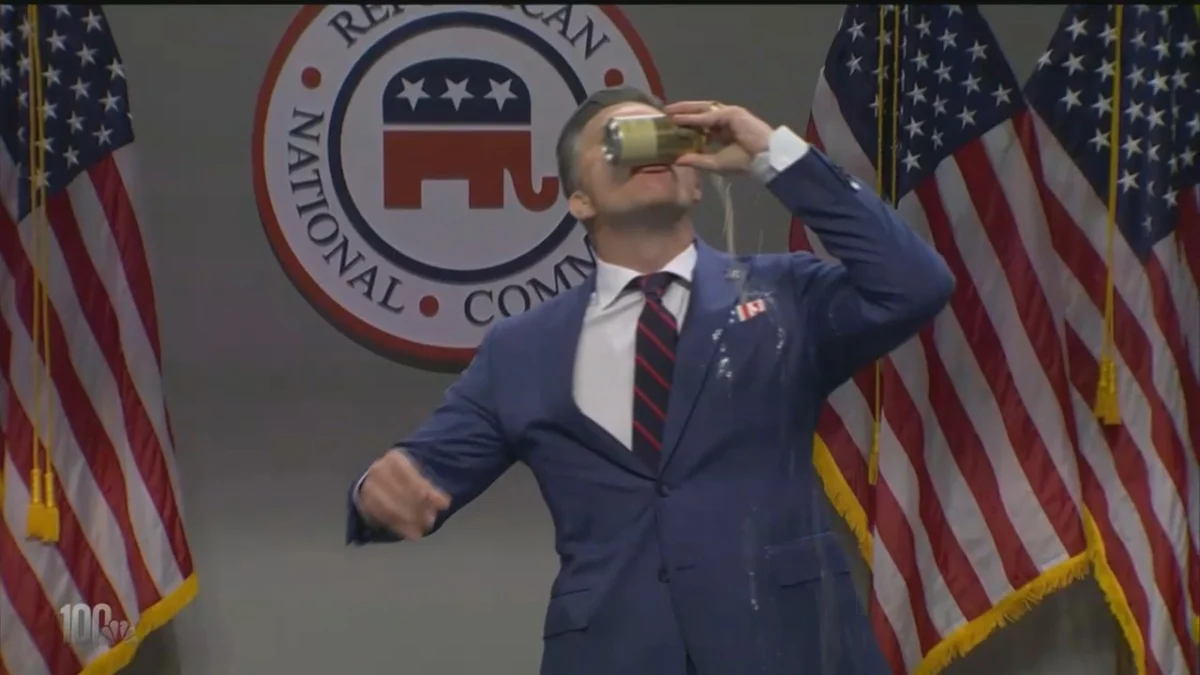
The political landscape has long been the primary fuel for Saturday Night Live’s cold opens, and the October 3rd episode proved no exception. As the American electorate navigates an increasingly polarized and chaotic news cycle, SNL leaned into the absurdity of the current Republican platform. Through a series of rapid-fire cameos and biting characterizations, the sketch served as a scathing commentary on the party’s ongoing identity crisis.
The cold open, anchored by Andrew Dismukes and Ashley Padilla as beleaguered Republican strategists, sought to capture the frantic, high-stakes atmosphere of a party attempting to "build buzz" in an era where the headlines often write themselves.
The Anatomy of the Sketch: A Chronological Breakdown
The cold open unfolded with a frantic pace, designed to mirror the disorganized nature of the modern political machine.
The Strategists’ Dilemma
The sketch begins with Dismukes and Padilla in a dimly lit campaign war room. Their chemistry captures the exhaustion of political operatives tasked with rebranding a party that feels increasingly adrift. They are the audience’s surrogate, attempting to make sense of a chaotic roster of figures who seem to be working at cross-purposes.
The Cameo Parade
The segment quickly devolved into a parade of impressions, each serving to highlight a specific vulnerability within the GOP:
- Marco Rubio (Marcello Hernández): Hernández entered the fray delivering a portion of his plea to constituents in Spanish. The sketch focused on Rubio’s attempt to walk a fine line, admitting that Donald Trump had failed to meet expectations and that the ongoing "endless wars" were yielding diminishing returns. It was a portrayal of a politician caught between his base and the harsh realities of global policy.
- The Frozen Mitch McConnell (Mikey Day): Perhaps the most visually striking moment occurred when Mikey Day appeared as a literal "frozen" Mitch McConnell in a wheelchair. The physical comedy was punctuated by his inability to do anything other than flash a peace sign. In a meta-moment that delighted the studio audience, Day nearly broke the fourth wall when he prematurely attempted to deliver the show’s iconic "Live from New York" catchphrase, highlighting the surreal nature of the performance.
- The JD Vance Test (Jeremy Culhane): Jeremy Culhane’s portrayal of Vice President JD Vance leaned heavily into the persistent critique regarding his perceived lack of charisma. The sketch featured a mock camera test where Vance attempted to introduce himself, only to be promptly dismissed by the frustrated strategists, underscoring the narrative that Vance has struggled to find a foothold in the national conversation.
The Hegseth and Trump Highlights
The sketch reached its comedic crescendo with the return of Colin Jost as Pete Hegseth. Jost’s portrayal skewered Hegseth’s recent, highly publicized "State of the Force" address. Jost famously chugged a Bero beer—Tom Holland’s non-alcoholic brand—dismissing it as "Spider-Man’s new non-alcoholic bitch beer."
Following this, James Austin Johnson returned as Donald Trump. Johnson’s Trump is known for his erratic, stream-of-consciousness style, and he did not disappoint. He addressed his controversial midterm strategy—the promise of a $5,000 payout to voters—by casually admitting, "If the Republicans win, I’ll give everyone $5,000 and that is not a bribe because I have no intention of following through on that promise."
Supporting Data: Contextualizing the Parody
To understand the weight of SNL’s satire, one must look at the real-world events that inspired the writing team.
The Hegseth "State of the Force"
The sketch directly referenced Hegseth’s recent pivot regarding the Pentagon and military leadership. His rhetoric, which has focused on purging "woke" ideology from the ranks, has been met with both fervor from the far-right and alarm from traditionalist defense analysts. SNL’s choice to have him urge patriots to "do the gayest thing ever and vote" serves as a satirical inversion of the hyper-masculine, anti-woke framing that defines much of the current GOP military discourse.
The Economic Populism of Trump
The inclusion of the $5,000 bribe promise is rooted in the erratic campaign rhetoric often seen in recent rallies. By having the character openly admit he has "no intention of following through," the writers were tapping into a deep-seated public sentiment regarding the reliability of campaign promises. The phrase "Let me cook," used by Johnson’s Trump, serves as a testament to the character’s belief in his own narrative, regardless of its factual basis.
Official Responses and Public Sentiment
While political figures rarely offer official rebuttals to Saturday Night Live sketches, the public reaction on social media platforms serves as a de facto barometer for the sketch’s success.
The segment went viral almost immediately, with many viewers praising the show for its willingness to highlight the contradictions within the party’s platform. Conversely, some critics on the right accused the show of being "out of touch" with the average voter, arguing that the caricatures served only to alienate the very people the show purports to satirize.
The episode, hosted by Dakota Johnson with musical guest Turnstile, maintained a high level of engagement throughout the night. The inclusion of Turnstile—a band known for their high-energy, unconventional sound—was viewed by many as a signal that SNL is attempting to broaden its cultural footprint, moving beyond traditional pop acts to capture a younger, more niche demographic.
Implications: The Role of Satire in a Divided America
The October 3rd cold open serves as a case study in the evolving role of late-night satire. In an era where news cycles move at breakneck speed, SNL is no longer just reporting on the news—it is attempting to decode the psychology behind it.
The "Normalization" Problem
One of the primary implications of this sketch is the difficulty of satirizing a political reality that is already bordering on the absurd. When real-life politicians make statements that seem like scripts from a comedy writer, the show must work twice as hard to stay ahead of the curve. By focusing on the performance of these politicians—the "frozen" nature of McConnell, the "charisma deficit" of Vance, and the "unhinged" address of Hegseth—SNL is essentially stripping away the veneer of policy to reveal the underlying character flaws.
Media Fragmentation
The segment also highlights the fragmentation of American media. By including references to niche topics like Tom Holland’s non-alcoholic beer brand, SNL is catering to an audience that is deeply online and culturally literate. This is a departure from the "water cooler" comedy of the 1990s, where sketches were designed to be universally understood. Today, the humor is increasingly tailored to those who spend their hours scrolling through Twitter (X) and TikTok, looking for the next viral clip.
The Impact on Voter Perception
Does SNL actually change votes? Most political scientists would argue that late-night comedy has little effect on the hard-line partisan voter. However, it does play a significant role in "softening" or "hardening" the perceptions of undecided voters. By casting figures like JD Vance or Pete Hegseth as figures of ridicule, the show reinforces a specific cultural narrative: that these men are not serious actors, but rather performers in a circus of their own making.
Conclusion: A Mirror to the Nation
The October 3rd cold open was more than just a collection of impressions; it was a snapshot of a nation struggling to reconcile its political traditions with a rapidly changing media and cultural landscape. Through the lens of Saturday Night Live, we see the anxiety, the absurdity, and the sheer fatigue of a country that is constantly being asked to choose between increasingly polarized extremes.
As the season progresses, the writers at SNL will undoubtedly continue to find themselves in the position of "strategists" for the country—trying to build a narrative out of a reality that refuses to conform to logic. Whether or not their satire will lead to any tangible change remains to be seen, but for now, they continue to provide a necessary, albeit chaotic, mirror to the American experience.
With the backdrop of Dakota Johnson’s hosting duties and the aggressive, forward-thinking sound of Turnstile, the episode signaled that SNL is not going anywhere. It remains a titan of cultural commentary, even if, at times, it seems as overwhelmed by the news cycle as the rest of us. The "frozen" Mitch McConnell might have tried to end the show early, but the discourse—and the comedy—is clearly just getting started.
 Azzam Bilal Chamdy
  Nila Kartika Wati