
 By Neng Nana
Main Facts
In a candid and deeply personal cover interview with Elle magazine, actor, fashion icon, and trans trailblazer Hunter Schafer revealed that she underwent gender-affirming bottom surgery in December 2025. Schafer, globally renowned for her breakout role as Jules Vaughn in HBO’s hit series Euphoria, as well as major cinematic projects including Kinds of Kindness, Cuckoo, and The Hunger Games: The Ballad of Songbirds & Snakes, shared the news to offer insight into her ongoing personal evolution.
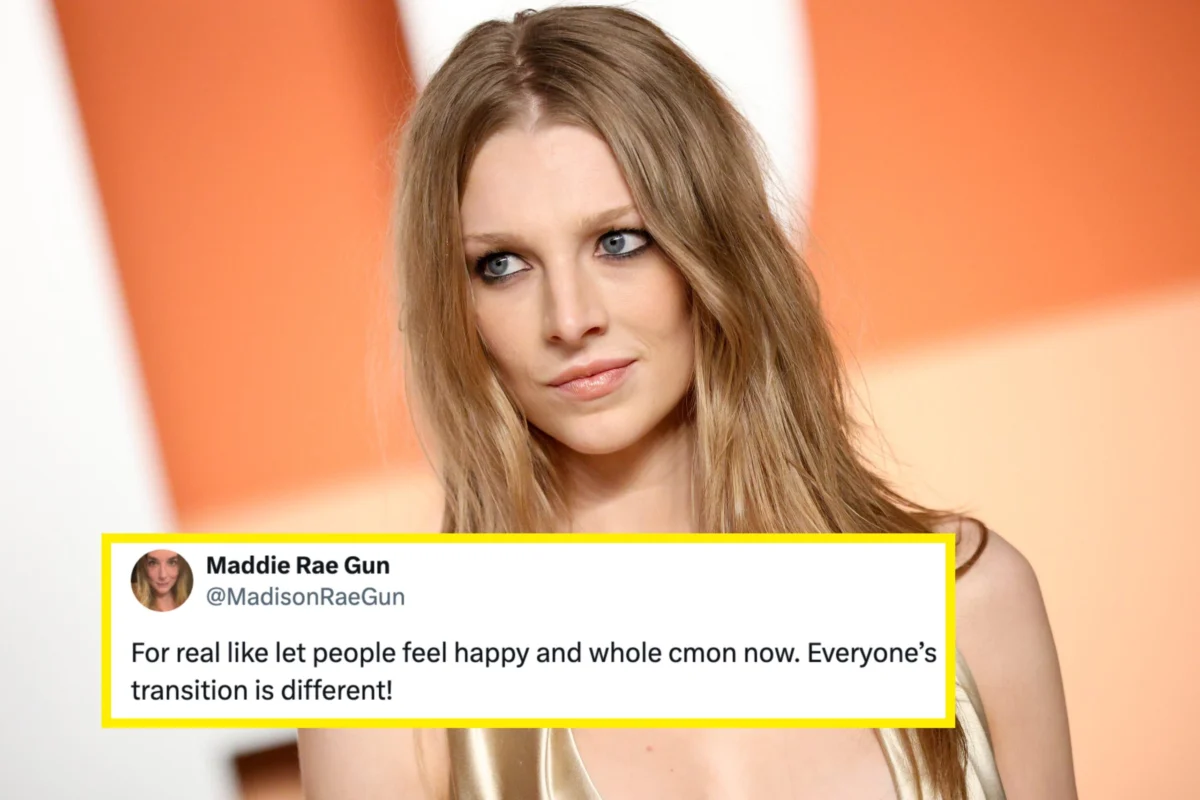
For years, Schafer has intentionally distanced herself from being pigeonholed solely as a "trans actor." However, this latest revelation marks a significant shift in how she chooses to share her transition journey with the public. The disclosure has sparked widespread conversations across digital media regarding bodily autonomy, the relentless scrutiny faced by transgender public figures, and the pervasive issue of trans fetishization. Amid online criticism from certain corners of the internet, fellow prominent trans artist Kim Petras quickly stepped forward to defend Schafer, highlighting the courage required to navigate a high-profile medical transition under a microscope.
Chronology: From Euphoria Breakout to Private Medical Evolution
To understand the weight of Schafer’s recent announcement, it is necessary to retrace the trajectory of her career and her evolving public relationship with her gender identity.
2016–2019: Early Advocacy and Artistic Rise
Long before breaking into mainstream television, Schafer was recognized as a prominent voice for transgender youth. As a teenager in North Carolina, she actively participated in legal and social advocacy against discriminatory legislation, such as the state’s controversial House Bill 2 (HB2). In 2019, her life transformed globally when she was cast in Sam Levinson’s Euphoria. Playing Jules—a character whose artistic, complex identity mirrored aspects of Schafer’s own lived experience—propelled her to international stardom almost overnight.
2024: The Strategic Shift Away from "Trans Roles"
By 2024, as her career expanded into high-profile feature films and high-fashion runways, Schafer made a conscious decision to pivot how the media discussed her identity. In a profile for GQ, she admitted that she had deliberately turned down numerous trans-specific acting roles and avoided using the word "trans" in interviews.
"It took a while to learn that and it also took a while to learn that I don’t want to be [reduced to] that, and I find it ultimately demeaning to me and what I want to do," Schafer told GQ. "Especially after high school, I was sick of talking about it. I worked so hard to get to where I am, past these really hard points in my transition, and now I just want to be a girl and finally move on."
At the time, she acknowledged the heavy burden of representation, noting that while she felt a sense of responsibility as one of the most visible trans figures in media, she believed that breaking barriers through stellar performances rather than constant discourse was the most effective service to the broader movement.
December 2025: A Private Medical Milestone
Behind the scenes, Schafer was preparing for a monumental personal milestone. In December 2025, she quietly underwent vaginoplasty—a gender-affirming surgical procedure designed to align her physical anatomy with her female gender identity. She chose to keep the procedure entirely private during its immediate aftermath, navigating a grueling recovery process away from public scrutiny.
October 2026: The Elle Reveal and Public Reaction
Nearly a year after the procedure, Schafer chose to speak openly about the surgery in her October 2026 Elle magazine interview. The announcement immediately captured global headlines, triggering a wave of public dialogue, commentary, and subsequent solidarity campaigns led by fellow artists.
Supporting Data: Understanding the Context of Gender-Affirming Surgery
Schafer’s transparency sheds light on the realities of medical transitions for public figures, highlighting specific aspects of physical recovery and philosophical perspectives on gender identity.
The Realities of Post-Surgical Recovery
Discussing her time immediately following the December 2025 operation, Schafer opened up about the intensive physical rehabilitation required. Recovery from lower surgeries involves strict limitations on physical activity to ensure proper healing. Schafer noted that her mobility was severely restricted during the initial phases, recalling that her daily limit was a mere "150 steps per day, which is nothing." This strict limitation underscores the physical toll and patience required for gender-affirming medical care—a reality often overlooked by casual observers.
Bridging Ideology and Reality
Reflecting on why she ultimately chose to undergo the procedure after years of identifying as gender-expansive, Schafer explained that she "hit a wall again and again where this theoretical queer utopia didn’t match up with the world she encountered every day."
She elaborated on her earlier desire to maintain a gender-expansive physical presentation, admitting:
"For a long time I’ve embraced the gender-expansive part of myself, and I really wanted to try to make that previous body work, because I thought there was something really cool and badass about it."
However, personal evolution prompted a change. Schafer noted that the true magic of queerness lies in the capacity to evolve, expand, and grow. While she maintains a broad ideological appreciation for gender fluidity, her personal journey has settled into a clearer, more definitive truth:
"I’m a woman. I’m a girl."
Official Responses and Celebrity Solidarity
The revelation of Schafer’s surgery was met with overwhelming support from fans, but it also exposed underlying pockets of transphobia and objectification online. This prompted swift, public pushback from prominent members of the entertainment community.
Kim Petras Speaks Out on X (Formerly Twitter)
German pop superstar Kim Petras, who famously underwent gender-affirming surgery as a teenager and has long navigated the intersection of trans identity and mainstream pop stardom, took to social media on October 19, 2026, to fiercely defend Schafer.
Writing to her hundreds of thousands of followers, Petras did not hold back regarding the toxic nature of the online commentary:
"Reading some really weird ass shit on here about beautiful Hunter Schaffer talking about getting vaginoplasty. And just wanna say it’s so brave of her to speak on this and it’s exposing so many of the gross ways in which trans women get fetishized."
Petras connected Schafer’s experience to broader themes of societal rejection and conditional acceptance, drawing a line directly to her own artistic work:
"The idea of someone aligning their body with how they feel on the inside and people saying YOU ARE WORTH LESS TO US NOW is what I wrote a song called brutalist about…"
Petras’s post quickly garnered over 26,000 likes, with the reply sections transforming into a digital community of support, amplifying messages of solidarity and condemning the policing of trans bodies.
Implications: Changing the Narrative on Trans Visibility
Hunter Schafer’s decision to discuss her bottom surgery carries profound implications for how society views transgender celebrities, bodily autonomy, and the intersection of art and identity.
1. Dismantling the Trap of Fetishization
As Kim Petras pointed out, public discussions surrounding trans women’s bodies are frequently plagued by an underlying layer of fetishization. For years, media consumers and internet subcultures have placed unrealistic expectations on trans public figures, often demanding that they maintain specific physical traits to satisfy a niche public gaze. By openly discussing her vaginoplasty, Schafer disrupts this dynamic. She reclaims ownership over her narrative, demonstrating that a trans woman’s medical choices are personal health milestones—not public commodities meant for online debate or sexualized consumption.
2. Redefining Trans Representation
Schafer’s journey highlights a complex tension within modern representation: the desire to simply "be an actor" versus the historical reality that visibility carries social weight. By initially trying to sidestep discussions of her transness to focus purely on her craft, Schafer fought against typecasting. Now, by choosing to speak openly about a deeply private medical procedure on her own terms, she proves that an artist can demand professional respect while unapologetically claiming their complete bodily reality.
3. Emphasizing the Fluidity of Personal Growth
Ultimately, Schafer’s interview challenges rigid expectations of what a "queer journey" is supposed to look like. Her transition from embracing a fluid, gender-expansive presentation to grounding herself firmly in womanhood illustrates that gender identity and personal comfort can evolve over time. By normalizing the idea that transition goals can shift, change, and reach new chapters years down the line, Schafer offers a powerful blueprint for authenticity—one defined not by what the world expects, but by what an individual needs to feel at home in their own skin.
 Iffa Jayyana
 Raul Delapena Setiawan
 Nana Wu
