
 By Lina Hope
PARIS — In an autumn week defined by a jarring juxtaposition of high-stakes cultural triumph and sobering real-world volatility, Paris reaffirmed its status as the world’s undisputed capital of art and design. Even as Art Basel Paris faced the unprecedented decision to shutter its doors prematurely—conceding to security concerns following the unrest that rippled through the city in the wake of October 17th—the creative pulse of the city remained defiant.
What began as a scheduled four-day cornerstone event for the global art market transformed into a decentralized, city-wide exhibition, proving that the appetite for cultural engagement in the French capital is far more resilient than the physical walls of a fairground.
The Main Facts: A Fair Interrupted, A City Inspired
Art Basel Paris, the much-anticipated contemporary anchor of the season, opened to the public on Friday after three days of highly successful previews. However, as the shadow of potential protests loomed, organizers made the difficult decision to cancel Saturday and Sunday sessions, citing the safety of staff, exhibitors, and visitors as the primary concern.

Yet, the premature closure served as a catalyst rather than a deterrent. Art lovers, collectors, and gallerists, already in town, redirected their attention to the wealth of satellite events, museum residencies, and private viewings that had been meticulously curated to run in tandem with the fair. The result was an art week that lacked a single central hub but gained a sprawling, intimate, and highly exclusive character.
Chronology of a High-Stakes Week
The week’s timeline reflects the rapid pivot from the grand, commercial scale of the fair to the boutique, experiential nature of the city’s historic venues:
- Thursday: The week reached its commercial zenith at Sotheby’s Paris, where Claude Monet’s Iris shattered records, selling for 50 million euros—the highest price ever paid for an artwork under the hammer in France.
- Friday: Art Basel Paris welcomed the public for a singular, high-energy day before security concerns dictated a change in course. Simultaneously, culinary collaborations like We Are Ona’s pop-up with Dalad Kambhu and Rirkrit Tiravanija began their secret-location service.
- Saturday & Sunday: With the fair closed, the spotlight shifted to historic sites. The Palais Garnier hosted Aline Asmar d’Amman’s residency, while Jordan Roth’s To Think of the Tranquil Life of Things at the Hôtel de Guise became the must-see installation of the weekend.
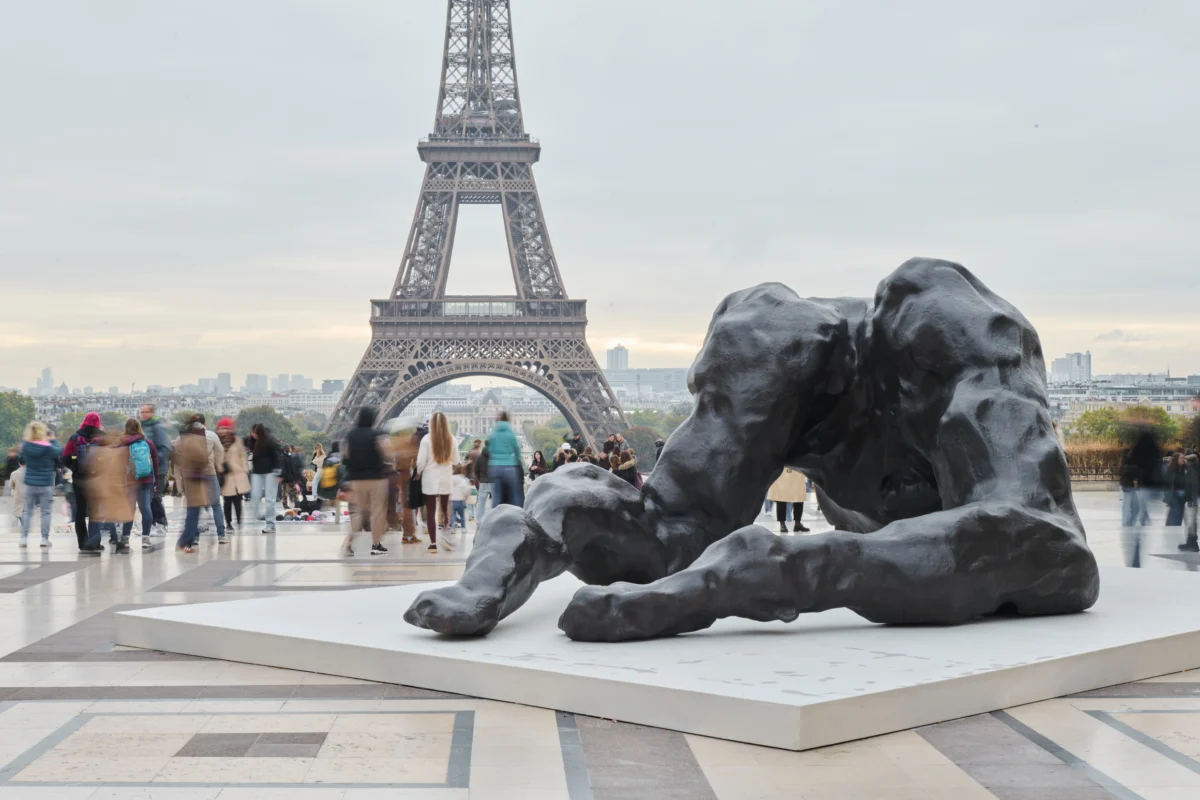
- Ongoing: Throughout the week, landmark interventions—such as Tracey Emin’s monumental sculptures on the Trocadero esplanade—provided a persistent, defiant visual presence against the backdrop of the Eiffel Tower.
Supporting Data: The Economics of Beauty
The sheer volume of capital and craftsmanship on display during this abbreviated week was staggering. Sotheby’s Chez Sotheby’s pop-up on the Rue de Rivoli featured a curated selection of works by masters including Pablo Picasso, Andy Warhol, and Gerhard Richter, with a combined value nearing $150 million.

The economic impact was not limited to the auction block. The week showcased a sophisticated integration of high art and lifestyle. Harry Nuriev’s "The Stage" at Le Meurice saw 24 lucky guests per seating enjoy a Michelin-starred menu designed by Alain Ducasse, set against a shimmering silver table installation. Meanwhile, in the world of luxury design, the collaboration between Iris Van Herpen and Maison Perrier-Jouët highlighted the value of sustainable, high-concept luxury, with unique collector pieces—some crafted from recycled 22-karat gold—serving as the focal point of the week’s most prestigious gala.
Official Responses and Strategic Pivots
The industry’s response to the disruption was marked by pragmatism and a commitment to "the show must go on." Kirstin Mearns, CEO of QC+, the entity behind the Qatar Lounge at the fair, emphasized the necessity of cultural continuity. "Paris seems the obvious place to be able to do a fashion-forward moment," Mearns stated. Her team’s decision to continue showcasing Qatari designer Yasmin Mansour—whose beige cotton-canvas uniforms for the lounge drew inspiration from the traditional bisht—was a deliberate act of supporting cross-cultural dialogue during a time of global anxiety.
Similarly, Rodman Primack, curator of Apple’s "Designers of Tomorrow" showcase, noted that the theme of "presence" took on a deeper meaning given the context. "The theme was born from an honest recognition of just how busy our lives have become," Primack explained. "In answering it, our designers demonstrate the power of objects to shape our physical environments and transform the human experiences that are possible within them."

Implications for the Future of Art Fairs
The events of the week have sparked a wider conversation about the future of global art fairs. The reliance on centralized, massive structures like the Grand Palais is being re-evaluated in favor of decentralized, agile, and hybrid models.
1. The Decentralized Model
The success of the satellite events—such as Rocco Ritchie’s "Back on the Brush" at the Pierre Augustin Rose Gallery—suggests that collectors are increasingly looking for deeper, more personal connections with artists. By utilizing living-room-like spaces rather than sterile booths, galleries were able to cultivate a sense of exclusivity that a fair floor, by definition, cannot provide.
2. The Intersection of Art and Hospitality
The "Chez Sotheby’s" model, where museum-grade art is consumed alongside high-end gastronomy, marks a shift in how art is sold. By creating an environment that mirrors the homes of collectors, the auction house successfully "subverted the usual seating rules," as creative consultant Valerio Polimeno noted. When a Francis Bacon hangs above your dinner table, the experience of "viewing" art becomes visceral and domestic, potentially accelerating private sales.

3. Sustainability and Craft
The work of artists like Iris Van Herpen, who utilized fruit leather and bioluminescent algae in her recent couture projects, and the "Designers of Tomorrow" finalists, indicates a shift toward materials that tell a story of planetary health. Whether it is Salem S. Charabi’s date-palm-frond lamps or Yoonjeong Lee’s furniture constructed from recycled pencils, the message is clear: the future of art is as much about the provenance and impact of the material as it is about the aesthetic outcome.
The Resilience of the Creative Spirit
As the week concluded, the sense of loss over the curtailed fair was eclipsed by the sheer density of what was accomplished. From the historic plaster casts of the Cité de l’architecture et du patrimoine, where Kennedy Yanko’s sculptures stood as silent observers, to the quiet, meditative atmosphere of the Qatar Lounge, the art world proved it does not require a trade show to thrive.
The week’s events were a testament to the Parisian philosophy of art de vivre. By folding art into the fabric of daily life—in our restaurants, our historic hotels, and our private apartments—the city’s creative community effectively rendered the interruption of the fair a minor footnote in a much larger, more enduring story of cultural dominance.

As the industry looks toward the next major milestones, including Art Basel Qatar in January, the lessons learned in Paris are clear: in an unpredictable world, the most successful cultural events will be those that prioritize intimacy, adaptability, and the ability to find beauty in the most unexpected corners. The art of the future will not just be displayed; it will be lived, tasted, and felt in the very rooms where the world’s most influential conversations take place.
 Neng Nana
 Ali Ikhwan
 Siti Muinah
