
 By Asep Darmawan
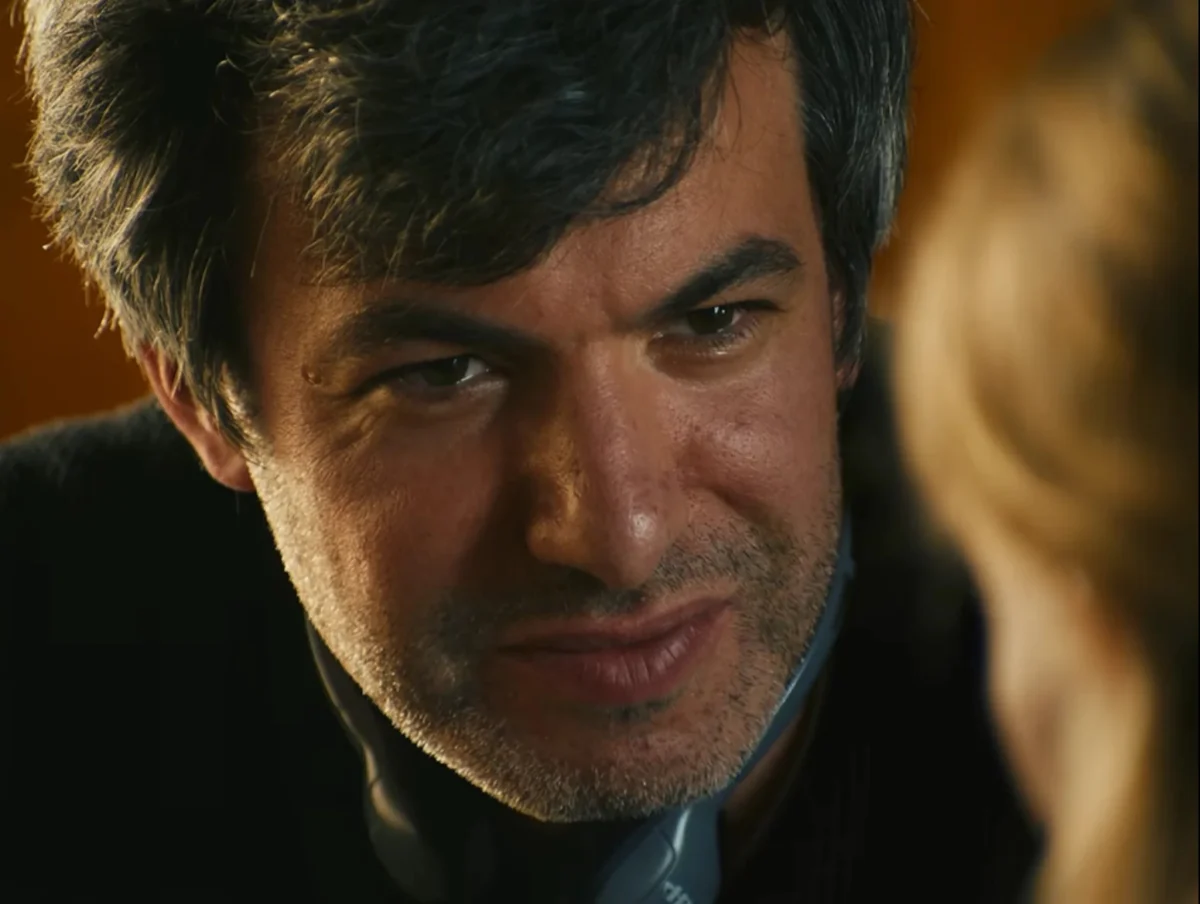
In the modern cinematic landscape, few subjects have been as thoroughly picked over as the meteoric rise and catastrophic fall of Elizabeth Holmes. From the investigative prowess of John Carreyrou’s Bad Blood to the star-studded dramatization of Hulu’s The Dropout and Alex Gibney’s definitive documentary The Inventor, the Theranos scandal seemed to have reached a point of saturation. Yet, You Can See Everything—the current buzzy documentary directed by Lance Oppenheim and produced with the idiosyncratic vision of Nathan Fielder—has managed to pierce the noise.
The secret to its success, as it turns out, was not a massive budget or exclusive access, but a radical contractual agreement that almost killed the project before it began. In an industry defined by rigid production schedules and the crushing pressure of deliverables, Fielder and Oppenheim successfully negotiated a "kill switch" with A24—a provision that allowed them to abandon the film entirely if they failed to uncover a unique narrative thread.
The Skepticism of the Filmmakers
The genesis of You Can See Everything was rooted in profound creative doubt. Fielder, known for his subversion of documentary tropes in The Rehearsal and Nathan for You, was initially hesitant to tread the well-worn path of the Holmes saga. The story, he noted, had been told through virtually every medium available, leaving little room for a fresh perspective.
“I told A24, ‘I don’t really know what the angle is, but there is something tickling in my brain,’” Fielder told Wired in a recent profile. At the time, the clock was ticking: Holmes was just 34 days away from beginning her prison sentence. The looming deadline provided a sense of urgency, but also a sense of potential failure. Fielder realized that if they arrived on the ground and found nothing original to say, they would be wasting time and capital.
Fielder’s solution was to approach A24 with a proposition that defied standard industry practices. He asked for the freedom to film without the burden of a guaranteed final product. “I was like, ‘If you guys want, I’m down to go down and start filming and see what emerges. But we need the ability to deliver nothing to you guys if it doesn’t work out.’ And they said ‘Sure.’”
A Chronology of the Gamble
The timeline of the project highlights the high-stakes nature of this experiment. With only a month before Holmes was set to be incarcerated, the window for capturing something authentic was vanishingly small.
- The Pre-Production Phase: Fielder and Oppenheim approach A24 with the "kill switch" concept. They argue that the only way to avoid the "rehearsed" nature of previous Holmes coverage is to remove the pressure of a deadline-driven output.
- The Agreement: A24, recognizing the unique potential of the duo, agrees to the terms. They provide the funding but agree to the clause that permits the directors to walk away if the footage lacks a cohesive, original narrative.
- The Production Window: The duo begins filming during the final countdown to Holmes’ imprisonment. The atmosphere is described by the filmmakers as one of "pure curiosity," a stark departure from the calculated, promotional nature of most documentary filmmaking.
- The Discovery: As the footage accumulates, the directors find the "tickle" in Fielder’s brain materializing into a distinct, unsettling, and intimate portrait that distinguishes the film from its predecessors.
- The Release: You Can See Everything premieres to critical acclaim, vindicating the gamble.
Supporting Data: The Saturation of the Holmes Narrative
To understand why the kill switch was necessary, one must look at the density of existing media surrounding the Theranos founder. Between 2018 and 2024, the public was inundated with content:
- Literature: Bad Blood: Secrets and Lies in a Silicon Valley Startup (John Carreyrou, 2018).
- Documentaries: The Inventor: Out for Blood in Silicon Valley (HBO, 2019).
- Podcasts: The Dropout (ABC News, 2019), which later evolved into a series.
- Television: The Dropout (Hulu, 2022), starring Amanda Seyfried.
This sheer volume created a "truth fatigue" among audiences. Any filmmaker attempting to cover the story again would be expected to either provide new, breaking information or an entirely different stylistic approach. Fielder and Oppenheim chose the latter, but they needed the emotional safety net of the kill switch to feel comfortable enough to pursue a less conventional, more experimental path.
Official Responses and Creative Freedom
In an interview with IndieWire, Lance Oppenheim reflected on how the freedom granted by the contract fundamentally altered the filmmaking process. "This was the first time where I’ve ever been like, ‘Oh, we actually have room to explore something without any pressure of anyone looking over us,’” he said.
For a director, the knowledge that they can "throw it all in the garbage can" is a double-edged sword. It creates a vacuum of accountability, but it also fosters a level of creative risk-taking that is often absent in high-budget productions. Fielder echoed this sentiment, noting that the possibility of failure was actually a source of comfort.
"Making a film, or any project, is very stressful," Fielder explained. "So if we had to pull the plug because it didn’t work out, it would sort of be a relief to me. It’s a very nice zone to operate in. Lance and I both thought, ‘Well, at the very least, this will be an interesting week or two that we’ll have as a story.’”
A24’s willingness to acquiesce to this request speaks to a shifting landscape in film production. By trusting the directors to be the arbiters of their own work’s value, the studio bypassed the "sunk cost fallacy"—the tendency to finish a mediocre project simply because money has already been spent.
The Implications for Future Documentary Filmmaking
The success of You Can See Everything serves as a case study for a new model of independent documentary production. By prioritizing the integrity of the vision over the necessity of a deliverable, A24 and the filmmakers created a product that feels raw, unmanufactured, and genuinely necessary.
1. The Death of "Contractual Necessity"
Historically, documentary filmmakers have been pressured by distributors to "find the story in the edit" regardless of the quality of the raw material. This often leads to over-produced, narrative-heavy documentaries that feel forced. The kill-switch model suggests that if a director isn’t finding a genuine story, they shouldn’t be forced to fake one.
2. The Power of "Operating out of Curiosity"
Oppenheim’s comment about "fishing" for a story highlights the difference between an assignment and an artistic pursuit. When the pressure to deliver a specific product is removed, filmmakers can lean into the weird, the uncomfortable, and the unexpected. This is the hallmark of the "Fielderesque" style—a pursuit of the truth that exists in the periphery rather than the center.
3. A Shift in Studio-Creator Dynamics
This agreement signals a potential shift in how studios view their creators. By treating filmmakers as partners in risk rather than employees, studios like A24 are positioning themselves as the premier destination for high-concept, auteur-driven content. The kill switch, while risky for the financier, effectively buys the studio a guarantee that the final product will have the full commitment and creative belief of its creators.
Conclusion
The "kill switch" in You Can See Everything is more than just a legal clause; it is a philosophy. It is a testament to the idea that the best art comes from a place of genuine, unpressured inquiry. By allowing themselves the freedom to fail, Nathan Fielder and Lance Oppenheim managed to do what many thought impossible: they made the Elizabeth Holmes story feel new again.
As the film continues to garner attention, it serves as a reminder that in an age of constant content creation, sometimes the most productive thing a filmmaker can do is threaten to walk away. The resulting film is not just a documentary about a scandal; it is a document of the artistic process itself—a process that, in this instance, was saved by the courage to abandon it.
 Nila Kartika Wati
 Siti Muinah
 Ammar Sabilarrohman
