
 By Ammar Sabilarrohman
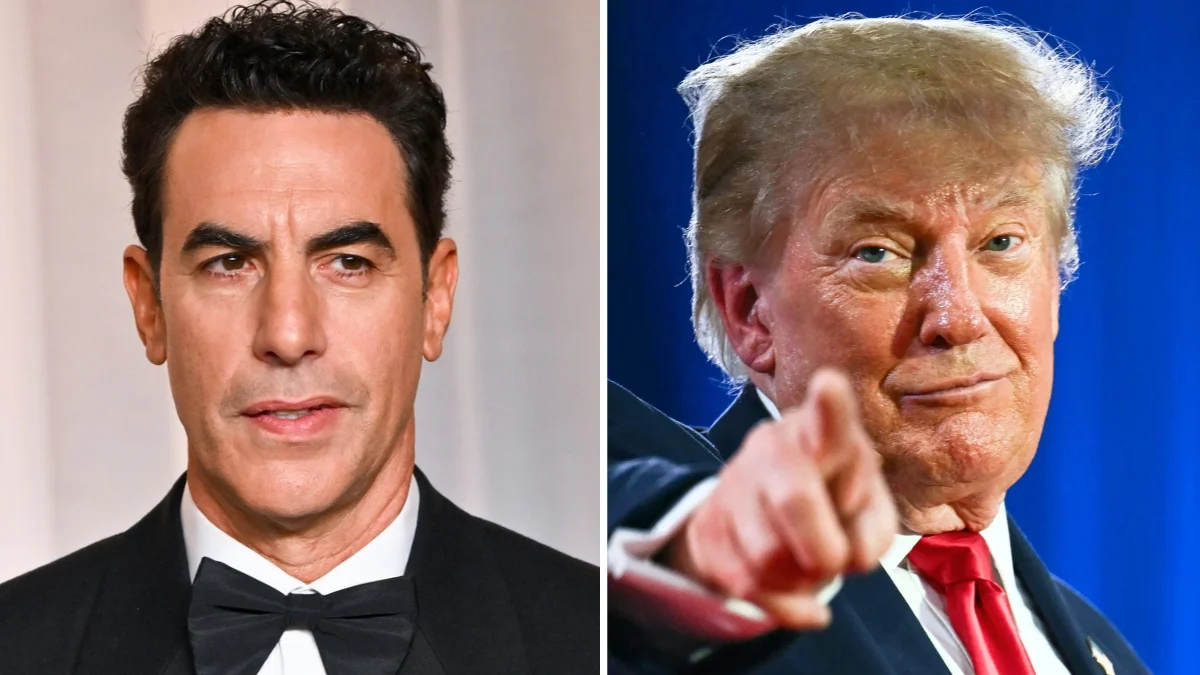
Two decades after he seemingly hung up his iconic yellow tracksuit and retired his most recognizable alter ego, Sacha Baron Cohen has defied the odds—and the passage of time—to bring Ali G back to the spotlight. The release of Ali G: Who Iz I?, which has hit select theaters ahead of its streaming debut on Amazon Prime this October, marks a significant cultural moment. It serves as a reminder of the turn-of-the-century phenomenon that was Da Ali G Show, a program that fundamentally shifted the landscape of television satire by embedding a crude, tracksuit-clad caricature into the inner sanctums of global power.
The return of the character, known for his relentless, absurd questioning of world leaders and intellectuals, has provided Baron Cohen with a platform to reflect on his legacy. During a candid, live-taped session of the popular podcast Happy Sad Confused at New York’s 92nd Street Y, the British comedian sat down with host Josh Horowitz to pull back the curtain on the mechanics of his craft—and the singular, intimidating experience of interviewing a pre-presidency Donald Trump.
The Chronology of a Collision: Trump Tower, 2003
To understand the weight of Baron Cohen’s return, one must revisit the era when his brand of "guerilla journalism" was at its zenith. In 2003, long before the reality-TV stardom of The Apprentice or the seismic shift of the 2016 presidential election, Donald Trump was viewed primarily as a flamboyant New York real estate mogul.
Baron Cohen recounted the logistics of that 2003 interview with vivid detail. Accompanied by his longtime collaborator, director James Bobin, the comedian arrived at Trump Tower expecting the professional decorum usually afforded to high-profile media guests. Instead, they were left waiting for 40 minutes—a delay Baron Cohen now views as a calculated "power move."
While they waited in an antechamber, the duo was treated to an unintended masterclass in Trump’s private temperament. Through the walls, they could hear the future president engaged in a heated, expletive-laden phone call with Rudy Giuliani. Baron Cohen, tongue-in-cheek, described the barrage of colorful language as being "not for the likes of delicate Jewish ears."
The dynamic shifted further when the team finally entered the room. Trump, initially charmed by the "very handsome, blond, Oxford-educated" Bobin, visibly soured the moment he realized he was to be interviewed by the caricature of a West Staines suburban gangsta. The resulting footage, which captured a confused and eventually irritated Trump, became a staple of Baron Cohen’s career. The comedian revealed that a source later confirmed Trump was "furious" following the encounter, even going so far as to publicly criticize Baron Cohen—a move that ultimately backfired by providing the comedian with free publicity for his subsequent projects.
Analyzing the "Brilliance" of a Political Phenomenon
The most striking aspect of Baron Cohen’s recent press tour has not been the nostalgia surrounding the return of Ali G, but rather his sober, analytical take on the man he once mocked. Having spent his career inhabiting characters designed to expose the absurdity of his subjects, Baron Cohen has developed a unique vantage point on the political evolution of Donald Trump.
Speaking to the audience at the 92nd Street Y, the comedian pushed back against the narrative that Trump is merely a buffoon. "We were too easy to dismiss him as a nincompoop," Baron Cohen admitted. "There are elements of brilliance to him, otherwise. And that explains his appeal with the fact that he’s there for a second term."
This acknowledgment is a departure from the typical Hollywood critique of the former president. Baron Cohen suggests that the ease with which critics dismiss Trump has been a strategic oversight. By failing to recognize the deliberate, albeit unconventional, mechanics of Trump’s communication style, his detractors have often played directly into his hands.
The Weaponization of Comedy
Expanding on these themes in a separate appearance on the Pivot podcast with Kara Swisher and Scott Galloway, Baron Cohen analyzed the role of humor in the modern political ecosystem. He noted that Trump’s approach is not accidental; rather, it is a sophisticated, albeit polarizing, tool.
"He’s intentionally being funny," Baron Cohen explained. "And if you have a look on the far right, they use comedy and sarcasm as an engaging way to dismiss criticisms." This observation touches on a broader sociological trend: the displacement of traditional debate by performative, comedic deflection. Baron Cohen posits that the right-wing political apparatus has successfully adopted the tactics of the satirist—irony, ridicule, and the subversion of "polite" discourse—to insulate its leaders from conventional media scrutiny.
The Mechanics of Satire in a Complex World
The return of Ali G invites an inevitable comparison between the media landscape of 2000 and that of 2024. When Da Ali G Show first aired, the internet was in its infancy, and the "post-truth" era was a distant nightmare. Today, the lines between reality, satire, and political theater are increasingly blurred.
Baron Cohen’s career has been a decades-long experiment in testing the limits of human ego and societal tolerance. From Borat Sagdiyev to Admiral General Aladeen, his characters have consistently acted as mirrors, reflecting the prejudices and insecurities of those they encounter. However, the current political climate presents a challenge even for a master of disguise: when the reality of politics feels as absurd as a Sacha Baron Cohen character, how does one satirize it?
The comedian suggests that the answer lies in embracing the complexity of the world. "In the black and white, the world is a little bit complicated," he mused. By bringing back Ali G, he is not just recycling a popular character; he is re-inserting a prism of chaos into a public discourse that is already teetering on the edge of the surreal.
Official Perspectives and Public Reception
The critical reception to the return of the character has been mixed but largely nostalgic. Fans of the original show have praised the commitment to the bit, while political commentators have noted the timing of the release. With the U.S. election cycle nearing its climax, the re-emergence of a character who once forced powerful men to say ridiculous things feels like a pointed commentary on the state of modern leadership.
While no official response has been issued by the Trump campaign regarding Baron Cohen’s recent comments, the history between the two suggests that the former president is unlikely to take the "brilliance" compliment at face value. For Trump, who has spent years crafting a persona of strength and unassailability, being analyzed by a comedian—even one who offers a backhanded compliment—is likely to be viewed as just another layer of the adversarial relationship they established two decades ago.
The Implications: Where Do We Go From Here?
The return of Ali G is more than a creative revival; it is an interrogation of the last twenty years of American culture. Baron Cohen’s reflection on Trump’s survival and his "elements of brilliance" serves as a warning to those who believe that satire can dismantle a political movement simply by exposing it as absurd.
If the lesson of the last two decades is that "nincompoop" is a dangerous label to attach to an opponent, then Baron Cohen’s new work may be shifting toward a more nuanced, albeit unsettling, critique. The comedian appears to have moved from the role of the provocateur who laughs at his subjects, to the observer who understands that the joke is often on the audience itself.
As Ali G: Who Iz I? reaches theaters and homes, it serves as a litmus test for the public. Can we still find the humor in the absurdity, or have we become too entrenched in our respective corners to see the "brilliance" or the "madness" of the figures we follow?
Sacha Baron Cohen has spent a career showing us that the most powerful people in the world are, at their core, just as fragile and performative as the rest of us. In the end, his return suggests that perhaps we need the tracksuit-clad fool now more than ever—not necessarily to solve the world’s problems, but to keep us humble enough to recognize that the absurdity is not going anywhere.
 Siti Muinah
 Layla Zulfa
 Evan Lee Salim
