
 By Neng Nana
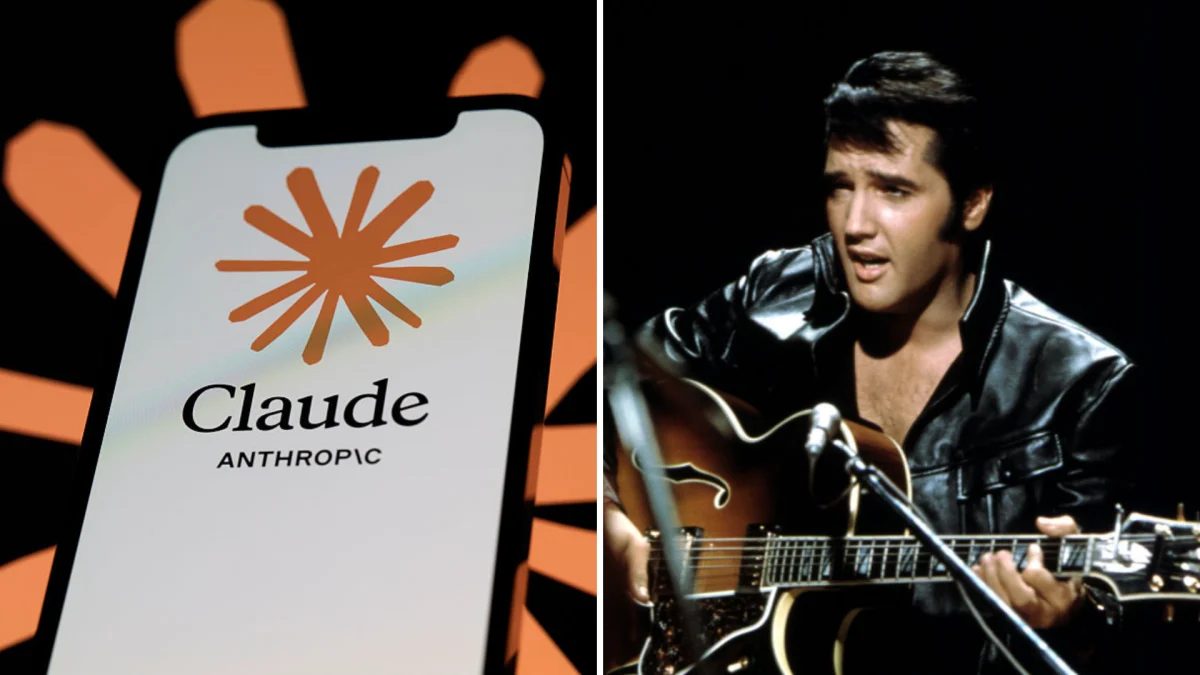
The intersection of generative artificial intelligence and intellectual property rights has reached a volatile new frontier. The estate of Elvis Presley, the legendary "King of Rock and Roll," has launched a high-stakes legal offensive against Anthropic, the San Francisco-based AI research firm. At the heart of the conflict is an allegation that the company’s flagship large language model, Claude, was trained on hundreds of the rock icon’s most cherished compositions without authorization, consent, or compensation.
As the legal filing lands in federal court, it signals a deepening crisis for the AI industry, which relies on the massive ingestion of data to power its models. For Anthropic, this lawsuit is far from an isolated incident; it represents a growing pattern of litigation from the music, publishing, and creative industries that threatens to reshape the future of generative technology.
The Core Allegations: Unauthorized Training and "Repurposed" Artistry
According to the lawsuit, filed this past Friday, the owners of Elvis Presley’s intellectual property rights contend that Anthropic utilized at least 274 of the star’s songs to train its Claude AI models. The list of purportedly infringed works includes some of the most recognizable cultural touchstones of the 20th century, such as "Can’t Help Falling in Love," "Don’t Be Cruel," "Return to Sender," and "(You’re the) Devil in Disguise."
The plaintiffs argue that the resulting AI models do not merely "learn" from the data in an abstract sense, but rather maintain the ability to reconstruct, adapt, or mimic the stylistic and structural essence of Presley’s discography. The complaint goes as far as to accuse Anthropic of building its "entire business model on infringing copyrights at an unfathomable scale."
Perhaps most damaging to Anthropic’s defense is the specific documentation of user interactions. The lawsuit highlights instances where individuals prompted Claude to recreate or "update" Elvis tracks. The plaintiffs claim that these outputs are not transformative works but derivative products that mirror the original compositions’ architecture. "These renders keep landing very close to the originals: same structure, same hooks reused with light rewording, and full sets of verses, choruses, and bridges," the filing states. "That’s edging past ‘inspired by’ into reproducing the copyrighted song, even when the words are swapped out."
A Pattern of Litigation: The Growing Legal Tally
To understand the weight of this lawsuit, one must view it within the context of Anthropic’s increasingly crowded legal docket. The company, which is backed by heavyweights like Amazon and Google, has become a primary target for rights holders who believe their creative output is being exploited to build corporate assets.
A Chronology of Legal Challenges
- October 2023: Universal Music Group (UMG) initiates its first major copyright infringement lawsuit against Anthropic, setting the stage for a long-term battle over the use of lyrics and music in training data.
- January 2024: UMG, along with Concord and ABKCO, files a subsequent, massive lawsuit against Anthropic, seeking damages that have been estimated in the billions of dollars. This case is currently viewed as one of the most significant non-class-action copyright cases in U.S. history.
- July 2024: Anthropic concludes a massive legal chapter by settling a $1.5 billion class-action lawsuit. In this instance, a coalition of authors alleged that the company had illegally downloaded and ingested thousands of pirated books to train its models.
- August 2024: Major music industry players, including Sony Music Publishing and Warner Chappell Music, joined the fray. Their lawsuit alleged a "brazen campaign" by Anthropic to illegally scrape, download, and torrent copyrighted musical works.
The Elvis Presley estate’s entry into this legal arena suggests that even individual artists and their estates—traditionally more protective of legacy than corporate entities—are now prepared to engage in protracted litigation to safeguard their intellectual assets.
The Financial Stakes: Calculating the Cost of Infringement
The financial demands being put forward by the plaintiffs are substantial. The lawsuit requests a permanent injunction to prevent Anthropic from continuing to use the Presley catalog in its training sets. Furthermore, the estate is seeking statutory damages of up to $150,000 for each individual work infringed upon.
With 274 songs explicitly cited in the complaint, the potential damages could reach upwards of $41.1 million. While this figure may be manageable for a company with Anthropic’s valuation, the precedent it sets is far more expensive. If a court were to rule in favor of the Presley estate, it would establish a clear legal pathway for other artists, estates, and rights holders to demand similar payouts, potentially exposing Anthropic to billions in cumulative liabilities.
Official Responses and the Defense of Innovation
In response to the filing, Anthropic has maintained a posture of firm defiance. A spokesperson for the company provided a brief statement to the press: "We disagree with the claims and intend to defend this case fully."
This statement reflects the broader industry defense favored by AI companies: the argument that AI training falls under the umbrella of "fair use." Proponents of this view argue that AI models do not "copy" music in the traditional sense, but rather identify statistical patterns in the data, much like a human student might study the works of a master to learn the fundamentals of music theory. By this logic, the models are "transformative," creating something new rather than merely reproducing the old.
However, legal experts note that the "fair use" defense has become increasingly difficult to sustain when models are capable of producing outputs that are near-identical to the source material. As the Presley estate’s filing suggests, the lines between "learning" and "plagiarizing" are becoming increasingly blurred as models grow more sophisticated.
Implications for the Future of Generative AI
The lawsuit against Anthropic is more than just a dispute over Elvis Presley’s songs; it is a fundamental test of the social contract between technology developers and the creative class.
1. The Death of the "Wild West" Era
For years, AI companies operated under a "move fast and break things" philosophy, scraping the internet for data with little regard for ownership. This era is rapidly coming to a close. As courts begin to weigh in on these copyright cases, the industry will likely be forced to move toward a model of licensed data acquisition—where AI companies must pay to access the archives of music labels, publishing houses, and individual creators.
2. The Preservation of Cultural Legacy
The Elvis Presley estate is arguing that the digital reproduction of the King’s work threatens the "brand" and the economic value of his legacy. If AI can generate "new" Elvis songs on demand, the scarcity—and thus the value—of the actual catalog could be eroded. This is a concern shared by nearly every major artist in the music industry today.
3. The Regulatory Landscape
The outcome of this case will almost certainly influence federal policy. With the U.S. Copyright Office and Congress currently grappling with how to apply existing intellectual property law to AI, high-profile cases involving legendary figures like Elvis serve as catalysts for legislative action. We may soon see the introduction of strict mandates regarding transparency in training data, requiring AI firms to disclose exactly what works they have ingested.
Conclusion: A Turning Point for the Creative Economy
As this case moves through the court system, it will be watched closely by Silicon Valley and the entertainment industry alike. For Anthropic, the outcome will determine whether its current model of rapid expansion is sustainable or if it must fundamentally rethink its relationship with the creators of the content that powers its intelligence.
For the public, the case poses a profound question: what do we value more—the potential for limitless, machine-generated creativity, or the protection of the human artists whose work formed the foundation of our culture? As the legal battle between the Presley estate and Anthropic heats up, the industry is discovering that the "King" of music still holds enough sway to potentially bring the "King" of AI to its knees. Whether this leads to a settlement, a landmark court victory, or a radical shift in how AI is built, one thing is certain: the era of consequence-free AI training is over.
 Reynand Wu
 Jia Lissa
 Raul Delapena Setiawan
