
 By Lina Hope
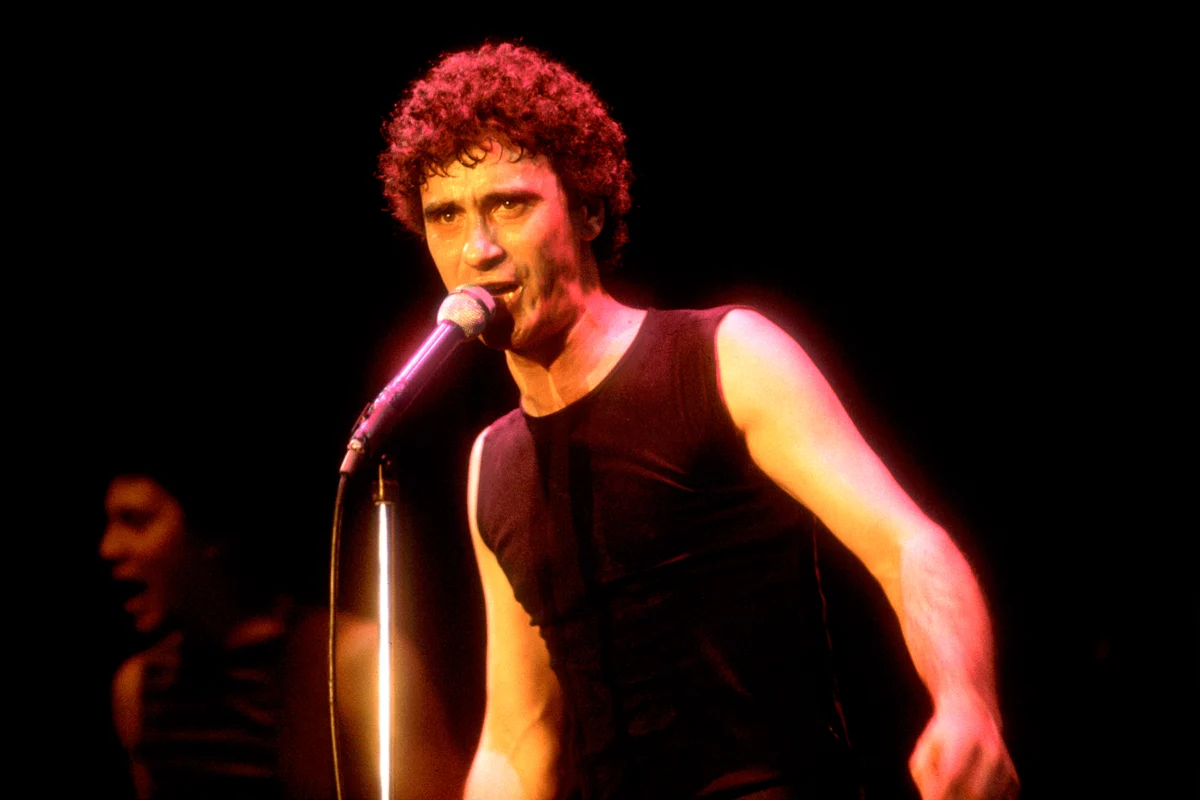
The legendary rocker, whose career spanned from the doo-wop halls of the 1950s to the new wave dominance of the 1980s, leaves behind a legacy defined by infectious hooks and an unwavering connection to his Rust Belt roots.
Donnie Iris, the cherished Pittsburgh rocker whose unmistakable falsetto and penchant for melodic, synthesizer-infused rock defined the sound of the early 1980s, has died at the age of 83. The artist, known to legions of fans as "King Cool," passed away just weeks after stepping away from the stage, closing a final, poignant chapter on a career that spanned seven decades.
The news was confirmed by Joe Vitale Jr., the drummer for Iris’ long-running backing band, The Cruisers. In a heartfelt tribute shared via social media, Vitale captured the essence of a man who was as beloved for his humility as he was for his chart-topping hits. "Tonight, I have some very sad news to share," Vitale wrote. "My boss and friend Donnie Iris passed away… He always had an infectious smile, incredible energy and a wondrous personality. After you meet him, you honestly just love him. You could just sit and talk with him, laugh with him. He was King Cool."
The Final Curtain
The passing of Iris comes in the wake of a brave, public battle with bladder cancer. Diagnosed in 2023 shortly after a celebratory 80th birthday concert, Iris remained a fixture on the local circuit, determined to perform as long as his health allowed. However, the toll of the illness eventually necessitated a withdrawal from the spotlight.
On October 9, Iris issued a graceful farewell to his fanbase: "After much thought, and in light of recent health issues, I have made the difficult decision to retire from future concert performances. Music has given me far more than I could ever put into words. From the earliest days to every chapter of my life, your support has been a constant source of joy and inspiration."
His final performance, held on September 28 at Citizens Live at The Wylie in Pittsburgh, served as a bittersweet coda to a storied career, drawing hundreds of fans who gathered to honor the man who had become a synonymous symbol of Western Pennsylvania’s musical identity.
A Chronology of a Musical Life
Born Dominic Ierace on February 28, 1943, in New Castle, Pennsylvania, the future rock star’s trajectory began in the humblest of settings. As a schoolboy, his vocal talents were showcased at local weddings and talent contests, where the raw potential of his voice began to emerge.
The Formative Years: Doo-Wop to The Jaggerz
By high school, Iris was deeply entrenched in the doo-wop scene, performing with The Fabutons. As he matured, his ambitions grew, leading him to Slippery Rock State College. However, the siren song of the professional music industry proved too strong; he eventually abandoned his studies to pursue a career in rock and R&B, playing with regional acts like the Tri-Vels and Donnie and the Donnells.
His first taste of national success came with The Jaggerz. In 1970, the group released "The Rapper," a clever, swinging rock track that resonated with audiences across the country. The song reached No. 2 on the Billboard Hot 100, marking the arrival of a major talent. The track, featured on the album We Went to Different Schools Together, was a masterclass in the pop-rock sensibilities that would eventually become his trademark.
The Cruisers and the King Cool Era
Following the dissolution of The Jaggerz, Iris briefly lent his talents to Wild Cherry, the group behind the global smash "Play That Funky Music." His tenure there was brief but productive, as he contributed guitar and vocal work to their 1979 album Only the Wild Survive.
It was shortly thereafter that Iris linked up with keyboardist Mark Avsec to form the group that would cement his legacy: Donnie Iris and the Cruisers. With a sound that blended the punch of power pop with the experimental edge of new wave synthesizers, the band struck gold with their 1980 debut, Back on the Streets. The album featured the enduring hit "Ah! Leah!," a song that remains a staple of classic rock radio today. The track’s infectious energy and lyrical obsession captured a generation, peaking at No. 29 on the Billboard Hot 100.
The band’s follow-up, 1981’s King Cool, solidified his status as a regional hero and an international cult icon. The album provided him with the nickname that would define his persona for the rest of his life. Throughout the early 1980s, the band continued to churn out records, including The High and Mighty (1982), Fortune 410 (1983), and No Muss… No Fuss (1985).
Supporting Data: Charting the Legacy
While Donnie Iris’ career was marked by shifting industry tides, his commercial footprint remains significant. Between his time with The Jaggerz and his work with The Cruisers, Iris placed multiple tracks on the Billboard charts.
- "The Rapper" (The Jaggerz): Peaked at No. 2 on the Billboard Hot 100 (1970).
- "Ah! Leah!": Peaked at No. 29 on the Billboard Hot 100 (1981).
- "My Girl": The highest-charting single for The Cruisers, peaking at No. 25.
- "Injured in the Game of Love": Reached No. 28 on Billboard’s Mainstream Rock Airplay chart (1991), serving as one of the band’s final major chart appearances.
Beyond these numbers, Iris’ longevity was a testament to his adaptability. Even after being dropped by MCA in 1984, he continued to produce independent music, maintaining a loyal, multi-generational following that sustained his touring career for nearly forty years. His studio swan song, the 2010 Christmas album Ah! Leluiah!, served as a final gift to the fans who had stood by him through various lineup changes and musical shifts.
Official Responses and Public Mourning
The outpouring of grief following the news of his passing has been immediate and profound. Across the Pittsburgh region, radio stations have dedicated hours of airtime to his discography, while local officials and fellow musicians have lauded him as a titan of the community.
"Donnie was more than just a musician; he was the heartbeat of our local scene," one local promoter remarked. "He treated every fan like an old friend. That’s why he was ‘King Cool’—not because he was untouchable, but because he was the guy you wanted to be hanging out with."
Social media platforms have been flooded with testimonials from fans who recall his concerts as high-energy, communal experiences. The consensus among those who knew him—from collaborators like Mark Avsec to the casual concertgoer—is that Iris possessed a rare, genuine kindness that transcended his celebrity.
The Implications: A Lasting Cultural Footprint
The death of Donnie Iris marks the end of an era for Pittsburgh’s rock history. He served as a bridge between the soul-influenced rock of the 1970s and the synthesizer-heavy pop of the 1980s. His ability to reinvent himself while maintaining a core sound allowed him to survive industry shakeups that claimed many of his contemporaries.
His influence extends beyond his chart success; he paved the way for future generations of Pittsburgh artists to pursue professional careers without feeling the need to abandon their roots. By staying true to the identity of a "working-class rocker," he provided a blueprint for authenticity in an industry often obsessed with artifice.
As the music world processes the loss of one of its most charismatic figures, the legacy of Donnie Iris remains secure. His songs—"Ah! Leah!," "The Rapper," and "My Girl"—continue to echo through stadiums, dive bars, and radio airwaves, serving as a reminder of the man who, with a simple smile and a falsetto note, earned his crown as the King Cool of rock and roll.
The silence left by his passing is profound, but the soundtrack he leaves behind ensures that the music of Donnie Iris will continue to burn with the same "desire" he sang about decades ago. He was a son of Pennsylvania who captured the imagination of the nation, a true original whose influence will undoubtedly be felt for decades to come.
 Laily UPN
 Nana
 Basiran
