
 By Basiran
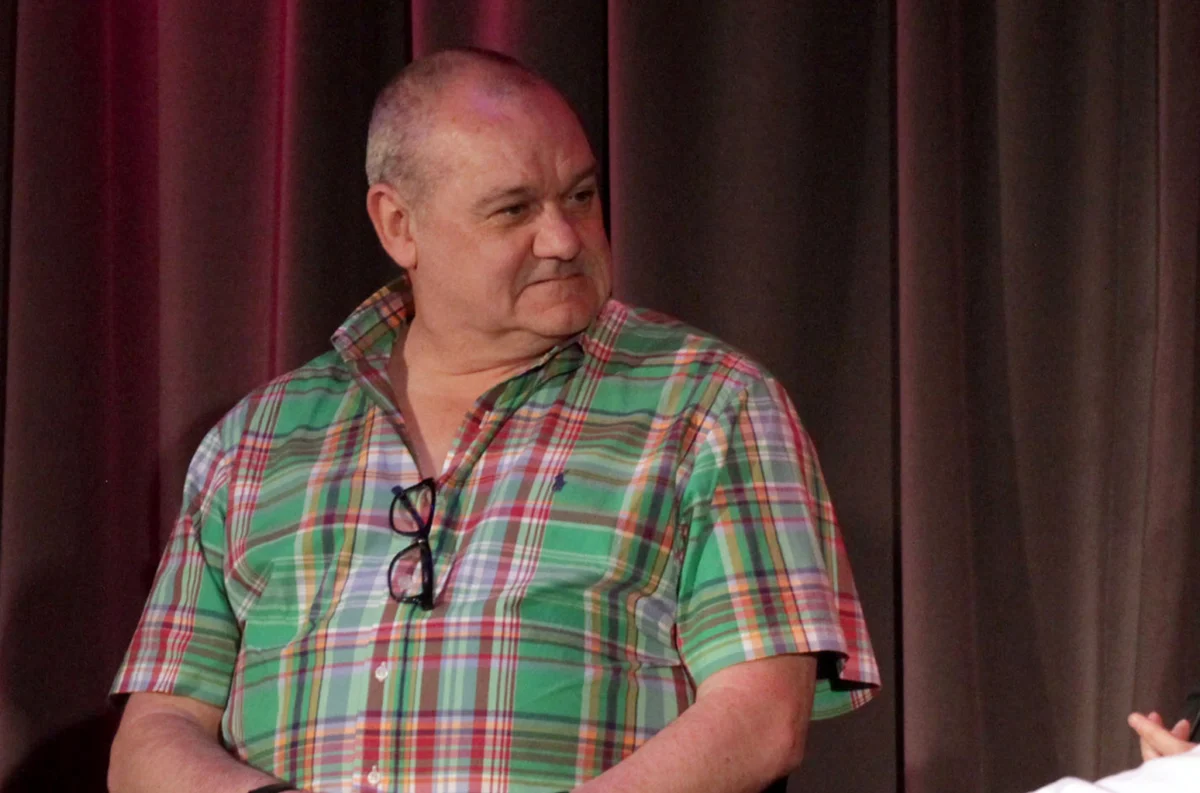
The global music industry is mourning the loss of a foundational figure. Kenny MacPherson, a visionary music publishing executive whose career bridged the gap between the gritty live-music circuits of Glasgow and the high-stakes boardrooms of Los Angeles, passed away on October 23. He was 71 years old. His death, confirmed in Los Angeles, leaves behind a legacy that transformed how songwriters are nurtured, protected, and elevated within the modern music ecosystem.
MacPherson was more than a dealmaker; he was a curator of culture. Over a career spanning four decades, he became synonymous with a specific brand of A&R: patient, loyal, and unapologetically "left-of-center." Whether he was managing the early tours of Billy Connolly or securing the legacies of legends like Thom Yorke, OutKast, and St. Vincent, MacPherson’s fingerprints are on some of the most enduring compositions of the last forty years.
The Scottish Roots of a Global Visionary
Born in Largs, Scotland, MacPherson’s education in the music business did not begin in a university, but in the trenches of the Glasgow live music scene. His early years were defined by the visceral energy of the Apollo Theatre, where he served as a concert manager. It was there, amidst the chaos of touring schedules and the distinct personalities of the era’s rising stars, that he first encountered the complexities of the industry.
He began his trajectory in the orbit of legendary Scottish comedian Billy Connolly. As his tour manager, MacPherson traveled extensively, learning the mechanics of the trade. It was a piece of advice from publisher Bill Martin, delivered in the quiet offices of London, that changed his life. Martin told him, "You know, Kenny, if you want to be in the music business, get into publishing—it’s a gentleman’s game." That simple directive became the North Star for his entire professional life.
Chronology: A Career of Strategic Growth
MacPherson’s career can be categorized by his ability to evolve alongside the industry while maintaining the same core values of integrity and artist-first management.
The Transatlantic Leap (Late 1970s–1989)
In the late 1970s, MacPherson moved to the United States, a transition that would define his influence on the American music market. After a stint working with The Manhattan Transfer, he joined the management team for Supertramp. It was there he first began to explore the publishing arm of the business, proving that he had a knack for the legal and creative intricacies of copyright and song management.
The Warner/Chappell Era (1989–2002)
In 1989, MacPherson joined Warner/Chappell to lead its New York office. This period marked a turning point in his reputation. Over 13 years, he became a magnet for alternative and independent talent. His roster read like a “who’s who” of 90s indie and alternative rock, including Radiohead, Paul Westerberg, the Afghan Whigs, Underworld, and the Blue Nile. He was instrumental in providing these artists with the structural stability they needed to experiment creatively.
The Chrysalis Years (2002–2010)
Taking the reins of Chrysalis Music’s North American division, MacPherson entered a golden age of A&R. During this time, he fostered an environment where risk-taking was encouraged. His team signed a diverse array of genre-defying acts, including OutKast, My Morning Jacket, Ray LaMontagne, TV on the Radio, the Yeah Yeah Yeahs, Beach House, and St. Vincent. Under his leadership, Chrysalis became one of the most respected publishers in the world, eventually leading to its acquisition by BMG in 2010.
The "Big Deal" Revolution (2012–2020)
In 2012, MacPherson co-founded Big Deal Music alongside Dave Ayers and Jamie Cerreta. His goal was simple yet ambitious: to build a firm that prioritized "manners, courtesy, and high touch." Big Deal was designed as a boutique publisher with global reach. By reuniting with past signings like My Morning Jacket and St. Vincent, and adding modern powerhouses like Blake Mills, Weyes Blood, Kamasi Washington, and Sharon Van Etten, the company quickly became a force to be reckoned with. In 2017, the Association of Independent Music Publishers named Big Deal the Indie Publisher of the Year.
The Hipgnosis Era (2020–Present)
In a move that solidified his status as an industry elder statesman, Hipgnosis Songs Fund acquired Big Deal in September 2020. MacPherson transitioned into the role of CEO for the newly branded Hipgnosis Songs Group, continuing to oversee a vast and culturally significant catalog.
Supporting Data: An Industry Powerhouse
MacPherson’s success was not merely anecdotal; it was quantifiable. Throughout his tenure at Big Deal Music, the company consistently ranked among the top 10 U.S. publishers by market share—a staggering achievement for an independent firm in an industry dominated by major conglomerates.
His commitment to songwriter advocacy was as fervent as his commitment to business. He was a vocal proponent for systemic change, frequently arguing that songwriters should have permanent seats on industry boards. He championed the creation of a publisher-funded healthcare system for songwriters, recognizing that the very people who created the "content" that fueled the multi-billion dollar streaming economy were often the most vulnerable.
Reflections from the Industry
The response to MacPherson’s passing reflects a career built on genuine, long-term relationships rather than transient business transactions.
Dougie Thomson, the Supertramp bassist and a friend of over 50 years, captured the sentiment of the industry when he told HITS Daily Double, "Kenny was one of a kind." This sentiment was echoed by Jamie Cerreta, who noted, "Kenny was beloved by the songwriters he fought so hard for."
These testimonials speak to a rare quality in the music business: the ability to remain a "gentleman" while navigating the often-cutthroat nature of copyright acquisition and A&R. He was respected by the executives he competed against and adored by the songwriters he represented.
The Implications of a Lost Voice
The passing of Kenny MacPherson leaves a void that will be felt throughout the publishing landscape. As the industry grapples with the rise of AI, the complexities of the streaming royalty model, and the consolidation of publishing catalogs, the loss of a veteran who balanced "cultural significance" with commercial success is profound.
MacPherson stood as a bridge between the traditional era of publishing—where the relationship between the publisher and the writer was paramount—and the modern era of data-driven asset management. His philosophy was clear: "A world without songs would be a very dull place." He understood that the business was merely a container for the art, and his primary responsibility was to ensure that the artists who filled that container were treated with respect and fair compensation.
His legacy will continue through the songwriters he mentored and the catalogs he protected. As the industry moves forward, the "Big Deal" model—one based on high-touch management and personal loyalty—will remain a benchmark for what independent publishing can achieve.
Kenny MacPherson is survived by his wife, photographer Melanie Nissen, his daughter Nicole Walker, his granddaughter Kate Land, and his sister Anne Cowgill. In his wake, he leaves a global community of musicians and executives who benefited from his sharp ear, his fierce advocacy, and his enduring commitment to the "gentleman’s game" of music publishing.
 Nila Kartika Wati
 Raul Delapena Setiawan
 rifanmuazin
