
 By Nana Muazin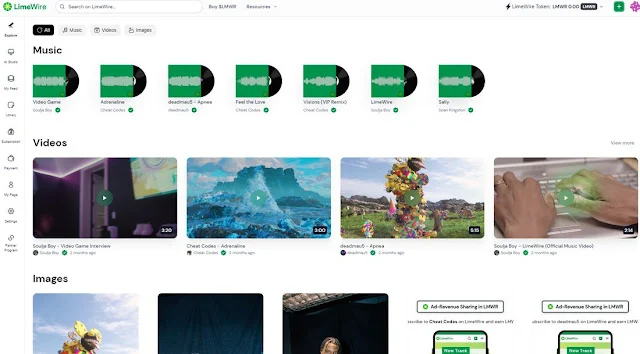
In the rapidly shifting landscape of digital media, few brand names evoke as much nostalgia as LimeWire. Once the quintessential symbol of the peer-to-peer file-sharing era in the early 2000s, the name was synonymous with the democratization of music—and the legal battles that followed. However, in a stunning corporate pivot, LimeWire has shed its controversial past to emerge as a sophisticated, forward-thinking generative AI content publishing platform.
Today, LimeWire is not facilitating the exchange of pirated MP3s; it is empowering a new generation of digital creators to harness artificial intelligence to build, monetize, and trade unique assets. By bridging the gap between generative art and blockchain technology, LimeWire has positioned itself as a critical player in the creator economy, offering a suite of tools that turn simple prompts into ownable digital collectibles.
The Chronology of a Transformation
The journey of LimeWire is a testament to the power of brand reinvention in the digital age. After the original entity ceased operations due to legal constraints, the brand lay dormant for over a decade. In 2022, the platform underwent a massive structural shift, pivoting toward the burgeoning Web3 space.
Initially launching as a digital collectibles marketplace, the platform quickly identified that the future of content lay in generative AI. By mid-2023, the platform had integrated advanced AI image generation models, allowing users to bypass traditional creative hurdles. This trajectory—from a defunct file-sharing service to a high-tech studio for AI-driven artists and musicians—represents one of the most unique corporate turnarounds in recent tech history. The platform now hosts content from high-profile figures, including Deadmau5, Soulja Boy, and Sean Kingston, signaling its transition from a grassroots tool to a legitimate hub for mainstream creators.
The Mechanics of LimeWire AI Studio
At its core, LimeWire AI Studio is designed to lower the barrier to entry for digital artists. The platform supports industry-leading generative models, including Stable Diffusion 2.1, Stable Diffusion XL, and DALL-E 2. This multi-model approach allows users to select the specific AI "engine" that best suits their aesthetic goals.
Advanced Generative Capabilities
The beauty of the LimeWire interface lies in its accessibility. A user can input a rudimentary prompt and receive a high-quality visual output, or they can engage with advanced settings—such as samplers, prompt guidance, and specific style parameters—to achieve precise results. Whether a user is aiming for cinematic realism, pixel art, anime, or analog film aesthetics, the platform provides the granular control necessary to execute a vision.
Furthermore, LimeWire is currently developing a proprietary AI model, signaling a move away from reliance on third-party integrations toward a self-sustaining creative ecosystem. This commitment to internal R&D ensures that the platform remains competitive as the generative AI market becomes increasingly saturated.
The Intersection of AI and Blockchain
One of the most disruptive aspects of LimeWire is its automatic integration with blockchain technology. Unlike traditional image-generation tools where the user simply downloads a file, LimeWire treats every creation as an asset.
Automated Minting
Upon publishing a piece of content, the platform automatically mints the creation as a Non-Fungible Token (NFT) on either the Polygon or Algorand blockchains. This process provides the artist with a permanent, immutable digital signature. This "proof of creation" is vital in an era where AI-generated content is often viewed with skepticism regarding authenticity. By embedding this into the workflow, LimeWire ensures that creators maintain clear ownership of their work.
Monetization Through Community
The platform’s monetization strategy is built on the premise of direct creator-to-fan engagement. Once content is minted, creators have two distinct paths:
- Public Release: The content is visible to the entire LimeWire community. This encourages virality and trading, with the original creator earning a 2.5% royalty on every subsequent sale of their asset.
- Exclusive Access: Creators can gate content behind a subscription model, offering premium, behind-the-scenes, or specialized AI-generated assets only to their paid fans.
Supporting Data: Revenue Models and Economic Sustainability
LimeWire’s business model is explicitly designed to incentivize creators to remain on the platform. The "Ad Revenue Share" model is arguably the most compelling feature for independent designers and hobbyists.
The LMWR Token Economy
When users view content on the platform, ad revenue is generated. LimeWire shares up to 70% of this revenue directly with the creators. Payments are processed in the form of LMWR tokens, the platform’s native cryptocurrency.
The economic utility of the LMWR token extends beyond simple payouts. Users can leverage these tokens to pay for additional AI generation prompts, effectively creating a closed-loop economy. For those looking to exit the ecosystem, LMWR tokens are liquid assets, tradeable on major global exchanges such as Kraken, ByBit, and Uniswap. This provides a clear, transparent path to monetization that is often lacking in standard social media platforms, where algorithmic changes can wipe out a creator’s income overnight.
Tiered Subscription Benefits
LimeWire operates on a "freemium" model, ensuring that the platform remains accessible to casual users while offering professional-grade tools for power users.
- Free Tier: Includes 10 credits (approx. 20 images per day) and 50% of ad revenue.
- Pro Tier ($9.99/mo): 1,000 credits, early access to new models, and 50% ad revenue share.
- Elite Tier ($29/mo): 3,750 credits and 60% ad revenue share.
- Creator Tier ($49/mo): 5,000 credits and 70% ad revenue share.
- Professional Tier ($99/mo): 11,250 credits and 70% ad revenue share, alongside faster generation speeds and an ad-free experience.
This tiered system ensures that as a creator’s following and content output grow, their earning potential and resource access scale proportionally.
Implications for the Creative Industry
The rise of LimeWire as an AI-centric studio has significant implications for the future of digital art. By commodifying the creative process, the platform is challenging the traditional agency-client model.
Democratization vs. Quality Control
Critics of AI-generated art often point to the "dilution of creativity," arguing that the ease of generation will lead to a glut of low-quality content. However, the market-based approach of LimeWire serves as a natural filter. If content has no artistic or aesthetic value, it will not be traded, and the creator will not earn royalties. The community, through its engagement and purchasing power, effectively acts as the arbiter of quality.
Future Expansion: Beyond Imagery
LimeWire’s roadmap suggests that we are only seeing the tip of the iceberg. The platform has confirmed plans to roll out AI-driven music and video generation tools. For a brand that started as a music-sharing hub, this feels like a full-circle moment. By providing tools that allow musicians to generate tracks or filmmakers to storyboard with AI, LimeWire is positioning itself to be a comprehensive multimedia studio for the next generation of digital artists.
Official Stance and Community Outlook
LimeWire leadership has consistently framed the platform as a "democratizing force." In official communications, the focus is placed on lowering the barriers to entry. By removing the need for expensive software licenses or deep technical knowledge of code, the platform invites anyone with a vision to step into the role of a creator.
The inclusion of high-profile creators like Soulja Boy and Deadmau5 acts as a signal of institutional validation. When industry veterans begin utilizing AI-minting platforms, it suggests that the skepticism once surrounding NFTs and generative AI is beginning to give way to a more pragmatic adoption of these tools as standard parts of the creative toolkit.
Conclusion: The Path Ahead
LimeWire’s evolution is a profound case study in adaptability. By abandoning its legacy of unauthorized file distribution and embracing the cutting-edge intersection of AI and blockchain, the brand has successfully rebranded as an essential utility for modern creators.
As the platform continues to refine its image generation capabilities and prepares to launch its proprietary models, it will face stiff competition from tech giants like Google and Adobe. However, LimeWire’s unique advantage lies in its community-first economic model. By giving creators a stake in the revenue generated by their work, the platform fosters a sense of loyalty that traditional software-as-a-service companies often struggle to replicate.
For the artist, the hobbyist, and the digital entrepreneur, LimeWire offers a glimpse into a future where the gap between thought and creation is bridged by AI, and the value of that creation is secured by the blockchain. Whether you are looking to experiment with generative art for free or seeking a platform to monetize your digital portfolio, LimeWire has established itself as a formidable, evolving, and essential destination in the creative economy.
 Siti Muinah
  Sagoh
Sagoh  Basiran