
 By Jia Lissa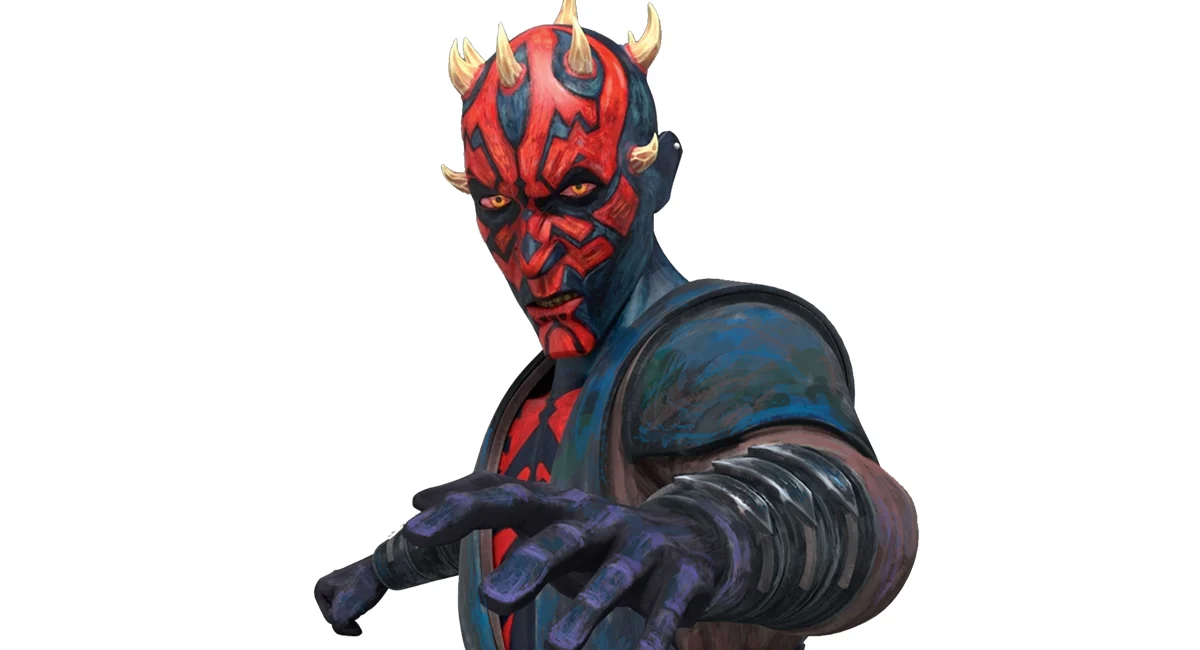
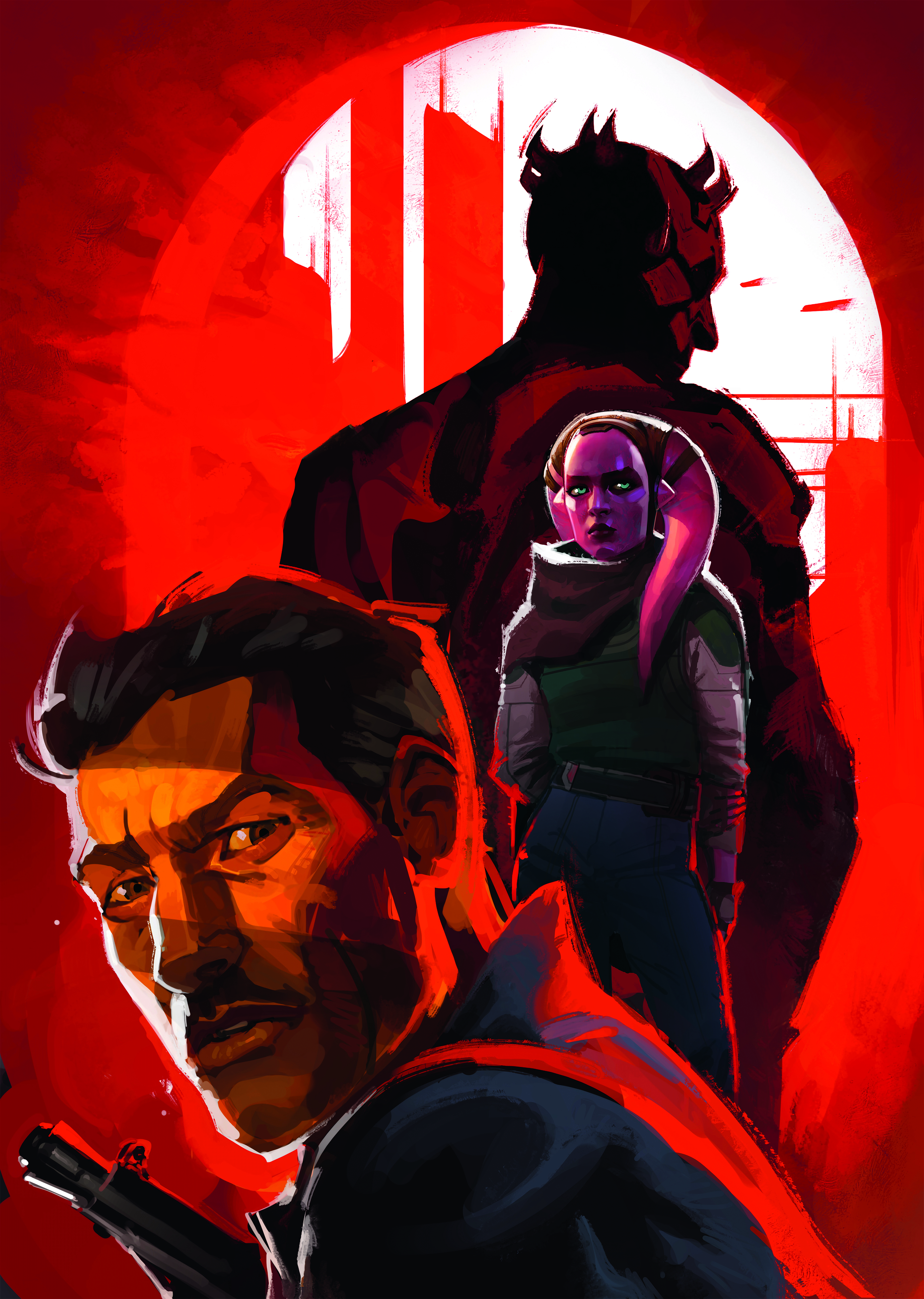
For nearly three decades, the figure of Maul has loomed large over the Star Wars galaxy. From his silent, terrifying debut in The Phantom Menace to his tragic, complex evolution in The Clone Wars and Rebels, the character has become an archetype of resilience, rage, and intellectual depth. Now, Lucasfilm Animation is pushing the boundaries of the medium with its latest project, Star Wars: Maul – Shadow Lord.
Moving beyond traditional digital rendering, the production team has embraced a bold, painterly aesthetic that breathes new life into one of cinema’s most recognizable silhouettes. To understand the vision behind this stylistic shift, we spoke with Lucasfilm Animation Art Director Andre Kirk about the conceptual hurdles, technical innovations, and the meticulous design process that went into building the world of Shadow Lord.
The Evolution of a Visual Language
The core mandate for Star Wars: Maul – Shadow Lord came directly from Lucasfilm President Dave Filoni. According to Kirk, Filoni sought to revisit the experimental, artistic ambitions that were present during the early development of The Clone Wars—a time when the team dreamed of a visual style that mimicked traditional oil painting.
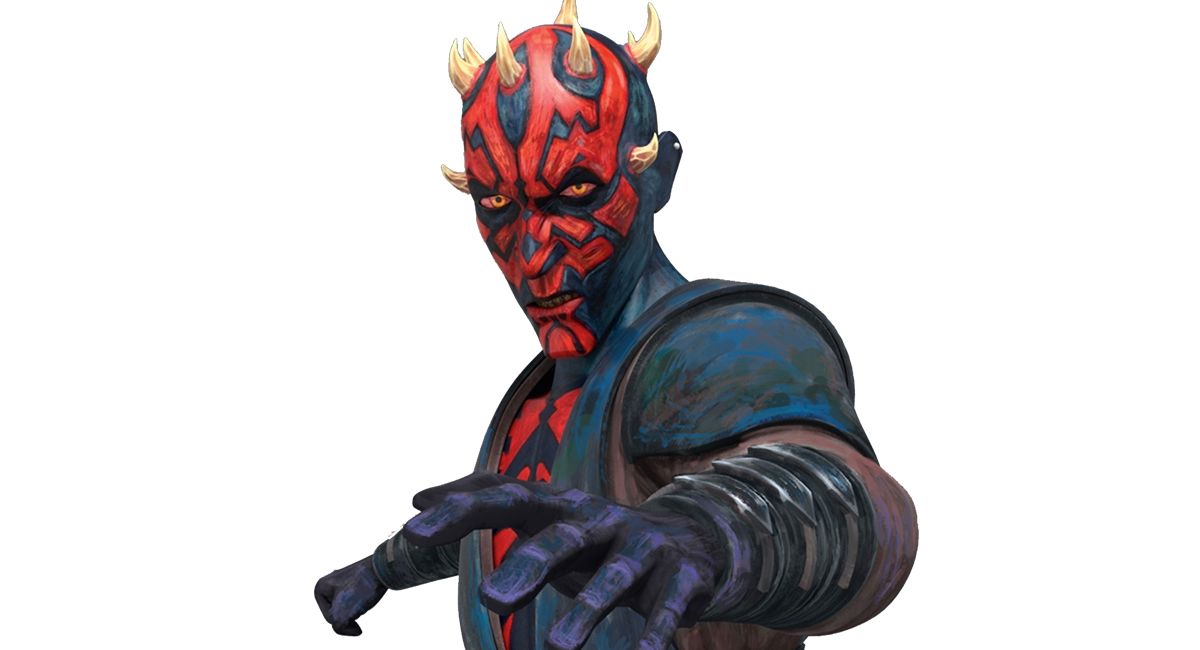
"Back then, the technology was fighting us," Kirk explains. "We wanted that painterly feel, but we didn’t have the tools to make it move and feel authentic. Now, we’re at a point where we can fully realize that vision."
The transition was not merely a matter of software, but of philosophy. The production team had to be trained in the nuances of traditional media. Kirk emphasized to his artists that the goal was to avoid the "digital look" at all costs. "We don’t want to see the paper underneath the paint," he says. "We want the light to be the color itself. We walked the team through the distinctions between watercolor, gouache, acrylic, and oil painting. For younger designers accustomed to digital perfection, it was a process of unlearning and re-learning how to prioritize texture and tactile thickness."
Chronology of a Design: The Seven-Day Sprint
The efficiency required to produce high-quality animation within a massive franchise like Star Wars is immense. Kirk details a rigorous seven-day design cycle for each character, a process designed to minimize ambiguity for the 3D modeling and animation teams.
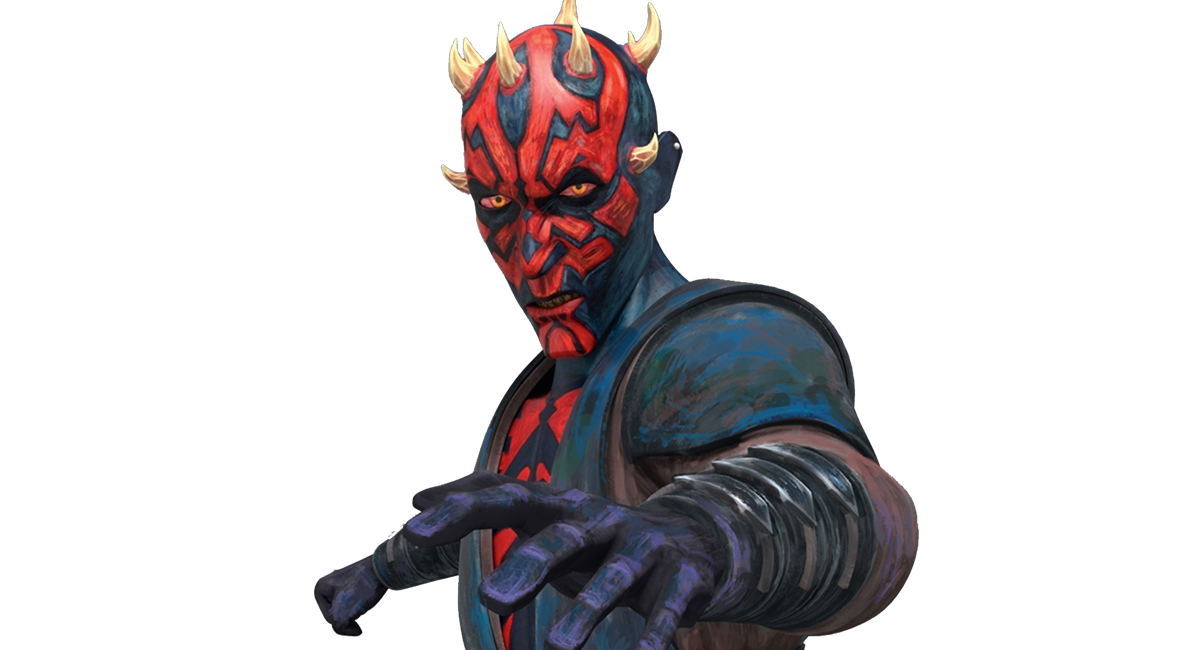
"We have exactly one week to finalize a character design," Kirk notes. "By the end of those seven days, we need to deliver a package that can be turned into a 3D asset with no questions asked. Any delay caused by uncertainty is a luxury we don’t have."
The "Spirit-Of" Approach
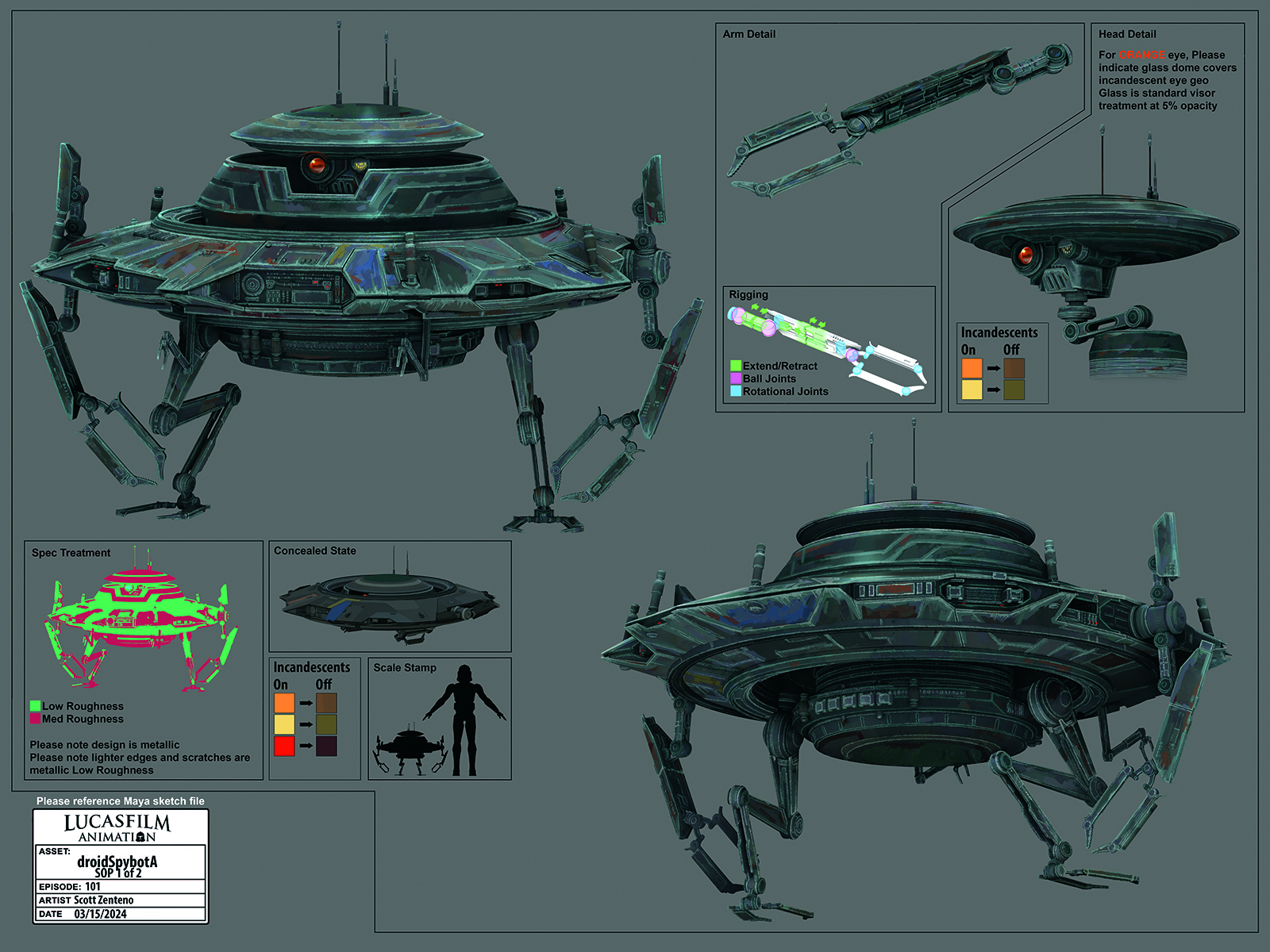
The design package consists of two distinct components. The first is the technical delivery: orthographic turnarounds—front, back, and side views—that provide the 3D team with precise data regarding line work, color, and texture. The side views are delivered in "flat" color to ensure no lighting artifacts interfere with the modeler’s interpretation.
The second component is what the team calls the "Spirit-Of" image. While the orthographic sheets feature characters in a stiff A-pose for technical ease, the "Spirit-Of" images are highly expressive. They capture the character’s mannerisms, personality, and vibrant stylistic flair. "When you add these together, the crew gets a full, rounded picture of who the character is and how they should move," says Kirk.
Architectural World-Building: The Mystery of Janix
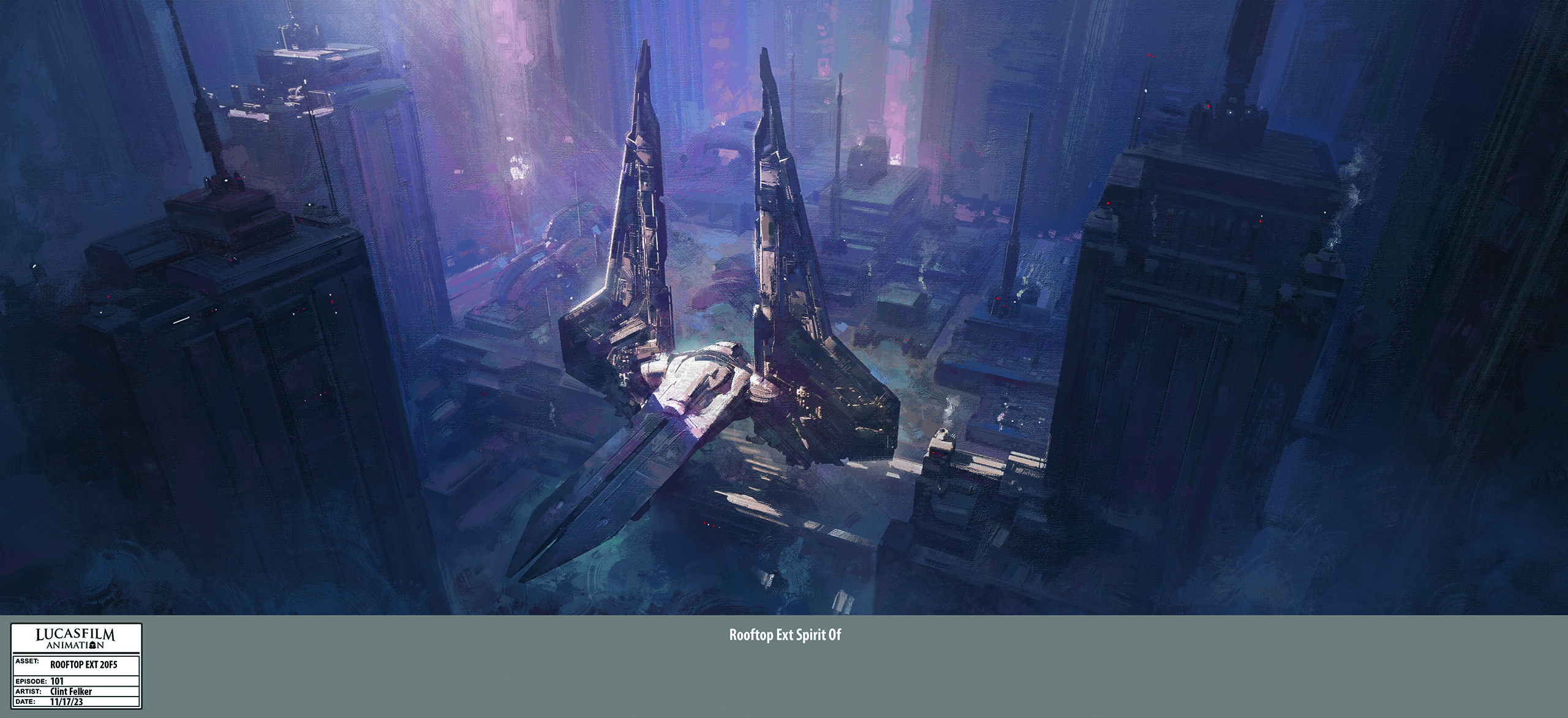
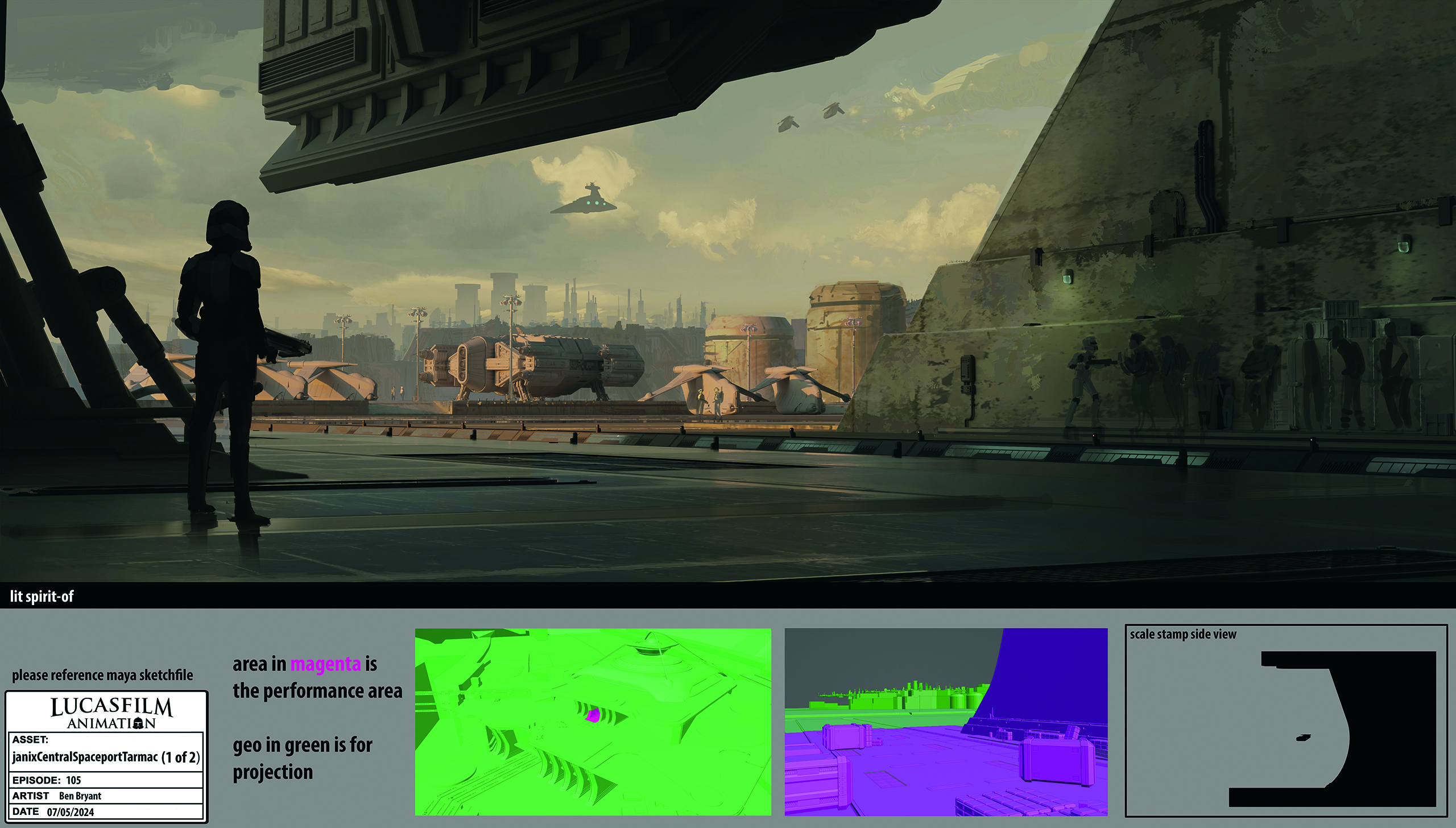
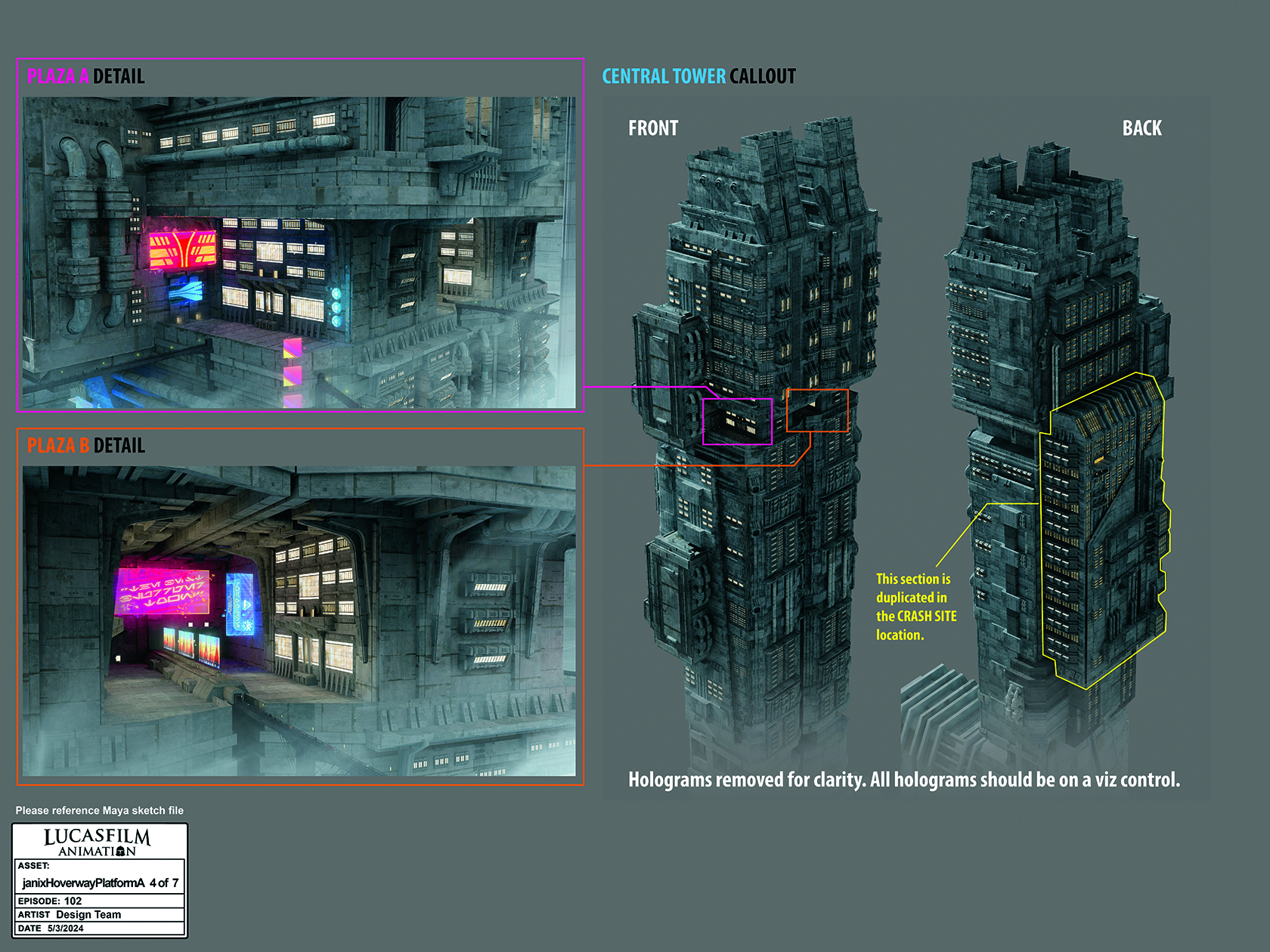
While the characters anchor the story, the setting of Shadow Lord—the planet Janix—serves as a vital character in its own right. The design process for Janix, which is built into a massive crater on a jungle planet, was heavily influenced by Filoni’s own sketches.
"Filoni was very specific about the architectural hierarchy," Kirk explains. "He wanted us to explore ‘retro-futurism’—the kind of future we were promised in the 20th century but never quite received."
The design team had to consider the practicalities of urban planning, even within the fantastic confines of the Star Wars universe. They asked fundamental questions: "How do the citizens get around? Is it a walkable city? Are there subways or crosswalks?" By applying these terrestrial considerations to the alien architecture of Janix, the team created a world that feels lived-in and logical, rather than just a collection of cool sci-fi shapes. This attention to detail—like placing a subway entrance or a crosswalk in a concept painting—grounds the viewer and adds a layer of authenticity to the Star Wars experience.
The Challenge of Originality: Designing New Aliens
Designing new species for Star Wars is a high-stakes endeavor. They must feel native to the galaxy far, far away while standing out as unique. Kirk points to the character of Jedi Master Eeko-Dio Daki as a prime example of this balancing act.
"We wanted something more unique than a standard dinosaur-inspired alien," says Kirk. "The challenge is that the further you move away from a human face, the harder it is to make the audience empathize with the character’s emotions. Eeko-Dio Daki needs to hold a conversation, convey fear, joy, and sorrow, all while maintaining an alien appearance."
The team operates on a strict rule: a character must be interesting enough to be distinct, but not so "bespoke" that they cannot blend into a crowd. By ensuring the world is populated with varied, believable alien life, the design team avoids the trap of making every lead character feel like a spectacle.
Technical Implications: Light, Shadow, and Silhouette
The visual identity of Maul – Shadow Lord relies heavily on silhouettes. During the first day of the seven-day design sprint, artists are tasked with creating rough silhouettes of their subjects.
"The rougher the better," Kirk says. "If a character is backlit, you should still know exactly who they are. If you put them in a lineup, they need to be instantly recognizable. We check our character silhouettes against one another to ensure that no two characters overlap in a way that creates confusion."
This commitment to readability extends to the lighting. The team uses specific hex numbers for skin tones and surface textures to ensure consistency across different lighting environments. By explicitly calling out effects—such as a glowing hand or a specific metallic sheen—the design team provides a roadmap that the lighting and effects departments can follow without deviation.
The "Living Painting" Philosophy
Ultimately, the goal of Star Wars: Maul – Shadow Lord is to create a sense of cohesion where the design phase directly informs the final render. "There’s no filter between us and the final product," Kirk concludes.
By prioritizing the "living painting" aesthetic, the team is not just creating an animated show; they are honoring the legacy of Star Wars concept art while using modern technology to push it into new, uncharted territory. For fans, this means a visual experience that feels both familiar and strikingly new. The project stands as a testament to the idea that even in a galaxy defined by high-tech space battles, the most powerful tool in the shed remains the artist’s eye for color, shape, and shadow.
As the industry continues to debate the role of automation and AI in animation, the work done on Maul – Shadow Lord serves as a strong argument for the continued necessity of human artistry. It is a reminder that the most compelling stories are those told with intent, where every line, texture, and silhouette is a deliberate choice meant to evoke an emotion.
For more insights into the world of professional animation and design, be sure to subscribe to ImagineFX magazine. For the latest developments in digital art tools and techniques, visit Creative Bloq’s digital archives or download the official app to stay updated on the go.
 Basiran
  Sagoh
Sagoh  Laily UPN