
 By Nana Muazin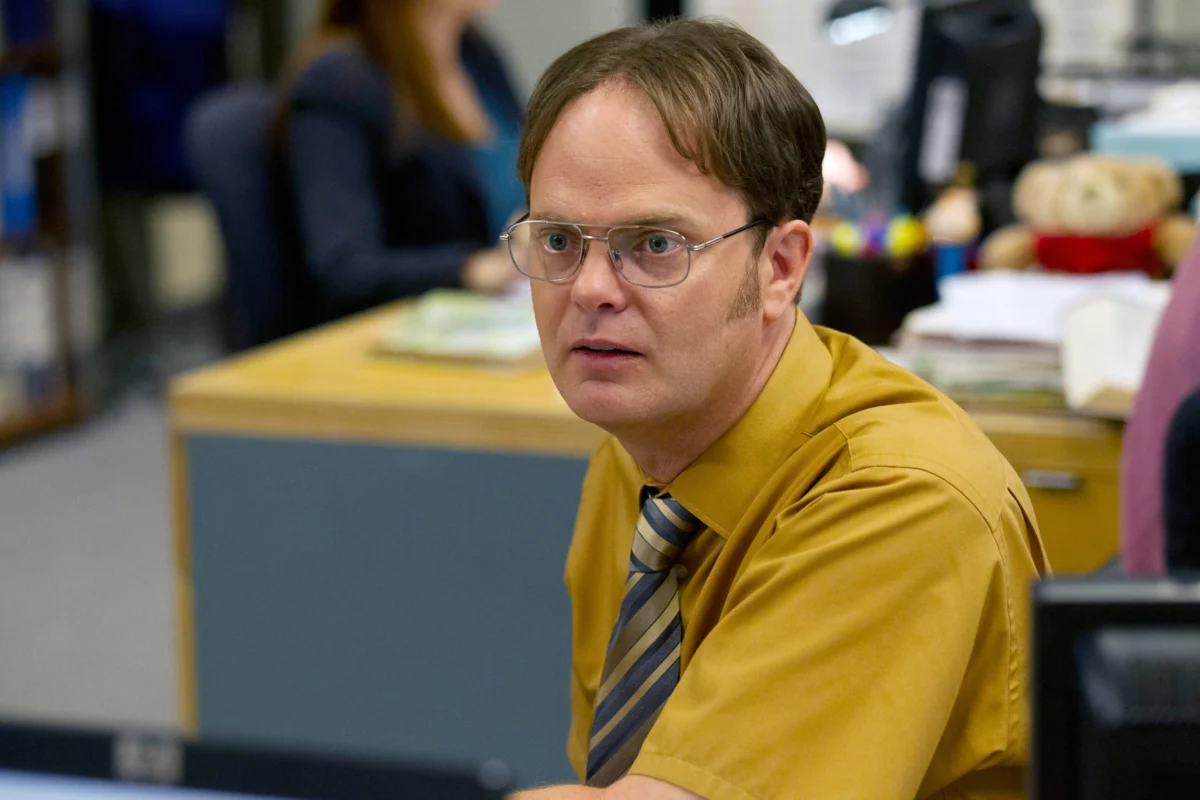
In the landscape of modern television, few shows occupy as hallowed a space as NBC’s The Office. For nine seasons and 201 episodes, the mockumentary chronicled the mundane, often chaotic lives of the employees at Dunder Mifflin Paper Company. Yet, as the cultural pendulum swings toward heightened sensitivity and evolving standards of representation, one of the show’s most iconic figures is questioning whether the hit series could even exist in today’s media environment.
Rainn Wilson, who portrayed the beet-farming, power-hungry, and socially inept Dwight Schrute, recently offered a candid assessment of the show’s legacy. Speaking with Fox News Digital, Wilson suggested that the very DNA of The Office—which relied heavily on politically incorrect humor and the "clueless" nature of its central characters—would be incompatible with the current television landscape.
The Evolution of Comedy: Why the Dunder Mifflin Spirit Faces Hurdles
The premise of The Office was built upon a foundation of discomfort. It relied on the audience’s ability to recognize the inherent ignorance of its characters, particularly Michael Scott (Steve Carell), Dwight Schrute, and Andy Bernard (Ed Helms). By positioning these characters as figures of ridicule rather than heroes, the show managed to satirize workplace prejudice and bigotry.
However, Wilson argues that the "cultural climate" has shifted significantly since the show’s finale in 2013. "I do feel like you couldn’t make The Office today," Wilson told Fox News Digital. "I think that would be too hard to be as politically incorrect as the show was. And I do kind of miss that."
Wilson’s concern centers on the nuance of character development. In the show’s original run, characters like Michael and Dwight were frequently depicted as sexist, racist, or generally insensitive. The humor was derived from the irony that these characters were the ones in positions of authority, despite their complete lack of self-awareness. According to Wilson, that specific type of satirical characterization—where the viewer is meant to "laugh at" the character’s ignorance—might be misinterpreted or rejected by contemporary audiences and networks alike.
A Chronology of Controversy and Candor
The conversation surrounding The Office and its problematic elements is not a new development; it is an ongoing dialogue that has evolved alongside the show’s enduring popularity on streaming platforms.
- 2005–2013: The Office runs on NBC, consistently pushing the boundaries of what is acceptable in a network sitcom.
- 2013–2020: The show gains a second life on streaming services like Netflix, finding a massive new generation of fans who analyze its legacy through a modern lens.
- September 2025: Rainn Wilson appears on the "The Last Laugh" podcast, where he labels the show "jaw-droppingly" offensive, specifically citing the infamous "Benihana Christmas" episode.
- September 2025: The spiritual successor to the franchise, The Paper, premieres on Peacock, proving that while the original show might be "untouchable," the mockumentary format remains a viable commercial product.
- Early 2026: Wilson doubles down on his assertions, noting that the "cluelessness" of characters like Michael and Dwight would likely face insurmountable hurdles in today’s production environment.
During his September 2025 appearance on "The Last Laugh," Wilson specifically pointed to the Season 3 episode "A Benihana Christmas." In this episode, Michael and Andy mark one of the Asian women at a restaurant with a permanent marker to tell her apart from her colleague. Wilson acknowledged the horror of the scene, stating, "It’s a tricky conversation, you know? They’re clueless and in their cluelessness they’re racist and insensitive, and they’re always saying the wrong thing."
Examining the "Cluelessness" Defense
The core of the debate lies in the intent behind the writing. Critics of the show’s legacy argue that even if the intent was to mock racism, the perpetuation of these tropes—even in a satirical context—can be harmful. Conversely, supporters of the show argue that The Office was a mirror held up to the American workplace, exposing the reality that many people in power are, in fact, "clueless, insensitive, racist, [or] sexist."
Wilson aligns with the latter perspective. He suggests that the show was not celebrating these traits, but rather exposing them as a reflection of broader American society. "It’s a show based around clueless, insensitive, racist, sexist people that kind of mirrors the United States in a lot of ways," Wilson explained.
The struggle today, however, is that networks and streamers are increasingly risk-averse. The "cancel culture" phenomenon, combined with a heightened focus on corporate responsibility and social equity, has led to a climate where shows that rely on "offensive" humor—even for the sake of irony—are often deemed too high-risk for development.
The Legacy Continues: Enter ‘The Paper’
Despite Wilson’s insistence that The Office could not be made today, the brand remains an juggernaut in the industry. This is best illustrated by the launch of The Paper, the sequel series that premiered on Peacock in late 2025.
Set in the offices of a struggling Midwestern newspaper, the show stars an ensemble cast including Domhnall Gleeson, Sabrina Impacciatore, and original series alum Oscar Nuñez. While The Paper is designed to capture the same documentary-style energy that defined its predecessor, it operates under the watchful eye of 2026 standards. The show has already been renewed for a second season, signaling that while the style of The Office is still highly sought after, the content must be carefully calibrated to fit a new era of viewership.
Implications for the Future of Comedy
The implications of Wilson’s comments extend far beyond Dunder Mifflin. We are witnessing a transition in the television industry where the "unlikable" protagonist—a staple of the early 2000s—is being re-evaluated. Shows like It’s Always Sunny in Philadelphia or Curb Your Enthusiasm continue to thrive, but they are increasingly outliers.
As writers and producers look to the future, they face a fundamental question: How do you create a comedy that addresses the flaws of humanity without crossing the line into gratuitous offense?
If The Office were pitched today, it is highly probable that it would be forced to undergo a "sanitization" process. This would likely involve stripping away the sharpest edges of Michael Scott’s personality and tempering the blunt bigotry of characters like Dwight and Andy. The danger, as Wilson implies, is that in removing these "offensive" elements, the show might lose the very thing that made it a masterpiece of cringe-comedy: its unflinching commitment to depicting the messy, often problematic reality of human interaction.
Ultimately, Rainn Wilson’s assessment serves as a reminder that television is a historical document. The Office is a time capsule of the mid-2000s—a period of time where the lines of humor were drawn in a very different place. Whether or not we "miss" that era is a subjective matter, but there is no denying that the comedy landscape has been permanently altered. As we look forward to the second season of The Paper and beyond, we are reminded that while the format of the mockumentary endures, the culture it reflects is constantly, and sometimes radically, changing.
 Ammar Sabilarrohman
  Lina Irawan
  Nana
Nana 