
 By Evan Lee Salim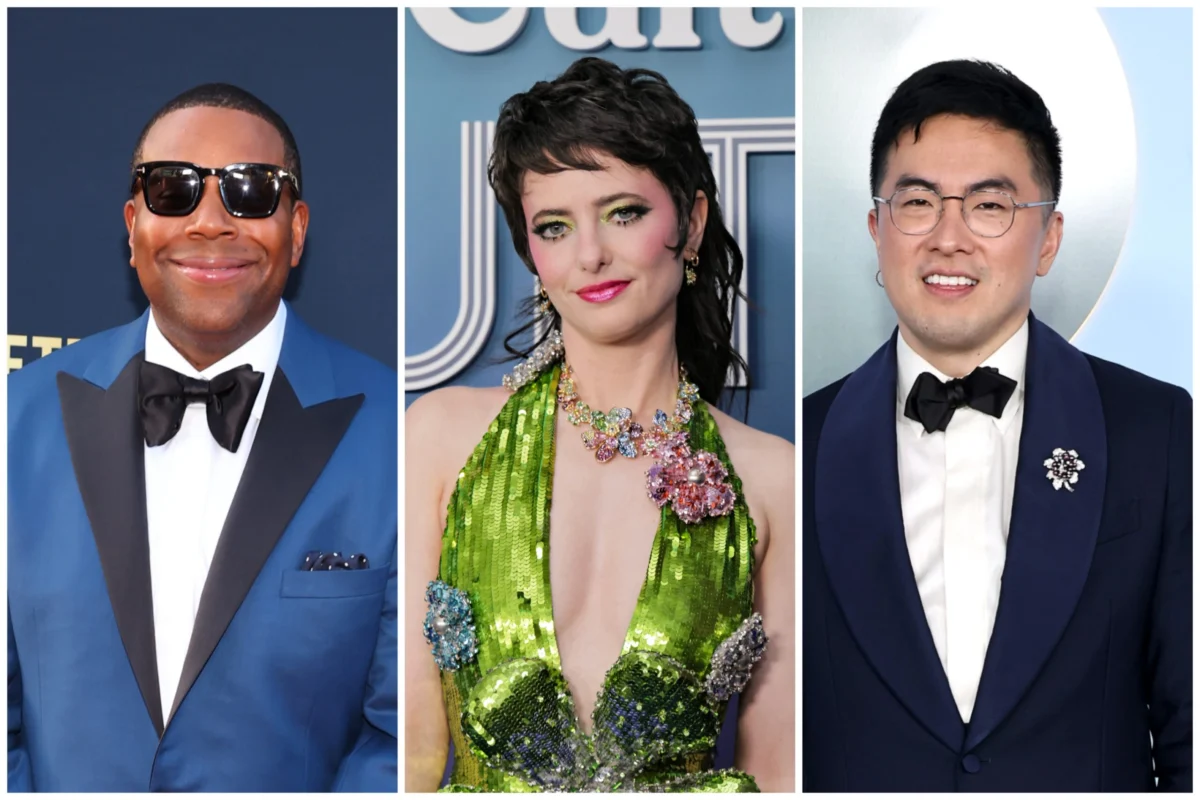
For the better part of five decades, the hallowed halls of 30 Rockefeller Plaza have served as a crucible for American comedy. It is a place where careers are forged in the fires of live television, where the pressure of the weekly deadline creates a unique, high-stakes camaraderie. Recently, three of the show’s most defining voices—Bowen Yang, Kenan Thompson, and Sarah Sherman—gathered at the Television Academy’s Emmy FYC event to pull back the curtain on the peculiar, often surreal experience of being part of the Saturday Night Live (SNL) machine.
The conversation, which spanned from the existential dread of modern satire to the "empty nest" syndrome of departing cast members, offered a rare, intimate look at the institution that continues to shape the cultural zeitgeist.
The Dream Factory: Bowen Yang’s Post-SNL Reflection
Bowen Yang, who first joined SNL as a writer in 2018 before ascending to the cast, departed the show this past December. For Yang, the exit was not an immediate release, but a gradual realization of the magnitude of his tenure. He described his recent work on the "Las Culturistas Culture Awards"—a project co-created with podcast partner Matt Rogers—as a catalyst for his current introspection.
"When we did the culture awards, it reminded me very much of the dream factory that was SNL, just on a much smaller scale," Yang reflected. The process of producing a large-scale live event outside the protective infrastructure of NBC forced him to evaluate his own creative DNA. "It really broke open all these thoughts that I’ve had about SNL. I kind of spun out and started to think about how comedy overall is just in this interesting spot where I feel like it might be a little undervalued. People have a psychological need for it to cope with the reality of things."
Watching the show as a fan for the first time in years, Yang noted that the experience is "surreal," yet it has solidified his appreciation for the show’s unique function as a comfort object. It is, he argues, a essential component of the national psyche.
Chronology of a Comedy Institution
The dynamic between the cast members is one of mentorship and evolution. Kenan Thompson, the longest-running cast member in the show’s history, serves as the show’s anchor. His presence provides a sense of continuity that spans generations of writers and performers.
- The Early Years (2003–2010): Thompson joined the cast, establishing himself as a versatile player capable of handling both the "straight man" roles and the high-energy, eccentric characters that define SNL’s legacy.
- The Middle Era (2010–2018): As the show navigated shifting political landscapes and digital-first comedy, Thompson became the reliable heartbeat of the show.
- The Modern Shift (2018–Present): The arrival of talents like Bowen Yang and Sarah Sherman signaled a new era of SNL, one that embraces "hard comedy"—a term coined by Lorne Michaels to describe the rigorous, high-joke-per-minute pace required to satisfy a live audience.
During the conversation, Thompson admitted that his perspective on the show has shifted dramatically. He confessed that he no longer feels the "stress" that once plagued him, particularly regarding the pre-show warm-ups—a ritual he performed for years, involving song and dance to energize the studio audience. "I’m not stressed about the show at all anymore," he said, noting that he now views the Saturday night broadcast as "cake."
The "Empty Nester" Dynamic: Supporting the Next Generation
A central theme of the discussion was the emotional toll of watching colleagues depart. Thompson likened the experience to raising a child who eventually leaves for college. "There’s a sadness to it," Thompson remarked. "It’s like, you start to become somewhat of an empty nester in that specific person’s lane. They come back around, but it’s just a different dynamic."
For Sarah Sherman, who has been with the show for five years, the transition from "newbie" to "tenured player" has been a process of finding her footing amidst giants. She credited both Thompson and Yang with modeling a standard of professional excellence that goes beyond simply performing.
"Kenan is never sweating," Sherman noted. "He’s so zen that it gives you perspective." She recalled an incident where, after simply mentioning it was cold in her office, Thompson ensured she had a space heater the very next day. This, for the younger cast members, is the true legacy of SNL: not just the sketches, but the community-building that happens in the hallways.
Supporting Data: The Art of the Sketch
The panelists discussed the technical difficulty of translating an idea into a successful SNL sketch. Thompson highlighted the "game" of a sketch—the underlying logic that makes it funny. He cited a sketch called "The Devin Avery Show," which has been periodically pulled and workshopped for over a decade, as an example of how difficult it is to hit that "bullseye."
Yang and Sherman also discussed the "skill transfer" inherent in the show. Yang noted that his time at SNL provided him with the logistical and creative toolkit necessary to succeed in independent projects. Sherman, meanwhile, reflected on how the senior members of the cast—specifically Yang—helped broaden her range. "I came in and I look crazy and I act crazy, so people were like, ‘Oh, she’ll do whatever,’" she said. "But Bowen… would always write me as the straight girl in the sketch… no one else was doing that."
Official Responses and Industry Implications
When asked about the future of comedy and the challenge of balancing topical satire with escapism, the group offered a nuanced view. Thompson emphasized that his primary goal is to provide "another version of escapism." He acknowledged that while the writers must be aware of the "dark stuff" going on in the world, the show serves as a necessary relief valve for the audience.
"I’m more trying to just put a ball cap on and do, like, a silly security guard," Thompson said. "That’s where it’s fun for me."
Sherman, however, admitted that it is impossible to completely divorce the show from current events. "You have to come up with three sketches a week, and it’s like, the only thing I’m thinking about is [current events]. And then I write a crazy Weekend Update piece… and sometimes it bombs, and you’re like, ‘riiight.’"
The implication for the future of the industry is clear: the SNL model is moving toward a more individualized, multi-hyphenate approach. Cast members are increasingly expected to balance the demands of the show with personal branding, stand-up specials, and film projects, as evidenced by Yang’s work on Wicked and Thompson’s sitcom, Kenan.
Conclusion: A Legacy of "Silly, Silly"
As the conversation drew to a close, the mood shifted from professional to deeply affectionate. The camaraderie was palpable—the "What Would Kenan Do?" (WWKD) mantra that Sherman and Yang referenced is not just a joke, but a genuine philosophy of how to conduct oneself in a high-pressure environment.
When asked if he would ever leave, Thompson’s answer was telling: "I could do it for forever." In a media landscape that is increasingly fragmented and fraught, the enduring, collective effort to be "silly" on a Saturday night remains one of television’s most vital services. For Yang, Sherman, and Thompson, the show is not just a workplace; it is a shared language, a community, and a testament to the idea that, no matter how heavy the world becomes, there is always room for a bit of absurdity.
As the trio joked about their time together, it became evident that the true heart of SNL isn’t found in the ratings or the viral clips, but in the quiet moments in the hallway, the supportive notes left in offices, and the shared realization that they are part of something that is, in every sense, historic.
 Lina Irawan
  Asep Darmawan