
 By Layla Zulfa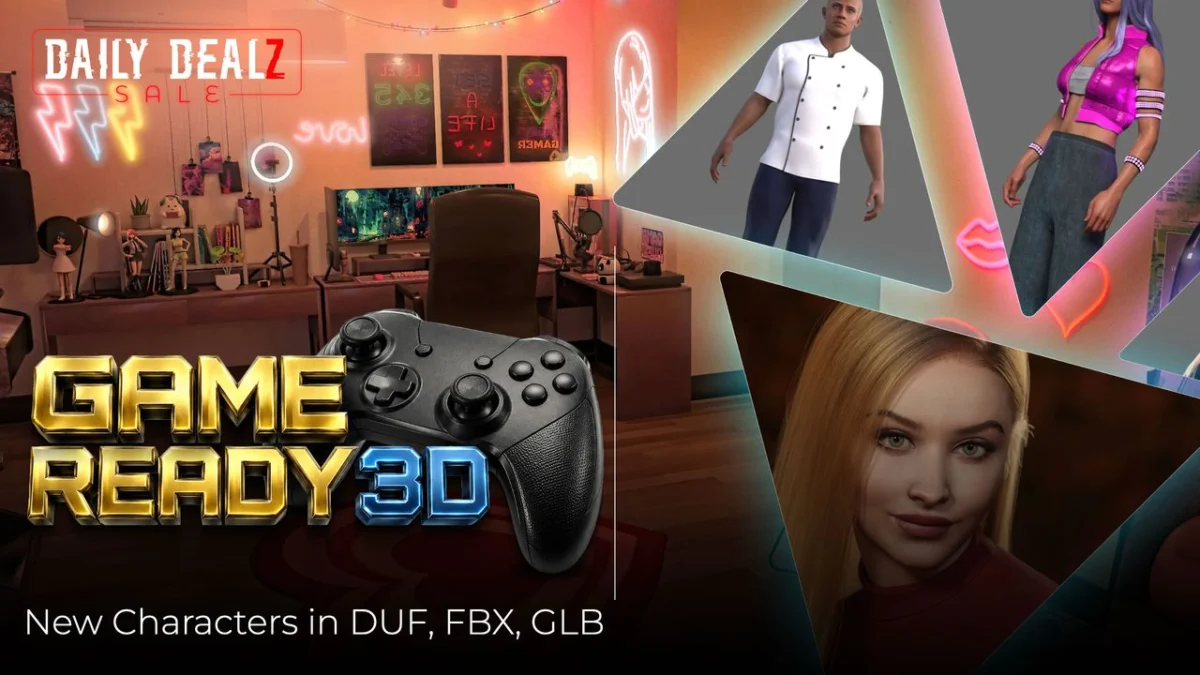
For years, the professional 3D character pipeline has been plagued by a persistent, unglamorous, and time-consuming bottleneck: the "import-and-rebuild" tax. Artists who source high-fidelity models from platforms like Daz 3D, ZBrush, or scan-data libraries often find themselves spending hours—sometimes entire days—untangling fragmented materials, optimizing messy mesh hierarchies, and manually reassigning textures before a single character is ready for a production environment.
In a significant move to address these technical hurdles, Daz 3D has officially launched a new line of game-ready character assets. Designed with the specific demands of modern game development, virtual production, and interactive media in mind, this collection represents a strategic shift toward plug-and-play interoperability.
The Problem: The "Import Tax" in Modern Pipelines
The challenge faced by developers is twofold: fidelity versus performance. High-end characters are, by nature, complex. They contain intricate geometry, layered clothing, and complex material definitions that are optimized for high-end rendering in tools like Iray or Octane. However, when those same assets are ported into real-time engines like Unreal Engine 5 or Unity, they rarely translate cleanly.
Common pain points include:
- Material Fragmentation: Assets arriving with dozens of disparate material slots that drain draw calls and complicate shaders.
- Hierarchical Bloat: Overly complex scene structures that require manual cleaning to fit into engine-specific blueprints.
- Texture Mismanagement: Unlabeled or poorly categorized texture maps that lead to hours of hunting and manual re-linking.
For indie developers operating with limited resources, or concept artists looking for a quick reference, this "tedious work" isn’t just an annoyance—it is a direct drain on project velocity.
A Chronology of the Shift Toward Interoperability
Daz 3D’s evolution has been defined by a move toward becoming an industry-standard hub for character creation.
- Initial Phase: Daz established itself as a library for static imagery, focusing on high-fidelity, photorealistic posing and rendering.
- The Bridge Era: The company introduced bridges for major DCC (Digital Content Creation) tools like Maya, Blender, and Unreal Engine, attempting to automate the transfer process. While effective, these plugins were often seen as "middleware" that could still result in errors or configuration mismatches.
- The Current Pivot: The release of the "game-ready" line marks a fundamental change in philosophy. Rather than relying solely on bridges to fix data after export, Daz has optimized the source assets themselves. By changing the file structure and organizational standards at the point of origin, they are aiming to remove the need for corrective plugins entirely.
Engineering for Efficiency: The Technical Details
The new asset line is built to export in universal formats, specifically FBX and GLB. This choice reflects a commitment to engine-agnostic workflows, allowing for direct drag-and-drop integration into the industry’s "big three": Unreal Engine, Unity, and Blender.
Optimized Texture and Material Workflows
One of the most immediate benefits is the consolidation of textures. Instead of the typical "scattershot" file organization, Daz has implemented a logical, area-based grouping. Textures are now grouped by specific zones: head, body, hair, outfit, and eyes. This simple, hierarchical naming convention reduces the cognitive load on artists who are trying to locate specific maps within a complex shader graph.
Furthermore, outfits and accessories have been consolidated into unified materials. By reducing the number of draw calls per character, Daz is essentially handing developers a performance-optimized asset that doesn’t need a heavy "optimization pass" before hitting a target frame rate.
MetaHuman Compatibility and UV Layouts
Perhaps the most intriguing technical detail is the adoption of MetaHuman-compatible UV layouts. By aligning their UV standards with Epic Games’ widely adopted ecosystem, Daz 3D is signaling a clear intent to become a primary resource for Unreal Engine developers. This level of standardization is rare for third-party marketplaces and suggests that Daz is actively monitoring the trends in high-end virtual production.
Official Perspectives: Bridging the Gap
James Thornton, CEO of Daz 3D, frames the release not merely as a product update, but as a direct response to the increasing fragmentation of modern creative pipelines.
"Production pipelines have become much more connected over the past several years," Thornton notes. "Teams are working across more tools, more engines, and more complex production environments. These assets were designed to simplify setup and make high-quality characters easier to integrate into complex workflows."
Thornton’s perspective highlights a growing trend in the software industry: the move toward "frictionless creativity." By reducing the technical overhead, Daz hopes to keep artists focused on the "experience" of building, rather than the "mechanics" of data management.
"The easier it is for creators and developers to move assets between tools and workflows," he adds, "the easier it becomes to stay focused on building experiences instead of spending time rebuilding or reorganizing assets."
The Implications for Industry Professionals
For Indie Developers
For smaller studios, the implications are profound. Budget and headcount are the two greatest constraints in indie game development. By reducing the time spent on technical art—the "plumbing" of character integration—indie teams can reallocate those hours toward gameplay design, environmental storytelling, or polish.
For Concept Artists and Illustrators
Concept artists who use 3D software as a "digital maquette" to generate reference poses for illustrations will find the new, cleaner organizational structure incredibly liberating. The ability to drop a character into a scene and immediately begin lighting and posing, without having to fix broken textures, significantly speeds up the pre-production phase.
Potential Risks: The Flexibility Trade-off
While the consolidation of materials and accessories is a net positive for performance, there is a subtle risk to address: creative flexibility. In the past, Daz’s strength lay in its modularity—the ability to mix and match individual outfit components. By consolidating these into unified materials to save on performance, there is a question of whether users will lose the ability to tweak individual elements. If the "game-ready" label results in a more rigid, "all-in-one" asset, users may have to choose between a faster workflow and a highly customizable character.
Future Outlook: A Growing Ecosystem
This release is only the opening act. Daz 3D has confirmed that this collection is the foundation of a broader, long-term initiative to build out a comprehensive game-ready library.
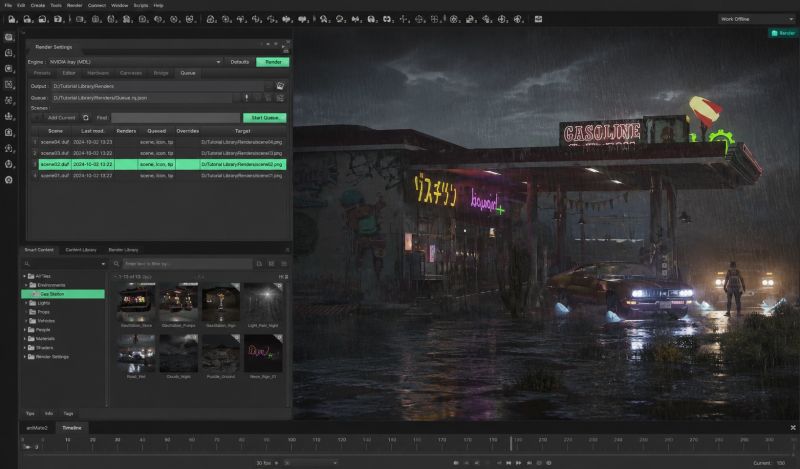
As game development continues to converge with film production—a trend accelerated by virtual production technologies—the demand for high-fidelity assets that can be swapped between engines will only increase. Daz is positioning itself to be at the center of this movement. By focusing on standardization and engine-agnostic output, they are betting that the future of 3D art is not about creating the most complex file, but about creating the most accessible one.
For professionals currently struggling with the "import tax," the path forward seems clearer. By adopting these new, cleaner standards, Daz 3D is inviting the industry to stop "fixing" their characters and start "using" them.
For those looking to integrate these assets into their own pipelines, the current range is already available on the Daz 3D website. As the library expands, it will be worth monitoring how these assets hold up in high-stress, production-level environments, but for now, the industry has a promising new tool to help reclaim those lost hours of technical cleanup.
For those looking to equip their studios with the hardware necessary to handle these high-fidelity assets, we recommend reviewing the latest benchmarks for the best laptops for game development, as the performance of your machine will remain the ultimate arbiter of how quickly these assets integrate into your specific project.
 Lina Hope
  Reynand Wu
  Pevita Pearce