
 By Raul Delapena Setiawan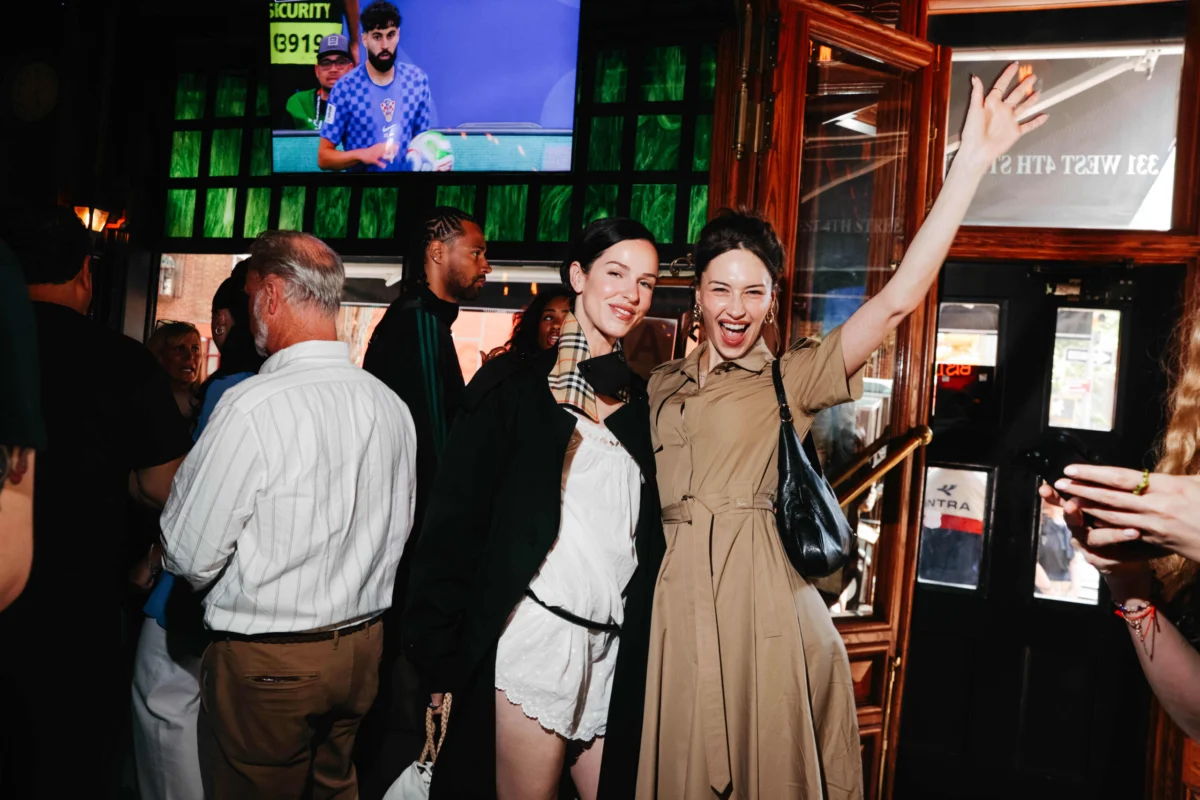
The intersection of high fashion and global sport has long been a fertile ground for brand storytelling, but few events have captured the juxtaposition of British heritage and downtown New York grit quite like Burberry’s recent “A Good Sport” event. As the England and Croatia World Cup match commanded the attention of the globe, the iconic West Village haunt, Corner Bistro, was transformed into a bastion of Burberry-branded camaraderie.
For one afternoon, the air in the West Village was thick with the scent of classic beef burgers, the sharp tang of dirty martinis, and the unmistakable tension of a high-stakes football match. It was a study in contrasts: a historic New York institution, renowned for its no-frills culinary offerings, served as the backdrop for a meticulously curated fashion industry gathering, all tied together by the common language of sport.
The Scene: Where Culinary Tradition Meets High Fashion
The atmosphere inside the venue was electric, defined by a distinctively New York rhythm that managed to accommodate both the fervor of the football pitch and the cool detachment of the fashion set. Guests were greeted by the sight of Corner Bistro’s signature mini cheeseburgers—a menu staple that proved to be as much of a draw as the presence of Creative Director Daniel Lee himself.
“Oh my god, the burgers,” a guest remarked, her excitement palpable as a tray navigated the crowded room. This culinary allure set the tone for the afternoon: unpretentious, authentic, and undeniably indulgent. The space, usually cramped and bustling with locals, had been cleared of its standard furniture to facilitate a more fluid mingling of models, actors, and industry heavyweights.
Notable attendees included Myha’la, Adam DiMarco, Richie Shazam, Delaney Rowe, Olivia Ponton, Indira Scott, Paige Powell, Elsie Hewitt, Ella Emhoff, and Tony Ozkan, among others. The guest list was a testament to the brand’s current strategy under Daniel Lee—a move toward a younger, more dynamic demographic that appreciates the intersection of cultural relevance and luxury. Lee, sporting a classic England jacket, opted for a discreet entrance through the side, underscoring a desire to remain an observer of the event’s natural energy rather than its primary spectacle.
A Chronological Account of the Afternoon
The event unfolded with the precise pacing of a match day, though layered with the distinct flair of a Burberry takeover.
3:00 PM – The Kick-Off: As the match began, the televisions mounted throughout the restaurant became the focal point. The sound of the game—the roar of the crowd, the whistle of the referee—competed with the rhythmic, pulsating beats of a new Charli XCX track, creating a sensory environment that felt quintessentially modern.
3:30 PM – The Refreshment Strategy: Servers navigated the throng, circulating with silver trays of Pimm’s Cups—a nod to the traditional British match-day drink—and dirty martinis, a nod to the New York setting. Outside, the scene was equally curated. A Burberry-check-painted ice cream truck stood parked at the curb, serving as a whimsical landmark that drew guests during commercial breaks, bridging the gap between the stadium-focused intensity inside and the casual street style outside.
4:00 PM – The Climax: The tension peaked as Harry Kane, England’s talismanic striker, found the back of the net. The reaction was visceral. An English fan, momentarily shedding the reserved cool of the fashion crowd, shouted, “Come on Kane!” with genuine, unbridled passion.
4:30 PM – The Aftermath: As the match concluded with an England victory of 4-2, the room erupted in a brief, collective cheer. However, the transition back to the "New York state of mind" was nearly instantaneous. The discourse shifted from offside traps and penalty boxes back to the art of social networking, gossip, and the steady consumption of martinis, despite the early hour.
Supporting Data and Cultural Context
The success of "A Good Sport" lies in the brand’s ability to leverage the universal appeal of football. In the fashion industry, events are often criticized for their sterile, overly curated environments. By choosing the Corner Bistro, Burberry tapped into the authenticity of a neighborhood fixture, thereby grounding the luxury brand in a narrative of "everyday life."
The event also served as a strategic showcase for Daniel Lee’s vision for the house. Since taking the helm at Burberry, Lee has prioritized a return to Britishness—not the stuffy, traditional version, but a modern, rugged, and sporty iteration. The England jacket he wore was not merely a garment; it was a signal of his commitment to the brand’s DNA.
Furthermore, the guest list represents a significant shift in the influencer landscape. By inviting figures like Ella Emhoff and Richie Shazam, Burberry is positioning itself as a brand that resides at the intersection of political visibility, artistic expression, and social media influence.
Official Responses and Brand Implications
While Burberry representatives maintained a low profile during the event, the implications of the activation were clear. In the current luxury climate, consumer engagement is no longer about static retail displays or traditional runway shows. It is about creating "third spaces"—environments where luxury consumers can feel a part of a larger, global cultural moment.
By aligning with the World Cup, Burberry effectively positioned itself as a participant in global discourse rather than a spectator. The integration of the ice cream truck, the specific menu choices, and the deliberate choice of venue all point to a brand that is listening to the cultural zeitgeist.
Industry analysts suggest that this strategy is essential for heritage brands looking to maintain relevance in a market dominated by digital-first competitors. The ability to pivot from a high-fashion show to a soccer-viewing party demonstrates agility and a willingness to embrace the "low-brow" in service of a "high-impact" brand experience.
The Broader Implications: Fashion as a Cultural Conduit
The "A Good Sport" event serves as a microcosm of where the luxury industry is heading. As traditional barriers between "high" and "low" culture continue to dissolve, brands that can successfully bridge these worlds will ultimately capture the loyalty of a new generation of consumers.
The interaction between Adam DiMarco and a fellow guest—"Do you like soccer? Er, football?"—perfectly captured the spirit of the event. It was a moment of genuine human connection amidst the branding and the luxury, a reminder that at the heart of even the most curated marketing activation, there is a desire for shared experience.
Burberry’s decision to celebrate the World Cup in such a localized, intimate setting was a masterclass in brand storytelling. It reinforced the idea that luxury is not just about the product itself—the trench coat, the check print, the leather goods—but about the lifestyle and the moments that the brand chooses to inhabit.
As the sun began to dip over the West Village, and the crowds eventually dispersed, the lasting impression was one of a brand that had successfully managed to "score" in the court of public opinion. By betting on the passion of sports and the charm of a neighborhood institution, Burberry ensured that for one Wednesday afternoon, the fashion world was fully, and authentically, a good sport.
 Nana Muazin
  Nana
Nana  Ali Ikhwan