
 By Asro
In the hyper-competitive digital landscape, the mantra "what worked yesterday won’t always work tomorrow" has transitioned from a cautionary observation to a fundamental law of business survival. As consumer attention spans fragment and inboxes become increasingly crowded, the margin for error has vanished. For founders and digital marketers, the difference between stagnation and exponential growth rarely comes from a massive pivot or a rebranding effort; it is found in the granular, iterative process of A/B testing.
A/B testing is no longer a "nice-to-have" luxury for data-obsessed corporations. It is a non-negotiable operational standard for any entrepreneur looking to scale revenue without increasing their customer acquisition costs. By systematically testing subject lines, calls-to-action (CTAs), delivery cadences, and sender identities, smart businesses are turning their existing email lists into high-performance revenue engines.
Main Facts: The Anatomy of Optimization
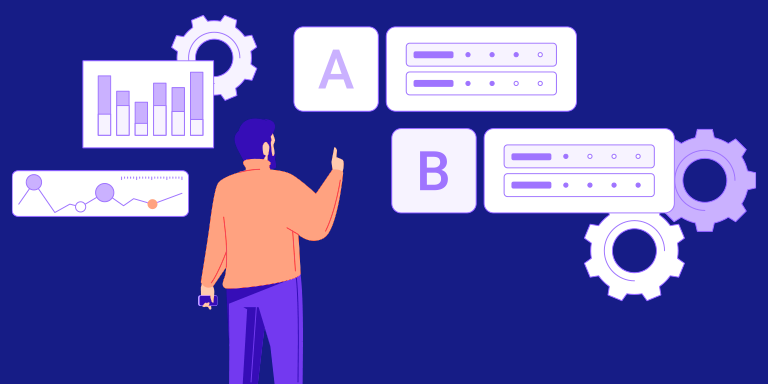
At its core, A/B testing—or split testing—is the practice of comparing two versions of a digital asset to see which performs better. While many founders obsess over top-of-funnel growth (acquiring new leads), the most sustainable path to profitability lies in conversion rate optimization (CRO).
The logic is simple: if you have an email list of 10,000 subscribers, a 5% increase in open rates coupled with a 10% bump in click-through rates doesn’t just improve vanity metrics—it compounds. When these improvements are applied across a full automated funnel (such as abandoned cart sequences or welcome series), the cumulative impact on the bottom line can be staggering. Companies that treat every email send as a data-collection opportunity, rather than just a broadcast, inevitably outperform those that rely on "gut feelings" or stale industry benchmarks.
The Chronology of Optimization: Moving Beyond "Set and Forget"
The evolution of email marketing has moved through three distinct phases. Initially, it was the era of the "blast"—sending the same message to everyone and hoping for the best. This was followed by the era of basic segmentation, where marketers grouped users by demographics.
Today, we are in the era of "Continuous Optimization." This phase is characterized by a chronological, scientific approach:
- The Hypothesis Phase: Before a single pixel is moved, the marketer identifies a specific bottleneck. For example, "I believe the current subject line is too generic, and a curiosity-driven approach will improve open rates."
- The Execution Phase: Using tools like Omnisend, the marketer deploys two versions of the campaign. By isolating one variable—such as the CTA button color—they ensure that the resulting data is actionable.
- The Analysis Phase: Once statistical significance is reached, the "winner" is identified.
- The Institutionalization Phase: This is the most overlooked step. The winning insight is documented and codified into the brand’s "Playbook of Best Practices," ensuring that every future campaign benefits from the knowledge gained in previous tests.
Supporting Data: The Mathematical Case for Testing
The efficacy of A/B testing is not anecdotal; it is backed by significant industry data. According to recent analysis by Omnisend, the landscape of email engagement is shifting upward for those who prioritize optimization.
Between 2022 and 2023, average open rates for merchants rose from 22.9% to 25.1%. Click-through rates followed suit, climbing from 1.2% to 1.5%. These gains are not the result of better technology alone, but rather the increased adoption of testing and granular segmentation.
Even more compelling is the performance of automated flows compared to manual campaigns. Automated emails—such as welcome series and abandoned cart reminders—boast 52% higher open rates, 332% higher click-through rates, and an extraordinary 2,361% improvement in conversion rates. When these automated flows are subjected to rigorous A/B testing, the ROI is magnified. For instance, Omnisend users who systematically tested their abandoned cart flows reported average monthly sales gains of approximately $5,000. These are not massive, expensive structural changes; they are the result of small, consistent optimizations in timing, tone, and offer structure.
Furthermore, the "subject line dilemma" remains the most critical barrier to entry. Statistics show that 43% of consumers decide to open an email based solely on the subject line, while 69% of users will flag an email as junk based on the subject alone. Personalization—which can be tested for impact—has been shown to boost open rates by as much as 26%.
Strategic Elements: What You Should Be Testing
To avoid "analysis paralysis," founders should focus on high-leverage areas. The goal is to understand the audience’s psychological triggers.
1. Subject Lines and Preheaders
The subject line is the gatekeeper. Test for length (short vs. long), tone (urgent vs. curiosity-driven vs. benefit-oriented), and the use of emojis or personalization.
2. Call-to-Action (CTA)
CTAs are where intent becomes revenue. Test the copy ("Buy Now" vs. "Claim My Discount"), the placement within the email, and the visual design of the button.
3. Send Timing and Frequency
Data often reveals that your audience may be more receptive on a Tuesday morning versus a Thursday afternoon. Frequency testing—how often you touch base—is essential to prevent "inbox fatigue" and unsubscribes.
4. Sender Identity
Does your audience respond better to a brand name, or the name of a specific person within the company? Testing the "From" field can dramatically alter the perception of the email from "corporate noise" to "personal correspondence."
5. Segmentation
Blanket emails are the enemy of conversion. Test how specific segments (e.g., VIP customers vs. one-time buyers) respond to different value propositions.
Official Perspectives: The Mindset of Success
Leading experts in the e-commerce space emphasize that testing is a system, not a tactic. "The most successful brands don’t treat testing as a ‘when-we-have-time’ activity," says a spokesperson for Omnisend. "They view it as a foundational process. If you aren’t testing, you are essentially flying blind. You might be making money, but you have no idea why, and more importantly, you have no idea how to replicate that success consistently."
The consensus is clear: testing builds institutional intelligence. Learning that a specific type of language works for your audience is a permanent asset that can be applied to landing pages, social media ads, and even SMS marketing.
Implications: Why You Must Start Now
The implications of ignoring A/B testing are severe. In an environment where customer acquisition costs are rising, wasting the traffic you already have is a critical business error.
By failing to test, you are effectively leaving revenue on the table. Every untracked email send is a missed opportunity to learn what your customers value. Conversely, by adopting a culture of experimentation, you build a resilient business that can pivot as consumer behavior changes.
How to Get Started Without Burning Time
- Start with a Hypothesis: Always articulate what you hope to learn. Avoid "let’s try red instead of blue" and aim for "we believe changing the CTA to a benefit-focused phrase will increase CTR by 10%."
- Isolate Variables: Never test more than one major change at a time. If you change the subject line and the CTA simultaneously, you will never know which factor drove the performance shift.
- Choose the Right Sample Size: For statistically significant results, aim for at least 1,000 recipients per test. If your list is smaller, use a 20/20/60 split: test on 40% of your list, and send the winner to the remaining 60%.
- Document Everything: Create a "Testing Log." A year from now, this document will be the most valuable piece of intellectual property in your marketing department.
Conclusion: The Path Forward
The path to scaling a business is rarely found in grand gestures. It is found in the quiet, methodical process of refinement. A/B testing allows you to listen to your customers through their actions rather than their words.
For those looking to streamline this process, platforms like Omnisend provide the infrastructure necessary to move quickly. By automating flows and simplifying the testing workflow, entrepreneurs can spend less time juggling tools and more time analyzing the insights that actually move the needle.
Foundr readers can claim an exclusive 50% discount on their first three months with code FOUNDR50. Start testing smarter, and turn your existing audience into your greatest growth engine.
 Neng Nana
  Basiran
  Azzam Bilal Chamdy