
 By Basiran
The audiophile landscape in 2026 has, by many accounts, been drifting through a period of iterative stagnation. While incremental upgrades have kept the market ticking, true innovation has been a scarce commodity. That silence was shattered this week by Dan Clark Audio (DCA), a company synonymous with the pinnacle of planar magnetic engineering, with the announcement of the Aeon Core. Positioned as an "accessible" gateway into the brand’s high-end ecosystem, the Aeon Core arrives not just as a new product, but as a potential paradigm shift in how we measure and experience personal audio.
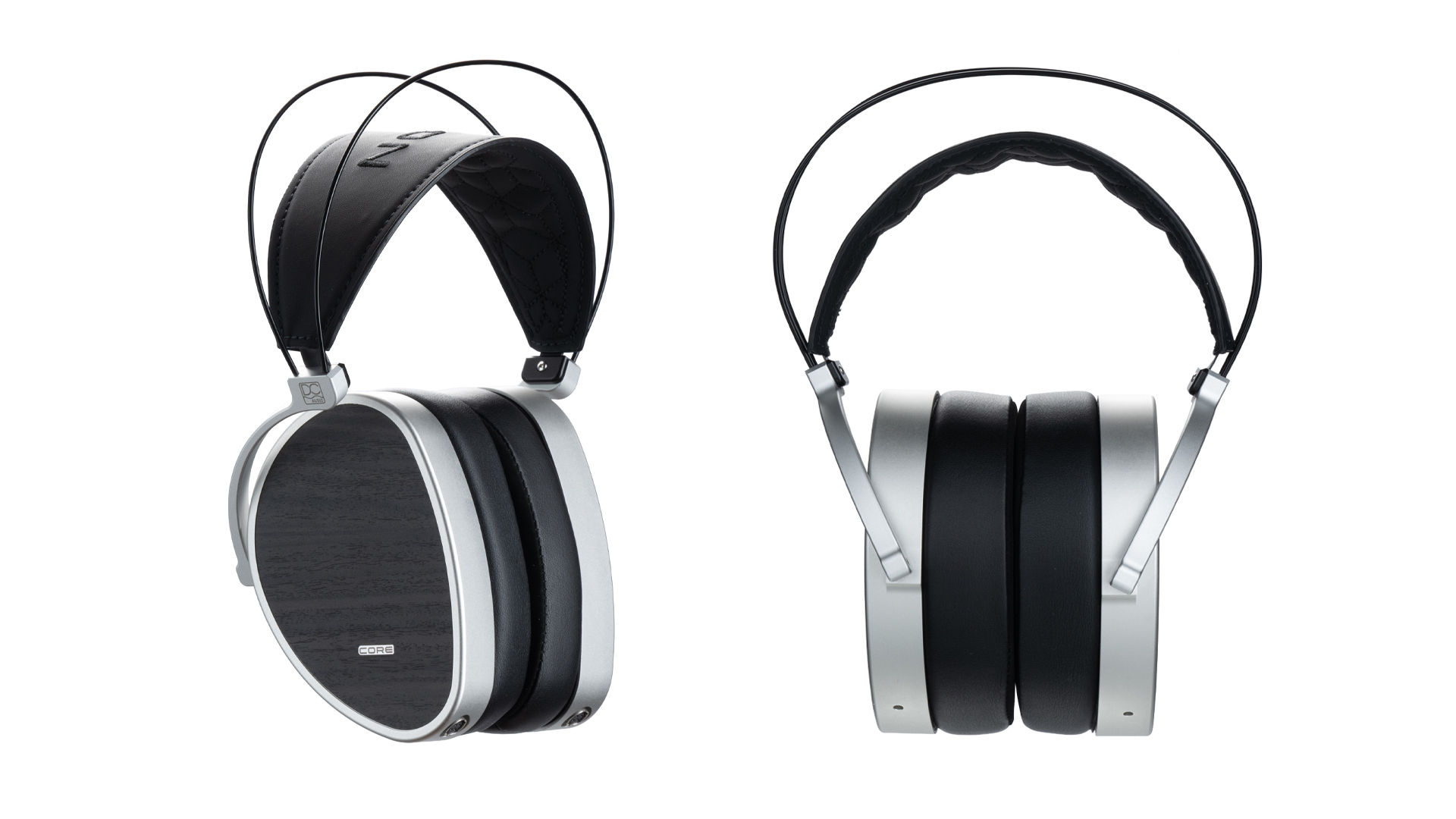
Priced at the sub-$900 threshold, the Aeon Core is an ambitious, closed-back planar magnetic headphone that promises to distill the "open-back" magic of flagship models like the $4,500 Stealth into a more compact, driveable package.
Main Facts: Engineering the New Standard
At the heart of the Aeon Core lies a fundamental pursuit of acoustic efficiency. Planar magnetic drivers have long been the gold standard for low-distortion, high-resolution audio, but they have historically been notorious for their voracious power requirements, often demanding massive, desktop-class amplifiers to truly shine.
DCA has effectively inverted this narrative. The Aeon Core boasts an impressive sensitivity rating of 97dB/mW, requiring only 125mW into 16 ohms. In practical terms, this means the headphones can be driven to their full potential by a modern smartphone dongle, a high-fidelity portable DAP, or a standard laptop output. By utilizing a proprietary new diaphragm material and the company’s signature V-Planar technology, the Aeon Core minimizes harmonic distortion while maximizing dynamic range. The result is a set of cans that provides the isolation of a closed-back design without the "hemmed-in" pressure often associated with the form factor.
A Brief Chronology: The Evolution of the Aeon
To understand the significance of the Aeon Core, one must look at the lineage of the Aeon series. Since its inception in 2017, the Aeon line has served as the "reference entry point" for Dan Clark Audio.

- 2017 – The Original Aeon: Launched with the intent to democratize high-end planar sound, it established the unique, ergonomic teardrop-shaped ear cup that has become a brand staple.
- 2019 – The Aeon 2: Introduced the foldable gimbal design, significantly improving portability and comfort for mobile professionals and frequent travelers.
- 2022-2024 – The Flagship Era: During this period, DCA focused on ultra-premium releases like the Stealth, E3, and the electrostatic Corina, perfecting the "Acoustic Metamaterial Tuning System" (AMTS) to manage resonance and wave diffraction.
- 2026 – The Aeon Core: The culmination of nearly a decade of research. The Core acts as a bridge, synthesizing the lessons learned from the flagship series and applying them to the hardware that built the company’s reputation.
Supporting Data: The Science of the "Harman Correction"
Perhaps the most groundbreaking aspect of the Aeon Core is the collaborative effort behind its sound signature. Dan Clark has confirmed a direct partnership with Dr. Sean Olive—a titan in the field of psychoacoustics—to refine the industry-standard "Harman Curve."
For years, the audio industry has relied on the Harman target as a benchmark for consumer preference. However, the emergence of modern measurement gear, specifically the GRAS (G.R.A.S. Sound & Vibration) high-resolution artificial ear systems, has revealed that older, traditional measurement setups were introducing systematic errors in frequency response data.
The Aeon Core is the first production headphone explicitly tuned using a newly corrected target curve. This scientific recalibration addresses the "bum notes" of the past. Early indications suggest a sound profile that features:
- Linearized Bass: A shift away from the traditional, often bloated, closed-back bass toward a tight, articulate, and surgically precise low end.
- Refined Midrange: A gentle lift in the lower-mid frequencies to provide body to instruments, paired with a smoother upper-midrange transition to prevent sibilance and fatigue.
- Forward Vocal Projection: An emphasis on clarity, positioning the listener closer to the performance without the artificial "shoutiness" common in lesser designs.
Official Perspectives and Design Philosophy
In discussions regarding the launch, the Dan Clark team emphasized that the Aeon Core is not a "lite" version of a premium product, but rather a strategic application of core competencies.
"We wanted to prove that you don’t need a mortgage-sized budget to experience the nuances of a master-grade recording," says a spokesperson for the brand. By utilizing a combination of machined aluminum and dark, sustainable wood finishes, the Aeon Core maintains the premium aesthetic of the E3, while ensuring the build quality remains robust enough for studio environments.

The design philosophy relies on passive isolation. In an era where Active Noise Cancellation (ANC) has dominated the mainstream, DCA is betting on the idea that high-quality, physical acoustic design provides a more natural, honest sound. The Aeon Core aims to deliver a "zero-leakage" experience, making it a viable tool for mastering engineers who need to monitor high-frequency detail in shared spaces without disturbing others.
The Broader Implications: What Does This Mean for the Market?
The release of the Aeon Core sends a clear signal to the rest of the high-end audio industry: the "trickle-down" effect is finally accelerating. By bringing flagship-level acoustic science to the sub-$900 segment, Dan Clark Audio is forcing competitors to justify their pricing models.
1. The Death of the "Budget" Compromise
Historically, moving from a $300 set of headphones to a $900 set involved massive jumps in performance. The Aeon Core threatens to narrow this gap, offering a level of resolution that was previously reserved for the $2,000+ category. If this tuning correction becomes the new industry standard, we may see a swift obsolescence of headphones that rely on outdated frequency response targets.
2. Efficiency as a Premium Feature
By making the Aeon Core "easy to drive," DCA is acknowledging the changing habits of the modern audiophile. The days of requiring a $2,000 stack of dedicated amplifiers are waning. By optimizing the driver efficiency to 97dB/mW, the Aeon Core caters to the "digital nomad"—the professional who needs desktop-quality sound from a laptop or a simple USB-C DAC.
3. A New Baseline for Professional Monitoring
For audio engineers and content creators, the Aeon Core represents a reliable, neutral tool. The promise of an "open" sound in a closed-back chassis is the holy grail for tracking and mixing. If these headphones perform as the initial frequency response graphs suggest, they could quickly become the standard-issue equipment for project studios worldwide.
Conclusion: A Worthy Investment?
While $900 remains a significant financial commitment, the Aeon Core occupies a unique, somewhat lonely space in the current market. It sits above the cluttered entry-level tier and below the exorbitant prices of "ultra-fi" headphones.
For the listener who is tired of the colorations, the power-hungry demands, and the inconsistent frequency targets of the current market, the Aeon Core feels like a breath of fresh air. It is a product that respects the listener’s intelligence, relying on scientific advancement rather than marketing hyperbole. As we move further into 2026, the Aeon Core will likely serve as the benchmark against which all other "mid-range" headphones are judged. It is not just a new pair of headphones; it is a statement that the future of high-fidelity audio is accurate, efficient, and, finally, accessible.
 Lina Hope
  Reynand Wu
  Pevita Pearce