
 By Ali Ikhwan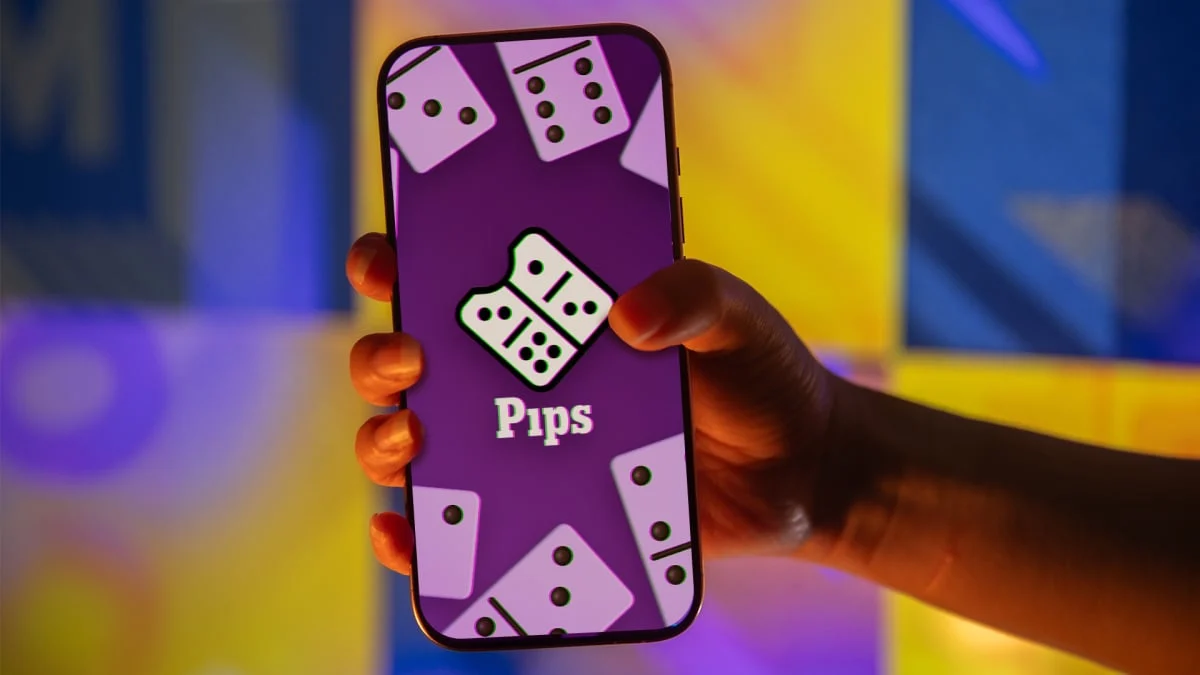
The landscape of daily digital puzzles has a new contender. In August 2025, the New York Times expanded its highly successful gaming portfolio with the release of Pips, a single-player puzzle game that reimagines the classic mechanics of dominoes. Melding spatial reasoning with arithmetic constraints, Pips has quickly captured the attention of casual gamers looking for their next daily habit.
However, as players migrate to this new digital offering, they have encountered a steep learning curve. The game’s current user interface offers limited assistance for those who find themselves stuck, presenting a stark choice: reveal the entire puzzle and forfeit the challenge, or abandon the board to start over. This design choice has fueled a growing demand for external, step-by-step guides and analytical walkthroughs.
Main Facts: What is ‘Pips’ and How Does It Work?
Pips is a grid-based logic puzzle that utilizes the familiar anatomy of domino tiles—rectangular blocks divided into two squares, each bearing a specific number of dots, or "pips." While traditional dominoes require players to match adjacent numbers, Pips introduces a modern twist by utilizing color-coded spatial conditions.
The Core Rules of the Game
- Tile Placement: Players must place domino tiles either horizontally or vertically onto a grid.
- Color-Coded Conditions: The grid is divided into various color-coded zones, each dictating a specific mathematical rule. The numbers on the tiles placed within these zones must satisfy the zone’s active condition.
- The Split-Tile Dynamic: Crucially, a single domino tile does not need to sit entirely within one colored zone. It is common—and often necessary—for one half of a tile to reside in a conditioned zone while the other half sits in a different zone or an unconditioned (blank) space.
- Blank Spaces: Areas of the grid without color coding carry no mathematical constraints, offering players structural flexibility to connect their tiles.
Common Zone Conditions
- Equal (X): Every tile half falling within this boundary must display exactly X pips.
- Number (X): The sum of all pips on the tile portions within this specific zone must add up to exactly X.
- Less Than (X): Every tile half within this boundary must display a value strictly lower than X.
- Greater Than (X): Every tile half within this boundary must display a value strictly higher than X.
Chronology: The Evolution of the New York Times Games Portfolio
The launch of Pips in August 2025 represents the latest phase in a decade-long strategy by the New York Times to diversify its digital offerings and drive subscription retention through interactive media.
[2014] Launch of the Mini Crossword (Pioneered short-form daily puzzles)
   │
[2019] Acquisition of Spelling Bee (Introduced tier-based progression)
   │
[2022] Acquisition of Wordle (Catalyzed the global daily puzzle phenomenon)
   │
[2023] Launch of Connections (Popularized group-association mechanics)
   │
[2024] Launch of Strands (Expanded word-search and theme-based puzzles)
   │
[2025] Launch of Pips (Marked a strategic shift toward math and spatial reasoning)
By shifting its focus toward spatial and mathematical reasoning with Pips, the publisher is diversifying its audience, appealing to players who prefer numerical logic over wordplay.
Supporting Data: Solutions and Hints for the June 20 Puzzle
Because Pips does not currently feature a progressive hint system—only an "all-or-nothing" solve option—players frequently rely on third-party breakdowns to get past difficult bottlenecks. Below is the complete, verified solution data for the June 20 puzzle across all three difficulty tiers: Easy, Medium, and Hard.
Easy Difficulty Solutions
The Easy tier introduces players to basic placement strategies and simple arithmetic boundaries.
| Condition Zone | Rule Requirement | Correct Tile Placement & Orientation |
|---|---|---|
| Equal (2) | All values in this zone must be exactly 2. | 2-2 (Horizontal); 2-5 (Horizontal) |
| Equal (0) | All values in this zone must be exactly 0. | 0-5 (Vertical); 0-3 (Horizontal) |
| Less Than (5) | All values in this zone must be less than 5. | 0-3 (Horizontal) |
| Number (6) | The sum of all values in this zone must equal 6. | 2-5 (Horizontal); 1-1 (Vertical) |
Medium Difficulty Solutions
The Medium tier introduces overlapping constraints, requiring players to balance tiles that cross multiple colored boundaries simultaneously.
- Equal (3): Requires all values in this zone to be exactly 3.
- Solution: 3-5 (Placed vertically); 3-3 (Placed vertically).
- Number (3): The sum of values in this zone must equal 3.
- Solution: 2-3 (Placed horizontally).
- Greater Than (3): All values in this zone must be strictly greater than 3.
- Solution: 1-6 (Placed horizontally); 3-5 (Placed vertically).
- Equal (1): All values in this zone must be exactly 1.
- Solution: 1-6 (Placed horizontally); 4-1 (Placed horizontally); 1-0 (Placed vertically).
- Greater Than (2): All values in this zone must be strictly greater than 2.
- Solution: 4-1 (Placed horizontally); 6-0 (Placed horizontally).
- Equal (0): All values in this zone must be exactly 0.
- Solution: 6-0 (Placed horizontally); 1-0 (Placed vertically).
Hard Difficulty Solutions
The Hard tier features highly restrictive summation zones and complex spatial layouts, requiring precise tile coordination.
Primary Constraints & High-Value Sums
- Equal (3): All values in this zone must be exactly 3.
- Solution: 3-1 (Placed vertically); 3-2 (Placed horizontally).
- Less Than (3): All values in this zone must be less than 3.
- Solution: 3-2 (Placed horizontally).
- Number (1): The sum of values in this zone must equal 1.
- Solution: 3-1 (Placed vertically); 0-6 (Placed horizontally).
- Number (11): The sum of values in this zone must equal 11.
- Solution: 0-6 (Placed horizontally); 5-4 (Placed vertically).
- Number (5): The sum of values in this zone must equal 5.
- Solution: 5-4 (Placed vertically); 1-4 (Placed vertically).
- Less Than (3): All values in this zone must be less than 3.
- Solution: 2-6 (Placed horizontally).
- Number (10): The sum of values in this zone must equal 10.
- Solution: 2-6 (Placed horizontally); 1-4 (Placed vertically).
Secondary Constraints & Isolated Zones
- Less Than (7): All values in this zone must be less than 7.
- Solution: 2-5 (Placed horizontally).
- Greater Than (3): All values in this zone must be greater than 3.
- Solution: 4-0 (Placed vertically).
- Number (1): The sum of values in this zone must equal 1.
- Solution: 4-0 (Placed vertically); 1-2 (Placed vertically).
- Less Than (3): All values in this zone must be less than 2.
- Solution: 1-2 (Placed vertically).
- Greater Than (2): All values in this zone must be greater than 2.
- Solution: 3-0 (Placed horizontally).
- Less Than (2): All values in this zone must be less than 2.
- Solution: 3-0 (Placed horizontally).
- Greater Than (9): All values in this zone must be greater than 9.
- Solution: 4-6 (Placed horizontally).
High-Threshold Endgames
- Greater Than (4): All values in this zone must be greater than 4.
- Solution: 6-6 (Placed vertically).
- Equal (3): All values in this zone must be exactly 3.
- Solution: 3-3 (Placed vertically); 3-6 (Placed vertically).
- Greater Than (10): The sum of values in this zone must be greater than 10.
- Solution: 6-6 (Placed vertically); 6-1 (Placed horizontally).
- Number (1): The sum of values in this zone must equal 1.
- Solution: 6-1 (Placed horizontally).
Official Responses and Community Feedback
Since its debut, Pips has sparked active discussion across puzzle communities and social media platforms. While the game’s core loop has been praised for its novelty, its user interface has drawn criticism.
The "All-or-Nothing" Hint Debate
In its current build, Pips does not feature an incremental hint system. If a player is unable to find a placement, the only built-in recourse is to click "Reveal Puzzle," which instantly populates the entire board and ends the active run.
On forums such as Reddit’s r/NYTGames, players have expressed frustration with this mechanic:
"I love the logic of Pips, but the reveal button is too punishing. If I’m stuck on one last tile in the Hard puzzle, I don’t want the whole board solved for me. I just want a single tile hint, like in ‘Strands’ or ‘Spelling Bee’."
Response from the Product Team
While the New York Times Games division rarely comments on individual daily puzzle designs, product representatives have historically noted that beta-phase and newly launched games undergo continuous refinement based on telemetry and player behavior. Industry analysts expect that if player retention is impacted by the steep difficulty curve, a "reveal single tile" or "check verification" tool will likely be introduced in a future update, mirroring the progression systems seen in older NYT titles.
Implications: The Business Strategy Behind Casual Games
The launch of Pips underscores a broader shift in how major media organizations view digital engagement. Casual games are no longer mere distractions; they are central to subscription-based business models.
┌────────────────────────────────────────────────────────┐
│               THE NYT ENGAGEMENT FLYWHEEL              │
└───────────────────────────┬────────────────────────────┘
                            │
                            ▼
               ┌─────────────────────────┐
               │  Daily Puzzle Engagement│ (Wordle, Connections, Pips)
               └────────────┬────────────┘
                            │
                            ▼
               ┌─────────────────────────┐
               │    Habit Formation      │ (Daily streaks, social sharing)
               └────────────┬────────────┘
                            │
                            ▼
               ┌─────────────────────────┐
               │   Subscription Bundling │ (Games tier, News, Cooking)
               └────────────┬────────────┘
                            │
                            ▼
               ┌─────────────────────────┐
               │  Churn Reduction/LTV    │ (Long-term subscriber value)
               └─────────────────────────┘
Driving Subscription Bundles
For the New York Times, games serve as a highly effective funnel for digital subscriptions. Users who visit the site daily for puzzles are significantly more likely to convert to paid "all-access" bundles, which include News, Cooking, Wirecutter, and Athletic subscriptions.
The Rise of the "Hint Economy"
The popularity of games like Pips has also created a secondary ecosystem of digital content. Major digital publishers, including Mashable, routinely publish daily guides, tips, and answers. These articles serve a dual purpose: they assist players who are frustrated by rigid game mechanics, and they generate substantial search traffic, demonstrating how daily puzzle habits influence broader web traffic and search engine optimization (SEO) trends.
As Pips continues to find its footing alongside established giants like Connections and Wordle, its success will depend on how effectively the development team balances challenging math-based logic with accessible user features. For now, the daily challenge of placing the perfect tile continues to draw millions of players into the grid, one pip at a time.
 Asro
Asro  Nila Kartika Wati
  Siti Muinah