
 By Suro Senen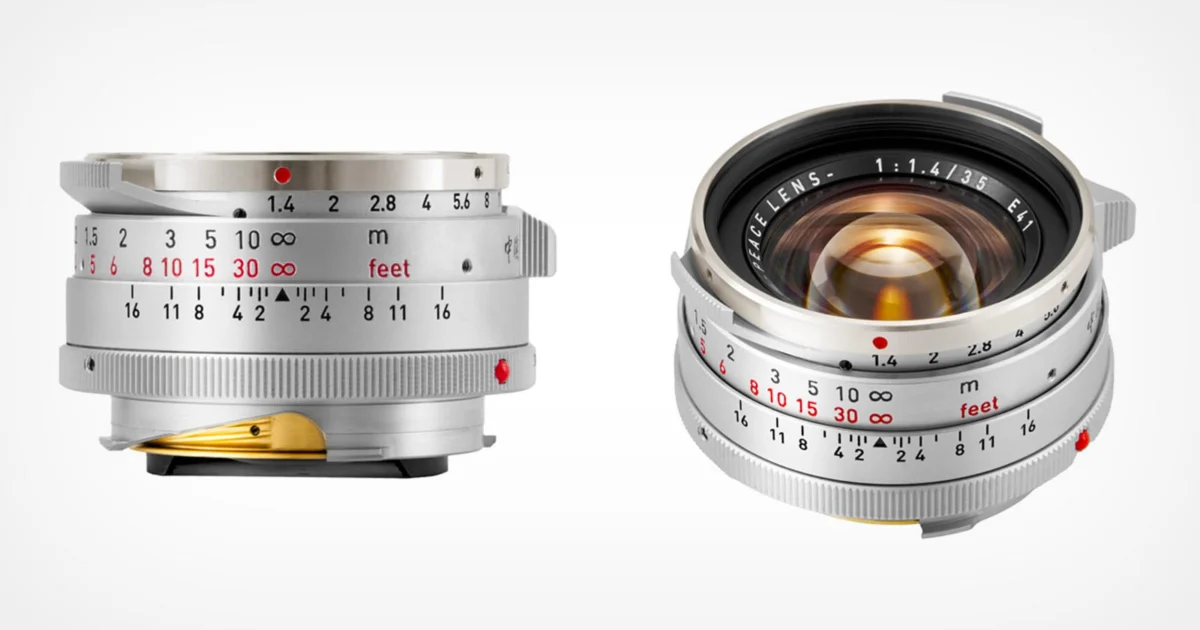
In an era defined by clinical sharpness, digital perfection, and the relentless pursuit of MTF-chart dominance, a quiet rebellion is taking place among rangefinder enthusiasts. The latest entrant to this movement is the Wahei Optical "Peace" 35mm f/1.4 E41 Classical Silver Chrome lens, a sophisticated homage to one of the most storied optical designs in history. Now available via the Japanese retailer Shoten Kobo, this M-mount prime offers a deliberate departure from modern lens philosophy, inviting photographers to rediscover the "character" of vintage glass.
Main Facts: A Modern Rebirth of a 1961 Icon
The Wahei Optical Peace 35mm f/1.4 is not designed to compete with the sterilized precision of contemporary high-end optics. Instead, it is a calculated effort to recapture the soul of the iconic Leica 35mm f/1.4 "Steel Rim"—the legendary wide-angle lens first introduced in 1961.
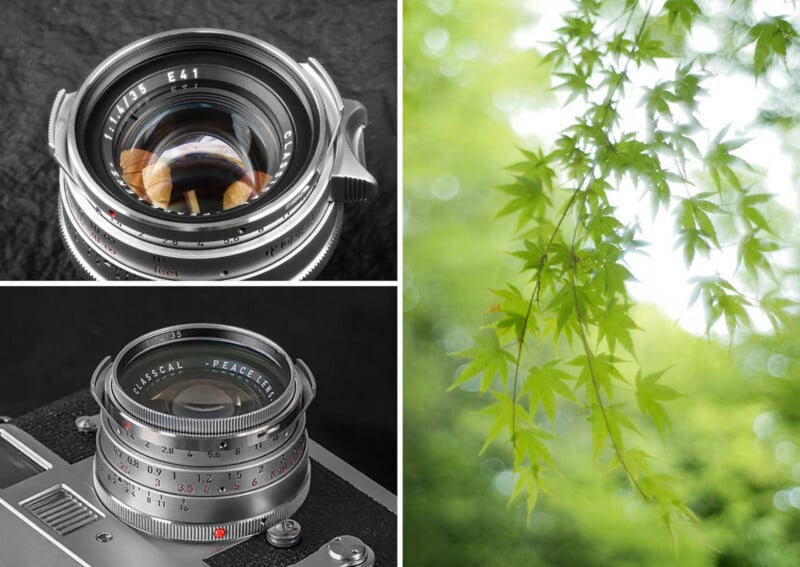
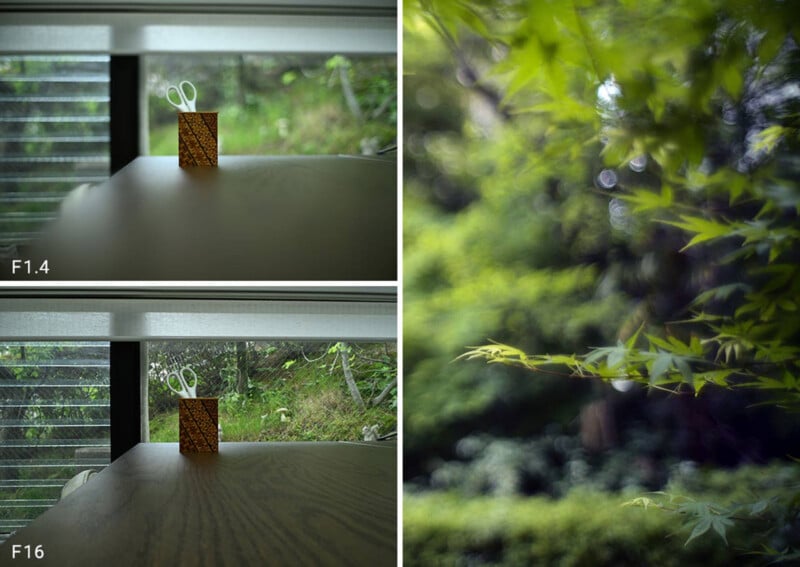
At its core, the Peace 35mm f/1.4 utilizes a classic double Gauss optical construction, featuring seven elements arranged across five groups. This configuration is intentional; rather than correcting every possible aberration to achieve laboratory-grade micro-contrast, the lens embraces the spherical aberrations inherent in its design. At the wide-open aperture of f/1.4, the lens produces a soft, ethereal "glow" that is highly sought after for portraiture and artistic street photography. As the user stops the aperture down, the rendering tightens, transitioning from a dreamy, impressionistic aesthetic to a sharp, high-fidelity image by the time the lens reaches f/5.6 or f/8.
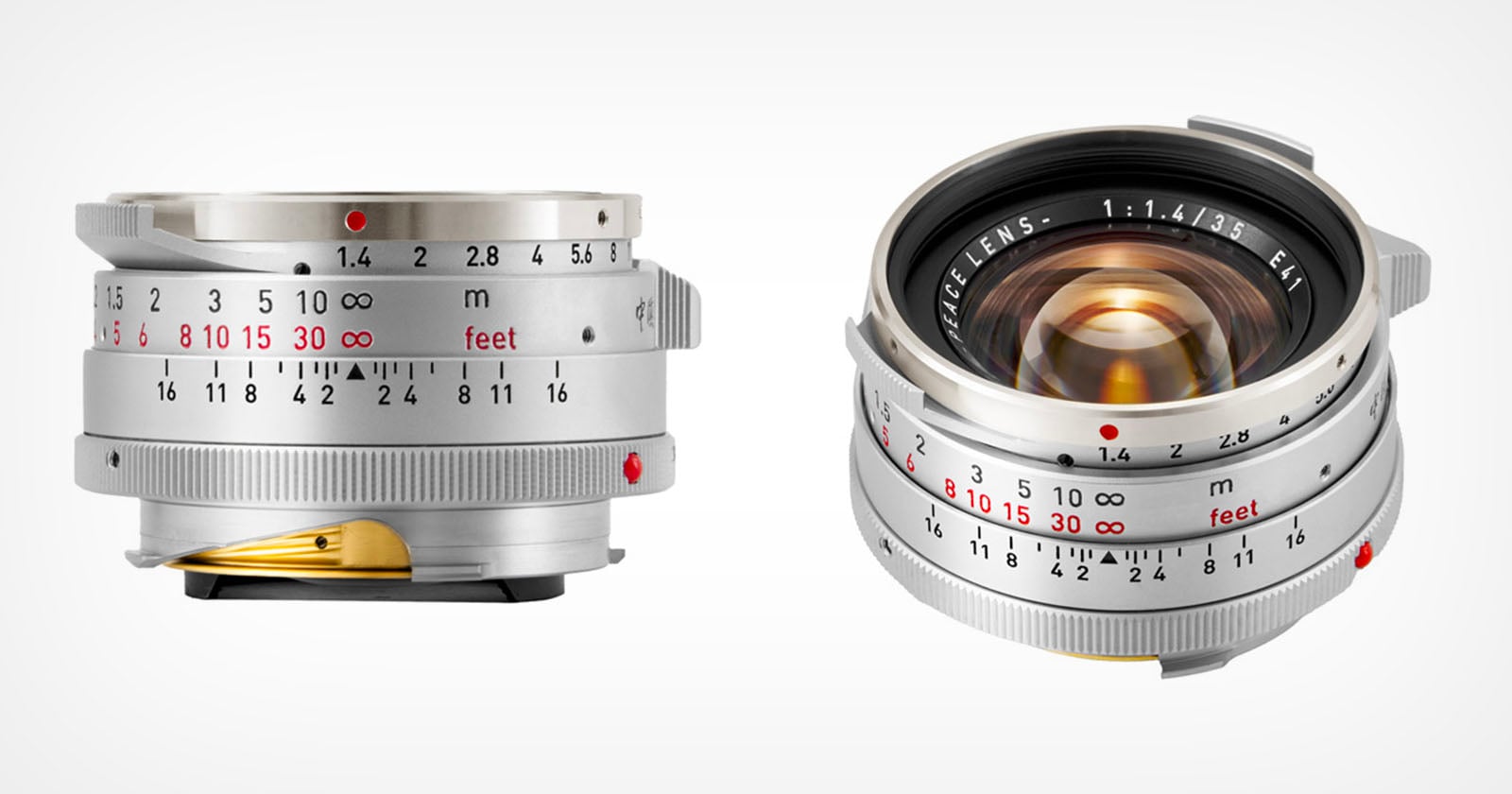
The build quality matches its vintage inspiration. The lens is housed in a robust, classic brass barrel, finished in a tasteful silver chrome. It is remarkably compact, weighing in at just 210 grams (approximately 7.4 ounces), making it an ideal companion for Leica M bodies or adapted mirrorless setups. The lens also features a 10-bladed aperture diaphragm, which ensures that out-of-focus highlights remain circular and smooth, contributing to the "dreamy" bokeh that the manufacturer highlights as a primary selling point.
Chronology: The Trend of Vintage Revivalism
The release of the Peace 35mm f/1.4 is the latest chapter in a burgeoning market trend that began to gain serious momentum in the early 2020s. For years, the photography industry focused almost exclusively on the "digital-first" mentality: higher pixel counts required lenses with extreme resolving power. However, as digital sensors reached a plateau of performance, photographers began to feel a "digital fatigue."
- 2023-2024: Independent manufacturers began experimenting with "re-issue" lenses, focusing on the specific "look" of mid-century optics.
- February 2026: The market saw a significant milestone when a recreation of Mandler’s 35mm f/2 "7 Elements" lens was released to near-instant sell-out success. This proved that there was a massive, untapped demographic of photographers willing to pay a premium for vintage rendering characteristics.
- June 2026: Wahei Optical officially launched the "Peace" 35mm f/1.4. The lens was developed to specifically target the "Steel Rim" era of Leica history, bridging the gap between the high cost of original vintage glass—which often suffers from haze, fungus, or separation—and the reliability of a newly manufactured optic.
This timeline reflects a paradigm shift. Collectors and professionals alike are no longer just looking for the sharpest tool; they are looking for a tool with a specific "signature." The Peace lens represents a refinement of this trend, offering modern multi-coating and manufacturing tolerances while retaining the optical flaws that gave the 1960s originals their cult status.
Supporting Data: Technical Specifications and Performance
For the technical purist, the Peace 35mm f/1.4 offers a unique set of constraints and capabilities that define its performance envelope:
- Mount Compatibility: M-mount (natively compatible with Leica M cameras and easily adapted to Sony E, Nikon Z, and Fujifilm X systems via off-the-shelf adapters).
- Optical Formula: Double Gauss (7 elements, 5 groups).
- Aperture: f/1.4 to f/16, featuring a 10-blade diaphragm.
- Filter Thread: 41mm (a non-standard, smaller size that contributes to the compact form factor).
- Weight: 210g.
- Focusing: Rangefinder-coupled manual focus.
The lens performance data, provided by Wahei Optical and corroborated by early testing reported in CAPA Camera Web, suggests a distinct "bimodal" performance. At f/1.4, the lens exhibits significant spherical aberration, which results in the "glow" surrounding bright highlights. This is a hallmark of the original 1960s design. However, the lens is not "soft" in a traditional sense; the center of the frame remains remarkably usable.
As the aperture closes to f/2.8 and beyond, the spherical aberrations subside. By f/5.6, the lens enters a "sweet spot" where it performs competitively with modern standard primes, providing the resolution required for architectural or landscape work. This versatility allows a single lens to serve two purposes: an artistic, "dreamy" portrait lens at wide apertures, and a sharp, clinical tool for everyday photography when stopped down.
Official Responses and Philosophy
In a statement accompanying the launch, the engineers behind Wahei Optical emphasized that their mission was not to replicate the perfection of a computer-simulated lens, but to replicate the experience of shooting with a classic.
"Depending on your mood and your subject, you can choose to embrace the open-angle feel or stop down for a more polished image," the company stated in their official press release. "This lens allows photographers to enjoy deciding ‘how they want to capture the image’ rather than leaving the rendering entirely to the software of a modern camera."
The name "Peace" is also cited as being emblematic of the lens’s intent—to provide a calm, deliberate, and contemplative photographic experience in a world that is increasingly obsessed with speed, autofocus accuracy, and computational photography. By stripping away the electronics and focusing on tactile, mechanical, and optical character, Wahei Optical aims to bring the joy of manual photography back to the forefront.

Implications: What This Means for the Photography Market
The arrival of the Wahei Optical Peace 35mm f/1.4 has several significant implications for the photography industry:
1. The Death of the "Sharpness-Only" Metric
The success of lenses like the Peace 35mm f/1.4 suggests that the "sharpness war" may be coming to a close. As sensors continue to improve, the demand for lenses that offer character—micro-contrast, unique bokeh, and specific flare patterns—will likely increase. Manufacturers are beginning to realize that "perfect" is often synonymous with "sterile."
2. The Democratization of Vintage Aesthetics
Original Leica "Steel Rim" lenses from the 1960s are now collectors’ items, often selling for thousands of dollars in varying states of condition. By providing a brand-new lens that mimics this look, Wahei Optical is democratizing access to this aesthetic. It allows a younger generation of mirrorless photographers to achieve a look that was previously gated behind high-priced vintage auctions.
3. The Future of Third-Party M-Mount Optics
The M-mount remains the "gold standard" for manual focus lenses. Because of its short flange distance, it serves as the ultimate "adapter-friendly" mount. We can expect to see more boutique optical manufacturers moving toward the M-mount as a platform for launching high-end, vintage-inspired glass that can be enjoyed across multiple camera brands.
4. Pricing and Accessibility
The Wahei Optical Peace 35mm f/1.4 is currently priced at $1,329.99. While this is not an entry-level price point, it occupies a strategic middle ground. It is significantly more affordable than a genuine vintage Leica lens in collector condition, yet it carries a premium over mass-produced, budget-tier manual lenses. This pricing suggests that the lens is aimed at the "prosumer" and enthusiast market—individuals who take their photography seriously and value the tactile experience of using high-quality materials like brass and glass.
In conclusion, the Wahei Optical Peace 35mm f/1.4 is more than just a lens; it is a statement. It serves as a reminder that the tools we use to capture the world are as important as the world itself. By looking back to 1961, Wahei Optical has managed to move the conversation forward, proving that sometimes the best way to innovate is to remember how we used to see. Whether you are a rangefinder purist or a digital mirrorless shooter looking for a bit of character, the Peace 35mm f/1.4 offers a compelling reason to put down the autofocus and look through the viewfinder with a renewed sense of purpose.
 Laily UPN
  Reynand Wu
  Lina Hope