
 By Asep Darmawan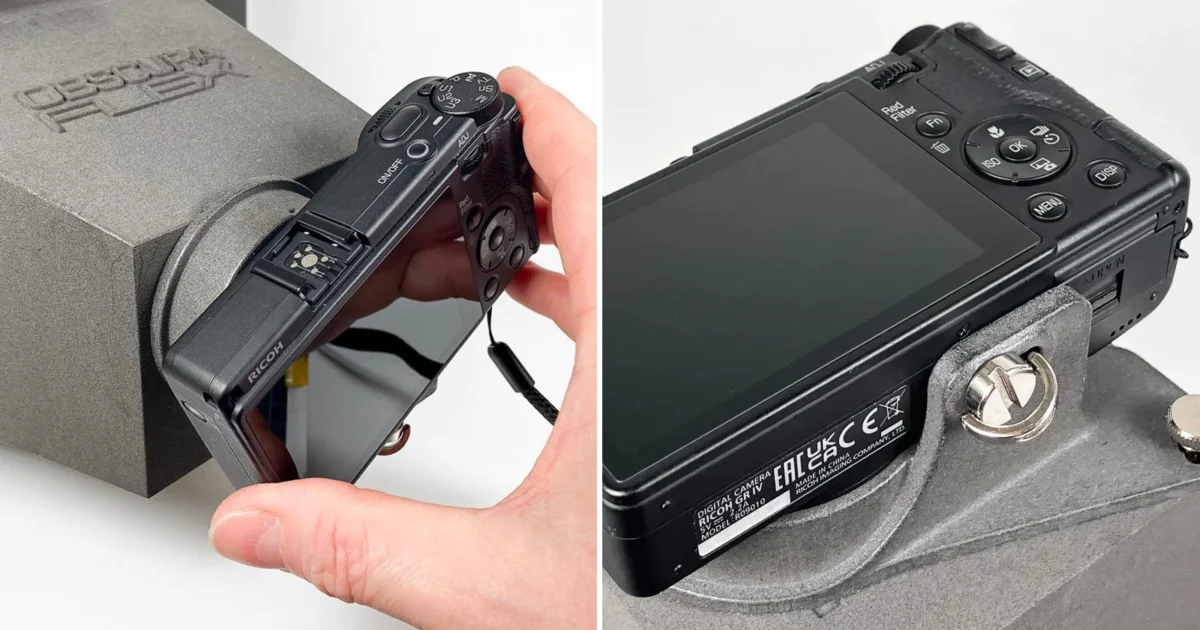
In the evolving landscape of experimental photography, the quest to marry the ethereal aesthetic of large-format film with the efficiency of modern digital sensors has led to a fascinating convergence of technologies. ObscuraFlex, the innovative system that effectively transforms 4×5 large-format cameras and vintage platforms into high-performance digital devices, is undergoing its most significant evolution to date.
For years, the ObscuraFlex ecosystem has relied almost exclusively on a smartphone-first workflow. While this approach provided a sleek, accessible entry point for photographers looking to digitize their legacy gear, it invited constant scrutiny from purists and professionals alike: Why tether a premium, handcrafted large-format camera to a mobile phone? Today, ObscuraFlex is providing a definitive answer by officially expanding its architecture to support dedicated compact digital cameras, beginning with the acclaimed Ricoh GR series.
The Evolution of a Hybrid Workflow
The original vision for ObscuraFlex was simple: leverage the ubiquitous processing power, touch interfaces, and connectivity of smartphones to serve as a digital back for bulky, analog large-format cameras. By projecting an image onto a ground glass and capturing it with a smartphone lens, users could effectively "scan" their 4×5 view in real-time.
However, the transition from a smartphone-centric model to a dedicated camera system was not merely a matter of convenience; it was a technical necessity driven by the demands of serious photographers. While smartphones offer exceptional high-resolution RAW capture and intuitive image orientation tools, they impose limitations on manual control, physical ergonomics, and sensor responsiveness in high-contrast environments.
Chronology of the Shift
- The Smartphone Era: ObscuraFlex launched with a focus on iPhone-based capture, prioritizing ease of use and the immediate sharing capabilities of mobile devices.
- The User Feedback Loop: Consistent requests from the community highlighted the need for a "pro-grade" alternative, citing the desire for physical aperture rings, better manual focus magnification, and the superior grain structure provided by dedicated CMOS sensors.
- The Prototype Phase: ObscuraFlex engineers spent the last eighteen months testing various compact cameras, focusing on optical alignment and weight distribution.
- The Current Rollout: As of June 2026, the company has released custom-engineered cradle systems for the Ricoh GR III and GR IV, marking a pivot toward a more professionalized, modular ecosystem.
Why the Ricoh GR Series?
The choice to launch this expansion with the Ricoh GR III and GR IV is not arbitrary. In the world of compact street photography, the Ricoh GR line is legendary, but its application as a digital back for large-format cameras reveals a new layer of technical synergy.
Technical Symbiosis
The Ricoh GR series offers a rare combination of attributes that harmonize with large-format optics:
- Macro Capability: With a minimum focus distance of approximately 30mm in macro mode, the camera can capture the fine detail of the ground glass with clinical precision.
- ISO Performance: The ability to push sensitivity to 409,600 ISO allows for handheld 4×5 shooting in lighting conditions that would traditionally require long, tripod-mounted exposures.
- Physical Footprint: Weighing in at approximately 255 grams, the Ricoh GR is remarkably lightweight, ensuring that the balance of a vintage 4×5 Graflex camera is not compromised by the weight of the digital back.
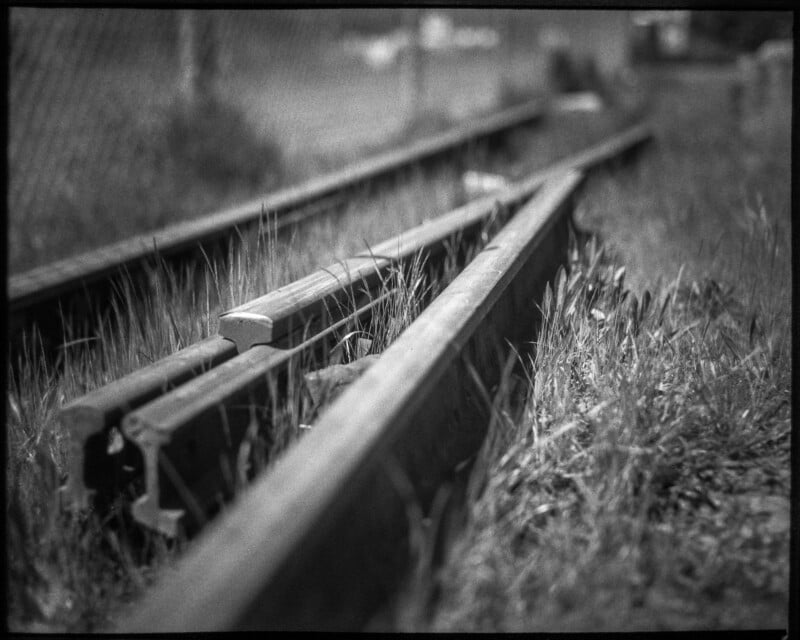
- Tonal Response: Early testing has revealed that the Ricoh GR IV Monochrome’s sensor creates a unique tonal response when capturing the ground glass, producing an output that feels less like a digital "capture" and more like an analog-inspired rendering.
Engineering the Integration: The Custom Cradle System
The cornerstone of this new expansion is a bespoke, multi-iteration mounting cradle. To ensure the Ricoh GR functions as an integrated component of the camera, rather than a mere accessory, the ObscuraFlex team developed a dual-anchor system.
Precision Mounting
The cradle interfaces directly with the camera’s accessory bayonet mount, ensuring the lens remains perfectly parallel to the ground glass. To alleviate stress on the bayonet and ensure long-term durability, the system also anchors into the camera’s 1/4-inch tripod thread. This design distributes the physical load, preventing alignment drift during long sessions in the field.
Fine-Tuning and Calibration
Recognizing that even a fraction of a millimeter in misalignment can ruin a shot, ObscuraFlex has introduced a rotational adjustment mechanism within the twist-lock assembly. This allows photographers to calibrate their horizon alignment precisely, a feature that addresses one of the most common pitfalls in custom-mounted digital imaging.
Implications for Modern Imaging
The shift toward dedicated compact cameras is emblematic of a broader trend in the industry: the "Hybrid Imaging Movement." Photographers are increasingly rejecting the "all-in-one" approach of modern mirrorless cameras in favor of modular systems that allow them to choose their optics, their capture medium, and their aesthetic output independently.
A New Visual Narrative
This trend is not restricted to hobbyists. As demonstrated during the recent Milan Cortina Winter Games, professional organizations are utilizing these hybrid workflows to produce imagery that standard digital setups cannot replicate. When Getty Images photographers utilized vintage Graflex cameras modified with modern digital components, they weren’t just taking photos; they were crafting a visual narrative that bridged the gap between the 1956 Winter Games and the modern era.
By adopting systems like ObscuraFlex, photographers can harness the "soul" of 4×5 lenses—with their unique bokeh, fall-off, and perspective control—while utilizing the reliability and storage flexibility of modern digital memory cards.
Comparative Data: Smartphone vs. Dedicated Compact
In evaluating the transition, it is helpful to look at the raw data generated during the testing phase.
| Metric | Smartphone (iPhone 17 Pro Max) | Ricoh GR IV (Mono) |
|---|---|---|
| Weight | 233g | 255g |
| Sensor Tonal Range | Standard Digital | Analog-Inspired Grain |
| Manual Focus | Software-assisted | Hardware-magnification |
| RAW Resolution | Very High | High (6192 x 4128) |
| Handling | Touch-only | Physical tactile controls |
While the smartphone remains a powerhouse for high-resolution output, the Ricoh GR series offers a more consistent tonal response, specifically regarding the "texture" of the ground glass. When shooting at 1/60th of a second at ISO 3200, the Ricoh setup yields a 5K by 4K output, effectively mimicking the resolution of a 4×5 negative scanned at 1,000 DPI.
Official Stance and Future Roadmap
ObscuraFlex has made it clear that this is only the beginning. According to company spokespeople, the roadmap for the next two years involves deep-diving into optical compatibility for other compact heavyweights.
"The goal is not to replace the smartphone, but to offer the user a choice based on their aesthetic and workflow needs," stated an ObscuraFlex representative. "We are currently evaluating the Leica D-Lux 7 and 8, as well as specific Panasonic Lumix models like the L10. The priority remains consistent: if the camera has a high-quality sensor, compact form factor, and manual capability, we want to build a bridge for it."
Conclusion: The Future of the Hybrid Studio
For the professional photographer, the ability to integrate a dedicated camera like the Ricoh GR into a large-format workflow represents a massive leap in creative potential. It minimizes the friction between the act of focusing a classic lens and the reality of modern delivery requirements.
As the hybrid imaging movement continues to mature, we are likely to see more manufacturers creating "open" systems that invite this type of experimentation. For now, ObscuraFlex stands at the forefront of this movement, turning the "why" of their workflow into a "how" that is as technically sound as it is creatively liberating.
Whether you are a studio photographer looking for a new way to capture large-format textures or a street photographer experimenting with the constraints of vintage glass, the expansion of the ObscuraFlex system provides a compelling reason to revisit the cameras gathering dust on your shelf. With the cradle kits now available for purchase, the line between the legacy of the past and the technology of the future has never been thinner.
 Laily UPN
  Reynand Wu
  Lina Hope