
 By Suro Senen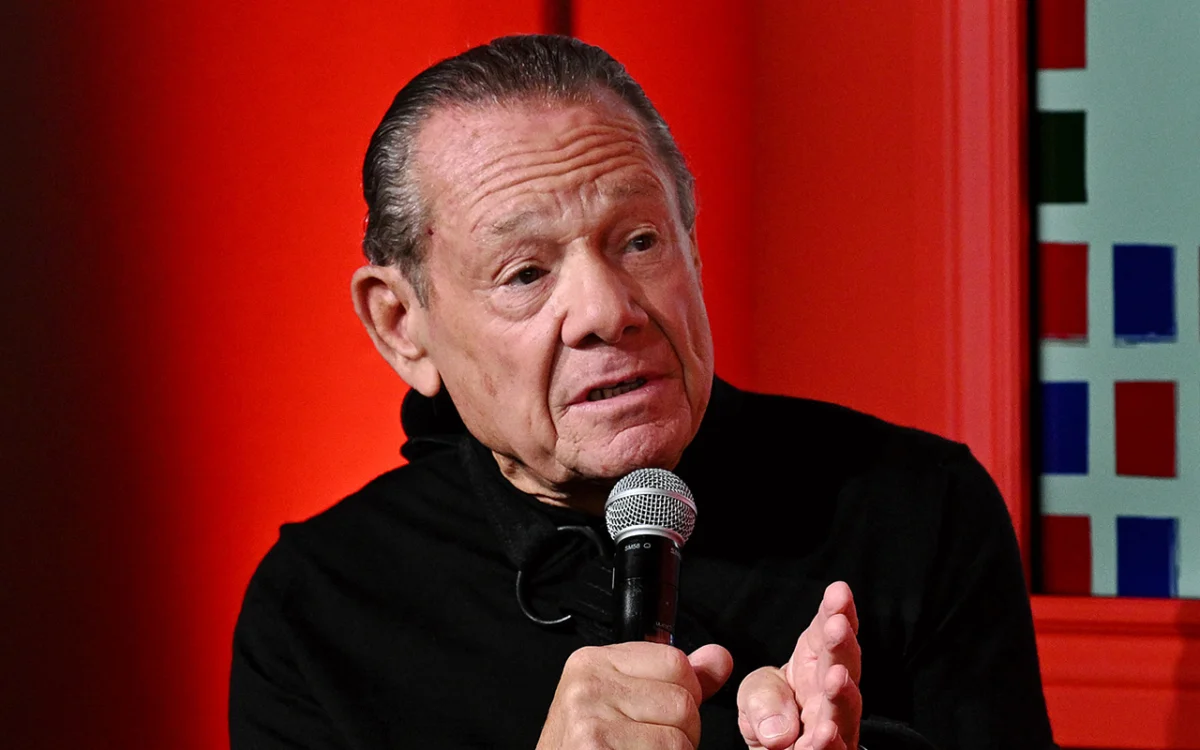
The high-stakes legal battle between actress Julia Ormond and the talent agency powerhouse Creative Artists Agency (CAA) reached a dramatic boiling point on June 1. Michael Ovitz, the legendary co-founder of CAA and arguably the most influential figure in Hollywood history, abruptly terminated a court-ordered deposition after being pressed on his personal associations with the late convicted sex offender Jeffrey Epstein.
The incident, which took place at the New York offices of Ovitz’s legal counsel, has transformed a civil litigation regarding sexual assault allegations into a volatile clash over accountability, discovery limits, and the shadows cast by the industry’s most powerful figures.
The Core Allegations: Ormond vs. CAA
The legal saga stems from a 2023 lawsuit filed by Julia Ormond under New York’s Adult Survivors Act. Ormond alleges that in December 1995, her representatives at CAA—fully aware of Harvey Weinstein’s history of sexual misconduct—effectively facilitated her assault by arranging a dinner meeting that ended with Weinstein sexually violating her in a Miramax-owned apartment.
While Disney and Miramax have since reached out-of-court settlements to resolve their portions of the litigation, CAA has steadfastly maintained its innocence. The agency argues that its agents acted in good faith and that it bears no liability for the criminal actions of Weinstein. However, for Ormond’s legal team, the agency’s historical culture and the knowledge held by its top executives remain central to proving that CAA’s negligence was systemic rather than isolated.
A Tense Chronology: From Cooperation to Contempt
For over a year, Ormond’s attorneys had been locked in a protracted effort to compel Michael Ovitz to testify. Despite having departed CAA shortly before the specific incident involving Ormond, Ovitz’s tenure as the agency’s architect made him a primary target for discovery. Plaintiffs argued that Ovitz’s testimony was essential to understanding the “culture of harassment” within the agency—a topic Ovitz himself touched upon in his published memoir.
On the day of the deposition, the proceedings began with a palpable tension. Ovitz, who built his career on managing crises and controlling narratives, appeared willing to address his relationship with Harvey Weinstein, though he took pains to distance himself from the disgraced producer.
“I didn’t like his methodology of business,” Ovitz testified during the early hours of the deposition. “He was a bully—and he and I got into it multiple times. I talked to him as little as possible.”
When asked about his awareness of the allegations against Weinstein, Ovitz claimed total ignorance prior to the public explosion of the #MeToo movement in 2017. Pressed on how he would have responded had he known of a sexual assault, Ovitz maintained a firm stance: “We surely wouldn’t have done business with the person.”
The atmosphere soured rapidly when the questioning shifted from the internal operations of CAA to the external social circles of the agency’s founder. When attorney Kevin Mintzer steered the inquiry toward Jeffrey Epstein, Ovitz’s demeanor shifted from calculated to combative.
“I’m not going to discuss anything about Jeffrey Epstein,” Ovitz declared. “You can ask all the questions you want—you’re going to get no answers.”
Moments later, the situation devolved into open defiance. Ovitz removed his microphone, stood up, slammed the door, and exited the building, cutting short a scheduled three-hour deposition just 45 minutes into the process.
The Epstein Connection: Evidence and Evasion
The motivation for the line of questioning regarding Epstein lies in a substantial trove of documents released by the U.S. Department of Justice earlier this year. These records include email correspondence that contradicts the notion of a casual or nonexistent relationship between Ovitz and Epstein.
One 2012 email captures Ovitz writing to Epstein, “I would love to see you.” Another communication shows Ovitz expressing anticipation for a meeting with Epstein in St. Barts, while a third records Ovitz telling the financier that he and a mutual party were “raving about you.”
When confronted with these associations during the deposition, Ovitz initially attempted to minimize the connection. He claimed that he had visited Epstein’s residence only once, for a mere 20 minutes, citing a “recommendation of the JP Morgan Bank.” However, when asked if he had visited Epstein at his private island retreat in St. Barts, Ovitz snapped, “What does this have to do with Harvey Weinstein?”
The refusal to answer, coupled with the abrupt departure, has provided Ormond’s legal team with ammunition for a motion for sanctions. Meredith Firetog, an attorney representing Ormond, was unequivocal in her assessment of the event: “Ovitz has no plausible defense for his contemptuous conduct.”
Official Responses and Legal Maneuvering
The fallout from the walkout has been immediate. Ormond’s legal team has officially petitioned the court to hold Michael Ovitz in contempt. They are currently seeking an arrest warrant to ensure that the deposition is completed, arguing that the witness cannot simply choose which lines of inquiry he finds acceptable.
CAA’s defense team, meanwhile, has attempted to shield their former leader, objecting that they were never notified that the scope of the deposition would include inquiries into Jeffrey Epstein. This tactical defense suggests that the agency is concerned about the broader implications of these associations. If the court rules that the Epstein questions were relevant to uncovering the culture of the agency—or if it is determined that Ovitz’s connections to high-profile abusers were a matter of institutional habit—it could severely undermine CAA’s defense.
Furthermore, the record shows that even before the walkout, the deposition was on shaky ground. During the preliminary stage, when asked if his testimony would be truthful, Ovitz reportedly answered “no” before correcting himself to “yes.” This initial hesitation has been cited by the plaintiff’s counsel as evidence of a pattern of contemptuous behavior intended to frustrate the legal process.
The Broader Implications for Hollywood
The spectacle of a former titan of industry storming out of a deposition signals a changing tide in how Hollywood’s past is being reconciled. For years, the “old guard” of the entertainment industry operated under a shroud of confidentiality and protection. The willingness of legal teams to pursue figures like Ovitz—and to link them to the broader web of Epstein and Weinstein—suggests that the era of untouchable power brokers is facing a formal, judicial reckoning.
The implications of this incident are threefold:
- The Limits of Executive Privilege: While Ovitz is no longer with CAA, his refusal to answer questions on the grounds of personal privacy or relevance sets up a major judicial test. Courts in New York have historically been strict regarding the scope of depositions in civil cases involving allegations of sexual misconduct, often allowing for broad inquiries into the defendant’s state of mind and social circle.
- Reputational Risk: For a man who defined the “power agent” archetype, the optics of walking out on a court-ordered deposition are devastating. It suggests a lack of cooperation that juries often interpret as a sign of hidden culpability.
- Systemic Discovery: By seeking to link the culture of CAA to the wider social network of Epstein, Ormond’s attorneys are attempting to prove that the agency’s failure to protect her was not a singular mistake, but part of an industry-wide normalization of abusive behavior.
As the motion for sanctions works its way through the court system, the legal community is watching closely. If the judge grants the motion for contempt or issues an arrest warrant, it would be a watershed moment, affirming that even the most powerful figures in the history of entertainment are subject to the same legal scrutiny as any other citizen.
For Julia Ormond, the struggle continues, but the events of June 1 have arguably made the truth—and the motivations of those who stood at the top of the pyramid—more visible than ever. The question now remains whether the court will force the “king of the deal” back into the witness chair to finish what he started.
 Asep Darmawan
  Azzam Bilal Chamdy