
 By Lina Hope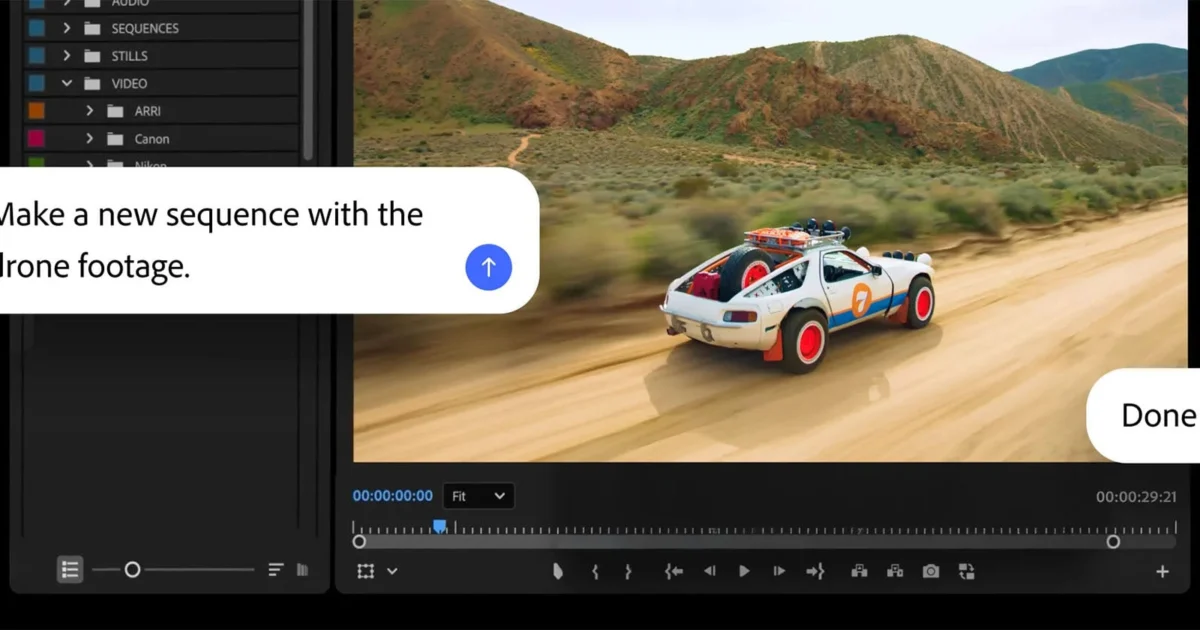
Adobe has officially ushered in a new era for its Creative Cloud suite, announcing the full integration of its highly anticipated "agentic" AI Assistant across its core applications. From the precision of Photoshop and Illustrator to the high-stakes timelines of Premiere Pro and the collaborative hubs of Frame.io, Adobe’s Firefly-powered assistant is no longer just a concept—it is a functional tool designed to fundamentally change how creators interact with their digital canvases.
By enabling users to issue natural language commands to execute complex technical tasks, Adobe is betting that it can eliminate the "friction of production." The goal is clear: to strip away the repetitive, mind-numbing labor of file management and basic execution, allowing artists, photographers, and editors to refocus their energy on the creative decisions that define their unique style.
The New Frontier: What is Agentic AI?
Unlike traditional generative AI, which might simply create an image or a text string, "agentic" AI is designed to perform actions. It acts as a bridge between the user’s intent and the software’s interface. Instead of navigating through complex menus, layers, or folder hierarchies, a user can simply prompt the AI Assistant to perform a sequence of operations.
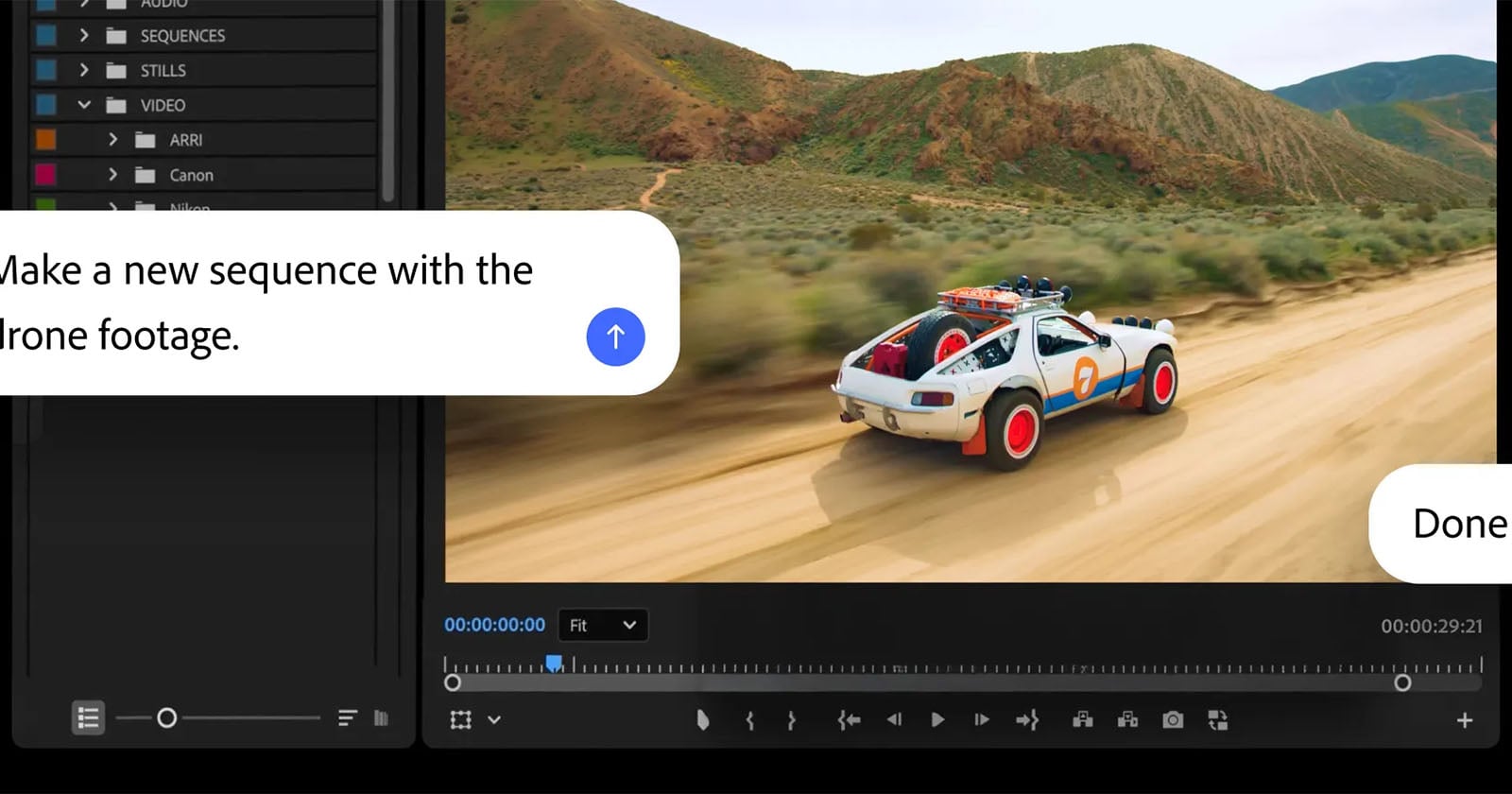
In the context of the new Creative Cloud update, this means an editor can tell Premiere Pro to "create a new sequence with the drone footage," and the AI will handle the ingestion, organization, and basic assembly of those files. In Photoshop, it means offloading batch processing, background removal, or resizing to an agent that works in the background, freeing the human to focus on composition and color grading.
Chronology of a Transformation
Adobe’s journey toward an agentic workflow has been a deliberate, multi-year evolution. The company’s trajectory highlights a shift from "AI as a gimmick" to "AI as a utility."
- The Foundation (2022-2023): Adobe introduced Firefly, its generative AI model. Early iterations focused on image generation and basic content-aware fills. The reception was mixed, as the creative community grappled with the implications of generative art.
- The Pivot to Utility (March 2026): Adobe shifted its messaging during a major technology showcase, moving away from purely "generative" tools toward "assistant" tools. This event highlighted how users could command Photoshop to perform specific, complex edits, essentially using the AI as an expert guide or an automated intern.
- The Beta Rollout (June 2026): The current release marks the transition from conceptual demos to a public beta. By launching across Premiere, Photoshop, Illustrator, InDesign, and Frame.io, Adobe is testing the agentic model in real-world, high-pressure professional environments.
Supporting Data: Why Creatives Need Help
Adobe’s internal research and broader industry surveys underscore a critical reality: professional creatives are suffering from "workflow bloat."
A recent study of working photographers revealed a stark trend: the majority of professionals are not looking for AI to replace their creative vision. Instead, they are actively seeking AI to handle the "tedious 80%." When asked how they preferred to use AI, respondents consistently ranked file organization, metadata tagging, batch editing, and export preparation as the highest priorities for automation.
The Friction Cost
- Time Allocation: Data suggests that nearly 40% of a professional creative’s time is spent on administrative tasks—sorting bins, renaming files, resizing assets, and managing version control.
- Cognitive Load: The "steep learning curve" of professional software like Photoshop or Premiere acts as a barrier to entry. AI Assistants provide a "natural language" bridge that allows novice users to achieve professional results without needing to memorize thousands of hotkeys or deep-menu structures.
Official Responses: The Philosophy of "The Human in the Loop"
Adobe has been careful to frame this technological leap not as a replacement for human talent, but as a scaffold for it. The company’s messaging centers on the idea that "the best creative work has never been defined by how fast you can organize files."
"As a creative, you remain in control," Adobe stated in its official launch documentation. "You choose what to hand off, what to refine, and how to apply your taste, expertise, and judgment to shape every outcome. These tools are built for how you’ve told us you actually work."
Adobe’s leadership emphasizes that the "final 10%"—the artistic choices, the emotional resonance, and the specific color tweaks—are where the human value lies. By automating the "boring bits," Adobe argues it is protecting the artistic soul of the profession rather than eroding it.
Implications: The Future of Creative Labor
The arrival of agentic AI in Creative Cloud is poised to have profound implications for the creative industry.
1. The Democratization of Professional Tools
For novice creators, the AI Assistant acts as an onboard mentor. When a user asks the AI to perform a complex task, they are essentially witnessing the software’s capability in real-time. Over time, this creates an educational loop where the AI helps users learn the software’s deeper functionalities, effectively lowering the barrier to entry for professional-grade design and editing.
2. Shifting Agency Models
The shift toward "agentic" workflows means that the role of a Junior Editor or an Assistant Photographer may evolve. As AI takes over the "grunt work" of sorting and syncing, these roles will likely pivot toward quality control, creative strategy, and advanced curation. The industry is moving toward a model where one highly skilled individual can accomplish the work that previously required a small team of assistants.
3. Workflow Efficiency as a Competitive Advantage
In a fast-paced market where social media trends die in hours, speed is currency. Agencies and freelancers who adopt Adobe’s AI Assistant will likely see a significant uptick in throughput. The ability to handle high volumes of content without sacrificing quality is a massive competitive advantage.
4. Ethical and Quality Considerations
While the efficiency gains are clear, the industry will inevitably debate the "loss of touch." Critics argue that if the AI performs the edits, the subtle, human-led idiosyncrasies that make work "distinctly yours" might be smoothed over by algorithmic averages. Adobe’s challenge moving forward will be ensuring that its agents remain highly customizable and that the "AI signature" does not become a homogenized look that plagues much of current AI-generated content.
Conclusion: A Tool, Not a Replacement
The launch of Adobe’s AI Assistant represents a mature realization of where AI belongs in the creative process. By focusing on productivity rather than creative replacement, Adobe is aligning itself with the actual needs of the professional community.
As the beta testing phase continues across its flagship applications, the creative world will be watching closely. Will the AI truly handle the heavy lifting, or will it add a new layer of technical complexity? If Adobe’s vision holds true, we are entering an age where the software finally stops acting like a rigid machine and starts acting like an intuitive partner.
For the modern creative, the future isn’t about being replaced by a machine; it is about finally having the time to focus on the work that actually matters—the ideas, the craft, and the instinct that no algorithm can truly replicate.
The Adobe AI Assistant is now available in public beta for subscribers of Premiere Pro, Photoshop, Illustrator, InDesign, and Frame.io. Users are encouraged to provide feedback through the Creative Cloud portal to help refine the agents’ capabilities.
 Laily UPN
  Reynand Wu