
 By Evan Lee Salim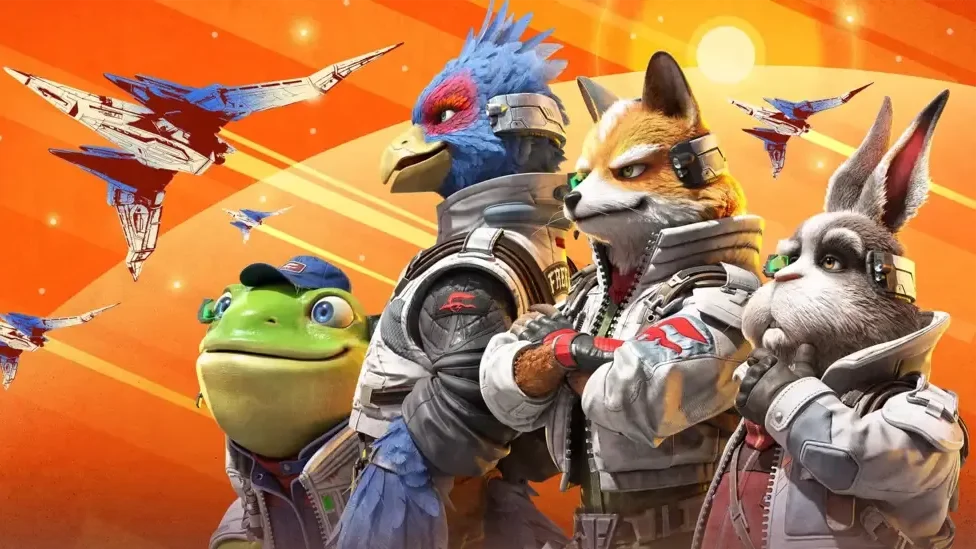
In an industry often obsessed with the "next big thing," the return of Star Fox to modern hardware feels like both a homecoming and a confrontation with the past. Developed by Velan Studios—a team founded by veterans of Vicarious Visions—this latest iteration of the Lylat System’s greatest heroes arrives with a clear mandate: to modernize a classic without stripping away its soul. While the gaming landscape currently debates Nintendo’s conservative approach to its intellectual property, Star Fox serves as a case study in how "playing it safe" can occasionally yield a masterclass in polish, provided the developer understands the fundamental DNA of the source material.
The Context: Nostalgia vs. Innovation
The release of Star Fox arrives against a backdrop of critical discourse regarding Nintendo’s creative trajectory. As Keza MacDonald notes in her insightful book Super Nintendo, there is a growing, palpable anxiety that the Kyoto giant has become overly reliant on its back catalog. The "freewheeling creativity" of the Satoru Iwata era—a time defined by hardware risks and unconventional gameplay loops—seems increasingly distant.
When Star Fox was first announced, skeptics raised the inevitable question: do we really need another journey to Corneria? The skepticism was rooted in the late Iwata’s own warnings about the diminishing returns of focusing solely on "advanced graphics." Yet, upon playing this new version, a counter-argument emerges: when the core gameplay loop is as timeless as Star Fox’s on-rails combat, advanced graphics aren’t just a gimmick—they are a transformative tool that allows the player’s imagination to finally catch up to the screen.
Chronology of the Lylat Conflict
The narrative remains a familiar, bite-sized epic. Players take control of the titular mercenary crew, navigating the Lylat system to dismantle the forces of the malevolent scientist Andross. The structure is classic: a series of branching paths that reward objective completion and tactical awareness.
- The Classic Foundation: Velan Studios has adhered strictly to the original’s structure. From the opening salvos over Corneria to the climactic confrontation with Andross, the game retains its brisk, arcade-like pacing.
- The Modern Polish: While the beats are the same, the presentation has been overhauled. The technical fidelity allows for a sense of scale previously impossible on the Nintendo 64. The Cornerian fleet no longer looks like a collection of grey polygons; it is now a sprawling, intimidating armada.
- The Experimental Additions: Alongside the traditional campaign, the inclusion of a first-person perspective and a four-on-four multiplayer suite marks the only significant departures from the original 1997 experience.
Supporting Data and Gameplay Analysis
The triumph of this remake lies in its understanding of the "on-rails" shooter genre. Velan Studios recognizes that by restricting player movement, they gain the ability to direct the camera and curate the visual spectacle.
The Spectacle of Scale
The level design, while faithful, benefits immensely from the current generation’s hardware. Katina’s mothership is now a daunting, massive entity that overwhelms the player with sheer volume of fire. The derelict base in Sector X feels truly gargantuan, emphasizing the isolation of the pilot. Even the toxic waters of Zoness, with their surfacing, serpentine threats, demonstrate a visual depth that turns what was once a frustration into a set-piece of genuine tension.
However, the fidelity is a double-edged sword. Some levels, such as the lava-scorched surface of Solar, feel less dangerous than they did on the Nintendo 3DS version, perhaps due to a shift in how the screen real estate is utilized. Furthermore, while the game’s first-person mode offers a crisp, twitch-based aiming experience, the sensitivity controls can sometimes lead to accidental transitions back into third-person, disrupting the flow of high-intensity dogfights.
The Multiplayer Misstep
If the campaign is a masterclass in refinement, the multiplayer component is a reminder of the industry’s struggle to shoehorn competitive features into legacy titles. While playing as the Star Wolf crew is a welcome bit of fan service, the three available stages feel disconnected from the tight design of the single-player experience. It echoes the "tacked-on" multiplayer modes of the mid-2000s—sufficient for a few rounds of local bot battles, but lacking the depth to maintain a long-term, healthy online player base.
Official Responses and Developer Intent
Velan Studios has maintained that their goal was to pay homage to the original while ensuring the game felt at home on modern hardware. In interviews, the developers have emphasized that they did not want to "fix" what was never broken. This is a deliberate design philosophy: prioritize the "feel" of the flight physics and the satisfaction of the laser-bomb economy over reinventing the wheel.
Nintendo, for its part, has positioned this release as a bridge between generations. By providing a copy of the game for review, the publisher has signaled its confidence that the core gameplay remains an essential experience. While they have not officially commented on the "conservatism" critiques, the product itself suggests a strategy of "preservation through modernization."
Implications for the Franchise
What does Star Fox mean for the future? On one hand, it confirms that the IP still has legs. The mechanics are as addictive as ever, and there is clearly a market for high-quality, arcade-style shooters. On the other hand, the lackluster script and the uninspired multiplayer suggest that Nintendo and its partners are currently better at polishing legacy content than they are at evolving it.
The dialogue, while efficient at establishing the stakes, is devoid of the wit that made the original characters so iconic. Fox, Peppy, Slippy, and Falco remain static archetypes. While this keeps the "mercenary" aesthetic intact, it misses an opportunity to inject fresh life into these characters through better writing or minor narrative arcs.
Final Assessment: A Triumph of Nostalgia
Star Fox is a paradox: it is an incredibly accomplished remake that succeeds precisely because it is so afraid to fail. It is a triumph of nostalgia over innovation, providing a curated experience that feels like the ultimate version of a game that has been reimagined several times before.
For the veteran, it is a chance to test one’s skills against the exacting medal targets and the punishing Expert Mode. For the newcomer, it serves as an exemplary lesson in level design and arcade pacing. Yet, one cannot help but hope that this success grants Velan Studios the creative capital to move beyond the boundaries of the original. We have seen that they can recreate the past with breathtaking fidelity; now, the question remains whether they—and Nintendo—have the courage to chart a new course for the Lylat system.
If Nintendo continues to rely on the "golden principles" of the past, they may maintain their position in popular culture, but they risk losing the very thing that made them a titan of the industry: the ability to surprise us. For now, we have a beautiful, responsive, and exhilarating Star Fox remake. It is a fantastic game, but one that is standing on the shoulders of giants, waiting for its own moment to leap.
 Laily UPN
  Nila Kartika Wati
  Asro
Asro 