
 By Basiran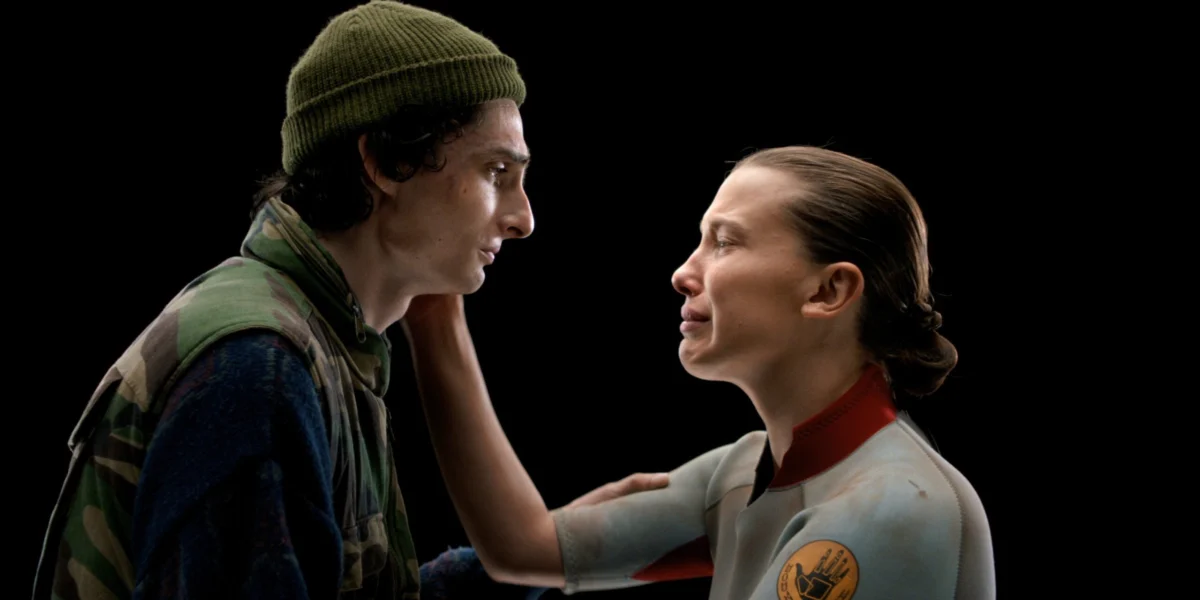
In the landscape of modern television, there exists an unwritten golden rule: a character is never truly gone unless the audience is explicitly shown their demise. This narrative ambiguity has served as the bedrock for countless fan theories, yet few have been as persistent or as emotionally charged as the debate surrounding Eleven, the telekinetic heart of Netflix’s global phenomenon, Stranger Things.
As the credits rolled on the series finale—concluding with Mike Wheeler envisioning a future where his companion survives the cataclysmic showdown with Vecna in the Upside Down—the internet erupted into a fervor of speculation. Is Eleven alive, a survivor of the final fray, or is she a tragic martyr whose presence in the finale was merely a projection of a grieving heart? During her first major press tour following the series’ conclusion, Millie Bobby Brown, the woman who brought Eleven to life, finally addressed the question that has haunted the fandom since New Year’s Eve.
The Secret Pact: A Silence Shrouded in Mystery
The discourse surrounding Eleven’s fate was brought to the forefront during a live recording of Josh Horowitz’s Happy Sad Confused podcast at 92NY. Brown, faced with the inevitable inquiry regarding her character’s final status, revealed that the mystery is not merely a narrative choice, but a strictly enforced off-screen agreement.
According to Brown, the Stranger Things co-creators, Matt and Ross Duffer, were quick to reach out following the finale’s debut to ensure the ambiguity remained intact. "They were like, ‘Do not tell anyone. Because we made it a secret kind of pledge,’" Brown shared with the audience. "No one else knows. It’s just us three. And what we do with that information, it’ll be up to them."
This "secret pledge" highlights the Duffer brothers’ commitment to preserving the emotional weight of the finale. By withholding a definitive answer, the creators have transformed the ending from a closed book into a living, breathing debate that keeps the Stranger Things community engaged long after the final frame.
A Chronology of Grief: From Finale to Post-Production
The journey to the end of Stranger Things was a decade-long odyssey that profoundly impacted its young cast. For Brown, the transition out of the role of Eleven was not just a professional shift, but a deeply personal loss.
Watching the fan reactions pour in on New Year’s Eve alongside her husband, Jake Bongiovi, Brown found herself navigating a surreal divide. "Jake was like, ‘Ooh, these are really split,’" she recalled. The divide, however, wasn’t just among the fans; it existed within the very cast that had grown up on the set in Hawkins.
"The whole cast thinks I’m dead," Brown noted, with a touch of playful indignation. "One, rude. It’s so rude of them. There’s something to it, surely. You guys are projecting! It’s like, ‘Hey guys, we get it. You want me dead!’ But I was like, ‘Believe!’ Let’s have some hope in here."
Following the show’s conclusion, Brown admitted to entering a period of emotional recovery. "I went into a little bit of a slight, slight depression," she revealed. "It was very hard for me. I would not have expected that coming off of the show. I’m a very happy-go-lucky person."
This period of transition saw Brown actively reaching out to her co-stars to "mend" any perceived distance. The fear that their decade-long bond might fracture under the weight of the show’s end led her to initiate heartfelt conversations. "I was like, ‘We’re still friends, right? Like, you’re not gonna stop talking to me anymore?’" she confessed. "I was like, ‘I’m sorry if I ever upset you,’ and was just trying to mend anything. It’s been 10 years, and I really want to be friends. You’re my sibling."
The Divergent Perspectives of the Hawkins Crew
The cast’s inability to agree on Eleven’s fate underscores the complexity of the finale’s writing. David Harbour, who portrayed the stalwart Hawkins police chief Jim Hopper, remains a proponent of the "Eleven is gone" theory. In his recent Variety cover story, he explained that her survival would be narratively dissonant.
"A lot of people think maybe she’s in Spain or whatever," Harbour said. "But right from the very beginning of that series—we love this little girl, but you really can’t have a little girl in Hawkins, Indiana, with supernatural powers running around. She just cannot exist."
Sadie Sink, who played Max Mayfield, echoed this sentiment during an appearance on The Tonight Show Starring Jimmy Fallon. She argued that the ambiguity serves a specific purpose in the story of childhood’s end. "Is that a hot take or something? Mike’s story is just one last story, and then they say goodbye to childhood. That’s one final tale, and that’s it. It’s just a coping thing. It’s stronger [that way], right?"
Conversely, others have embraced the hope the Duffer brothers left behind. Noah Schnapp, during a fan event at PeopleCon, offered a firm contradiction to the "death" theory. When asked if he believed Eleven was gone, he waved his finger in a definitive "no," flashing a thumbs-up to the crowd. This hopeful perspective is shared by much of the audience; during the Happy Sad Confused recording, roughly 80 to 90 percent of the attendees expressed their belief that Eleven survived.
The Duffer Brothers: Crafting Bittersweet Closure
In their post-finale breakdown with Variety, the Duffer brothers offered insight into the creative intent behind the ambiguity. They confirmed that there was never a scripted version where Eleven was seen safe in a basement playing Dungeons & Dragons with the party.
"It was finding a way to come up with an ending where it was not that simple," Ross Duffer explained. "But also bittersweet, and that there was hope there."
Crucially, the creators confirmed that, regardless of her survival, a reunion with Mike is highly improbable. "Eleven does not communicate with Mike in any way," Ross added. "Any contact would risk bringing her back out in the open and starting the cycle again. So, in the story that Mike’s telling, I don’t think he sees a version where they reconnect."
This revelation shifts the interpretation of the finale from a question of survival to a question of sacrifice. Even if Eleven is alive, her existence is one of permanent exile, a necessary price to ensure the safety of the world she fought to protect.
Future Implications: A New Chapter for Brown and Harbour
As the dust settles on the Stranger Things universe, the focus turns toward the future for its stars. Brown has teased that her professional partnership with David Harbour is far from over. When prompted about potential upcoming projects, she noted that plans are "concrete," offering a tantalizing riddle: "Father-daughter is where we live, but Netflix will always be our home."
While projects like the rom-com Just Picture It (starring Gabriel LaBelle) and the potentially delayed series Prism remain on her radar, the collaboration with Harbour takes priority. "The David Harbour project is sooner than expected," she said. "And it’s David’s idea, so kudos to him."
For the audience, the "Eleven Enigma" may never be fully resolved, and perhaps that is the point. As Brown herself noted, the act of believing is essential. When pressed on the question one final time, she reflected on the necessity of that hope: "All people say now is, ‘Do you believe?’ And of course I believe. I have to believe, honestly—otherwise January will come around again."
In the end, Stranger Things has achieved the rarest of television feats: it has concluded its run while leaving its audience with the one thing every great story needs—a reason to keep wondering. Whether Eleven is truly gone or existing in the shadows of a world that can no longer contain her, her impact on the cultural zeitgeist remains as potent as ever.
 Asep Darmawan
  Azzam Bilal Chamdy