
 By rifanmuazin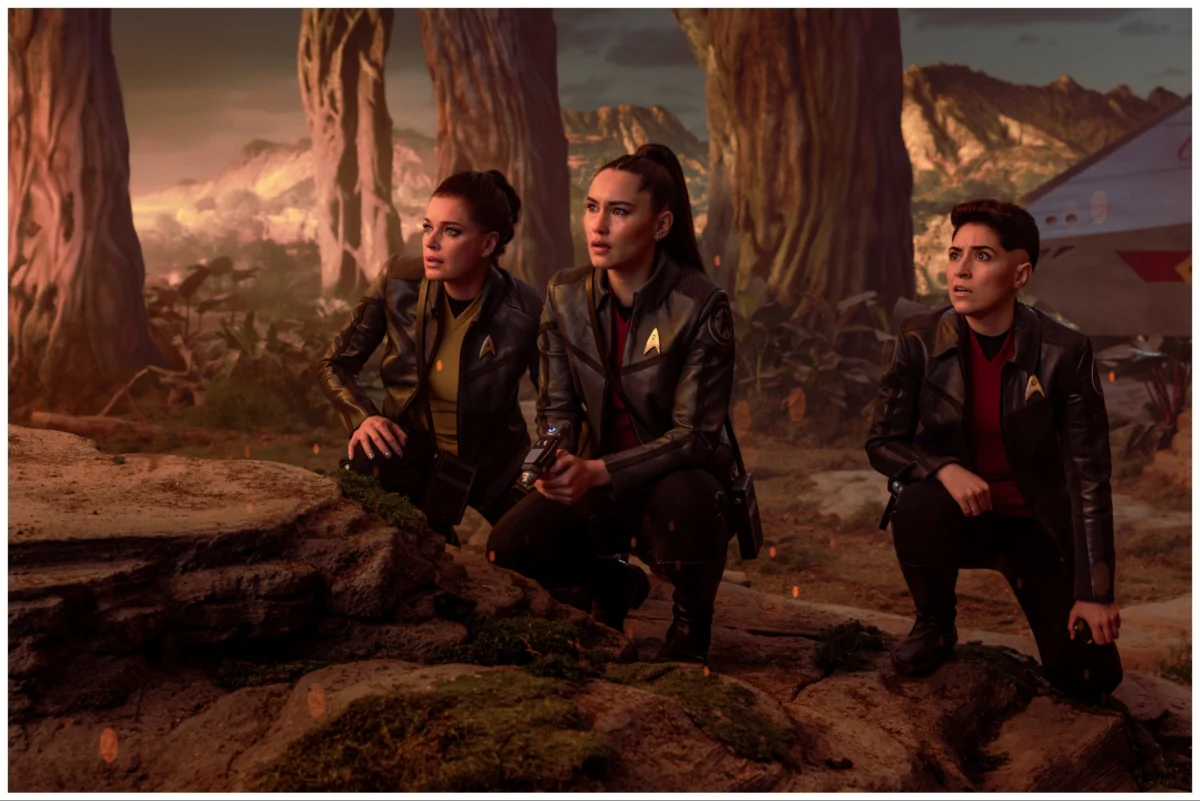
As the Adriatic sun glitters over the beaches of Rimini and Riccione, the Italian Global Series Festival (IGS) has returned for its sophomore edition, running from July 3–11. While the festival maintains its picturesque setting on the Riviera Romagnola, the 2026 iteration marks a deliberate pivot toward a more refined, strategic, and "leaner" identity. By narrowing its focus and sharpening its programming, the IGS is positioning itself not merely as a regional showcase, but as a critical nexus for the global television industry.
A Strategic Evolution: Quality Over Quantity
The inaugural 2025 edition of the festival—which served as a modern spiritual successor to the long-running RomaFictionFest—was a sprawling, ambitious debut. However, artistic director Marco Spagnoli has opted for a "rationalization" of the festival’s structure this year. The international competition, which boasted 32 titles in its debut, has been streamlined to 21 series hailing from 15 countries.
"We wanted to open this festival to the world," Spagnoli explained, standing on the threshold of the event’s opening weekend. "It’s not just about promoting Italian creation; it is about promoting the region, the culture, and the spirit of collaboration. We need people to meet. Last year, you could see an American actor, a Spanish actor, and an Italian director all sharing a table. Television rarely creates those genuine opportunities for cross-pollination."
By reducing the sheer volume of screenings, Spagnoli aims to provide attendees with the "breathing room" necessary for meaningful networking, transforming the festival from a high-speed sprint into a professional marathon where industry leaders can actually engage with one another.

Chronology and Highlights: From Global Debuts to Cultural Icons
The festival’s schedule is a carefully curated mix of high-stakes world premieres and deep-dive retrospectives. The IGS has moved away from a rigid requirement for exclusivity, opting instead to prioritize "interesting" content that merits international discovery.
Key Programming Strands:
- World Premieres: The U.K.-Spanish detective drama Benidorm Is Murder and the gritty Brazilian medical thriller Emergency 53 are set to make their global debuts, drawing significant interest from streaming platforms looking for the next breakout hit.
- International Showcases: The schedule includes high-profile international premieres such as the James Marsh-directed spy thriller Secret Service, starring Gemma Arterton; the Korean supernatural thriller Speaking Dead from director Lee Jung-hyo; and the historical epic Raza Brava, which offers a harrowing look at Chile’s soccer ultras during the Pinochet dictatorship.
- Star-Studded Presence: The guest list is robust, featuring CCH Pounder and Judith Light, who are on-site to represent the social horror series The Terror: Devil in Silver. French stars Virginie Ledoyen and Camille Razat are also in attendance to support the ambitious adaptation of Stendhal’s Le Rouge et le Noir.
Honoring the Architects of Television
A central pillar of the IGS philosophy is the recognition of those who have shaped the grammar of contemporary television. This year’s Maximo Excellence Award recipients include industry titan Carlton Cuse, actor Titus Welliver, director Lisa Mulcahy, and the visionary Richard Gadd.
The festival’s jury structure reflects a commitment to diverse perspectives. The comedy jury is led by French actor Bruno Gouery, whose work in Emily in Paris and The White Lotus has made him a household name. Spagnoli is particularly fond of Gouery’s connection to the host country: "Bruno’s mother is Italian, and he speaks the language perfectly. He could start working here tomorrow, and we want to encourage that kind of seamless crossover."
The drama jury is presided over by the influential Marti Noxon, whose work on Buffy the Vampire Slayer fundamentally altered the trajectory of genre television. "What Marti did on Buffy changed the very concept of vampires, and those vampires have been with us ever since," Spagnoli notes. "A festival like this needs to acknowledge that continuity—to show which works have mattered and who has actually shaped the landscape."

The Star Trek 60th Anniversary Celebration
Perhaps the most high-profile segment of the 2026 program is the celebration of the 60th anniversary of the Star Trek franchise. The festival is hosting a special conversation between limited-series jury president Nicholas Meyer and producer David W. Zucker, followed by the highly anticipated premiere of the fourth season of Star Trek: Strange New Worlds.
The event will feature stars Anson Mount, Rebecca Romijn, and Celia Rose Gooding, alongside fan-favorite Jeri Ryan, who portrayed Seven of Nine. For Spagnoli, the inclusion of Star Trek is thematic rather than just nostalgic. "Through her character, Jeri Ryan has explored questions about machines, artificial intelligence, and what it means to be human—all very modern concerns," he says. "The franchise was born of the Vietnam era, but its themes of peace and an optimistic, cooperative future are not limited to 1966. They are essential to our current moment."
Implications for the Industry: The Power of Intellectual Property
Beyond the star power and the red carpets, the IGS is positioning itself as a think tank for the future of European media. A major point of discussion at this year’s summit is the role of intellectual property (IP) and the trend of rebooting classic stories for modern audiences.
The festival is hosting a special preview of the upcoming Netflix adaptation of Little House on the Prairie. While some critics argue that the industry is over-reliant on existing IP, Spagnoli views the trend through a more constructive lens. "Intellectual property can and should live on, and it must be renewed," he asserts. "We Europeans should learn from that. There are so many Italian and European series that shaped my generation and could be just as powerful for modern audiences if approached with the right creative vision."

This focus on the past is deeply tied to the Italian experience. "In Italy, we’re born with the past," Spagnoli says, gesturing toward the historic architecture that surrounds the festival venues. "These series meant something to millions of people. We need to keep looking backward to understand the present and imagine the future."
The Road Ahead
As the festival concludes on July 11, the metrics of its success will not just be measured by ticket sales or red-carpet photos, but by the number of production deals, creative partnerships, and distribution agreements forged in the corridors of Rimini.
By streamlining its lineup, the IGS has successfully differentiated itself from the overcrowded festival circuit. It has managed to strike a delicate balance: providing a platform for gritty, challenging international narratives while simultaneously celebrating the legacy of the medium.
For the international television community, the message from the Adriatic is clear: The industry is at a crossroads where the preservation of cultural history must meet the innovation of modern storytelling. Whether through the lens of a historical Chilean drama or the futuristic optimism of Star Trek, the IGS is proving that the spirit of collaboration is the most important element of any production. As Spagnoli noted, "We need people to meet." In a world increasingly dominated by digital consumption, the IGS reminds us that the most vital television is still made by people, for people, in the shared space of a theater.
 Asep Darmawan
  Azzam Bilal Chamdy