
 By Neng Nana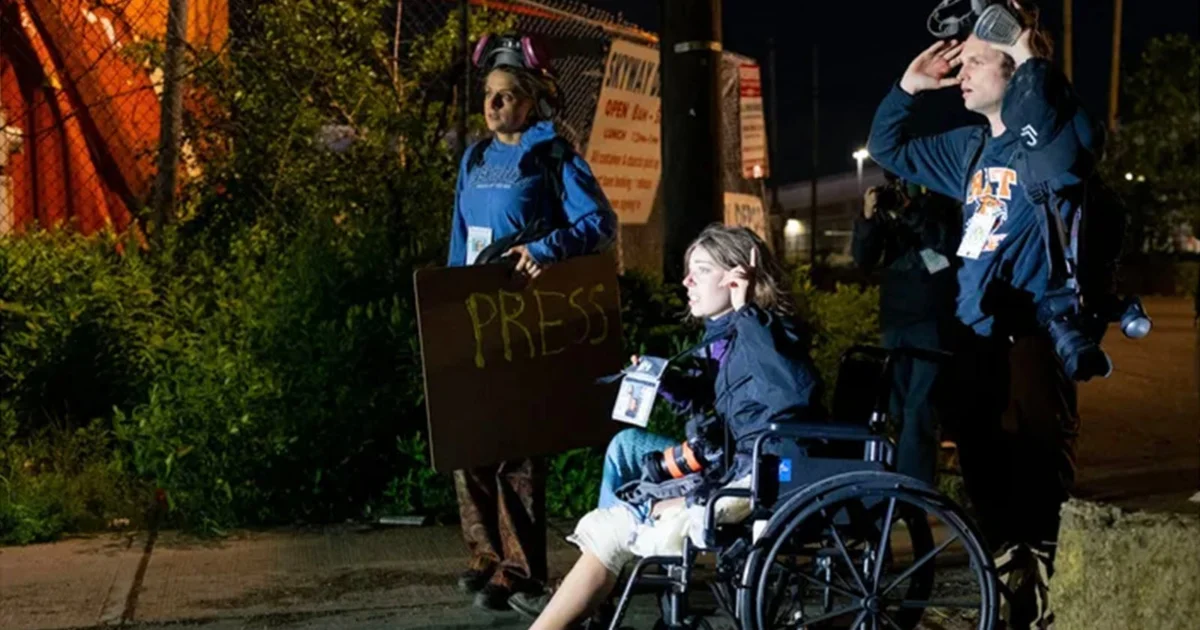
In a high-stakes legal confrontation centered on police accountability and the freedom of the press, The Jersey Vindicator—a non-profit news outlet—has filed a lawsuit against the Essex County Prosecutor’s Office. The legal action comes in response to the office’s refusal to release body-worn camera footage that allegedly captures a police sergeant stealing a camera bag from an injured photojournalist during a protest outside the Delaney Hall immigrant detention center in Newark.
The case has become a focal point for transparency advocates, raising significant questions about the extent to which law enforcement can withhold visual evidence in cases of alleged officer misconduct. As the criminal case against the accused officer proceeds, the fight to make the footage public highlights the growing tension between the government’s investigative secrecy and the public’s right to know.
The Incident: A Night of Chaos at Delaney Hall
On May 30, 2026, the area surrounding Delaney Hall in Newark became a flashpoint for civil unrest. Protesters gathered to demonstrate against the detention policies of Immigration and Customs Enforcement (ICE), drawing a heavy law enforcement response. Among those documenting the volatile scene was Angelina Katsanis, a seasoned photojournalist on assignment for the Associated Press.
As tensions flared between protesters and riot police, the situation turned violent. During the ensuing scuffle, Katsanis was struck by a wooden beam, sustaining injuries that required immediate medical attention. In the confusion of the clash and her urgent need for care, Katsanis was forced to leave behind her equipment—a bag containing expensive camera gear essential to her professional livelihood.
When she later returned to the site of the protest, assisted by a wheelchair due to her injuries, the bag was nowhere to be found. What followed was a modern-day detective story: Katsanis tracked the location of her gear using an Apple AirTag concealed within the bag. The digital trail led authorities not to a protest looter, but to a private residence in Sparta, New Jersey, belonging to Essex County Police Sergeant Darryl Brown.
Chronology of a Scandal
The subsequent investigation revealed a disturbing narrative of potential professional betrayal.
- May 30: Angelina Katsanis is injured during the Delaney Hall protests and subsequently discovers her camera gear has been stolen.
- June 1: Using tracking data, authorities identify the location of the gear at the home of Sergeant Darryl Brown.
- Early June: A search warrant is executed at the sergeant’s residence. Investigators recover several items belonging to Katsanis, some of which were clearly labeled with her name and contact information.
- June 5: The Jersey Vindicator reporter Steve Janoski submits a formal Open Public Records Act (OPRA) request to the Essex County Prosecutor’s Office, seeking the bodycam footage from Sergeant Brown’s uniform during the night of the protest, as well as related investigative reports.
- June 10: The Prosecutor’s Office officially denies the request, citing an ongoing investigation and claiming that releasing the footage could jeopardize the case.
- Late June: The Jersey Vindicator files a formal lawsuit, arguing that the public has a right to see the footage and that the government is improperly shielding its own officers from public scrutiny.
Sergeant Brown has since been suspended without pay and faces a third-degree theft charge. If convicted, he faces a potential sentence of three to five years in prison and fines reaching $15,000.
The Legal Argument: Why the Footage Should Be Public
At the heart of the lawsuit is a clash over the interpretation of New Jersey’s Open Public Records Act (OPRA) and police body camera statutes. The Essex County Prosecutor’s Office maintains that because the incident is part of an active criminal investigation, the release of evidentiary material—specifically bodycam footage—must be restricted to ensure a fair judicial process.
However, legal counsel for The Jersey Vindicator, government transparency attorney CJ Griffin, argues that this reasoning is flawed. The lawsuit asserts that the footage in question was recorded before Sergeant Brown became a suspect in the investigation. Therefore, the argument goes, the footage represents a record of public service and police conduct at a protest, rather than a privileged piece of evidence that was created solely for the purpose of the criminal case against the officer.
"There is no justification for keeping the video from the public," Griffin stated in a recent press release. "We deserve to see what occurred. When a law enforcement officer is accused of victimizing a member of the press, the public interest in transparency far outweighs the convenience of the prosecutor’s office."
The legal team contends that New Jersey law provides narrow exemptions for the withholding of police records, and that the Prosecutor’s Office is broadly misapplying these laws to avoid political embarrassment and public accountability.
Broader Implications: A Pattern of Hostility Toward the Press?
The case of Angelina Katsanis is not an isolated incident. It arrives against a backdrop of increasing friction between federal agents, local police, and members of the press covering immigration protests.
In recent weeks, the American Civil Liberties Union (ACLU) has filed its own lawsuit against ICE, alleging a systemic pattern of intimidation, surveillance, and physical threats directed at journalists who document the actions of federal agents. The ACLU’s legal action highlights reports from multiple photojournalists who claim they have been deliberately targeted, blocked, and harassed while attempting to fulfill their constitutional duties at Delaney Hall and other sites.
By combining these instances, civil liberties groups are painting a picture of an environment where journalists are viewed not as observers protected by the First Amendment, but as adversaries. If police officers—who are tasked with upholding the law—are accused of stealing the very tools journalists use to hold the government accountable, it suggests a profound degradation of the relationship between the state and the press.
Official Responses and Public Reaction
The Essex County Prosecutor’s Office has remained largely tight-lipped, adhering to its policy of not commenting on active litigation. However, the decision to withhold the footage has drawn sharp criticism from media watchdogs, press freedom organizations, and local community activists.
The Jersey Vindicator’s lawsuit is being watched closely by media organizations nationwide. Should the court rule in favor of the news outlet, it could set a powerful precedent for how bodycam footage is accessed in cases of officer-involved crimes. It would serve as a reminder that body cameras are intended to provide accountability to the public, not to serve as a digital vault for law enforcement agencies to store evidence of their own misconduct.
Conversely, a loss for the news outlet would reinforce the ability of prosecutors to use the "ongoing investigation" loophole to shield police behavior from the light of day for months, or even years, until the public interest in the event has waned.
Conclusion: The Quest for Accountability
The story of Angelina Katsanis is a chilling reminder of how easily the truth can be obscured. A photographer, injured while doing her job, finds herself not only victimized by the chaos of a protest but allegedly targeted by the very people sworn to protect the peace.
As the legal battle between The Jersey Vindicator and the Essex County Prosecutor’s Office unfolds, the core issue remains simple: Who owns the record of an officer’s actions? If the bodycam footage is the property of the public, the public has a right to see it. If, as the prosecutor claims, it must remain hidden, then the democratic process of police oversight is effectively paralyzed.
The outcome of this case will echo far beyond the courthouse in Newark. It will determine whether journalists covering the most contentious issues of our time—immigration, police conduct, and civil rights—can do so with the expectation of safety and the assurance that if they are wronged, the evidence will not be hidden behind a veil of bureaucratic secrecy. For now, the footage remains locked away, but the demand for its release grows louder with every passing day.
 Ali Ikhwan
  Laily UPN
  Reynand Wu