
 By Muslim
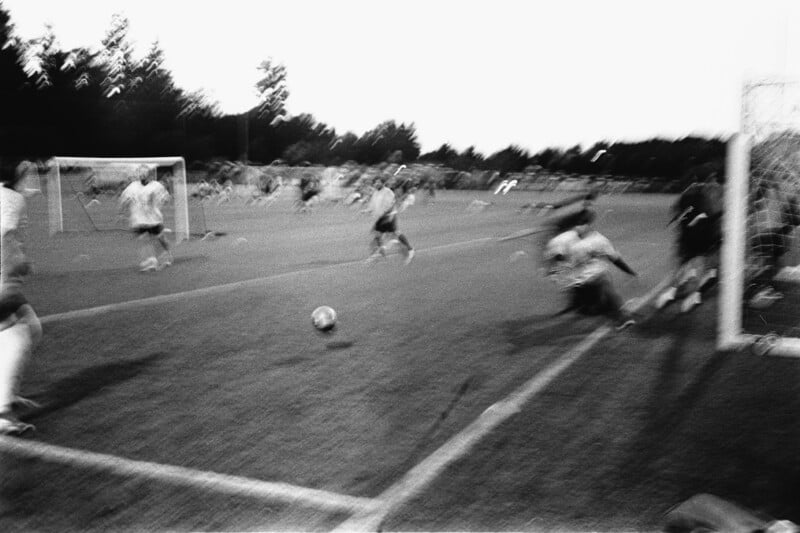
In the world of photography, few icons command as much reverence as Kodak Tri-X. While the global community has recently been glued to the television screens, captivated by the high-stakes drama of professional football, one member of the Blue Moon Camera and Machine staff found himself on the other side of the lens. Trading the armchair for the pitch, he spent his weekends documenting local soccer matches with nothing more than a humble Tri-X disposable camera.
The resulting images—raw, tactile, and teeming with movement—serve as a poignant reminder that photography is rarely just a technical exercise; it is an extension of our deepest passions. This week’s "Film Friday" tribute isn’t just about the science of silver halides; it’s about the intersection of sport, history, and the enduring grit of one of the world’s most celebrated film emulsions.

The Genesis of an Icon: A Chronology of Tri-X
To understand the cult status of Kodak Tri-X, one must first appreciate its longevity. The lineage of this film is deeply rooted in the golden age of black-and-white photography.
1938–1940: The "X" Factor
The story of Tri-X began in the late 1930s as Kodak embarked on a mission to push the boundaries of film speed. It was preceded by Panatomic-X in 1938, followed quickly by a series of experimental iterations: Plus-X, Super-X, and Super-XX. In 1939, Ortho-X hit the market, but it was 1940 that marked a definitive turning point in photographic history with the introduction of the original Tri-X sheet film. At its debut, it was a revolution—the fastest film Kodak had ever offered to the professional market.

1954: The Official Birthday
While the sheet film was a boon for studio photographers, the true democratization of the Tri-X aesthetic occurred in 1954, when it was finally released in 35mm and 120 formats. This shift allowed photojournalists, street photographers, and documentarians to take the high-speed film into the field. Whether one considers the 1940 release or the 1954 commercial explosion as its "true" start, the result is the same: Tri-X has been a staple of the visual record for over seven decades.
Supporting Data: Why Tri-X Defines the Medium
The ubiquity of Tri-X is not an accident of marketing; it is a result of performance. When asked why Tri-X remains the gold standard for beginners and masters alike, the answer usually centers on its unique chemical personality.

The "Gritty" Aesthetic
Unlike modern tabular-grain films—such as Ilford Delta or Kodak TMax—which aim for a smooth, clinical rendering, Tri-X embraces its identity. It is, by definition, a "gritty" film. The grain is not merely present; it is an active participant in the image. It provides a tactile quality that invites the viewer to lean in. This texture is the visual signature of 20th-century photojournalism.
Technical Versatility: The ISO 400 Benchmark
The film’s baseline sensitivity of ISO 400 has proven to be the "Goldilocks" zone for decades. It is fast enough for dimly lit indoor environments yet robust enough for bright, high-contrast outdoor settings. Its latitude for error is legendary. Photographers frequently "push" the film, rating it at ISO 800, 1600, or even 3200. With proper development, the film handles this underexposure with a characteristic increase in contrast, yielding the deep, dark, moody shadows that have come to define the "Tri-X look."
Historical Implications: The Witness to History
It is difficult to overstate the role Tri-X has played in shaping our collective visual memory. If an event of historical significance occurred between 1954 and the present day, there is a high statistical probability it was captured on a roll of Tri-X.
- The Street Masters: Figures like Garry Winogrand and Bruce Gilden prowled the chaotic streets of New York, their cameras loaded with Tri-X, capturing the raw, kinetic energy of urban life.
- The Human Condition: Sebastião Salgado utilized the film to document the harrowing realities of the Ethiopian famine, while Mary Ellen Mark relied on its consistency for her career-defining portraits.
- The Unseen Artist: Even Vivian Maier, whose work remained unknown during her lifetime, favored the film, leaving behind a cache of negatives that would eventually redefine street photography for a new generation.
From Henri Cartier-Bresson’s "decisive moments" to Elliott Erwitt’s wry, humanistic observations, Tri-X has been the silent partner to the world’s most influential photographers.
The Modern Practitioner’s Perspective
For the staff at Blue Moon Camera and Machine, recommending Tri-X to a beginner is an act of confidence. "If you are going to begin somewhere, why not here?" they ask. The film remains available in nearly every format imaginable: 35mm, 120, 4×5, 5×7, 8×10, and even specialized formats like 620 and 828.
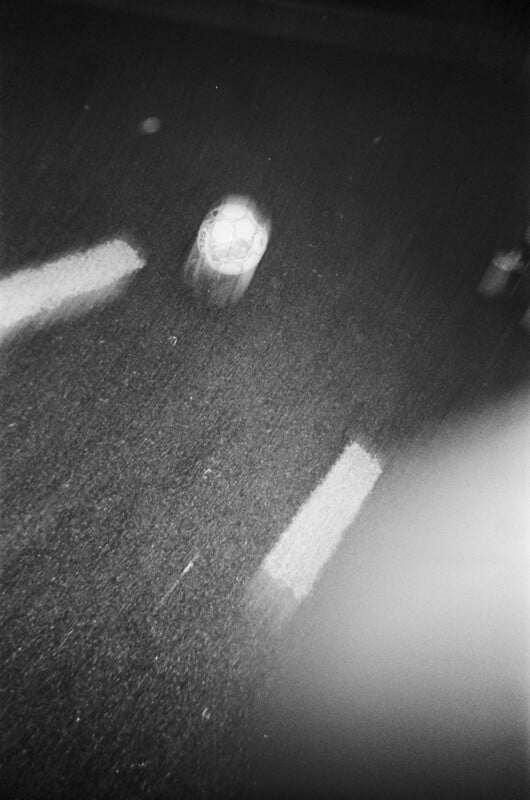
The recent experiment of using disposable cameras loaded with Tri-X to capture soccer matches highlights a critical truth: the quality of the image is not solely dependent on the complexity of the equipment. Whether you are using a professional-grade Leica or a plastic-lens disposable camera, the emulsion does the heavy lifting. The portability of the disposable camera allows for the "sideline spontaneity" that mirrors the fast-paced, unpredictable nature of the sport itself.

Official Stance: A Champion for the Analog Future
Blue Moon Camera and Machine, based in Portland, Oregon, continues to champion the analog experience through their weekly "Film Friday" series. The initiative was born out of a desire to break the cycle of "safe" film choices—encouraging photographers to step outside their comfort zones and explore the vast inventory of emulsions available today.
By documenting the local soccer scene, the staff at Blue Moon are reinforcing a simple philosophy: film photography should be integrated into our daily lives, not just reserved for "special" occasions. The football-themed project serves as a perfect metaphor. Just as the sport is considered the "beautiful game," Tri-X is, by all metrics, the "beautiful film."

Encouraging Participation
As part of their ongoing effort to keep the analog flame burning, the shop is currently offering a special promotion on Tri-X, encouraging both veterans and newcomers to grab a few rolls. For those looking to bridge the gap between their interest in analog photography and their love for the game, the shop invites visitors to share their thoughts on the current global tournaments while they stock up on supplies.
Conclusion: The Enduring Legacy
As we look toward the future of photography, the relevance of Tri-X remains undiminished. In a digital world of infinite, clean, and often sterile pixels, the "grit" of Tri-X serves as a grounding force. It is a reminder that photography is not just about capturing data; it is about capturing the feeling of a moment.
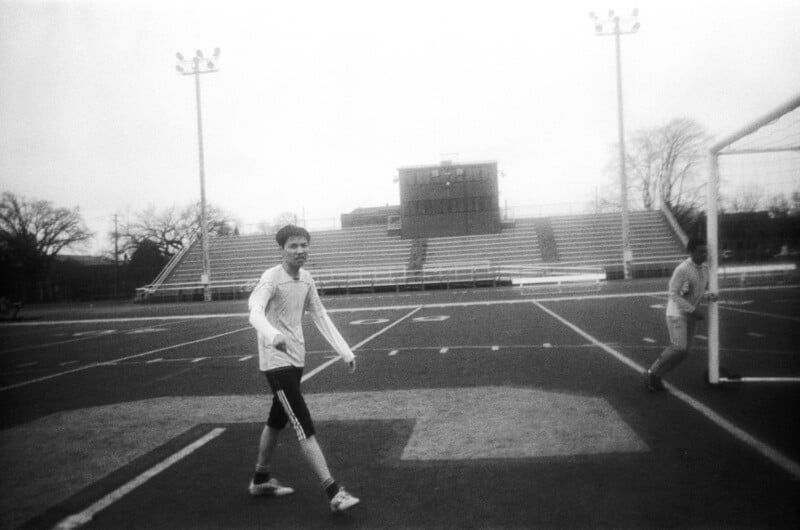
Whether it is a child tying his cleats on a grassy field, a goal scored in the dying minutes of a match, or a portrait of a stranger on the street, Tri-X provides the contrast, the depth, and the texture that turns a simple photograph into a lasting memory. If there could be only one black-and-white film left on earth, the consensus remains clear: Tri-X would be the champion.
This report was compiled with contributions from the team at Blue Moon Camera and Machine. For those interested in furthering their photographic journey, Blue Moon provides comprehensive lab services, from development to printing, ensuring that the legacy of analog photography continues to thrive in the modern age.
 Laily UPN
  Reynand Wu
  Lina Hope