
 By Sagoh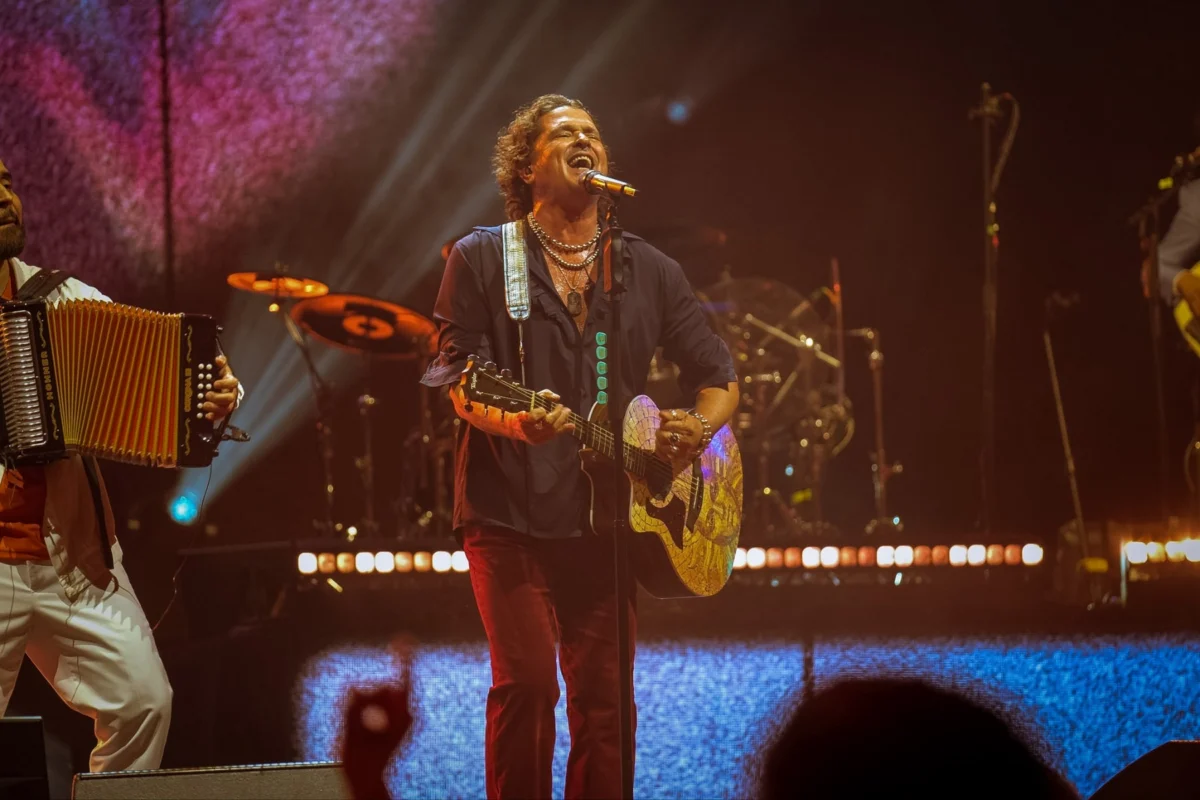
In a clandestine, industrial corner of Doral, Florida, the boundaries between the world stage of professional sports and the global arena of Latin music blurred. Within the walls of a private recording studio, four of Colombia’s most decorated musical titans—Juanes, Carlos Vives, Fonseca, and Camilo—joined forces with sporting legends René Higuita and Camilo Villegas. The gathering served as an intimate, high-profile celebration of Billboard Español’s June cover story, titled “Patria, Paternidad y Fútbol” (Nation, Fatherhood, and Soccer).
As global eyes shift toward the intensity of the FIFA 2026 World Cup, this summit offered a profound reflection on what it means to be Colombian in an era of unprecedented cultural export. The event was not merely a promotional tour; it was a curated discourse on the evolution of a nation’s narrative, moving beyond the stereotypes of the past to celebrate the enduring power of family, heritage, and artistic resilience.
The Setting: An Archive of Ambition
The choice of venue for this gathering—Juanes’s personal office and recording studio—provided a visceral backdrop for the conversation. The space is a sanctuary of influence, meticulously curated to reflect the history of a man who bridged the gap between Latin rock and global pop.
Guests were surrounded by a mosaic of inspiration: rare Beatles memorabilia, a complex 500-piece puzzle of Metallica’s Ride the Lightning, and shelves lined with seminal literature on Jimi Hendrix, John Lennon, and David Bowie. A dedicated wall displayed a fraction of his 30 Grammy awards, standing as silent testimony to the heights a Colombian artist can reach. Persian rugs lay across the floor, and in place of a traditional stage, an eclectic arrangement of sofas, chairs, and a bed created a living-room atmosphere. This intimacy was intentional, fostering a dialogue that was less of a press junket and more of a family gathering among architects of modern Colombian culture.
Chronology of a Cultural Shift
The evening was moderated by Leila Cobo, Billboard’s Co-Chief Content Officer, who steered the panel through a retrospective of the country’s trajectory. The discussion unfolded in three distinct phases: the historical struggle, the emergence of a global artistic identity, and the modern synthesis of fatherhood and sport.
The Historical Foundation
Cobo opened the evening with a deeply personal observation, noting that she and the artists on stage belong to a generation defined by the challenges of a country once overshadowed by pain and bloodshed. The conversation served to acknowledge that the current international success of these individuals did not happen in a vacuum. It was built upon the "shoulders of generations that came before us," as Carlos Vives poignantly remarked. For decades, Colombian talent was often overlooked or undervalued domestically, leading to a "brain drain" of culture. The turning point, as identified by the panel, was the collective decision to stop viewing their music as merely local, and instead as a universal language.
The Musical Synthesis
Following the formal discussion, the gravity of the event gave way to a spontaneous, high-energy jam session. This shift from dialogue to performance highlighted the camaraderie between the participants. Fonseca, Juanes, and Vives transitioned seamlessly into classic Colombian repertoire, performing renditions of Diomedes Díaz’s “Bonita” before launching into their own anthems, such as Vives’s “La Celosa” and the evocative “La Tierra del Olvido.” This musical interplay served as a live demonstration of the "team" dynamic mentioned by Juanes—a group that, despite individual successes, remains tethered by a shared national pride.
Supporting Data and Perspectives: The Panelists’ View
The dialogue was enriched by specific insights from the participants, each offering a unique lens through which to view the intersection of their respective crafts.

Carlos Vives on Cultural Export
Vives emphasized the shift in mindset required to project Colombian identity globally. "Neither Carlos, nor Juanes, nor Fonseca stayed only in Colombia," he noted. "We’ve taken our music to so many parts of the world." His point was clear: by embracing their roots while simultaneously innovating within global genres, they transformed the perception of Colombia from a place defined by its crises to one defined by its rhythm, vitality, and creative output.
Juanes on the Athlete’s Mindset
Perhaps the most compelling intersection of the evening was Juanes’s comparison between the mental state of a musician and that of a professional athlete. Addressing the intensity of a live show, he equated the stage to a playing field. "You step onstage thinking, ‘I have to win this over no matter what.’ There’s no way I’m going to lose," he explained. He argued that the vulnerability of performing—even in the face of potential catastrophe, such as technical failure or extreme weather—requires the same "champion" mindset as that of a soccer player facing a high-stakes penalty kick.
Fonseca on the Value of Family
Fonseca provided the grounding element for the "Paternidad" (Fatherhood) aspect of the theme. In a culture where family is the bedrock, the struggle to balance global touring with the responsibilities of fatherhood is a recurring narrative for many Colombian artists. By placing this topic alongside national pride and soccer, the panelists normalized the idea that their public personas are inseparable from their private realities as parents.
René Higuita’s Tactical Analysis
The legendary goalkeeper René Higuita provided a pragmatic look at the national soccer team (La Selección Colombia). His insights moved the conversation into the realm of current events, noting the immense pressure placed on the team during the World Cup. Higuita’s perspective served as a reminder that for all the glamour of the music industry, the raw, visceral experience of sports remains the primary heartbeat of the nation. He emphasized that the "adrenaline and pressure" of the tournament often dictate performance, and he urged for a continued focus on the fluidity and confidence the team displayed in their stronger matches.
Implications for Colombia’s Global Image
The significance of this event extends far beyond a magazine cover. It signals a sophisticated phase in Colombia’s "soft power" strategy. By aligning musical icons with sports heroes, the participants are actively participating in a rebranding effort—one that is authentic, earned, and deeply rooted in the lived experience of the artists.
- Reclamation of Narrative: By acknowledging the "pain and bloodshed" of the past while celebrating the achievements of the present, these figures are creating a holistic narrative. It is an honest approach that resonates with both local and international audiences.
- The "Team" Mentality: The camaraderie between Juanes, Vives, and Fonseca, particularly their willingness to perform together and support one another’s projects, establishes a model of collaboration that is rare in high-stakes entertainment. It reinforces the idea that their individual successes contribute to a collective Colombian "brand."
- The Intersection of Demographics: By bridging the gap between generations—from established legends like Higuita and Vives to younger stars like Camilo—the initiative captures a broad spectrum of the Colombian diaspora and domestic audience.
Conclusion: A Lasting Legacy
As the night concluded, the air in the Doral studio felt charged with a sense of accomplishment that transcended the music industry. The gathering was a testament to the idea that a nation is not just its geography or its politics; it is the sum of its stories, its songs, and the grit of its people.
The "Patria, Paternidad y Fútbol" initiative serves as a blueprint for how cultural leaders can utilize their platform to foster national unity. By refusing to shy away from the complexities of their heritage while simultaneously pushing the boundaries of global influence, these men have done more than sell records or win games. They have helped craft a new, confident identity for a country that is finally being heard—and seen—on its own terms. As the world turns its eyes toward the World Cup and the future of Latin music, the message from this intimate gathering remains clear: Colombia is a team, and it is ready to play.
 Ali Ikhwan
  Suro Senen
  Reynand Wu