
 By Basiran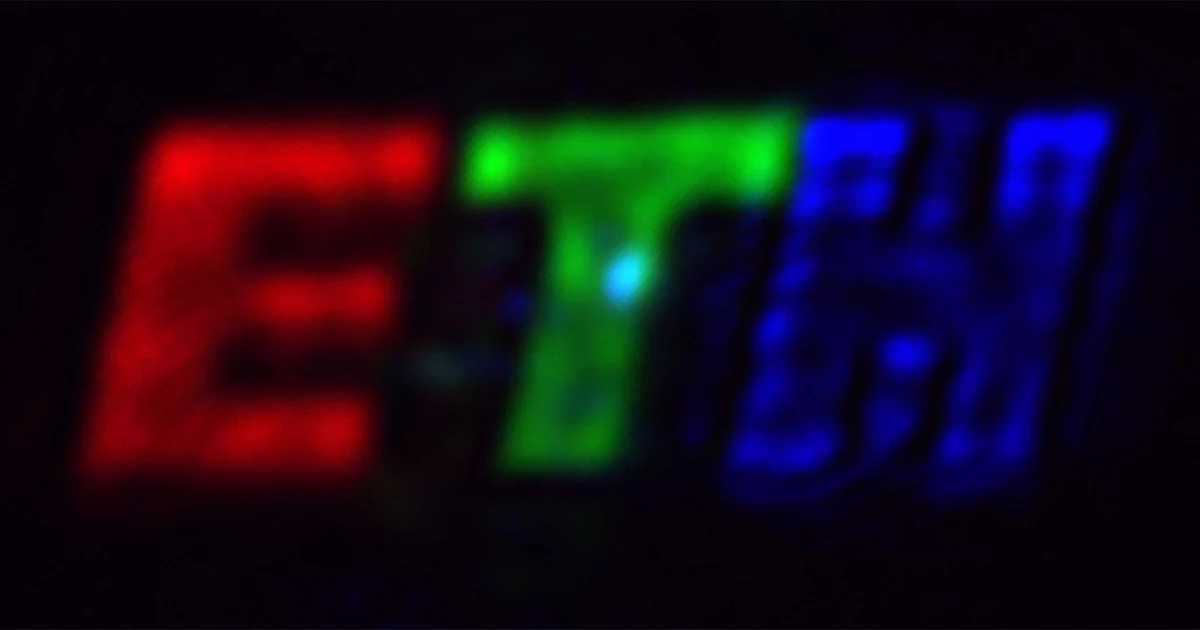
For nearly a century, the digital world has been defined by a fundamental binary. Since the term “picture element”—or pixel—was coined in the mid-1930s, technology has enforced a strict separation of labor: pixels either record light (cameras) or they emit light (displays). This duality has dictated the form factor of every smartphone, laptop, and television in existence, requiring manufacturers to stack separate sensor and display layers, adding bulk, complexity, and energy consumption to our devices.
However, a breakthrough from ETH Zurich is poised to collapse this century-old divide. A research team led by Professor David Norris at the Optical Materials Engineering Laboratory has unveiled a new class of “Fourier pixels” capable of both capturing and displaying light. This innovation, recently published in the journal Nature, effectively allows a single surface to function simultaneously as an eye and a screen, promising a future where the distinction between capturing an image and projecting one becomes obsolete.
The Mechanics of Light: How Fourier Pixels Work
To understand the magnitude of this discovery, one must look at the physics of light manipulation. Standard pixels in your smartphone’s camera are essentially photodetectors; they trap photons and convert them into electrical signals. Conversely, the pixels in your display are tiny light sources, such as OLEDs or LEDs, that generate photons to form an image.
The ETH Zurich team, led by researchers Y.M. Glauser and S.J.W. Vonk, moved beyond these traditional architectures by utilizing the wave nature of light. Their “Fourier pixels” function by controlling the interference patterns of light waves.
The Wave-Surface Interaction
When light interacts with a specifically sculpted surface, it doesn’t just bounce off; it generates surface waves that propagate across the chip. By engineering the geometry of these surfaces at the microscopic level, the researchers can precisely control the oscillation phase and polarization of these waves.
As the team explains, when these surface waves are scattered back out of the material as light waves, they interfere with one another. By manipulating the physical structure of the pixel, the researchers can force these waves to reinforce each other in specific spots—creating an image—or cancel each other out to create shadows. Because the physics of this process is reversible, the same structure that projects a light field can, in reverse, analyze an incoming light field. It reads the intensity, phase, and polarization of light as efficiently as it emits it.
A Chronology of the Pixel: From Wireless World to the Present
The evolution of the pixel is a history of increasing density and miniaturization. Here is a timeline of how we arrived at the current threshold of bidirectional light control:
- 1930s: The term “picture element” appears in the journal Wireless World, formalizing the concept of a digital image being composed of discrete units.
- 1960s–70s: The invention of the Charge-Coupled Device (CCD) allows for the first electronic capture of images, setting the standard for camera sensors.
- 1990s–2000s: The dominance of Liquid Crystal Displays (LCD) and later OLED technology revolutionizes how we consume light, cementing the divide between sensors and emitters.
- 2024: Research begins at ETH Zurich’s Optical Materials Engineering Laboratory to explore whether sub-wavelength surface structures can manipulate light in both directions.
- June 2026: The team publishes their findings in Nature, demonstrating the first functional “Fourier pixel” that acts as both a sensor and an emitter, marking the first time these two functions have been unified in a single hardware component.
Supporting Data: The Physics of Bidirectionality
The Nature paper, titled “Fourier pixels for bidirectional light control,” provides a rigorous breakdown of how these pixels overcome the traditional limitations of optical hardware.
The researchers utilized Fourier analysis—a mathematical technique that breaks down complex signals into individual frequencies—to calculate the exact surface shapes required to achieve specific light fields. This is the “secret sauce” of the technology: by applying advanced mathematical modeling, the team can “sculpt” the pixel surface to perform complex optical tasks that would otherwise require bulky lenses, mirrors, or separate sensor arrays.
Key Performance Indicators (KPIs) of the Fourier Pixel:
- Bidirectionality: The ability to switch between capture and display modes in near-real-time.
- Integrated Sensing: Unlike traditional CMOS sensors that require an array of transistors and color filters, the Fourier pixel uses its own topography to filter and analyze light.
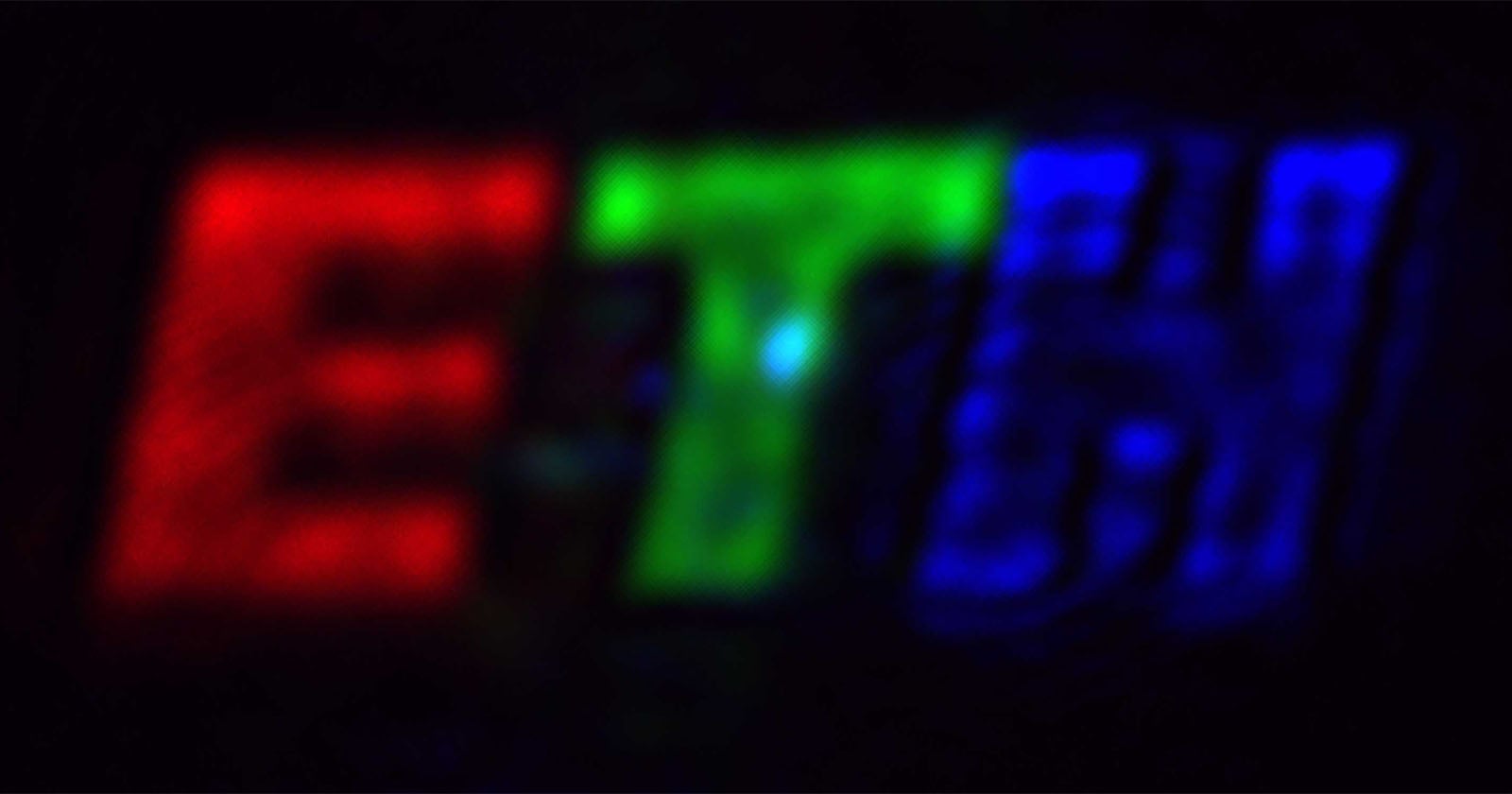
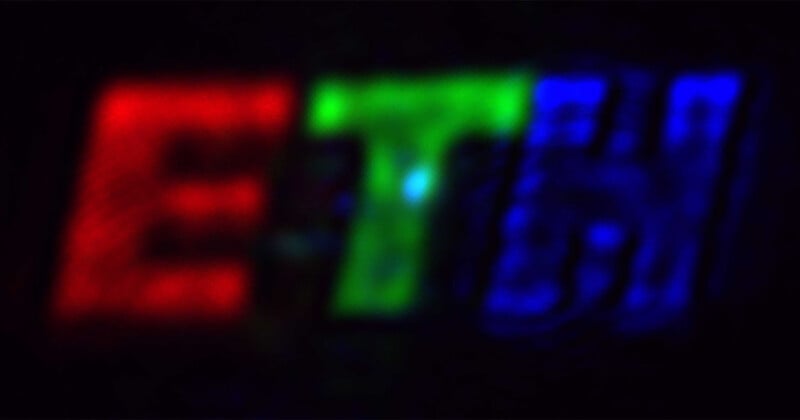
- Compactness: The “E” in the team’s proof-of-concept logo measures roughly 1 millimeter in height, yet it maintains high-fidelity control over the light field, demonstrating that the technology is scalable for future manufacturing.
Official Responses and Peer Perspective
Professor David Norris, speaking on the implications of the work, emphasizes the versatility of the system. “These pixels can both steer light and analyze it,” Norris stated. “Not only the intensity of the light, but also its oscillation phase and polarization can be controlled and analyzed.”
The scientific community has reacted with significant interest. The research is currently a finalist for the ETH Zurich Spark Award, which honors the most promising inventions originating from university research. The patent application filed by the team suggests that they are not merely aiming for a laboratory curiosity but are actively targeting industrial integration.
Independent experts noted that while the current prototype is a proof-of-concept, the implications for integrated optics are profound. By removing the need for a separate display layer over a camera sensor, manufacturers could potentially reduce the thickness of mobile devices, improve energy efficiency, and allow for “see-through” displays that can capture images of the user or the environment without a dedicated lens bump on the back of a phone.
Future Implications: The “Camera-Display” Hybrid
The most immediate application of Fourier pixels is the creation of a matrix—a grid of these pixels—that can function as a unified camera-display device.
Beyond the Smartphone
While the smartphone industry is the most obvious candidate for this technology, the broader implications reach into several fields:
- Augmented Reality (AR) Glasses: Current AR headsets are notoriously bulky because they require external cameras to map the environment and separate optics to project images onto the glass. A Fourier-pixel-based lens could act as both the camera and the projector, drastically reducing the weight and size of AR wearables.
- Autonomous Robotics: Robots often struggle with the “camera-display” loop—capturing data, processing it, and then signaling their status to humans. A bidirectional surface could allow a robot’s exterior “skin” to capture its surroundings and display information to humans simultaneously.
- Advanced Microscopy: In medical imaging, the ability to analyze the phase and polarization of light is critical for examining transparent biological tissues. These pixels could lead to a new generation of microscopes that are smaller, cheaper, and more precise.
- Zero-Latency Computing: Because the pixel can process and emit light without needing to send data to a separate computer processor for every stage of the cycle, there is the potential for “in-pixel” computation. The pixel could react to an incoming image and produce a corresponding light response instantly, bypassing traditional data bottlenecks.
The Challenges Ahead
Despite the optimism, the transition from lab to consumer device remains significant. The current Fourier pixels require precise, nano-scale manufacturing. Scaling this process to create a high-definition screen containing millions of these pixels—each with the required surface topography—will require a massive leap in semiconductor manufacturing and lithography.
Furthermore, the team must address the balance between display brightness and sensor sensitivity. A surface optimized for projecting light may not inherently be the most efficient at absorbing it. Balancing these two modes of operation in a high-resolution array will be the next major hurdle for the ETH Zurich team.
Conclusion
The work of Glauser, Vonk, and Norris represents a rare moment where the fundamental rules of a technology are rewritten. By moving away from the “pixel-as-a-switch” mentality and toward the “pixel-as-a-wave-manipulator” model, ETH Zurich has unlocked a path toward a new era of optical devices.
We are likely years away from seeing these pixels in our pockets, but the path is clear: the wall between seeing and showing has been breached. As the researchers continue to refine their Fourier matrices, the future of our devices—and perhaps the way we interact with the digital world—looks increasingly bidirectional.
 Laily UPN
  Reynand Wu
  Lina Hope