
 By Siti Muinah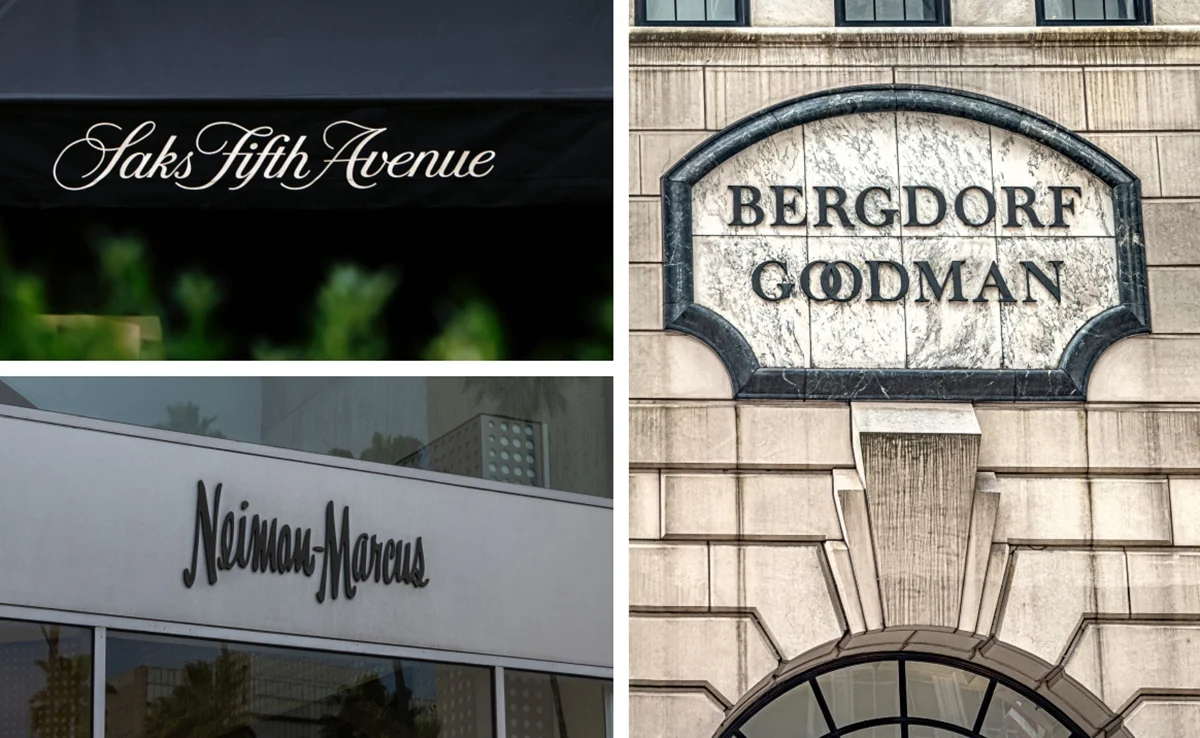
The American luxury retail landscape underwent a seismic shift late Friday as the parent company formerly known as Saks Global officially emerged from Chapter 11 bankruptcy. In a move signaling a definitive break from a turbulent past, the organization announced a comprehensive rebranding, now operating under the moniker Exemplar Luxury Group.
The restructuring, which concludes a year-long period of court-supervised reorganization, leaves the company with a fundamentally altered financial foundation. According to management, the group has successfully shed nearly 75 percent of its pre-bankruptcy debt, securing a fortified balance sheet and the full, renewed backing of its capital partners and primary stakeholders.
For the retail industry—which has watched the company’s struggles with apprehension—the emergence of Exemplar marks the beginning of a high-stakes effort to restore faith among vendors, solidify inventory levels, and reclaim the luster of three of the most iconic names in American fashion: Saks Fifth Avenue, Neiman Marcus, and Bergdorf Goodman.
The Path to Reorganization: A Chronology of Distress
The collapse of the previous corporate structure was neither sudden nor unexpected. The roots of the crisis trace back to the ambitious $2.7 billion acquisition of the Neiman Marcus Group, a deal spearheaded by executive Richard Baker. While intended to create an unassailable luxury powerhouse, the merger was quickly hamstrung by macroeconomic headwinds, a lack of operational cohesion, and, crucially, a failure to sustain adequate inventory levels.
By January 2026, the company’s inability to meet payment obligations to vendors—compounded by the weight of its acquisition-related debt—forced it to seek refuge in Chapter 11 bankruptcy.
Key Milestones in the Restructuring:
- January 2026: The company files for Chapter 11 bankruptcy protection amidst severe liquidity constraints and strained relations with luxury brand partners.
- Q1–Q3 2026: The group initiates a "right-sizing" of its corporate organization, centralizing merchandising functions and liquidating underperforming assets.
- Late 2026: A series of store closures occurs, including 57 Saks Off 5th locations, as the company pivots the off-price banner toward a pure-play liquidation model.
- March 2027: The company emerges from court supervision, formally adopting the "Exemplar Luxury Group" identity and announcing a new seven-member board of directors.
Financial Restructuring and Operational Strategy
CEO Geoffroy van Raemdonck, who remains at the helm of the rebranded organization, has emphasized that the transition is not merely cosmetic. The "Exemplar" identity is intended to convey a commitment to excellence and reliability—values the company admits were eroded during the previous regime.
The New Financial Framework
The reduction of debt by three-quarters has provided the "Exemplar" team with the operational breathing room necessary to shift from crisis management to long-term growth. The company’s goal, according to van Raemdonck, is to become a consistent "double-digit EBITDA company." By consolidating the back-office functions of Saks, Neiman’s, and Bergdorf’s, the group has significantly lowered its overhead costs, creating a leaner, more agile cost structure than the sum of its parts prior to the merger.
Store Footprint and Inventory Management
A significant portion of the reorganization involved the "optimization" of the group’s physical footprint. The retail portfolio has been narrowed to ensure that only high-performing locations remain:
- Saks Fifth Avenue: Retains 15 flagship stores, all located in high-demand luxury markets.
- Neiman Marcus: Operates 33 units.
- Bergdorf Goodman: Retains its iconic men’s and women’s flagships in New York City.
- Saks Off 5th: Reduced to 12 stores, serving exclusively as a channel for liquidating excess inventory rather than a primary retail growth vehicle.
Regarding the perennial issue of inventory, van Raemdonck expressed confidence, noting that recent seasonal receipts have surpassed the previous year’s levels. "When I look at the seasonal receipts, we are receiving exactly what we needed," he stated.
Repairing Vendor Relations: A New Policy of Transparency
Perhaps the most significant challenge facing the Exemplar Luxury Group is the deep-seated distrust among designer labels. The pre-bankruptcy era was marked by a controversial and widely criticized 90-day payment policy, which many brands viewed as an unfair burden on their own cash flows.

Van Raemdonck acknowledged these friction points directly, framing his leadership as a departure from the opacity of the past. "My goal is to be a key and better partner, one that is transparent, one that is reliable," he said. While declining to disclose specific payment terms for individual brands, he confirmed that the group is currently adhering to all agreed-upon schedules. With an annual purchasing volume exceeding $3 billion at cost, the group’s ability to pay on time will be the ultimate test of its recovery.
Governance and Leadership: A New Board
The transition to Exemplar includes a revamped board of directors, designed to provide both financial oversight and deep industry expertise. The seven-person board features representatives from Pentwater Capital Management and Bracebridge Capital—the firms that steered the company through the restructuring process—alongside independent directors with significant pedigree:
- Dave Kimbell: Formerly the CEO of Ulta Beauty, Kimbell brings vast experience in retail operations, having held leadership roles at P&G and PepsiCo, and currently serving on the board of Best Buy.
- Philippe Schaus: A veteran of the luxury sector, Schaus previously served as the global CEO of Moët Hennessy and held senior leadership roles within the LVMH executive committee for over a decade.
This injection of high-level talent is a clear signal to the market that Exemplar intends to prioritize luxury-specific retail strategy over the financial engineering that characterized the previous ownership era.
Implications for the Future of Luxury Retail
The birth of the Exemplar Luxury Group represents a "new day" for American retail, but the path forward remains complex. The luxury sector is currently experiencing a period of creative and strategic turnover, with many heritage houses re-evaluating their brand positioning.
Strategic Differentiation
Van Raemdonck insists that the branding of "Exemplar" is not an attempt to diminish the individual identities of Saks, Neiman’s, or Bergdorf Goodman. Instead, the parent company is intended to serve as a shared infrastructure for investments in technology, talent, and logistics. By centralizing these investments, the group claims it can better compete against the global scale of European luxury conglomerates.
The Consumer Appetite
Despite the instability of the past two years, the CEO remains optimistic about the resilience of the luxury customer. "When the brands deliver newness that is really congruent to their brand image and they tell strong brand stories, we see outperformance," he noted. The company has reported record-breaking success in recent trunk shows and brand activations, suggesting that if the supply chain is stable and the brand experience is curated, the high-end consumer remains eager to engage.
The "Maniacally Focused" Mandate
As Exemplar moves out of the shadow of court supervision, the focus turns to execution. The company is no longer operating under the constraint of the bankruptcy court, which allows for greater freedom in marketing, store renovations, and digital innovation.
However, the industry will be watching closely to see if the group can maintain its "maniacal focus" on financial discipline while simultaneously fostering the prestige and exclusivity that define its brands. The success of the Exemplar Luxury Group will not be determined by its balance sheet alone, but by its ability to prove that a consolidated American luxury group can offer more value to its partners and customers than the individual entities could provide on their own.
In the words of van Raemdonck, "We are starting as a new company… we want to make a promise to the industry that we are going to be the best partner, the best destination for customers, and an employer of choice." Whether the market accepts this promise as a fresh start or a final chapter remains to be seen, but for now, the Exemplar Luxury Group has successfully navigated the most perilous stretch of its journey.
 Nana Muazin
  Nana
Nana  Ali Ikhwan