
 By Evan Lee Salim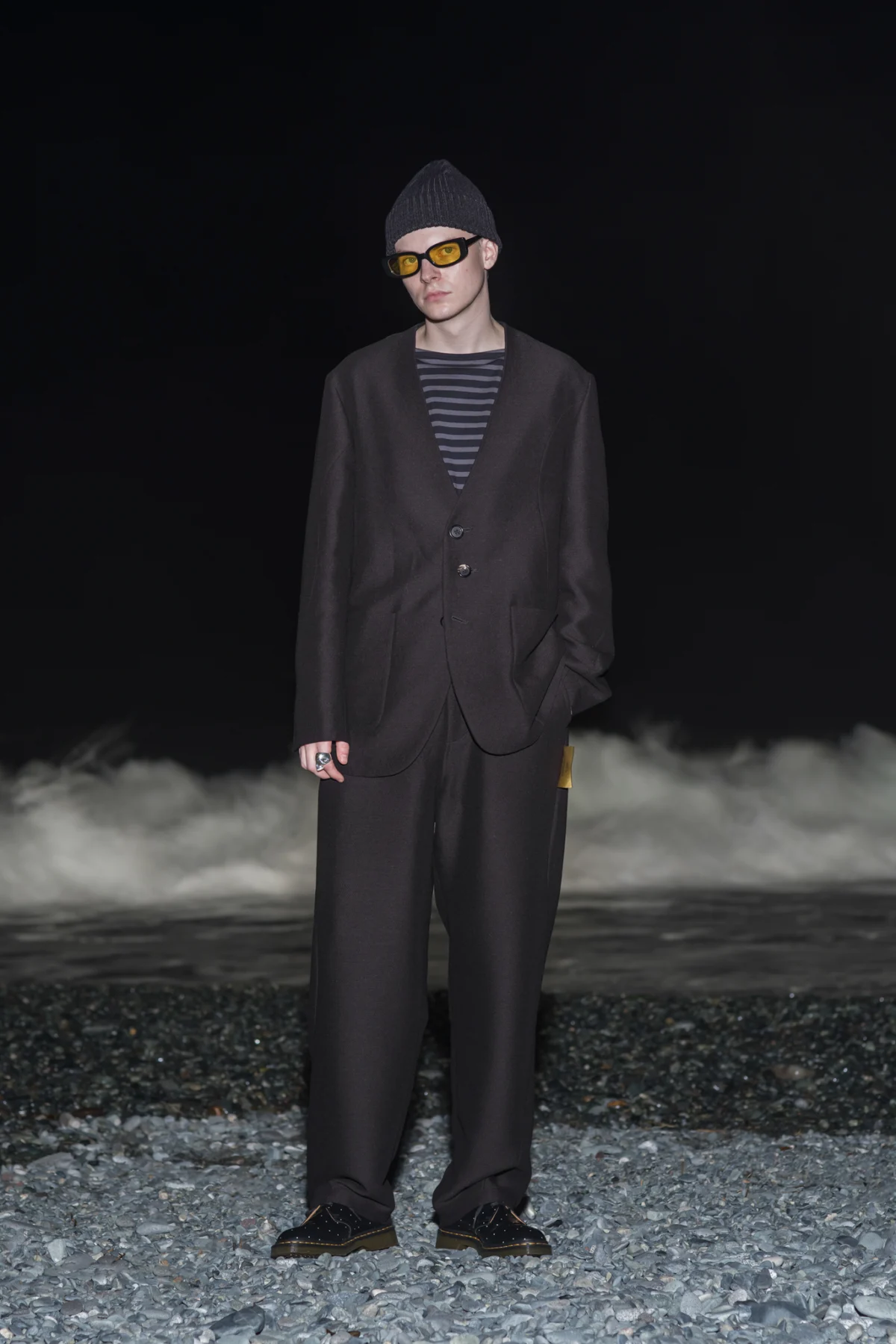
In the high-stakes theater of Paris Fashion Week, few designers bridge the gap between contemporary art and functional apparel as seamlessly as Jun Takahashi. The founder of Undercover, a label synonymous with Tokyo’s punk-infused intellectualism, has once again transformed the catwalk into a curated gallery space. His latest collection is not merely a seasonal offering; it is a profound meditation on the relationship between the painter’s brush and the tailor’s needle. By synthesizing the haunting, historical sensibilities of Belgian artist Michaël Borremans with his own subversive design vocabulary, Takahashi has delivered a collection that challenges the viewer to reconsider the boundaries between a garment and a canvas.
Main Facts: The Intersection of High Art and Street-Ready Utility
The core of Undercover’s latest collection is a deep-dive collaboration with Michaël Borremans, a painter celebrated for his enigmatic, impressionist-style depictions of soldiers and delicate floral still-lifes. Takahashi, who has recently intensified his own personal practice in painting, found a kindred spirit in Borremans’ ability to evoke history while maintaining a sense of detachment.
The collection serves as a wearable retrospective. Key pieces include:
- Reversible Linen Jackets: Adorned with Borremans’ prints of uniformed figures, these pieces emphasize the texture and history of the medium.
- Experimental Knitwear: Oversized cardigans engineered from a unique paper-and-rayon blend, offering a fragile yet structural aesthetic.
- Artistic Deconstruction: Sweatshirts featuring deliberate, hidden slashes at the elbows—a signature Undercover move that suggests both wear and tear, and the vulnerability of the human form.
- The Palette: A rigorous application of primary colors—vibrant reds, deep blues, and crisp whites—that pay homage to the color theory present in Borremans’ oil works.
This is a collection designed for the "art-wearer"—an individual who views their attire as an extension of their intellectual curiosity rather than a mere display of sentimentality.
Chronology: A History of Collaborative Genius
To understand the weight of this collaboration, one must look at the lineage of Takahashi’s curatorial approach. His tenure at Undercover has been defined by a restless desire to engage with external creative disciplines, effectively democratizing art through the medium of fashion.
The Sherman Influence
Years ago, Takahashi shocked the industry by incorporating the unsettling, transformative photography of Cindy Sherman directly onto his garments. This was not a simple logo placement; it was a dialogue between Sherman’s exploration of identity and Takahashi’s interest in the "masking" of the human face.
The "Twin Peaks" Aesthetic
Takahashi’s obsession with David Lynch’s Twin Peaks brought a cinematic, surrealist quality to his runways. By pulling inspiration from the show’s eerie, small-town-meets-nightmare aesthetic, he demonstrated an ability to synthesize pop culture into high-fashion narratives.
The Tactile Subversion of Anne-Valérie Dupond
In recent seasons, Takahashi worked with French plush artist Anne-Valérie Dupond. Her soft, tactile, and slightly subversive sculptures provided a stark contrast to the rigidity of traditional tailoring. It proved that Takahashi was not afraid to experiment with materials that felt "childish" to elevate them into the realm of the sophisticated.
The Borremans Chapter
The current pivot toward Michaël Borremans marks a shift in Takahashi’s maturity. Moving away from the gritty, pop-culture-heavy influences of his early career, this collaboration reflects a more refined, painterly approach to design. It is the result of Takahashi’s own increasing investment in his painting practice, which has fundamentally altered how he perceives the drape and canvas of a piece of clothing.
Supporting Data: Technical Innovation and Materiality
While the artistic inspiration provides the soul of the collection, the technical execution provides the body. Undercover remains a brand rooted in the practicalities of the urban environment, and this season is no exception.
Textile Innovation
The use of paper-and-rayon blends in knitwear represents a technical milestone. These materials, while notoriously difficult to manipulate, offer a crinkly, organic texture that mimics the surface of a canvas. When paired with the "handkerchief-style" patchwork shorts and quilted robes, the collection creates a rhythmic, graphic aesthetic. The teardrop motifs and lace flowers provide a necessary softness, balancing the more militant, uniform-inspired pieces.
Outerwear Prowess
The outerwear selection functions as the pragmatic anchor for the collection. Cotton flak vests, reminiscent of tactical military gear, were presented alongside leather jackets featuring precise clip-fastening hardware. This juxtaposition—the historical soldier imagery of Borremans versus the modern, utilitarian hardware of the street—creates a friction that is quintessential Undercover.
Furthermore, the introduction of nylon anoraks in primary "crayola" colors prepares the wearer for the unpredictable Paris weather. These pieces serve as a reminder that regardless of how "high-concept" the collection becomes, Takahashi never forgets that his clothes must endure the elements of the city.
Official Responses and Industry Reception
The critical response to the show has been one of reverence for Takahashi’s restraint. Industry insiders noted that while many designers have attempted to "print art on clothes," few achieve the synergy seen here.
"Jun isn’t just slapping a print onto a shirt," remarked one lead buyer from a top-tier Paris boutique. "He is integrating the mood of the paintings into the silhouette of the coat. The slashes in the elbows, the choice of linen—it all feels like a deliberate curatorial decision."
Takahashi himself has remained typically enigmatic regarding his process, though he has spoken on the importance of "moving away from the literal." In recent press statements, the designer noted that he has made a personal pact to avoid the recurring tropes that have populated his past work—specifically the butterfly motifs that once defined his collections—in favor of exploring the more complex, static, and melancholic beauty of fine art.
Implications: The Future of the "Gallery-Runway"
The success of this collaboration raises a significant question for the industry: What is the future of the designer-as-curator?
A Shift Toward Intellectualism
As fast-fashion brands continue to saturate the market with celebrity-driven collaborations, Undercover’s pivot toward established, high-brow fine art serves as a defensive wall. It signals to the consumer that fashion is not merely about trends, but about a lineage of artistic thought. By aligning with Borremans, Takahashi is effectively "elevating" his customer, inviting them to participate in a discourse that spans centuries of artistic history.
The Sustainability of Art-Driven Fashion
There is also a broader implication regarding production. By utilizing techniques like patchwork and reversible construction, Takahashi is emphasizing longevity. These are garments designed to be kept, cherished, and perhaps even displayed, rather than discarded after a single season. This "slow-fashion" approach, masked behind the excitement of a runway show, is a quiet but powerful statement on the environmental responsibilities of modern design houses.
The Designer’s Evolution
Finally, the collection marks a turning point for Takahashi himself. If the designer is spending more time at the easel and less time looking at the archives of others, we can expect future Undercover collections to be increasingly personal. This shift from "collaborator" to "co-creator" suggests that we are entering a new phase of Takahashi’s career—one where the distinction between the artist and the fashion designer is effectively dissolved.
In conclusion, Jun Takahashi’s latest outing in Paris is a triumph of synthesis. By merging the somber, historical elegance of Michaël Borremans with the tactical, urban grit of modern streetwear, Undercover has proven that fashion remains one of the most potent vehicles for artistic expression. For those who choose to wear their art on their sleeves—or indeed, on their entire wardrobe—this collection provides a beautiful, complex, and deeply human canvas for the seasons to come.
 Nana Muazin
  Nana
Nana  Ali Ikhwan