
 By Nana Wu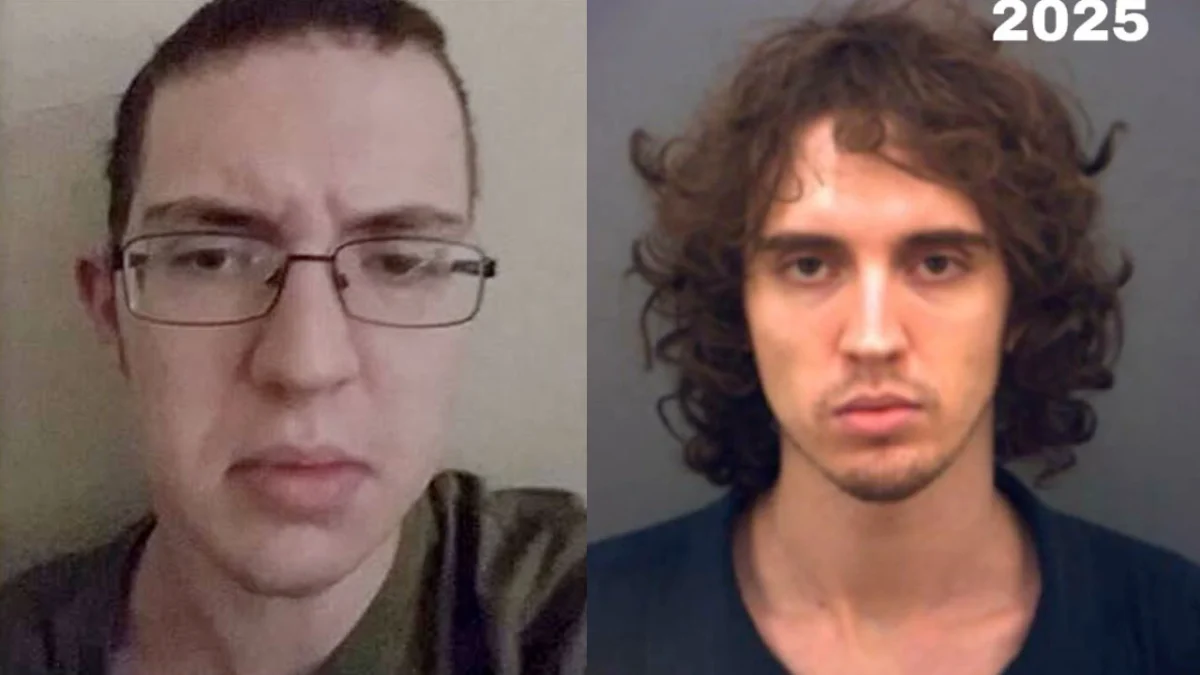
A purported "new" image of Patrick Crusius, the perpetrator of the devastating 2019 El Paso Walmart shooting, has recently circulated across social media platforms, igniting a disturbing wave of online commentary. The image, depicting Crusius with a different appearance than his widely recognized mugshot, quickly became the subject of "glow-up" jokes within certain internet circles. These discussions frequently referenced "Chudjak," a crude line-drawing meme directly inspired by Crusius, notorious for its association with extremist rhetoric like "Billions Must Die." The virality of the image and the subsequent reactions underscore a troubling aspect of contemporary internet culture: the desensitization to, and even the ironic trivialization of, figures responsible for heinous acts of domestic terrorism.
Patrick Crusius remains a figure of profound infamy, responsible for one of the deadliest hate-motivated mass shootings in modern American history. His actions on August 3, 2019, at a Walmart in El Paso, Texas, resulted in the deaths of 23 innocent people and left 23 others wounded. He is currently serving a lifetime sentence in federal prison after pleading guilty to 90 federal charges, including hate crimes resulting in death and firearms offenses. Yet, in some corners of the internet, the grim reality of his crimes is overshadowed by a distorted, meme-driven persona, reducing a mass murderer to a caricature known simply as "Chudjak." This recent surge in attention, fueled by a deceptively dated photograph, has reignited critical discussions about the ethical boundaries of online humor, the propagation of misinformation, and the dangerous normalization of figures linked to extremist violence.
The Resurgence of a Troubling Image
The catalyst for this renewed online discourse was the appearance of a photograph of Patrick Crusius that presented a significantly altered appearance compared to his initial, widely circulated booking photos. This image quickly propagated across various social media platforms, prompting a wave of commentary that ranged from shock to deeply unsettling "humor."
A "Glow-Up" Narrative Emerges
The image in question portrays Crusius without his characteristic glasses, sporting longer, curly hair, and noticeable facial scruff. This physical transformation, perceived by some as an improvement, led to the application of the internet slang term "glow-up," typically used to describe a positive personal transformation, particularly in appearance. The ironic and disturbing application of this term to a convicted mass murderer highlights a profound disconnect within certain online communities.
The image gained significant traction following a post on X (formerly Twitter) by user @TruueDiscipline on Sunday, April 28th. The tweet, which featured the photograph alongside the caption, "This is what chudjak looks like now… feel old yet?", rapidly went viral. Within just two days, the post amassed over 1.2 million views and garnered more than 17,000 likes, demonstrating the immense reach and rapid dissemination capabilities of platforms like X. The immediate reactions were varied but predominantly centered around the "glow-up" narrative, with many users engaging in what appeared to be dark humor or ironic commentary regarding the perpetrator’s changed appearance. This phenomenon quickly drew attention to the broader implications of how individuals responsible for such atrocities are perceived and discussed in the digital sphere.
The Image’s Dubious Provenance
Despite its rapid spread and the popular assumption that it was a very recent photograph, the image’s origin and precise date were initially unclear, contributing to a degree of misinformation. The photograph first surfaced online on April 25th, 2025, when Redditor /u/uncanealguinzaglio posted it to the subreddit /r/masskillers. The user claimed the image was a new federal mugshot of Crusius, purportedly acquired through a Freedom of Information Act (FOIA) request. The FOIA is a federal law that grants the public the right to request access to records from any federal agency, highlighting the potential for such sensitive information to enter public circulation.
However, the Reddit post was swiftly deleted, likely due to violations of Reddit’s Terms of Service, which typically prohibit content that glorifies or promotes violence, or that harasses or demeans individuals. Despite its removal, the image had already been cached and shared, ensuring its continued proliferation across other platforms. The original Redditor subsequently clarified that the image was not from 2025 but rather from "circa July of 2023," coinciding with Crusius’s plea of guilty to federal charges. The Redditor further explained, "It was not taken BY the federal government it was taken by El Paso holding him for them. For some reason. But it still came from his federal charges and not state." This clarification is crucial, as it distinguishes the "glow-up" photo from a truly recent court appearance, which occurred in April 2025, where Crusius’s appearance was notably different once more. The initial misdating, whether intentional or accidental, played a significant role in fueling the "new look" narrative and the subsequent viral spread.
Chudjak: The Meme and its Malignant Origins
To fully grasp the context of the recent online reactions, it is essential to understand the "Chudjak" meme itself, its origins, and its deeply troubling associations. The meme is not merely a caricature but a visual shorthand for a specific vein of extremist ideology prevalent in certain online communities.
Birth on the Fringes of the Internet
The Chudjak meme emerged from the darker recesses of the internet, specifically the /pol/ (politically incorrect) board of 4chan, a notorious imageboard known for its anonymous and often extreme content. It first appeared in late 2019, shortly after the El Paso shooting, directly drawing inspiration from Patrick Crusius’s initial mugshot and the details surrounding his manifesto.
Visually, Chudjak is a variant of the "Wojak" meme, a minimalist line drawing of a bald, often melancholic or expressive man, which originated on 4chan and evolved into a versatile tool for conveying various emotions and social observations. Chudjak distinguishes itself with specific features: typically depicted with glasses, deep nasolabial folds (lines extending from the nose to the corners of the mouth), and a perpetual frown or grimace. The name "Chud" itself is a derogatory internet slang term, often used by those on the far-right to describe individuals they perceive as "liberals," "progressives," or "globalists," sometimes with connotations of being "Cannibalistic Humanoid Underground Dwellers," referencing the 1984 horror film C.H.U.D. In other contexts, it can be a self-deprecating or ironic term adopted by some on the far-right. Its application to Crusius, often by those who align with aspects of his anti-immigrant and white supremacist ideology, serves as a perverse form of recognition or even veneration.
The "Billions Must Die" Mantra
Integral to the Chudjak meme is its frequent pairing with overtly genocidal and apocalyptic slogans, most prominently, "The West has fallen. Billions must die." This phrase is not merely a casual expression of nihilism; it is a direct echo of accelerationist and white supremacist ideologies that advocate for the violent overthrow of existing societal structures, often with the goal of establishing an ethnically pure state.
The "Billions Must Die" meme, in particular, has become a chilling shorthand for online extremist hysteria. It encapsulates the worldview of individuals who believe Western civilization is in an irreversible decline, often attributing this decline to multiculturalism, immigration, and perceived societal degeneracy. For adherents, the only solution is a catastrophic, cleansing event – a mass die-off – to pave the way for a new, idealized order. Patrick Crusius’s manifesto, which explicitly decried a "Hispanic invasion" of Texas and expressed support for the Christchurch mosque shooter’s anti-immigrant rhetoric, aligns perfectly with the sentiments conveyed by the "Billions Must Die" mantra. The meme, therefore, is not an innocuous piece of internet humor; it is a potent symbol that resonates with, and potentially reinforces, dangerous real-world ideologies that have already manifested in horrific violence.
The El Paso Tragedy: A Reminder of Real-World Consequences
Amidst the online jokes and meme-driven discussions, it is paramount to recall the devastating reality of the El Paso Walmart shooting and the profound human cost of Patrick Crusius’s actions. The trivialization of such an event through internet culture risks obscuring the gravity of the crime and disrespecting the memory of its victims.
The Horrific Act of August 3, 2019
On August 3, 2019, Patrick Crusius, then 21 years old, drove over 600 miles from Allen, Texas, to El Paso, armed with an AK-47 style rifle. He entered the Cielo Vista Walmart and opened fire on unsuspecting shoppers, many of whom were Hispanic. The attack, which unfolded over several minutes, resulted in the deaths of 23 people, ranging in age from 15 to 90, and injured 23 others. Crusius surrendered to law enforcement shortly after the massacre.
Prior to the attack, Crusius had posted a racist, anti-immigrant manifesto online, echoing the "Great Replacement" conspiracy theory – a white supremacist belief that white populations are being systematically replaced by non-white immigrants. His manifesto explicitly stated that the attack was a response to the "Hispanic invasion of Texas" and expressed solidarity with the Christchurch mosque shooter, who had perpetrated a similar white supremacist terrorist attack in New Zealand just months earlier. The Department of Justice formally classified the El Paso shooting as an act of domestic terrorism and a hate crime, underscoring its ideological underpinnings and the deliberate targeting of a specific ethnic group. The tragedy sent shockwaves across the nation, highlighting the escalating threat of white supremacist violence and the deadly consequences of online radicalization. The community of El Paso, a vibrant border city, was deeply scarred, and the victims’ families continue to grapple with unimaginable loss.
Legal Ramifications and Sentencing
Patrick Crusius’s legal journey has been extensive, reflecting the severe nature of his crimes. In February 2023, he pleaded guilty in federal court to 90 federal charges, including 23 counts of hate crimes resulting in death, 23 counts of hate crimes involving an attempt to kill, and 44 counts of using a firearm in relation to a crime of violence. As part of a plea deal, federal prosecutors agreed not to seek the death penalty, securing a sentence of 90 consecutive life sentences in federal prison without the possibility of parole. This federal conviction ensures that Crusius will spend the remainder of his life incarcerated.

Beyond the federal charges, Crusius also faces state charges in Texas, including capital murder. These state proceedings are ongoing and separate from his federal conviction. On April 21, 2025, Crusius appeared in state court in El Paso, where he formally pleaded guilty to capital murder. It was during this very recent court hearing that a photograph was taken showing him with glasses and a beard – an appearance distinct from the "glow-up" image that went viral. This distinction is crucial, as it clarifies that the "glow-up" photo, allegedly from July 2023, is not his most current public appearance, further underscoring the potential for confusion and misrepresentation in online viral content. The legal process, while lengthy, aims to deliver justice for the victims and their families and to hold Crusius accountable for the horrific violence he unleashed upon the El Paso community.
Internet Reactions: A Disturbing Glimpse into Online Culture
The spread of Crusius’s image and the subsequent "glow-up" commentary offered a stark, if disturbing, insight into certain facets of internet culture, particularly its propensity for dark humor, ironic detachment, and the rapid dissemination of potentially misleading information.
Trivialization and Dark Humor
The online reactions to Crusius’s changed appearance were predominantly characterized by a blend of ironic commentary and what some critics would describe as a desensitizing form of dark humor. Several prominent examples illustrate this trend:
- @Halsted_19’s Meme: This X user posted a meme depicting women ostensibly fawning over the "Chud" serving prison time. This particular meme, by presenting Crusius as an object of desire or fascination, contributes to a perverse romanticization or normalization of a mass murderer, even if intended ironically. It plays into the "bad boy" trope, disassociating the individual from the gravity of his crimes.
- @hayasaka_aryan’s "Indie Rock Singer" Comparison: This X user took the comparison a step further, posting a side-by-side image of Crusius with the caption, "From chud to indie rock singer." This particular remark highlights the tendency within some online communities to reduce complex, horrifying realities to superficial aesthetic judgments. The juxtaposition is designed to provoke, blurring the lines between a notorious criminal and a culturally acceptable archetype.
- @Marcus_cel’s "Cereal Guy" Reaction: Another X user, @Marcus_cel, deployed the classic "Cereal Guy" meme, showing the character spitting out his breakfast in shock over Crusius’s "new look." This meme typically signifies extreme surprise or disbelief, and its application here frames Crusius’s appearance change as an unexpected, almost comical, event rather than a trivial detail concerning a mass murderer.
These examples collectively demonstrate a cultural phenomenon where individuals, intentionally or unintentionally, engage in a form of gallows humor that can inadvertently desensitize audiences to the true horror of mass violence. While some participants might claim their intent is purely ironic or to "trigger" others, the effect can be a gradual erosion of empathy and a normalization of figures associated with extremism. This raises significant ethical questions about the boundaries of humor, particularly when it intersects with real-world suffering and acts of terrorism.
The "Feel Old Yet?" Phenomenon and Misinformation
The "Feel Old Yet?" meme template, which often features a side-by-side comparison of a person or character over time, implying significant change and the passage of time, was central to the viral spread of Crusius’s image. This meme format naturally lends itself to a narrative of transformation, regardless of the accuracy of the timeline or the underlying facts.
The initial viral spread of the "glow-up" image was heavily influenced by the misattribution of its date, with many users believing it to be a very recent photograph. This oversight highlights a common pitfall of rapid information dissemination online: speed often takes precedence over accuracy. Content can go viral based on its immediate visual impact or provocative nature, with factual verification often lagging far behind, if it happens at all.
Significantly, the original X user who helped popularize the image, @TruueDiscipline, later recognized the discrepancy. Shortly after their initial viral tweet on April 27th, they posted a correction, noting that the image was purportedly from 2023. More importantly, they shared a more recent photograph of Crusius, taken during his state court hearing on April 21st, 2025, where he pleaded guilty to capital murder. This genuinely recent photo showed Crusius with glasses and a beard, presenting yet another distinct appearance. This act of self-correction by a viral account, while commendable, often comes too late to fully counter the initial wave of misinformation, demonstrating the inherent challenges in controlling narratives once they gain momentum on social media. The "Feel Old Yet?" meme, in this context, became a vehicle for both rapid engagement and, inadvertently, for the spread of an incomplete or misleading narrative about a domestic terrorist.
Implications: The Blurring Lines Between Memes, Morality, and Mass Violence
The viral spread of Patrick Crusius’s image and the subsequent online commentary are more than just isolated incidents; they are symptomatic of broader, concerning trends within contemporary digital culture. These phenomena highlight the complex and often perilous interplay between internet memetics, ethical considerations, and the real-world impact of mass violence.
The Desensitization Effect
One of the most profound implications of this episode is the potential for a desensitization effect. When figures associated with horrific acts of violence, like Patrick Crusius, are transformed into meme templates or subjects of ironic "glow-up" jokes, it risks normalizing or even glamorizing them in certain online spaces. This process can inadvertently dilute the gravity of their crimes and the immense suffering they inflicted. The casualness with which some users engaged with the "Chudjak glow-up" speaks to a growing detachment from real-world consequences, where mass murder can be reduced to a punchline or a superficial aesthetic observation.
This desensitization is particularly concerning in the context of "edgelord" humor, a style of dark, often offensive humor popular in certain online subcultures. While proponents argue it’s merely a form of ironic detachment or rebellion against social norms, critics contend that it can serve as a gateway to, or reinforcement of, harmful ideologies. By continually pushing boundaries and trivializing atrocities, such humor can normalize extreme views, making them seem less shocking and, therefore, more acceptable within niche communities. This creates an environment where individuals susceptible to radicalization might find validation or even encouragement for their own dark thoughts.
The Role of Platforms and Moderation
The rapid dissemination of Crusius’s image also underscores the ongoing challenges faced by social media platforms in content moderation. Reddit’s swift deletion of the original post on /r/masskillers, likely for violating its Terms of Service, demonstrates an effort to curb the spread of potentially harmful content. However, the fact that the image had already been "out there" before deletion highlights the inherent difficulty in containing viral content once it begins to spread.
Platforms like X (formerly Twitter) face an even greater challenge due to their design, which prioritizes real-time information flow and virality. While X has policies against hate speech and violent extremism, the line between ironic dark humor and genuine promotion of harmful figures can be incredibly blurry and difficult to enforce at scale. The amplification of controversial content, even if the initial intent is not malicious, can have unintended consequences, granting undue attention to perpetrators of violence. The constant struggle for platforms is to balance freedom of expression with the imperative to prevent the spread of harmful content, misinformation, and the potential glorification of violence.
Public Discourse and the Cult of Personality (or Anti-Personality)
The online phenomenon surrounding Crusius’s image also touches upon the complex dynamics of public discourse and the creation of "anti-personalities" in the digital age. Even if the intent of the "glow-up" jokes is purely ironic or critical, the sheer volume of discussion and attention inadvertently keeps the perpetrator in the public consciousness. This can create a perverse form of notoriety, where individuals responsible for mass atrocities gain a twisted form of fame, even if the commentary is largely negative or satirical.
Journalists and media outlets, including this article, face an ethical dilemma: how to report on these disturbing online trends without inadvertently contributing to the very notoriety they seek to analyze. The focus must always remain on the victims, the gravity of the crime, and the societal implications of such online behavior, rather than dwelling on the perpetrator’s image. It serves as a stark reminder that while the internet can connect and inform, it also has the capacity to distort reality, desensitize audiences, and inadvertently amplify harmful narratives. The constant need for critical engagement with online content, coupled with a sober understanding of the real-world impact of violence and extremism, remains paramount.
Conclusion
The recent virality of Patrick Crusius’s "new" image and the subsequent "Chudjak glow-up" commentary represent a deeply troubling intersection of internet meme culture, misinformation, and the lingering shadow of mass violence. While some online users may engage in such discussions with a sense of ironic detachment or dark humor, the collective effect risks trivializing the horrific El Paso tragedy and inadvertently normalizing a domestic terrorist. The transformation of a perpetrator of white supremacist violence into a meme, subject to aesthetic critique, underscores a dangerous desensitization within certain digital spaces.
This episode serves as a powerful reminder of the profound disconnect that can exist between the gravity of real-world atrocities and their often-superficial treatment within the fast-paced, context-eroding environment of social media. It highlights the urgent need for critical media literacy, ethical engagement with online content, and robust content moderation by platforms. Ultimately, the focus must remain steadfastly on the victims of the El Paso shooting, whose lives were irrevocably altered by Crusius’s hateful actions, and on the ongoing societal imperative to combat extremism in all its forms, both online and offline. The casualness with which a mass murderer’s image can become fodder for internet jokes is a disquieting symptom of a larger cultural challenge that demands serious reflection and action.
 Nila Kartika Wati
  Azzam Bilal Chamdy