
 By Reynand Wu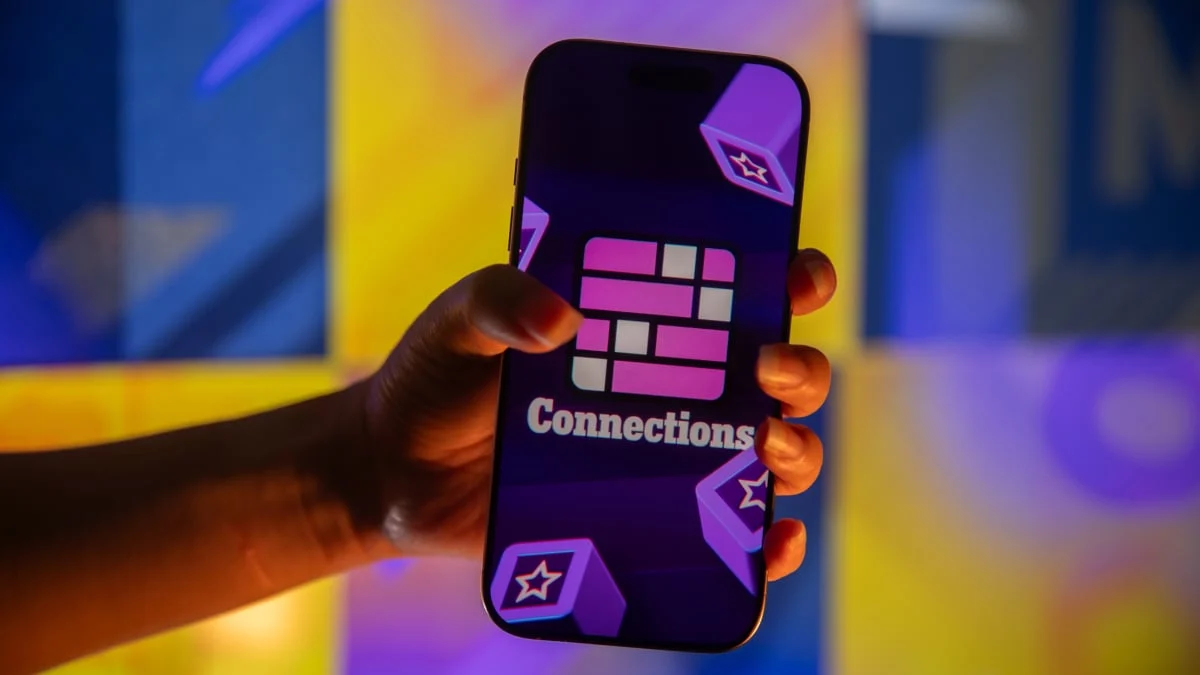
In the modern digital publishing landscape, the battle for user attention is no longer fought solely on the front lines of breaking news. Instead, it is increasingly waged in the quiet, intellectually stimulating arenas of daily word games. The New York Times Company, which has successfully transformed itself from a traditional print newspaper into a digital subscription powerhouse, has recently doubled down on this strategy with the release of Connections: Sports Edition. Produced in collaboration with The Athletic, this specialized spin-off of the wildly popular Connections game highlights a broader shift in media: the strategic use of gamification to drive subscriber retention, cultivate daily habits, and cross-pollinate distinct audience demographics.
The latest iteration of the game—puzzle #645—serves as a prime example of this editorial strategy. By challenging players with categories that require a deep understanding of international soccer, the game demonstrates its commitment to global sports literacy rather than relying solely on mainstream North American sports. This article provides a comprehensive analysis of Connections: Sports Edition, detailing its mechanics, historical evolution, operational data, editorial philosophy, and broader implications for the future of digital media.
1. Main Facts: What is ‘Connections: Sports Edition’?
Connections: Sports Edition is a daily digital puzzle that challenges players to find common threads between 16 seemingly disparate sports-related words, names, or terms. The objective is to organize these 16 words into four distinct groups of four.
Like its predecessor, the standard Connections game, the sports edition relies heavily on misdirection. Many words can plausibly fit into multiple categories, forcing players to use deductive reasoning, lateral thinking, and deep sports trivia knowledge to find the single, unique solution.
Key Game Mechanics:
- The Grid: Players are presented with a 4×4 grid containing 16 words.
- The Groups: Each group of four words is assigned a difficulty level, represented by a color-coded system once solved:
- Yellow: The most straightforward, direct associations.
- Green: Moderately direct associations, often requiring basic trivia knowledge.
- Blue: More specific or conceptual categories, requiring deeper sports expertise.
- Purple: The most difficult category, frequently involving wordplay, homophones, or highly niche trivia.
- The Strike System: Players are permitted up to four incorrect guesses (strikes). If a player commits a fourth error, the game ends, and the correct groupings are revealed.
- The Social Loop: Upon completion, players can copy a grid of colored emojis representing their path to victory or defeat, allowing them to share their results on social media platforms without spoiling the answers for others.
The inclusion of international soccer in recent puzzles underscores the game’s expansive editorial scope. Rather than limiting categories to domestic leagues like the NFL or NBA, the puzzle creators actively test players on global sports culture, including European football, Olympic disciplines, and historical sports figures.
2. Chronology: The Evolution of NYT Games and the Acquisition of The Athletic
To understand the emergence of Connections: Sports Edition, one must trace the timeline of the New York Times Company’s digital expansion, which has increasingly relied on non-news lifestyle products to anchor its subscription model.
[Jan 2022] NYT acquires The Athletic ($550M)
   │
[Feb 2022] NYT acquires Wordle
   │
[June 2023] NYT launches Connections (Beta)
   │
[Late 2023] Connections becomes a global phenomenon
   │
[2024] NYT launches Connections: Sports Edition to bridge games & sports coverage- January 2022: The Acquisition of The Athletic. The New York Times Company acquired The Athletic, a subscription-based sports journalism website, for $550 million. The acquisition brought in a highly dedicated sports audience but initially operated at a financial loss, prompting executive leadership to seek new ways to integrate The Athletic into the broader NYT subscription bundle.
- February 2022: The Wordle Phenomenon. The NYT acquired the simple word-guessing game Wordle from creator Josh Wardle for an undisclosed seven-figure sum. Wordle became a massive funnel for new digital registrations, proving that simple, shareable daily games could drive unprecedented web traffic.
- June 2023: The Launch of Connections. Capitalizing on the success of Wordle and the legacy New York Times Crossword, the games team launched Connections in beta. Within months, it became the second most-played game in the NYT portfolio, behind only Wordle.
- 2024: The Birth of Connections: Sports Edition. Seeking to create a bridge between the highly engaged games community and the premium sports reporting of The Athletic, the NYT introduced Connections: Sports Edition. This product was designed to convert casual puzzle players into sports subscribers and vice versa, leveraging the editorial expertise of The Athletic’s newsroom to curate authentic, challenging sports trivia.
3. Supporting Data: The Business Case for Gamification
The strategic pivot toward games is backed by compelling financial and engagement data. In its quarterly earnings reports, the New York Times Company has consistently pointed to its "bundle" strategy as the primary driver of digital average revenue per user (ARPU).
Subscription Growth and Engagement Metrics
- The Multi-Product Engine: According to NYT corporate reports, subscribers who engage with more than one product (e.g., News plus Games, or News plus Cooking) exhibit significantly lower churn rates than news-only subscribers.
- Traffic Influx: During peak periods, NYT Games attract tens of millions of active users daily. For many readers, the daily routine begins not with the morning headlines, but with Wordle, Connections, and Strands.
- The Athletic’s Integration: By offering sports-themed puzzles, the NYT directly targets the intersection of sports fans and puzzle enthusiasts. Internal data suggests that gamified content serves as a high-conversion gateway for readers who might otherwise resist paying for traditional sports journalism.
| Game Product | Target Audience | Primary Engagement Driver |
|---|---|---|
| The NYT Crossword | Traditionalists / Word Lovers | Long-form intellectual challenge |
| Wordle | Mass Market / Casual Players | Low barrier to entry, social sharing |
| Connections | Lateral Thinkers / Trivia Fans | Categorical reasoning, pattern recognition |
| Connections: Sports Edition | Sports Enthusiasts / Gamers | Specialized sports trivia, niche culture |
4. Official Responses and Editorial Philosophy
The creation of daily puzzles is a meticulous editorial process. While the standard Connections is edited by Wyna Liu, Connections: Sports Edition requires a collaborative effort between the NYT Games team and the editorial staff at The Athletic.
According to statements from NYT Games leadership, the editorial philosophy behind the sports edition centers on fairness, diversity, and balance.
Designing the Perfect Grid
In press releases and interviews discussing the development of their games portfolio, editors have highlighted several key challenges:
- Avoiding Regional Bias: One of the primary hurdles in designing a sports-themed puzzle is ensuring it is not overly Americentric. While American football (NFL) and baseball (MLB) are highly popular in the United States, a global audience demands representation from international soccer leagues (such as the Premier League, La Liga, and Serie A), Formula 1, cricket, and rugby.
- Calibrating Difficulty: Editors must carefully balance the categories so that they are neither too easy for die-hard sports fans nor completely inaccessible to casual observers. For instance, a category like "NBA Team Mascots" might serve as a Yellow (easy) category, while "Players with Signature Shoes in the 1990s" might be classified as Blue or Purple.
- The Art of the Red Herring: The core appeal of Connections lies in the overlap. An editor might include words like "Net," "Court," "Service," and "Fault." While a casual observer might immediately group these under "Tennis," the actual solution might split these words across entirely different categories—such as "Internet Terms" or "Legal System Vocabulary."
5. Implications: The Future of Media and Niche Gamification
The success of Connections: Sports Edition has profound implications for the broader media industry. As traditional advertising revenues continue to decline, digital publishers are forced to innovate to survive. Gamification represents a highly effective method for building habit-forming products.
1. The Rise of "Niche-ification"
The sports edition of Connections demonstrates that audiences are willing to engage with highly specialized versions of mainstream games. This opens the door for other niche verticals. In the future, we may see publishers launching financial-themed puzzles, entertainment and pop-culture editions, or science-focused daily games.
2. Copycat Products and Market Competition
The NYT’s success has not gone unnoticed. Competitors ranging from digital media companies to professional networking sites have begun integrating casual games into their platforms. For example, LinkedIn recently introduced daily games to increase user session times on its app. The battle for the "daily active user" metric has expanded far beyond traditional gaming companies like Zynga or Nintendo.
3. Subscriber Retention in the Attention Economy
Ultimately, Connections: Sports Edition is a customer retention tool. By providing a fresh, intellectually stimulating challenge every day at midnight, the NYT ensures that its app remains a permanent fixture on the user’s home screen. In an era of infinite scroll and digital fatigue, the daily puzzle offers a rare commodity: a satisfying, self-contained experience with a clear beginning, middle, and end.
Today’s Connections: Sports Edition Solutions (A Retrospective)
For readers seeking to understand how these editorial strategies manifest in actual gameplay, analyzing the structure of daily puzzles reveals the precise engineering that goes into each grid. In puzzles featuring international soccer, for example, players are often challenged to separate club names from geographic locations or common nouns.
As the games division of the New York Times Company continues to expand, Connections: Sports Edition stands as a testament to the power of combining premium journalism with interactive design. It is no longer just about reporting who won the game; it is about challenging the fans to prove how much they truly know.
 Jia Lissa
  Asro
Asro  Nila Kartika Wati