
 By Layla Zulfa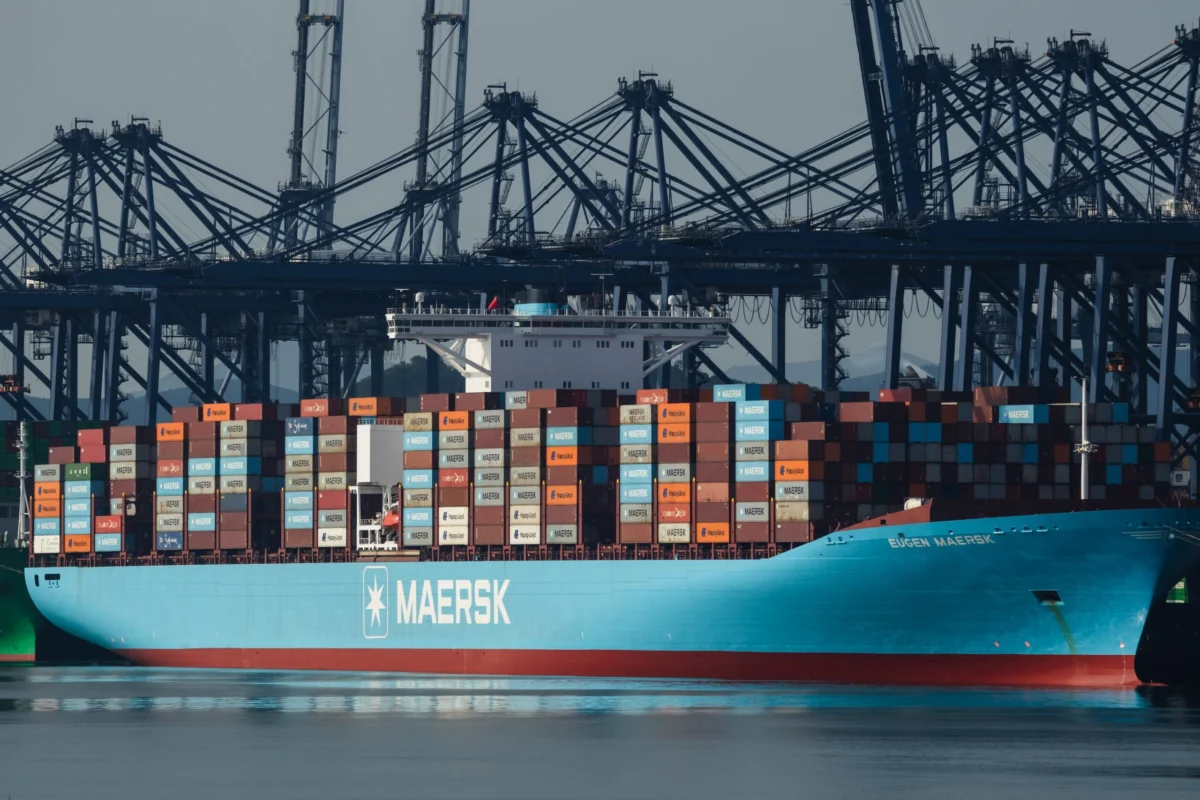
In a move that underscores both the strategic necessity of the Suez Canal and the persistent volatility of Middle Eastern maritime security, shipping giants Maersk and Hapag-Lloyd have officially resumed an Asia-to-Mediterranean shipping service via the Red Sea. The Gemini Cooperation, the vessel-sharing alliance between the two titans, confirmed that the AE15/SE3 service has been reactivated, marking a significant—albeit fragile—step toward normalizing transit through the world’s most critical maritime chokepoint.
The decision comes as the global logistics industry remains on edge, balancing the economic pressure to reduce transit times against the physical dangers posed by regional conflicts. While the resumption of this route offers a glimmer of hope for supply chain efficiency, the shadow of renewed aggression looms large over the corridor.
The Resumption of the AE15/SE3 Service
The vessel Majestic Maersk serves as the flagship for this operational pivot. Having departed Qingdao, China, on June 8, the massive container ship was tracked by MarineTraffic leaving the Port of Salalah in Oman on Monday morning, signaling its trajectory toward the Suez Canal.
The revived route is comprehensive, encompassing stops at major industrial hubs including Qingdao and Ningbo in China, Gwangyang in South Korea, and Tanjung Pelepas in Malaysia. Upon traversing the Indian Ocean and the Red Sea, vessels will dock at Egypt’s Port Said and Damietta Port before embarking on a return leg that includes stops in Sri Lanka and Singapore.
This move is not merely a logistical adjustment; it is a declaration of intent. For the Gemini Cooperation, the Suez route is the linchpin of their Mediterranean service, and its prolonged avoidance—necessitated by years of Houthi-led attacks and regional instability—has imposed significant operational costs and schedule delays on global trade.
A Chronology of Conflict and Withdrawal
To understand the significance of this return, one must look back at the cascade of events that forced the industry to abandon the Suez corridor.
- Late 2023: The Houthi militant group, acting in solidarity with Palestinians in Gaza, launched a sustained campaign of attacks against commercial shipping in the Red Sea. This forced major ocean carriers to divert vessels around the Cape of Good Hope, adding thousands of miles and weeks of transit time to voyages.
- February 2025: The Gemini Cooperation attempted a limited return to the region by resuming the ME11/IMX service connecting India and the Middle East to the Mediterranean. This effort was short-lived, as the outbreak of the Iran war forced a rapid suspension of the route.
- Fall 2025: A ceasefire between Israel and Hamas provided a brief window of stability, during which Houthi strikes largely ceased.
- June 2026: Following a series of threats from the Iranian Revolutionary Guard Corps (IRGC) and renewed regional tensions, a new maritime security incident occurred on Sunday, June 28. An unidentified cargo vessel reported being fired upon 30 nautical miles southwest of Hodeida, Yemen.
This latest incident, the first of its kind in 2026, serves as a stark reminder that the region remains a theater of war. Reports from the Associated Press indicate that the attack involved a skiff approaching a bulk carrier, with security guards on the vessel forced to return fire—a chilling echo of the tactical challenges faced by merchant mariners throughout the past two years.
Supporting Data: The Slow Re-emergence of Suez Transit
Despite the lingering risks, data indicates a gradual increase in carrier confidence. According to the Drewry Red Sea Diversion Tracker, the number of container ships opting for the Suez route reached 35 in the week ending June 28—the highest weekly volume since January.
While the volume remains a fraction of pre-conflict levels, the trend is clear. During that same week, industry heavyweights including CMA CGM, Mediterranean Shipping Company (MSC), and Maersk utilized the route for vessels exceeding 8,000 twenty-foot equivalent units (TEUs). Overall, 59 cargo vessels transited the Suez in the final two weeks of June, representing a 7 percent increase over the previous fortnight.
However, industry analysts remain circumspect. Judah Levine, head of research at Freightos, noted that despite the uptick in activity, the "vast majority of container traffic continues to divert away from the Red Sea," opting for the safety of the longer route around Africa rather than risking the uncertainty of the Egyptian channel.
Official Responses and Security Contingencies
The carriers have been careful to frame this return as a "gradual normalization" rather than a permanent reopening. In a customer advisory, Maersk emphasized that the situation is being monitored with intense scrutiny.
"Maersk and Hapag-Lloyd will continue to monitor the security situation in the Middle East region very closely," the advisory read. "Any alteration to services within the Gemini Cooperation will remain dependent on the ongoing stability in the Red Sea area and the absence of any escalation in conflicts in the region."
The alliance has developed robust contingency plans. If the security environment deteriorates—as it did in early 2025—the carriers are prepared to instantly revert to the Cape of Good Hope route. This "flexible routing" model has become the industry standard in an era where maritime security can shift in a matter of hours.
Strategic Implications and Market Dynamics
The decision to return to the Red Sea is also driven by competitive pressure. According to the consultancy Linerlytica, Maersk and Hapag-Lloyd are feeling the strain of falling behind their rivals in global capacity rankings.
"The move could trigger further Gemini re-routings to the Suez as the two carriers are falling further behind their rivals in the capacity rankings," Linerlytica noted in a recent update. Projections indicate that Maersk may slip behind CMA CGM for the title of the world’s second-largest container line by July 2027, while Hapag-Lloyd faces the risk of being overtaken by Ocean Network Express (ONE) by early 2028.
The stakes are further heightened by Hapag-Lloyd’s attempted acquisition of ZIM, a deal currently facing intense regulatory and political scrutiny in Israel. While ZIM has publicly stated it continues to operate in accordance with the merger agreement, opposition from high-ranking Israeli officials has cast a shadow over the carrier’s long-term strategic expansion.
Conclusion: A Precarious Future
The return of the Majestic Maersk to the Suez corridor is a symbolic victory for global trade, representing a desire to return to pre-conflict efficiency. Yet, the attack on an unidentified vessel off the coast of Yemen just days ago underscores the harsh reality: the Red Sea remains a contested zone.
For the Gemini Cooperation, the path forward is a delicate dance between economic necessity and the preservation of crew and cargo. As carriers weigh the costs of fuel and time against the threat of kinetic warfare, the "gradual" return to the Suez Canal will likely remain the defining theme of maritime logistics for the foreseeable future. The industry is betting that a cautious return is better than no return at all, but as the recent spike in piracy and regional volatility shows, the safety of the world’s most vital waterway is far from guaranteed.
 Neng Nana
  Ali Ikhwan
  Lina Hope