
 By Ammar Sabilarrohman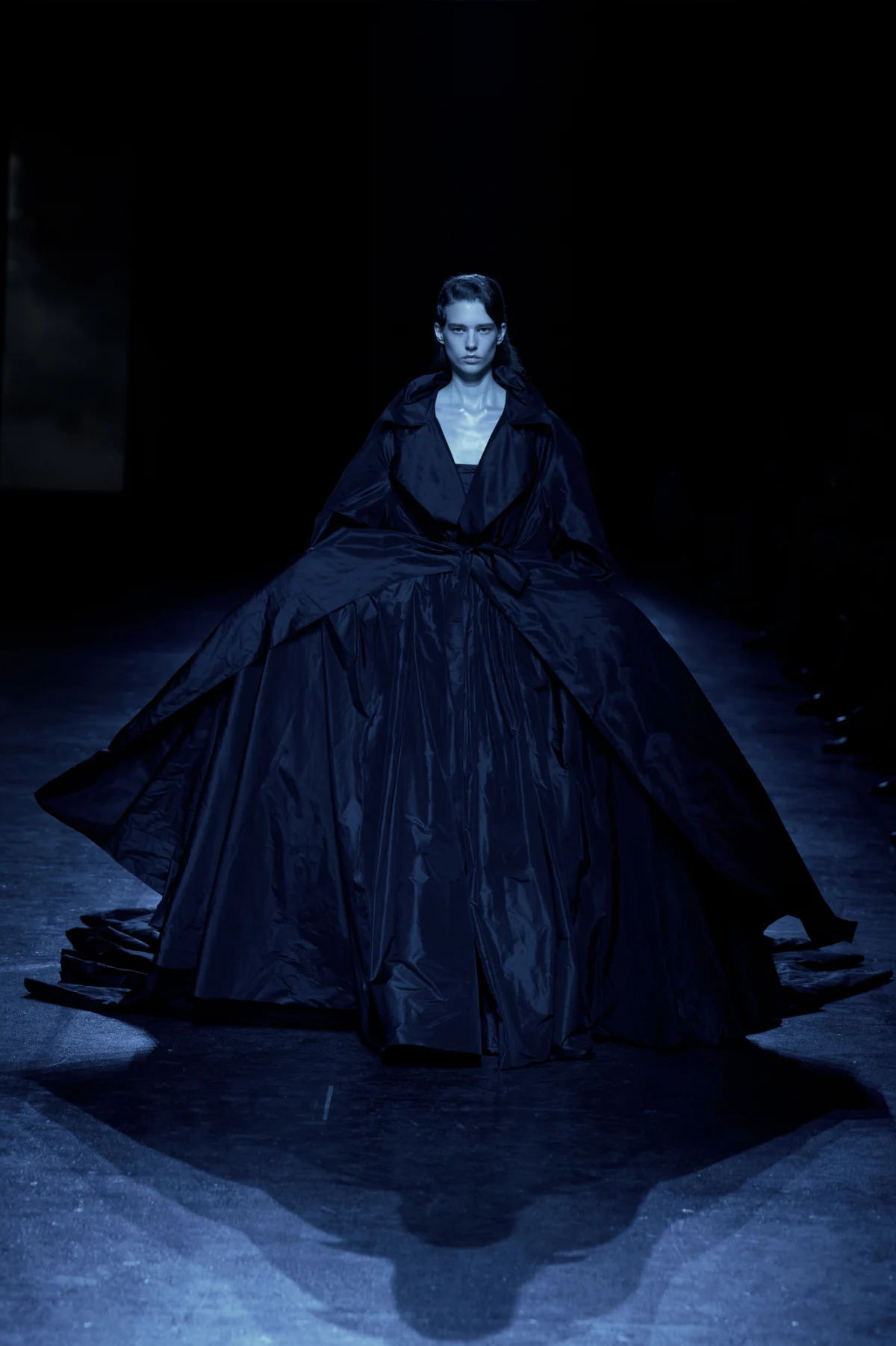
On the eve of Paris Couture Week, the fashion world witnessed a collision of disparate worlds: the high-octane, bass-heavy energy of the electronic dance music (EDM) universe and the hushed, intellectual reverence of Belgian couture. The occasion was the debut of Boloria, the new luxury label helmed by the enigmatic Olivier Theyskens and backed by We Are One World, the powerhouse production company behind the iconic Tomorrowland festival.
For those who have followed Theyskens since his meteoric rise in the late 1990s—when his dark, sculptural gowns famously caught the eye of Madonna—this return to the spotlight is not merely a comeback; it is a profound exploration of legacy, craftsmanship, and the enduring power of melancholic beauty.
The Genesis of a New Aesthetic
The name Boloria carries a weight that belies its recent inception. It is a term derived from entomology, specifically a genus of brush-footed butterflies identified by scientists in 1899. For Theyskens, the name was a gift from the founders of Tomorrowland, brothers Michiel and Manu Beers, who sought a moniker that felt unearthed rather than manufactured.
"I wanted to create a brand that feels like it could have been around for a century or more," Theyskens noted during a preview. The result is a collection that feels less like a seasonal trend and more like a curated archive of a life well-lived. By eschewing the frantic pace of contemporary fashion cycles, Theyskens spent two years meticulously refining the smallest variables: the precise, squared-off angle of a pump’s outsole, the rhythmic, uneven fall of beads on a lace skirt, and even the deliberate, academic serif font gracing the labels.
A Chronology of a Two-Year Obsession
The trajectory of Boloria began in the quiet corners of Antwerp, far removed from the festival stages that typically occupy the We Are One World team.
- The Meeting of Minds: Despite his initial, cursory awareness of Tomorrowland—fueled by accidental television viewings at his parents’ home in Northern Belgium—Theyskens found a surprising kinship with the Beers brothers. Their shared devotion to storytelling, authenticity, and the "craft" of their respective mediums—whether it be sound engineering, stage lighting, or haute couture—formed the bedrock of the partnership.
- The Development Phase: For twenty-four months, the project existed in the shadows. Theyskens brought his original sketches to the table, accompanied by technical drawings and a tactile library of fabrics: satins, tweeds, silks, and the innovative, airy Korean textiles that lend the collection its ethereal movement.
- The Grand Reveal: On the Saturday preceding Paris Couture Week, the curtains were pulled back. The venue, a darkened space filled with roiling, artificial fog, provided a cinematic backdrop that mirrored the "inner turmoil" and romanticism inherent in the designer’s vision.
The Philosophical Framework: "The Row meets Rimbaud"
Critics have struggled to pigeonhole the collection, with the most succinct description being "The Row meets Rimbaud." It is a synthesis of minimalist, architectural precision and the tortured, poetic romanticism of the 19th-century French poet.
Theyskens himself frames the project as a quest for "Belgian luxury"—a concept he defines through the lenses of humility, refinement, soul, and depth. "I always felt there is room and space for Belgian luxury," he stated. This philosophy manifests in the collection’s structure: a masterful tension between rigid tailoring and deliberate slouch.
The menswear pieces, characterized by retro silhouettes rendered in light, lustrous, or papery fabrics, suggest a man who is both a traveler and a dreamer. In contrast, the womenswear oscillations between androgynous, sharp-shouldered suiting and siren gowns—bias-cut silks that cling and flow with a haunting elegance.
Technical Craftsmanship and Design Details
The collection is a masterclass in detail. Theyskens’ opening look—dark, bulging gowns reminiscent of his early career triumphs—served as an allegory of dreams, a surrealist bridge between his past and the present. These were followed by male models draped in fabrics so artfully layered they appeared as if the wearers had just emerged from their beds, carrying the ghosts of their dreams with them.
The styling touches—upturned cuffs, rolled-up trousers, and metallic pocket squares—provide a jaunty, almost ironic contrast to the inherent melancholy of the garments. The fabrics themselves are a testament to the "craft" that the Beers brothers so admire. The interplay of textures is intentional; the juxtaposition of raw tweed with delicate lace and high-sheen satin creates a sensory experience that feels both ancient and remarkably modern.
Official Responses and Strategic Synergies
The partnership between Theyskens and We Are One World is a strategic coup. While Tomorrowland is globally recognized for its massive festival infrastructure, media platforms, and leisure concepts, the foray into high-end fashion is a departure.
The Beers brothers have long operated under the belief that creativity is the ultimate currency. By providing Theyskens with a base at their Antwerp headquarters—a bustling hive of hundreds of employees dedicated to event production and design—they have given him the stability to focus on his art without the crushing pressure of traditional retail expectations.
"For them, sound is a craft, lighting is a craft," Theyskens said of his collaborators. This mutual respect for the technical process has allowed for an atmosphere of creative liberty. For the Beers, backing Boloria is an exercise in brand expansion that transcends the "merch" culture associated with music festivals. It is a statement that they are not merely festival organizers, but purveyors of a holistic lifestyle brand.
Implications for the Future of Fashion
The debut of Boloria sends a clear signal to the luxury market: there is still an appetite for the "slow fashion" narrative, even when backed by the resources of a global entertainment giant.
1. The Decentralization of Luxury
By choosing to operate out of Antwerp—a city with a storied history in fashion—Theyskens is reinforcing the idea that true innovation does not need to be tethered to the traditional fashion capitals of Paris or Milan. The infusion of Tomorrowland’s resources into a boutique, couture-level project suggests a new model for luxury investment.
2. Narrative-Driven Consumption
Boloria’s success will likely hinge on its ability to sustain the "mythology" Theyskens has built. Consumers are increasingly seeking products with a backstory—the entomological origins of the name, the meticulous design of the serif font, the homage to the 1920s through the 1970s. This is no longer just about clothing; it is about buying into a specific historical and emotional frequency.
3. Cross-Industry Pollination
The success of this collaboration may encourage other music and event-based entities to seek out creative directors from the high-fashion world. If sound and light can be treated as "crafts," then the fashion that surrounds these experiences can be elevated to a similar tier of artistic production.
Conclusion
Boloria is a project of immense ambition. It is a defiant stand against the disposable nature of modern style, favoring a timeless, melancholic, and deeply personal aesthetic. Whether it will achieve the long-term longevity that Theyskens seeks—a brand that endures for a century—remains to be seen. However, as it stands, the collection is a triumph of vision.
Olivier Theyskens has succeeded in creating a sanctuary for the "Boloria people"—those who, like him, find beauty in the shadows and art in the smallest of details. As the fashion world looks toward a future defined by rapid change, Boloria offers a reminder that the most compelling stories are often those that take the longest to tell. In the quiet, fog-filled rooms of his debut, Theyskens proved that the spirit of the Belgian avant-garde is not only alive but ready to evolve into something far more profound.
 Neng Nana
  Ali Ikhwan
  Lina Hope