
 By rifanmuazin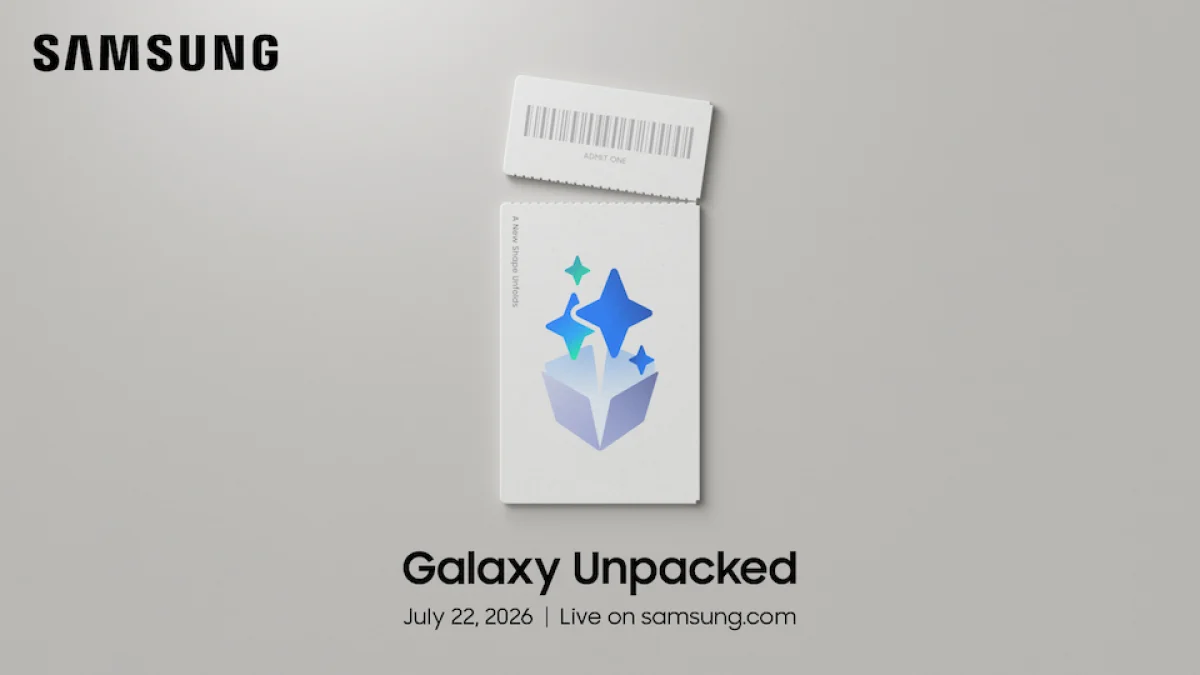
Executive Summary: The Main Facts of Samsung’s Summer Showcase
In what has become one of the tech industry’s most anticipated annual traditions, Samsung Electronics has officially confirmed the date, location, and focus of its next major hardware launch. On Tuesday, the South Korean conglomerate put an end to months of rampant supply chain leaks and regulatory filings by announcing that its next Galaxy Unpacked event will take place on July 22 in London.
The event is scheduled to begin at 9:00 AM Eastern Time (2:00 PM British Summer Time). To maximize global reach, Samsung will broadcast the presentation live across its official website and its primary YouTube channel.
The official media invitation was characteristically brief but strategically telling. Samsung stated it intends to "introduce its latest Galaxy innovations that build on its leadership in foldables." This phrasing confirms that flexible display technology will remain the centerpiece of Samsung’s premium mobile hardware strategy.
However, industry analysts and insider reports indicate that this Unpacked event will mark a significant departure from previous years. Rather than iterating on its established duo of flexible devices, Samsung is expected to expand its foldable portfolio to three distinct models: the mass-market Galaxy Z Flip 8, a redesigned standard Galaxy Z Fold 8, and an ultra-premium Galaxy Z Fold 8 Ultra.
Beyond smartphones, the showcase is highly anticipated to feature the debut of at least two new Galaxy Watch models and Samsung’s official entry into the wearable augmented reality (AR) space with a product tentatively named Galaxy Glasses.
Chronology: The Evolution of Samsung’s Foldable and Wearable Timeline
To understand the strategic significance of the July 22 event, it is essential to trace the historical timeline of Samsung’s hardware releases and the rapid acceleration of its product development cycles.
[2019] First-Gen Galaxy Fold Launched (Hinge and durability challenges)
  │
[2020] Galaxy Z Flip Introduced (Clamshell design popularizes foldables)
  │
[2021-2023] Consolidation & Refinement (Water resistance, gapless Flex Hinge)
  │
[2024] Galaxy Z Fold 7 Era (Mature design, premium pricing established)
  │
[Late 2024] Rumors surface of a three-tier foldable strategy and AR wearables
  │
[Spring 2025] CAD leaks reveal a shorter, wider aspect ratio for the Z Fold 8
  │
[July 22, London] Galaxy Unpacked Event: Launch of Z Fold 8, Z Fold 8 Ultra, Z Flip 8, and Galaxy Glasses
The Foldable Foundation (2019–2023)
Samsung pioneered the modern foldable category with the launch of the original Galaxy Fold in 2019. Despite early design vulnerabilities regarding the display hinge and debris ingress, the company committed to the form factor. By 2020, the introduction of the clamshell Galaxy Z Flip offered a more accessible, lifestyle-oriented entry point. Over the next three generations, Samsung focused on structural engineering—introducing water resistance, tougher Ultra Thin Glass (UTG), and eventually a gapless "Flex Hinge" design to eliminate the visible crease and reduce device thickness.
The Transition to Summer Launches (2023–2024)
Historically, Samsung hosted its second annual Unpacked event in August. However, to establish a competitive buffer ahead of Apple’s traditional September iPhone launches, Samsung moved its launch window forward into July. The release of the Galaxy Z Fold 7 established a high-water mark for productivity-focused foldables, but also highlighted a growing consumer demand for design diversification—specifically, a cover screen that felt more like a traditional smartphone.
The Road to the July 22 Announcement
- Late Autumn: Initial supply chain whispers emerge from display manufacturing partners in East Asia, suggesting Samsung has placed orders for two distinct screen sizes for its book-style foldable line.
- Early Spring: Render leaks from prominent industry insiders suggest a radical design shift, depicting a wider, shorter outer display panel.
- Late Spring: Bluetooth SIG and FCC regulatory filings register model numbers corresponding to three distinct foldable devices, alongside new wearable hardware.
- Tuesday (Official Confirmation): Samsung issues official invitations to global media, solidifying the July 22 date and selecting London—a crucial European market—as the physical venue for the launch.
Supporting Data: Technical Specifications and Market Analysis
Samsung’s decision to diversify its product lineup is driven by shifting market dynamics and intense competition, particularly from Chinese original equipment manufacturers (OEMs) who have introduced ultra-thin foldables with wider cover displays.
The Triple-Foldable Hardware Strategy
+-------------------------------------------------------------------------+
|                      SAMSUNG'S PLANNED FOLDABLE LINEUP                  |
+--------------------------+-----------------------+----------------------+
|        Z FLIP 8          |       Z FOLD 8        |   Z FOLD 8 ULTRA     |
+--------------------------+-----------------------+----------------------+
| Clamshell Form Factor    | Shorter, Wider Aspect | Successor to Z Fold 7|
| Mass-market appeal       | Ergonomic Cover Screen| Maximum Specs & S-Pen|
+--------------------------+-----------------------+----------------------+
1. Galaxy Z Fold 8 (The Mainstream Redesign)
The standard Galaxy Z Fold 8 represents a direct response to consumer feedback regarding the ergonomics of previous generations. For years, the Z Fold series featured a tall, narrow outer screen that many users found cramped for typing. The Z Fold 8 will introduce a shorter, wider aspect ratio. This adjustment allows the closed device to mimic the usability of a standard flagship smartphone, while still unfolding into a mini-tablet.
2. Galaxy Z Fold 8 Ultra (The Premium Powerhouse)
Positioned as the true successor to the Z Fold 7, the Z Fold 8 Ultra is designed for power users and enterprise clients. It is expected to maintain the premium, productivity-focused proportions of its predecessor but with significant hardware upgrades. Rumored specifications include:
- An integrated silo for the S-Pen stylus.
- Samsung’s latest under-display camera (UDC) technology for an uninterrupted inner screen experience.
- The top-tier Qualcomm Snapdragon processor optimized specifically for Galaxy devices.
- An advanced multi-lens camera array comparable to the Galaxy S-series Ultra models.
3. Galaxy Z Flip 8 (The Clamshell Staple)
The Z Flip series remains Samsung’s best-selling foldable line due to its compact form factor and lower price point. The Z Flip 8 is expected to refine this formula with a larger, more functional cover screen, improved battery life utilizing new stacked-battery technology, and enhanced dust resistance.
Wearables: Expanding the Ecosystem
The July 22 event will also serve as a launchpad for Samsung’s broader ecosystem. The wearable category is expected to see two major developments:
- Next-Gen Galaxy Watches: Samsung is expected to announce at least two new smartwatches. These devices will feature advanced bioactive sensors capable of tracking metabolic health metrics, longer battery life, and deeper integration with Wear OS.
- Galaxy Glasses: Marking Samsung’s long-rumored entry into the smart glasses and mixed reality space, this product is anticipated to focus on lightweight assisted reality (AR). Operating in partnership with Google and utilizing a Qualcomm Snapdragon XR chipset, the glasses are designed to overlay digital notifications, navigation, and AI-driven contextual information directly onto the user’s field of view.
Foldable Smartphone Market Share Projections
While Samsung initially held a near-monopoly on the foldable market, competitors have steadily chipped away at its lead. According to market intelligence data, while Samsung continues to lead globally, its market share in regions like Western Europe and China has faced pressure from thinner, lighter alternatives.
| Year | Samsung Global Foldable Market Share (%) | Competitors (Combined) (%) |
|---|---|---|
| 2021 | 83% | 17% |
| 2022 | 72% | 28% |
| 2023 | 64% | 36% |
| 2024 (Est.) | 58% | 42% |
The introduction of a three-tier foldable strategy is designed to capture distinct buyer personas: the lifestyle consumer (Z Flip 8), the ergonomics-focused buyer (Z Fold 8), and the high-end enthusiast (Z Fold 8 Ultra), thereby defending Samsung’s dominant market position.
Official Responses: Samsung’s Corporate Rhetoric and Strategic Positioning
Samsung’s official communications leading up to the event reflect a highly calculated corporate strategy. By framing the London event around "leadership in foldables," Samsung is actively signaling to investors and consumers that it does not view flexible displays as a niche gimmick, but rather as the definitive future of personal computing.
In recent briefings, executives from Samsung’s Mobile eXperience (MX) division have hinted at the critical role artificial intelligence will play in these new form factors. TM Roh, President and Head of the MX Business, has repeatedly emphasized the concept of "Galaxy AI," suggesting that the unique physical configurations of foldable devices—such as dual-screen Flex Mode—provide the ideal canvas for multimodal AI tools.
While Samsung has declined to comment directly on specific hardware leaks regarding the "Ultra" variant or the "Galaxy Glasses," corporate representatives have acknowledged that the company is actively collaborating with Google and Qualcomm on next-generation spatial computing platforms. The July 22 event is widely expected to showcase the first tangible fruits of this three-way hardware and software alliance.
Implications: How the July 22 Event Reshapes the Tech Landscape
The announcements scheduled for July 22 carry profound implications for the global consumer electronics market, influencing competitor strategies, software development, and the adoption of emerging technologies.
1. Pressure on Competitors, Particularly Apple
As Samsung enters its eighth generation of foldable devices, its chief rival, Apple, remains noticeably absent from the flexible display market. By launching three distinct foldables simultaneously, Samsung is reinforcing its technological lead and establishing clear product segmentation before Apple can debut a foldable iPhone or iPad. This aggressive expansion forces Apple to rely on its standard slab-style iPhones, potentially leaving a lucrative, high-margin segment of the ultra-premium market entirely to Samsung.
2. The Standardization of the Foldable Form Factor
For years, software developers hesitated to optimize applications for foldables due to fragmented screen sizes and low adoption rates. Samsung’s shift to a standard wider aspect ratio on the Z Fold 8, combined with Google’s ongoing commitment to foldable optimizations in Android, is likely to accelerate software support. As the physical dimensions of foldables align more closely with standard smartphone aspect ratios, the user experience will become more seamless, removing one of the final barriers to mainstream adoption.
3. The AR Wearable Battleground
The debut of "Galaxy Glasses" marks a critical step in the evolution of consumer wearables. While high-end headsets like the Apple Vision Pro focus on immersive, heavy-duty spatial computing, Samsung appears to be targeting a more wearable, daily-use AR form factor. If successful, the Galaxy Glasses could establish an open-ecosystem alternative to proprietary AR platforms, setting up a direct confrontation between Samsung’s Android-backed wearable ecosystem and its competitors.
4. Pricing and Consumer Economics
The introduction of a "Z Fold 8 Ultra" alongside a standard model suggests a restructuring of Samsung’s pricing matrix. This allows Samsung to lower the entry price of the standard Z Fold 8—making it more competitive with traditional flagships—while maintaining a premium price point (potentially exceeding $2,000) for the Ultra variant. This tiered pricing model could finally democratize foldables for the upper-middle tier of the consumer market, while continuing to extract high margins from enterprise and enthusiast buyers.
As the industry looks toward London on July 22, Samsung is poised to deliver a definitive statement on the future of mobile technology, attempting to prove that its foldable leadership is not just a head start, but a permanent advantage.
 Raul Delapena Setiawan
  Ali Ikhwan