
 By Raul Delapena Setiawan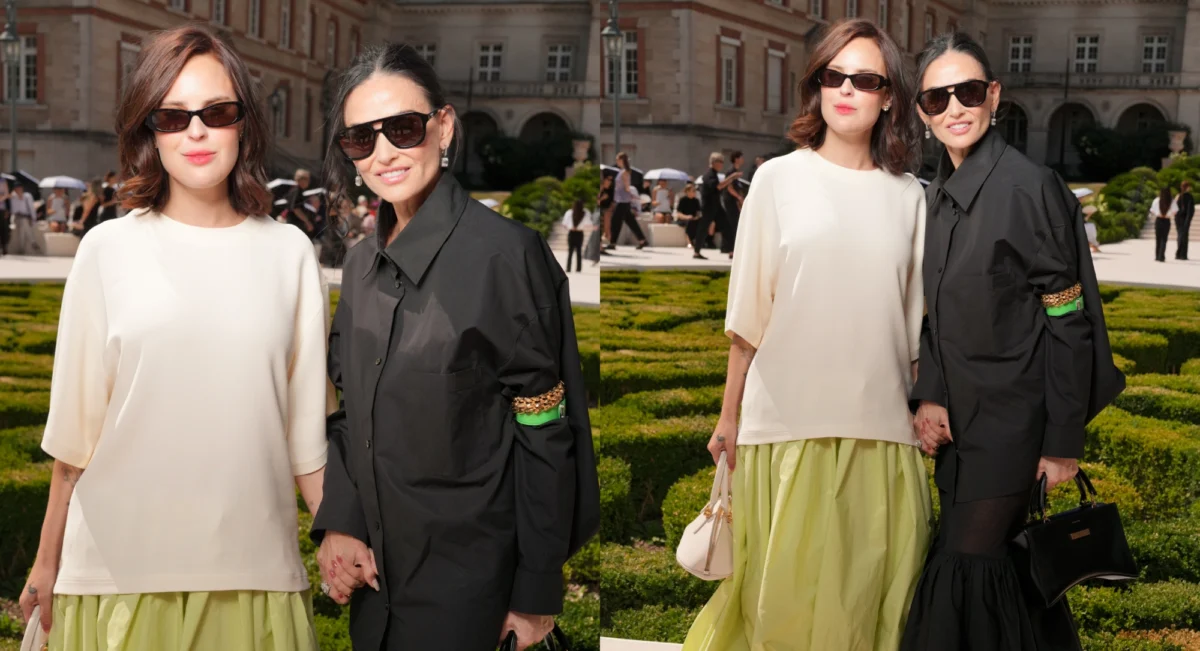
The picturesque grounds of the Cité Internationale Universitaire de Paris served as the stage for one of the most anticipated events of the fashion calendar this week: the Balenciaga Fall 2026 Haute Couture presentation. Amidst the architectural grandeur of the venue, the front row became a narrative focal point of its own, headlined by the presence of Hollywood icon Demi Moore and her daughter, Tallulah Willis. Their appearance, characterized by a deliberate divergence in aesthetic philosophy, highlighted the shifting identity of the house of Balenciaga under the creative stewardship of Pierpaolo Piccioli.
The Aesthetic Dichotomy: A Mother-Daughter Style Statement
In an industry often obsessed with matching sets and coordinated trends, Moore and Willis opted for a visual dialogue defined by "diametrically opposed" styling. Their presence at the show underscored the versatility of the current Balenciaga collection, which manages to bridge the gap between architectural severity and avant-garde playfulness.
Demi Moore, whose recent critical acclaim for her role in The Substance has cemented her status as a formidable force in both cinema and fashion, arrived in a sophisticated, monochromatic ensemble drawn from the house’s 2027 Resort collection. The look, curated by Piccioli, featured a structured long-sleeve black jacket paired with a sweeping mermaid-silhouette skirt. It was a study in modern minimalism, yet it was punctuated by precise, deliberate details: green and orange-gold belted armbands that disrupted the severity of the black fabric. Her choice of pointed-toe green pumps provided a sharp, saturated pop of color that echoed the sleeve detailing, while her choice of accessories—dark, oversized sunglasses and a sculptural, curved top-handle bag—evoked the classic Hollywood glamour Moore has cultivated for decades.
In contrast, Tallulah Willis, 32, embraced a softer, more experimental silhouette that leaned heavily into the Y2K-revivalist zeitgeist. Her ensemble featured an oversized, cream-colored top with dramatic, elbow-length sleeves, paired with a vibrant green skirt boasting a high-low bubble hem. The silhouette was fluid and youthfully irreverent, contrasting sharply with the tailored rigidity of her mother’s outfit. By pairing the look with a complementary cream-toned bag and dark shades, Willis successfully synthesized high-fashion couture with the accessible, nostalgic trends currently dominating the social media landscape.
Chronology of the Paris Haute Couture Week Presentation
The day’s proceedings began under the soft July sun at the Cité Internationale Universitaire, a historic campus that provided a stark, academic backdrop to the ethereal and experimental nature of the collection.

- 10:00 AM: Guests began arriving at the venue. The atmosphere was one of quiet anticipation, as industry insiders waited to see how Piccioli would follow up his previous successful iterations for the label.
- 11:00 AM: The runway show commenced. The collection, which WWD described as a masterclass in "dramatic and dreamy" design, featured a series of silhouettes that balanced structural integrity with soft, tactile elements.
- 11:45 AM: Post-show, the front row became the center of press attention. The interaction between Moore and Willis provided a compelling visual anchor for photographers, symbolizing the generational bridge inherent in modern luxury fashion consumption.
- 1:00 PM: Informal commentary began to circulate regarding the curation, with critics noting the successful marriage of Piccioli’s signature romanticism with the inherent, often cynical, edge of Balenciaga.
Supporting Data: The Piccioli Era at Balenciaga
Since Pierpaolo Piccioli assumed the mantle of creative director in July 2025, the house of Balenciaga has undergone a subtle yet distinct transformation. While the brand has historically been associated with Cristóbal Balenciaga’s legendary sculptural techniques, Piccioli has introduced a layer of emotional resonance and textural complexity.
According to design analysis from the Fall 2026 runway, the collection leaned into a narrative of "maximalist surfaces on minimalist shapes." Miles Socha, reporting for WWD, noted that the collection was defined by a recurring focus on materiality: "the plethora of fuzzy, full-legged pants, the tubular embroideries, or silky hairs lapping under lean cashmere coats."
The data suggests that the house is currently experiencing a period of renewed consumer interest. By tapping into the 2027 Resort collection for front-row appearances, the brand successfully utilized the "halo effect" of celebrity attendance to bridge the gap between runway fantasy and ready-to-wear retail reality. Moore’s choice of a Resort piece—which had only debuted a month prior—demonstrates a strategic push by the brand to keep the public eye on the immediate commercial availability of these high-concept garments.
Official Perspectives and Critical Reception
The reception to the Fall 2026 couture show has been largely celebratory, with many critics pointing to the collection as a turning point for the brand. Piccioli’s ability to imbue the house with a sense of "heart-soaring" drama has been a point of consistent praise.
"The collection succeeds because it doesn’t take itself too seriously while maintaining the highest technical standards of couture," says one industry analyst. "You see it in the way the garments move—the juxtaposition of the heavy, structured tailoring seen on Demi Moore against the playful, bubble-hemmed volumes worn by Tallulah Willis. It is a house that is finally speaking to two different demographics simultaneously."

Moore, who has a long-standing relationship with Balenciaga, has frequently used the brand to make statements on the red carpet, most notably at the Oscars and the Cannes Film Festival. Her continued support for Piccioli’s direction suggests a deep-seated alignment between the star’s personal brand—which is currently undergoing a renaissance of its own—and the house’s trajectory toward refined, yet boundary-pushing, elegance.
Implications: The Future of Celebrity-Fashion Synergy
The appearance of the Willis-Moore duo carries broader implications for the fashion industry. First, it highlights the importance of "family branding" in luxury. By appearing together, the pair reinforces the idea that high-end fashion is no longer restricted to a specific age demographic; instead, it is a multi-generational language.
Second, the use of diverse silhouettes—one structural and formal, one nostalgic and experimental—serves as a marketing blueprint for Balenciaga. By showcasing these two extremes, the brand effectively demonstrates that it has a solution for every type of consumer, whether they prefer the tailored, "quiet luxury" aesthetic or the trend-forward, Y2K-inspired maximalism favored by the digital-native generation.
Finally, the success of the Cité Internationale Universitaire presentation signals a shift away from traditional, sterile runway venues. By choosing locations that are historically and culturally significant, brands like Balenciaga are attempting to ground their ephemeral couture offerings in something more permanent. As the fashion world looks toward the remainder of the 2026 season, the synergy displayed by Moore and Willis will likely be remembered as the moment where the house of Balenciaga fully stepped into its new, multifaceted era under Piccioli—a period where drama, history, and modern personality coalesce into a singular, compelling vision of luxury.
As the curtains closed on Paris Couture Week, the lingering image of Moore and Willis in their divergent yet complementary outfits remains a testament to the power of fashion to tell a story—not just of what to wear, but of who we are, and who we aspire to be, in the eyes of the public.
 Neng Nana
  Ali Ikhwan
  Lina Hope