
 By Nana Wu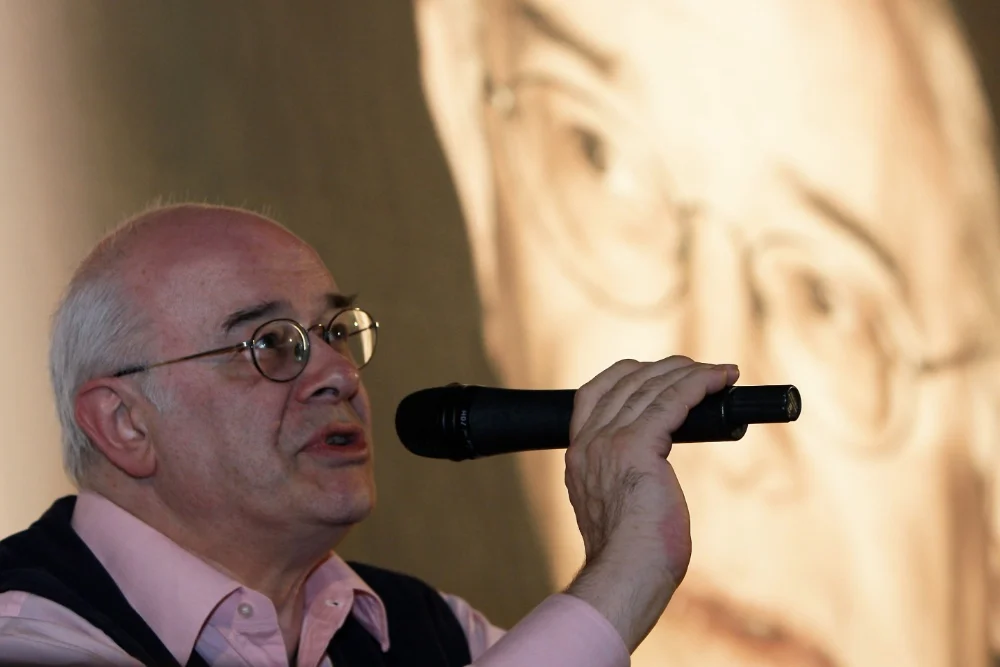
The global cinematic community is mourning the loss of Tony Rayns, the preeminent British critic, programmer, and historian whose life’s work served as the essential bridge between the masters of East Asian cinema and Western audiences. Rayns, 78, was found deceased at his home on July 7, following an accidental fall down the stairs. His passing marks the end of an era for film scholarship, leaving behind a legacy that fundamentally reshaped how the world perceives the cinematic landscapes of China, Japan, South Korea, and Taiwan.
His sister, Stephanie Gowman, confirmed the tragic news in an email to Variety, noting that Rayns’ death was entirely unexpected. A period of uncharacteristic silence from the famously prolific writer had prompted growing concern among his inner circle, leading to the discovery of his passing. "We are all shocked and deeply saddened by his sudden death and the loss of a dedicated, lifelong cinephile and a passionate promoter of East Asian cinematic talent," Gowman wrote. "He will be sorely missed by many."
A Life Dedicated to the Moving Image: Chronology of a Career
Born in 1948, Tony Rayns came of age during a period of radical transformation in global cinema. He cut his teeth in the 1960s and 70s, an era defined by the rise of the auteur and the collapse of traditional studio hegemonies. His early writing for the underground publication Cinema Rising provided a glimpse into his contrarian and deeply analytical mind.
In December 1970, Rayns joined the Monthly Film Bulletin, a publication that would serve as his professional home until its merger with the British Film Institute’s Sight & Sound in 1991. Throughout the 1970s, he became a fixture of British film criticism, contributing regularly to Time Out, Melody Maker, Cahiers du Cinéma, and Film Comment. His voice was characterized by an intellectual rigor that refused to indulge in populist sentimentality; he was a critic’s critic, respected as much for his encyclopedic knowledge as for his unvarnished integrity.
However, it was his pivot toward the East that would define his professional trajectory. Recognizing early on that the Western canon was woefully myopic, Rayns became one of the first Western voices to champion the "New Chinese Cinema" of the 1980s. He produced a landmark British television series on the subject, effectively introducing the revolutionary works of directors like Chen Kaige and Zhang Yimou to a British audience that had previously had little access to such visceral, sociopolitically charged storytelling.
Between 1988 and 2006, Rayns served as the curator for the "Dragons and Tigers" competition at the Vancouver International Film Festival. Under his stewardship, the section became the preeminent platform for emerging Asian filmmakers. His ability to identify talent was peerless; he didn’t just showcase films—he contextualized them, providing the necessary linguistic and cultural translation that allowed these films to travel beyond their borders.
Bridging Worlds: The Art of Translation and Guidance
Rayns was not merely an observer of cinema; he was an active participant in its creation. His work as a subtitle translator remains legendary among cinephiles. He possessed an uncanny ability to capture the nuance, rhythm, and sociolinguistic subtext of films from Hong Kong, Japan, Korea, Taiwan, and Thailand.
His collaborative relationship with directors was profound. Perhaps no tribute captures the weight of his influence better than the words of Chinese master Jia Zhangke, who worked with Rayns for nearly 30 years. In a moving social media post, Jia lamented the distance that had grown between them, while acknowledging that his own career was inextricable from Rayns’ guidance.
"Dear Tony, I didn’t get the chance to say ‘thank you,’ or to say ‘I’m sorry,’ before you were gone," Jia wrote. "In the 28 years we knew each other, I was always the one turning to you for help—whether it was subtitles for my films or questions I needed your guidance on. My work couldn’t have happened without you… You were a free citizen of the kingdom of cinema."
Jia’s reflection touches on the solitary nature of Rayns’ existence—a man who traveled, watched, and lived in the service of art. "You traveled alone, watched films alone, made your home everywhere, smoked alone, worried alone," Jia noted, adding that in 1999, it was Rayns who gave him the career-defining advice to remain in China to create his art.
Supporting Data: An Unparalleled Scholarly Body of Work
Rayns’ contributions to film history were both written and recorded. As an author, he provided the definitive English-language examinations of filmmakers who had been overlooked by Western academia. His bibliography includes essential monographs on the transgressive Japanese director Seijun Suzuki, the visual poet Wong Kar-wai, the South Korean visionary Jang Sunwoo, and the German provocateur Rainer Werner Fassbinder.
Beyond the written page, Rayns became a vital voice for the home video era. His audio commentary tracks for The Criterion Collection and Masters of Cinema are regarded as masterclasses in film education. He provided context for a staggering array of world-cinema cornerstones, including:
- Wong Kar-wai’s Chungking Express
- Nagisa Oshima’s In the Realm of the Senses
- Kenji Mizoguchi’s Ugetsu
- Akira Kurosawa’s Seven Samurai
- Bong Joon-ho’s Memories of Murder and Parasite (the latter recorded alongside the director himself)
- Edward Yang’s Yi Yi
These tracks were not mere scene-by-scene descriptions; they were deep dives into the political, historical, and aesthetic currents that produced these masterpieces. His work on labels like Arrow, Indicator, Second Run, and the BFI Video ensured that high-quality, intellectually stimulating home media releases remained the gold standard for film lovers worldwide.
Official Recognition and Implications
The film world did not fail to recognize the magnitude of Rayns’ contributions during his lifetime. In 2004, he was honored with the Kawakita Prize, a prestigious award recognizing individuals who have made significant contributions to the international promotion of Japanese cinema. In 2008, he received a formal commendation from the Japanese Foreign Ministry.
The implications of Rayns’ death are significant. As the film industry continues to grapple with the globalization of content, the role of the "informed mediator"—the critic who possesses the deep, granular knowledge of a region’s political and social history—is increasingly rare. Rayns operated in a space before the internet homogenized global taste; he was a gatekeeper who opened doors rather than closing them.
His passing leaves a void in the international festival circuit and among the academic community that will be difficult to fill. The family has indicated that a celebration of his life and career is being planned for a later date, where friends, colleagues, and the global cinematic community can gather to honor a man who, as Jia Zhangke put it, was truly a "free citizen of the kingdom of cinema."
In the coming months, film archives, universities, and festivals will undoubtedly reassess the scope of Rayns’ influence. He was a man who spent his life watching the world through the lens of East Asian cinema, and in doing so, he taught the rest of us how to see. His legacy is not just in the books he wrote or the festivals he programmed, but in the thousands of films that are better understood, more widely watched, and more deeply appreciated because of his lifelong dedication. As the tributes continue to circulate on forums like Criterionforum.org, it is clear that for the global film community, the lights have dimmed, but the illumination he provided will continue to shine for generations to come.
 Nila Kartika Wati
  Siti Muinah
  Ammar Sabilarrohman