
 By Reynand Wu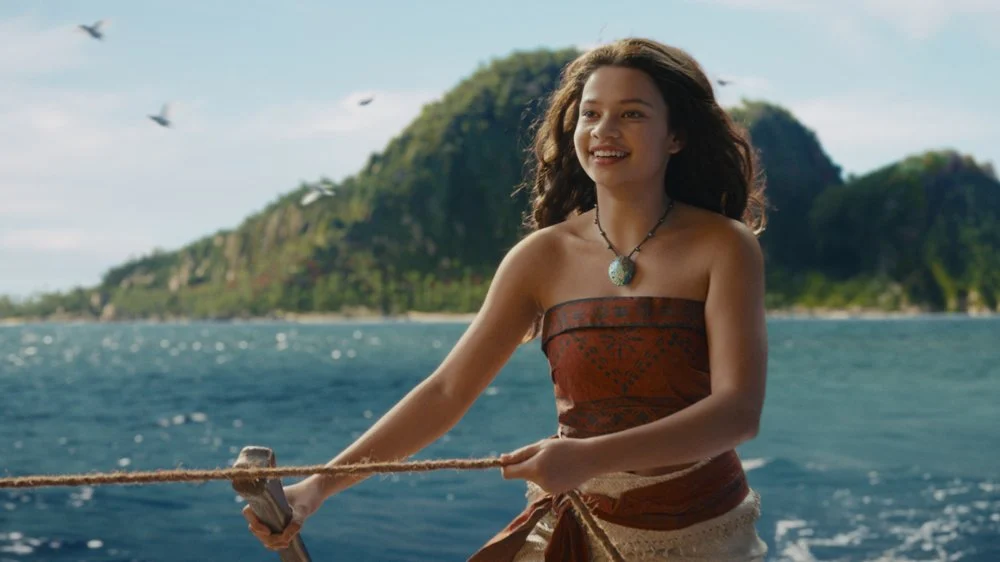
The recent global opening of Disney’s live-action reimagining of Moana has sent shockwaves through the film industry, serving as a sobering reality check for the studio’s ongoing strategy of revisiting its modern animated classics. With a production budget of $250 million—excluding the massive costs associated with global marketing and distribution—the film’s lackluster debut has raised urgent questions regarding audience fatigue, the necessity of live-action adaptations, and the evolving landscape of the theatrical experience.
A Catastrophic Opening: The Numbers Behind the Waves
When the curtain rose on the international box office for Moana, the performance was significantly lower than the industry-standard projections that Disney had relied upon. The studio had anticipated a robust global launch between $130 million and $140 million, with a specific expectation of $75 million from overseas markets. Instead, the film garnered a meager $52 million internationally and $43 million domestically, resulting in a worldwide opening weekend total of just $95 million.
This performance is particularly concerning when juxtaposed against the film’s massive $250 million production budget. In the current economic climate of tentpole filmmaking, a film typically needs to earn two to three times its budget to reach profitability. A $95 million global start for a quarter-billion-dollar investment is, by any professional metric, a catastrophic opening.
The film struggled to find a foothold in major international territories. Australia led the charge with $5.3 million, followed closely by France at $5.2 million and Korea at $3.8 million. Perhaps most alarming for Disney’s global expansion strategy was the performance in China, a territory that often acts as the make-or-break factor for massive franchises. Moana cratered in the Chinese market, bringing in a dismal $1.2 million, signaling a profound disconnect between the brand and the region’s current cinematic preferences.
Chronology of a Struggle: The Context of Disney’s Live-Action Strategy
To understand why Moana stumbled, one must look at the historical trajectory of Disney’s live-action remake initiative. The strategy reached its peak between 2017 and 2019, when adaptations like Beauty and the Beast, Aladdin, and The Lion King all soared past the $1 billion mark. These films benefited from deep-seated nostalgia for properties that had been dormant for decades, allowing the studio to capture both aging fans of the original animation and a new generation of children.
However, the trend has shown signs of exhaustion. In 2025, the live-action Snow White debuted to a soft $87 million globally, a performance analysts attributed to the age of the original 1937 property, which many younger demographics found difficult to relate to.
Moana, conversely, suffers from the opposite problem: proximity. The original 2016 animated film is still a cultural powerhouse, frequently topping streaming charts, and a billion-dollar animated sequel arrived in theaters as recently as late 2024. For audiences, the "live-action" experience currently feels less like a nostalgic trip down memory lane and more like a redundant retelling of a story that is still fresh in the public consciousness. This oversaturation has left the brand struggling to justify its own existence in the theatrical space, especially when the animated versions remain so accessible.
The Competitive Landscape: A Crowded Sea
Moana did not sail into a vacant theater landscape; it faced stiff competition from family-friendly sequels that have proven to be more resilient.
Disney and Pixar’s Toy Story 5 continued to dominate the market in its fourth weekend. Despite the film’s maturity in its release cycle, it added $45 million to its haul from 50 markets, pushing its global total to a staggering $879.1 million. The film is currently on track to surpass the $1.07 billion record held by Toy Story 4, proving that if the story is right, audiences are willing to show up for sequels—even after three decades of the franchise.
Simultaneously, Universal’s Minions and Monsters continued to perform well in its second outing. Although it saw a 44% drop from its opening, the film has generated $280 million globally against an efficient $85 million budget. While it may rank as the lowest-grossing entry in the Despicable Me spinoff series, its lean production costs ensure that it remains a profitable venture for Universal, highlighting the risks of Disney’s high-budget, high-stakes approach.
Supporting Data: Other Notable Performances
While Moana occupied the headlines for the wrong reasons, other releases provided a broader look at the current state of the global box office.
The R-rated horror film Evil Dead Burn debuted with a worldwide total of $27 million. While this is a tepid start compared to the 2023 hit Evil Dead Rise, the film’s modest $20 million budget mitigates the risk for both Sony and Warner Bros. It performed strongest in India ($1.5 million), the UK ($1.2 million), and Mexico ($1.1 million). This serves as a reminder that the mid-budget horror market remains a viable, if not spectacular, pillar of the industry.
Meanwhile, a historic milestone was achieved elsewhere: Universal’s biopic Michael officially crossed the $1 billion mark at the global box office. This achievement is monumental, as it marks only the second film of 2026 to hit this threshold—the other being Universal’s The Super Mario Galaxy Movie—and stands as the first biopic in history to join the billion-dollar club.
Official Responses and Industry Sentiment
Veronika Kwan Vandenberg, president of Universal Pictures International, commented on the success of Michael, noting, "From its opening weekend to this historic milestone, Michael resonated with moviegoers worldwide and transcended the screen to become a cultural phenomenon. It has been a distinct privilege to bring this groundbreaking film to international audiences."
Disney has remained relatively quiet regarding the Moana opening figures, though the disappointment within the studio is palpable. Directed by Thomas Kail—best known for the revolutionary stage-to-screen adaptation of Hamilton—the film follows the narrative beats of the original almost religiously. Newcomer Catherine Laga’aia stars as the titular heroine, while Dwayne Johnson reprises his role as the demigod Maui.
While professional critics have been largely unenthusiastic, labeling the film as "unnecessary" or "a carbon copy," audience reception has been notably warmer. Word of mouth will be the deciding factor in whether Moana can recover some of its lost ground, though the sheer density of family entertainment in the current market makes a major turnaround unlikely.
Implications: The Future of the Remake Strategy
The failure of Moana to ignite the box office carries profound implications for the Walt Disney Company. For years, the live-action remake model was the company’s most reliable engine for profit, leveraging intellectual property that required little in the way of audience discovery.
However, the "remake fatigue" that analysts have long predicted appears to have arrived. When a property is too old, it lacks cultural cachet; when it is too new, it lacks the novelty of a "reimagining." Disney is currently walking a razor’s edge, attempting to balance the need for recognizable content with the desire for original storytelling.
The implications for upcoming projects, such as the planned 2028 remake of Tangled, are significant. The studio will likely need to re-evaluate whether these films require the massive, $250 million budgets that demand blockbuster performance to break even. If the cost of production remains high, the margin for error effectively vanishes.
Ultimately, the lesson of this weekend is that while nostalgia is a powerful marketing tool, it is not a substitute for creative necessity. Audiences are increasingly savvy, and they are demanding fresh stories or, at the very least, a compelling reason for an old story to be told in a new way. As Disney looks toward its next slate of releases, the industry will be watching closely to see if they pivot toward more original content or if they will continue to test the endurance of their back catalog in the face of cooling global interest.
 Siti Muinah
  Ammar Sabilarrohman
  Layla Zulfa