
 By Siti Muinah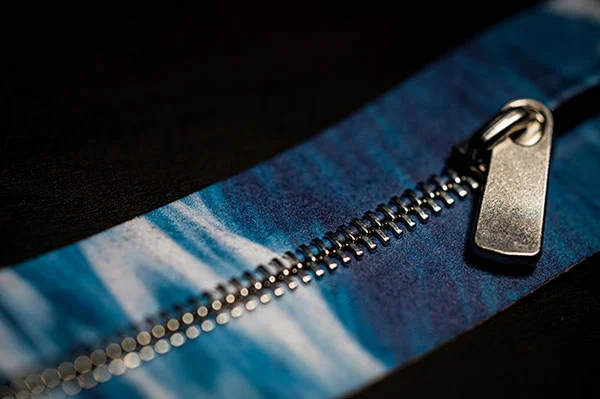
In a landmark collaboration that bridges the worlds of precision engineering and high-fashion couture, global fastening leader YKK Corporation and technology giant Epson have unveiled a groundbreaking development in textile circularity. By integrating Epson’s proprietary "Dry Fiber Technology" with YKK’s premium Excella zipper series, the two companies have successfully transformed discarded garments and textile mill ends into high-performance zipper tape.
This innovation made its global debut on the runway during Paris Haute Couture Week, featured as a structural component in the "Inferno" collection by visionary designer Yuima Nakazato. This partnership represents more than a mere product launch; it is a fundamental shift in how the fashion industry perceives "waste," proving that the materials of the past can serve as the structural foundation for the luxury goods of the future.
The Genesis of the Collaboration: Bridging Tech and Textiles
The collaboration between YKK and Epson is rooted in a shared commitment to the circular economy. For years, the fashion industry has struggled with the "end-of-life" problem: how to manage the billions of tons of textile waste generated annually. While recycling technology exists, it is often energy-intensive or requires vast amounts of water.
Epson’s Dry Fiber Technology offers a transformative solution. Originally commercialized to recycle office paper, this waterless process defibrates, binds, and reforms fibrous materials into new, non-woven sheets. By pivoting this technology toward textile waste, Epson has created a pathway to regenerate discarded clothing into high-quality, non-woven fabric.
YKK, recognizing the urgent need to address the environmental impact of its own supply chain, saw an opportunity to apply this regenerated material to its most iconic product: the Excella zipper. Known for its meticulously polished metal elements and luxurious aesthetic, the Excella line is the gold standard for high-end handbags and apparel. Applying non-woven, upcycled tape to this premium product was a technical challenge that required months of rigorous engineering.
Chronology of Innovation: From Concept to Couture
The journey to the Paris runway was a deliberate, multi-stage evolution that prioritized material integrity and functional performance.
Phase 1: The Technological Pivot (2023)
In January 2023, Epson officially expanded the scope of its Dry Fiber Technology to include textile waste. The company began converting used garments and factory off-cuts into fibers, creating a new, sustainable source of raw material. This was a critical step in proving that waste could be "re-manufactured" rather than simply downcycled.
Phase 2: Solving the Structural Puzzle (2024)
In 2024, Epson deepened its research by partnering with The Hong Kong Research Institute of Textiles and Apparel (HKRITA) to address the most difficult-to-recycle fabrics, including complex blends. During this period, YKK engineers joined the effort, focusing on the specific mechanics of zipper tape. Because non-woven materials possess different structural properties than traditional woven tape, the team had to conduct extensive stress testing to ensure that the zipper could withstand the rigors of daily use—such as tensile strength, flexibility, and durability.
Phase 3: The Couture Debut (2025/2026)
The culmination of this partnership was the "Inferno" collection by Yuima Nakazato. By incorporating the recycled-tape Excella zippers into haute couture garments, the designers demonstrated that circularity does not require a compromise in luxury or aesthetic refinement.
Technical Data: Engineering Circularity
Creating a functional zipper from recycled fiber is an exercise in material science. The challenges were twofold: maintaining the necessary mechanical strength for a fastener and ensuring the tape was pliable enough for sewing into high-end garments.
The Dry Fiber Process
Epson’s process operates without water—a significant departure from traditional textile recycling, which often involves chemical baths and high-pressure washing. By using mechanical defibration, the technology maintains the fiber length and integrity of the original material, allowing for a higher-quality output.
Optimizing the Zipper
For the Excella zipper, the collaboration focused on three key performance metrics:
- Tensile Strength: Ensuring the tape would not tear or fray when the zipper is under tension.
- Flexibility: Tailoring the thickness of the non-woven sheets to ensure the zipper remains soft to the touch, matching the feel of traditional woven tape.
- Slider Compatibility: Because the non-woven tape has a different density than traditional woven fabric, YKK engineers designed a custom slider structure. This ensured smooth operation, preventing the zipper from catching and extending the lifecycle of the garment it secures.
Official Responses and Corporate Vision
The leadership at both YKK and Epson have framed this project as a milestone in their long-term environmental strategies.
"Sharing a common awareness of the challenges surrounding textile circularity, YKK joined the project in support of its vision of creating new value through the upcycling of clothing and materials that would otherwise go unused," a YKK spokesperson stated. The sentiment reflects the company’s "2050 Sustainability Mission," a comprehensive roadmap to decarbonize its operations and transition entirely to sustainable materials.
YKK has already set a target of transitioning to 100 percent sustainable textile materials—including recycled polyester and plant-derived fibers—by the year 2030. Their existing Natulon fiber series serves as a precursor to this new innovation, utilizing recycled PET bottles and textile scraps to create high-performance tapes. The partnership with Epson takes this mission a step further, moving beyond simple recycled polyester into the realm of complex, regenerated non-woven fabrics.
Implications for the Fashion Industry
The successful integration of Epson’s Dry Fiber Technology into YKK’s product line carries profound implications for the global fashion market.
1. Scaling the Circular Economy
The primary barrier to circularity has historically been the difficulty of scaling solutions. If major component manufacturers like YKK can successfully incorporate recycled materials into their core lines, it creates a "pull" effect on the rest of the industry. Brands no longer have to sacrifice the quality of their fasteners to meet sustainability mandates; they can simply integrate these circular components into their existing designs.
2. Redefining Luxury
The inclusion of recycled materials in a couture collection challenges the long-held notion that luxury must be synonymous with "virgin" or "new" materials. By proving that high-fashion pieces—such as those by Yuima Nakazato—can utilize upcycled components, YKK and Epson are helping to destigmatize recycled materials in the luxury sector.
3. Supply Chain Resilience
As global regulations regarding textile waste tighten—particularly in the EU and North America—brands are under increasing pressure to account for the full lifecycle of their products. A zipper tape made from recycled garments is inherently "traceable" and helps companies meet their ESG (Environmental, Social, and Governance) targets.
4. Future Research and Development
The success of this pilot project opens the door to further applications. Could this technology be applied to other hardware components? Could the non-woven tape be further reinforced with bio-based resins? The partnership has established a research framework that will likely yield even more efficient circular solutions in the coming years.
Conclusion
The collaboration between YKK and Epson serves as a beacon for what is possible when heavy industry embraces radical innovation. By focusing on the "small" details—the zippers that hold our garments together—they are addressing the "big" picture of global textile waste. As the fashion industry stands at a crossroads, navigating the tension between mass production and environmental stewardship, the work of YKK and Epson provides a clear, actionable path forward: a future where the seams of our clothes are just as sustainable as the fibers they are made from.
As we look toward 2030 and beyond, this partnership signals that the era of "take-make-waste" is being systematically replaced by a circular paradigm, one that honors the value of every fiber and every fastener.
 Neng Nana
  Ali Ikhwan
  Lina Hope