
 By Dwi Wanna
In the fast-paced ecosystem of digital marketing, there is a recurring, humbling reality: what yielded a record-breaking return on investment last quarter may be met with total indifference today. Consumer attention spans are not merely shortening; they are evolving, becoming more discerning, and growing increasingly resistant to generic outreach.
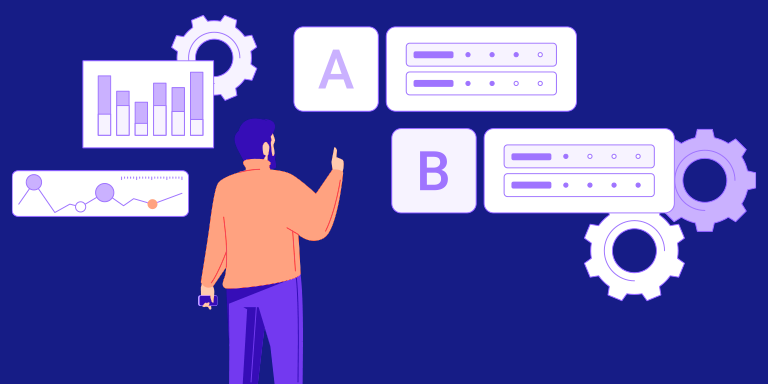
For entrepreneurs and marketing leaders, this creates a volatile environment where intuition is often the primary cause of failure. In the modern digital landscape, A/B testing—the systematic comparison of two versions of a digital asset—has transitioned from a “nice-to-have” optimization tactic into a non-negotiable cornerstone of sustainable business growth.
Main Facts: The Science of Small Wins
At its core, A/B testing is about the elimination of guesswork. It is the scientific method applied to commerce. By systematically isolating variables—such as the phrasing of a subject line, the color of a "Buy Now" button, or the timing of an automated email flow—brands can move from operating on "hunches" to operating on empirical data.
The premise is simple: small, incremental gains compound. A 5% lift in email open rates, when paired with a 10% increase in click-through rates, can result in a 30% revenue surge over a quarter without spending a single additional dollar on customer acquisition costs (CAC). This is the "compounding interest" effect of conversion rate optimization (CRO), allowing lean teams to outperform industry incumbents by simply being more efficient with the traffic they already possess.
Chronology of Optimization: From Manual Testing to AI-Driven Flows
The evolution of A/B testing reflects the maturation of the digital economy. In the early 2010s, testing was a manual, often cumbersome process, largely reserved for enterprise-level organizations with dedicated data science departments.
- The Manual Era (2010–2015): Testing was limited to basic website headlines. It required significant technical overhead and manual data analysis.
- The Tool-Integration Era (2015–2020): Marketing platforms began building native A/B testing features directly into email and landing page builders, democratizing the process for small-to-medium businesses.
- The Automated & Predictive Era (2020–Present): Today, platforms like Omnisend have integrated machine learning, allowing for "set-it-and-forget-it" testing. Automation now dictates not just what is sent, but who receives it and when, based on behavioral patterns rather than static calendars.
Supporting Data: Why Your Audience Demands Evidence
The data supporting a culture of constant experimentation is overwhelming. Recent industry analysis from Omnisend highlights a significant shift in performance metrics. Across their global merchant base, average email open rates climbed from 22.9% in 2022 to 25.1% in 2023. This growth was not incidental; it was the direct result of more sophisticated segmentation and rigorous A/B testing cycles.
Perhaps more striking is the performance gap between manual, blast-style campaigns and automated, optimized flows. Triggered flows—such as abandoned cart sequences or "welcome" series—are seeing 52% higher open rates and a staggering 2,361% better conversion rate than standard newsletters.
The weight of the subject line cannot be overstated. With 43% of consumers deciding whether to engage based solely on that single line of text, and 69% of users willing to report an email as junk based on the subject alone, the cost of an "untested" email is not just a lost sale—it is long-term damage to deliverability and brand reputation.
What You Should Be Testing: A Strategic Framework
To move the needle, one must look beyond aesthetics. While changing a button color is a classic "test," the high-leverage elements are those that touch the customer psychology.
1. Subject Lines: The Gatekeepers of Engagement
The goal here is simple: maximize the open rate. Entrepreneurs should test:
- Curiosity vs. Benefit: Does your audience prefer a "tease" (e.g., "The secret to our best year yet") or a direct value proposition (e.g., "Get 20% off your next order")?
- Urgency: Test time-sensitive language vs. scarcity (e.g., "Only 3 left" vs. "Offer ends at midnight").
- Personalization: Does including the recipient’s name or purchase history move the needle, or does it feel intrusive?
2. The CTA (Call to Action)
Once the email is open, the goal is conversion. Test these variables:
- Copy: Compare benefit-focused text ("Start My Free Trial") vs. passive text ("Click Here").
- Placement: Does the CTA appear "above the fold" or after a brief narrative?
- Visual Prominence: Test the contrast of the button color against the email background.
3. Send Timing and Frequency
Even the most compelling content will fail if it arrives in an already cluttered inbox.
- Time of Day: Segment your testing by time zone to determine if your audience engages better during morning commutes, lunch breaks, or evening wind-down hours.
- Cadence: Test the frequency of your automated flows to find the "Goldilocks zone" where you remain top-of-mind without causing subscriber fatigue.
Official Perspectives: The Expert Consensus
Leading marketing strategists argue that the primary barrier to successful A/B testing is not technology, but psychology. Many founders fear that testing will "break" their brand voice or annoy their subscribers.
However, the consensus among growth experts is that the audience wants relevance. A/B testing is, in essence, an act of empathy. By testing, you are effectively asking your audience what they value, how they prefer to be communicated with, and what barriers exist between them and the purchase. When a brand ignores testing, they are effectively telling the audience, "We know what you want better than you do," which is a dangerous assumption in an age of infinite consumer choice.
Implications for Future Scaling
The implication of adopting an "always-on" testing mentality is profound. It creates an institutional memory for the business. When you track every test—whether it succeeded or failed—you are building a "private library" of customer intelligence.
Avoiding the "False Positive" Trap
A common pitfall is testing too many variables at once. If you change the subject line, the imagery, and the CTA all at once, you will never know which element drove the change. A robust testing strategy must be isolated:
- The Hypothesis: Always define the "why" before the "what." (e.g., "I believe that highlighting the discount in the subject line will outperform the brand-name-only subject line.")
- Sample Size: To ensure statistical significance, avoid testing on small, insignificant groups. Most platforms recommend a minimum of 1,000 recipients per variant.
- The 20/20/60 Rule: For smaller lists, split your audience: 20% receive variant A, 20% receive variant B, and the remaining 60% receive the winner of the initial split.
The Competitive Advantage
In a crowded market, the brands that win are not necessarily those with the largest advertising budgets, but those that learn the fastest. Every email, every landing page, and every advertisement is a data point. When you treat your marketing as a continuous loop of testing, learning, and iterating, you develop a "compounding advantage." Your competitors are guessing; you are calculating.
Conclusion: Start Small, Iterate Often
You do not need a massive dev team or a Fortune 500 budget to master the art of A/B testing. You simply need the discipline to change one thing at a time and the patience to let the data speak.
As you refine your approach, tools like Omnisend become vital force multipliers. By automating the heavy lifting of segmentation and triggered flows, these platforms allow founders to focus on the high-level strategy of what to test, rather than the manual labor of how to test it.
The path to scaling is rarely found in one "big idea." It is found in the hundreds of small, data-backed improvements that, when combined, create a seamless, high-converting experience that your audience will choose again and again. Stop guessing what your audience wants—start testing and find out for sure.
For those looking to accelerate their growth, Omnisend is currently offering a special partnership for our readers: Get 50% off your first 3 months with code FOUNDR50. It is time to stop the guesswork and start building the scalable, data-driven business you deserve.
 Suro Senen
  Evan Lee Salim
  Ammar Sabilarrohman