
 By Laily UPN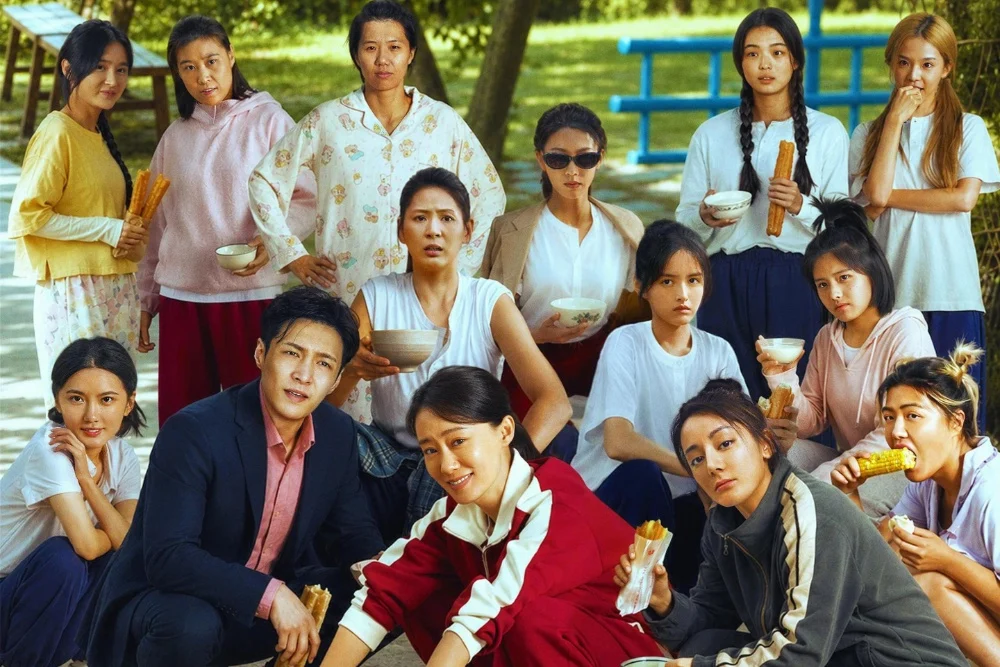
Main Facts: A Weekend of Domestic Dominance
The mainland China box office landscape experienced a weekend of clear-cut hierarchies from July 17 to July 19. Shenzhen Film Studio’s breakout sports comedy, Kung Fu Soccer, firmly entrenched itself at the top of the charts, maintaining its momentum with a dominant second-weekend performance. According to data provided by industry analytics firm Artisan Gateway, the film generated a staggering RMB 501.1 million ($73.7 million) over the three-day frame.
Directed by the legendary Stephen Chow, the film has become a cultural phenomenon, signaling a triumphant return to the director’s signature brand of athletic slapstick and high-concept humor. In just nine days since its initial release, Kung Fu Soccer has accumulated a massive $214.3 million, proving that the appetite for high-octane, star-driven Chinese cinema remains robust even in a challenging economic climate.
Chronology and Performance Breakdown
The weekend box office results painted a vivid picture of the current theatrical appetite in China, where local productions are currently outpacing imported international content.
1. The Reign of Kung Fu Soccer
The success of Kung Fu Soccer is being studied by analysts as a masterclass in genre blending. By focusing on an underdog narrative—an amateur women’s soccer team utilizing gravity-defying martial arts to take on professional titans—the film taps into a vein of nationalistic pride and comedic escapism. Chow’s influence is evident in the choreography and the rapid-fire pacing, which has kept audiences returning for repeat viewings.
2. All Wishes Come True! Makes a Strong Debut
Securing the second spot was Pearl Studio’s computer-animated fantasy feature, All Wishes Come True!. Directed by Mu Zhengyang, the film debuted with $30.6 million over the weekend. Since its July 18 launch, the co-production has amassed $39.6 million. The film offers a family-friendly twist on Chinese mythology, focusing on eight ordinary mortals who must outwit formidable deities to earn the title of the Eight Immortals. Its strong opening suggests that high-quality domestic animation continues to be a growth sector for the Chinese film industry.
3. A Part of Me and the Resurgence of Drama
Opening in third place with $13.6 million, Enlight Pictures’ A Part of Me represents a significant shift toward character-driven narratives. An adaptation of the 2015 U.K. film Miss You Already, the Chinese iteration is directed by Ma Yingxin and stars Zhang Ruonan and Jolin Jin. Spanning a two-decade timeline, the film’s emotional depth has resonated with younger demographics, showcasing the resilience of female friendship and the shifting tides of personal growth.
4. The Long Tail of International Hits
Universal’s Minions & Monsters saw a slight decline, moving to fourth place in its third week of release. With a weekend take of $3.7 million, the film’s cumulative Chinese haul has reached $40.3 million since July 3. While it remains a popular choice, it is being outpaced by the newer, more culturally resonant domestic titles.
5. The Surprise Return: Triangle
Rounding out the top five is an unconventional entry: the theatrical re-release of Christopher Smith’s 2009 psychological horror film, Triangle. Pulling in $3.7 million, this mind-bending cult classic has found a new life in Chinese theaters, signaling an interesting trend where audiences are willing to engage with older, high-concept international thrillers that offer intellectual stimulation alongside traditional entertainment.
Supporting Data: Market Health and Trends
While the top five films saw varying degrees of success, the broader context of the Chinese box office remains a subject of intense scrutiny. The mainland China market recorded a total weekend gross of $132.9 million. However, the year-to-date revenue for 2026 stands at $2.97 billion, which reflects a 35.3% decline compared to the same period in 2025.
This decline is largely attributed to a combination of shifting consumer habits, a post-pandemic recalibration of ticket prices, and a more selective audience that is increasingly favoring "event" cinema over routine releases. The success of Kung Fu Soccer acts as a vital buffer, but industry analysts are noting that the total volume of releases has not yet reached the pre-recession peaks of 2024 and 2025.
Official Responses and Industry Outlook
The Chinese film industry has been vocal about the need for revitalization. Studios like Shenzhen Film and Pearl Studio are currently being lauded by the China Film Administration for their focus on "high-quality, high-impact" content.
"The current market performance highlights that audiences are not retreating from theaters; they are simply becoming more discerning," says industry analyst Li Wei. "When a director like Stephen Chow delivers a film that combines physical humor with emotional stakes, the audience responds. The challenge for 2026 is ensuring a consistent pipeline of such content to reverse the year-to-date slump."
Furthermore, anticipation is mounting for the August 15 release of Christopher Nolan’s The Odyssey. Currently the number-one film globally by a significant margin, its arrival in China is expected to provide a much-needed boost to the third-quarter revenue figures. Exhibition chains are preparing for a massive turnout, as Nolan’s films have historically performed exceptionally well in the Chinese market.
Implications for the Future of Chinese Cinema
The current market cycle holds several implications for the future of the Chinese film industry:
The Shift Toward Domestic Intellectual Property
The dominance of Kung Fu Soccer and the strong debut of All Wishes Come True! demonstrate that Chinese audiences are increasingly prioritizing stories rooted in their own cultural touchstones. Whether through the lens of mythology or the modernization of classic sports tropes, local studios are finding that original IP often outperforms the rote recycling of Western formats.
The Evolution of the "Event" Film
The disparity between the top three films and the rest of the market suggests a "winner-take-all" landscape. Small to mid-budget films are finding it harder to gain traction without significant social media buzz or massive marketing campaigns. This creates a high-pressure environment for distributors, who must now invest heavily in digital marketing to ensure their films do not get lost in the noise.
International Distribution Challenges
The modest performance of Minions & Monsters compared to the juggernaut of Kung Fu Soccer illustrates the challenges faced by international studios. To compete, major global players like Universal and Disney must navigate the increasingly complex preferences of the Chinese audience, who are no longer content with "standard" international releases. The surprise success of Triangle indicates that there is still room for international content, provided it offers a unique, "must-see" experience that differentiates itself from domestic offerings.
Economic Resilience
Despite the 35.3% year-to-date decline, the sheer volume of revenue—approaching $3 billion—indicates that the industry is far from stagnant. The focus for the remainder of the year will be on bridge-building between high-quality indie dramas like A Part of Me and global blockbusters like The Odyssey. If the industry can maintain this balance, the final quarter of 2026 could see a narrowing of the gap between this year and the previous.
Conclusion
As the dust settles on the mid-July weekend, the story remains one of resilience and adaptation. Kung Fu Soccer has successfully reminded the industry that the magic of cinema still rests on the ability to entertain, surprise, and delight audiences on a grand scale. While the macroeconomic numbers reflect a challenging year, the creative output from Chinese studios suggests a vibrant, evolving landscape that is learning to prioritize quality and cultural relevance over quantity. As the industry looks toward the upcoming release of Christopher Nolan’s latest epic, all eyes will be on whether the market can sustain this momentum and reclaim its position as the world’s most dynamic box office theater.
 Siti Muinah
  Ammar Sabilarrohman
  Layla Zulfa