
 By Reynand Wu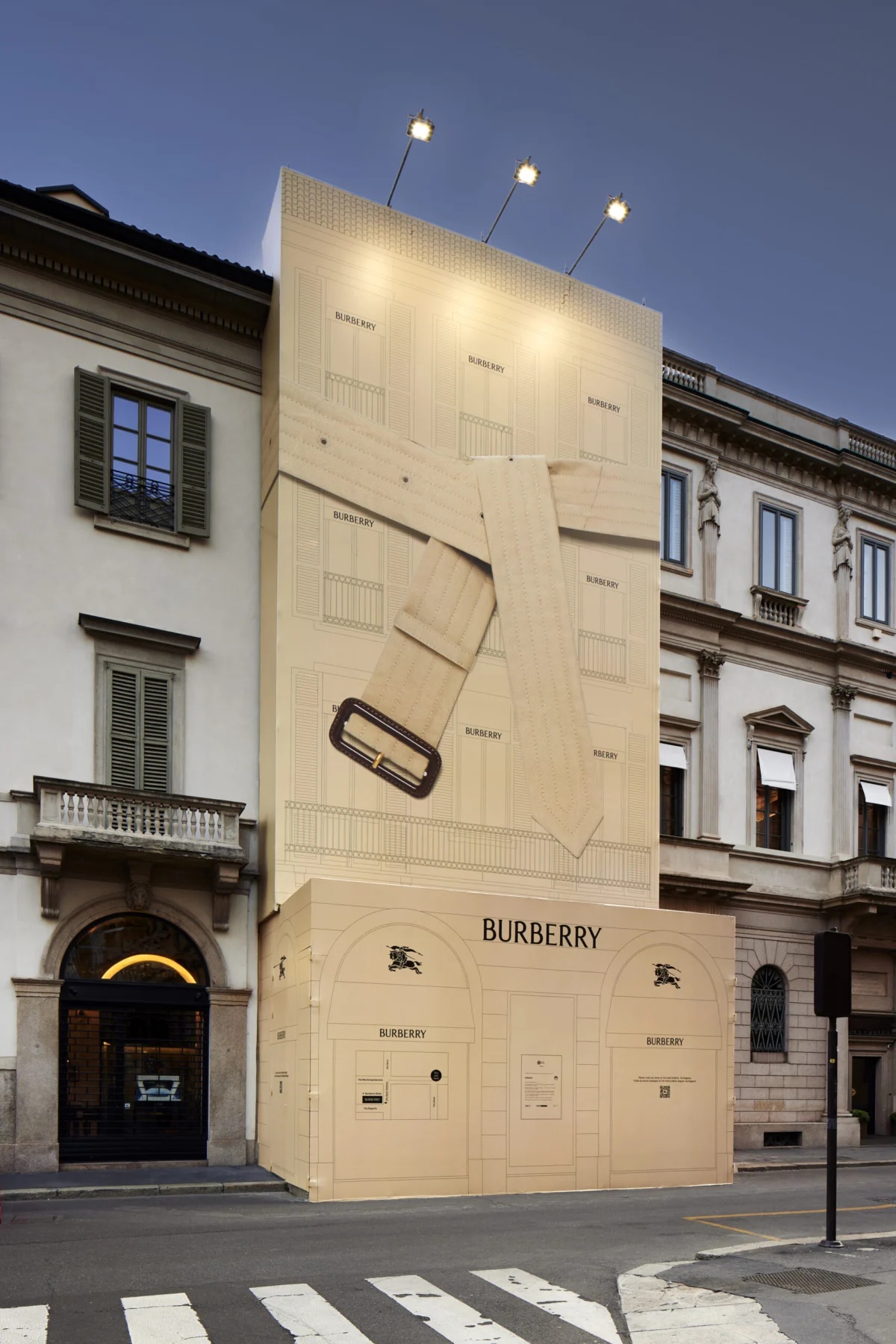
LONDON — In the shifting landscape of global luxury, few brands are navigating the transition between storied tradition and modern relevance as intensely as Burberry. As the iconic British fashion house marks two years under the leadership of CEO Josh Schulman, the company finds itself at a critical juncture: a successful turnaround is officially in motion, yet the financial markets are signaling that “steady progress” may no longer be enough.
While recent fiscal results demonstrate a brand regaining its footing, the divergence between operational success and investor sentiment highlights the unforgiving nature of the current luxury sector.
The Core Data: A Quarter of Broad-Based Recovery
Burberry’s first fiscal quarter results paint a picture of a brand effectively broadening its appeal. Retail revenue climbed 5 percent to reach 455 million pounds, a performance underpinned by growth across every primary product category—a milestone the brand has not achieved in three years. For the fourth consecutive quarter, same-store sales recorded a 5 percent increase, signaling that the "Burberry Forward" strategy is more than just a temporary fluctuation.
The recovery is not merely top-line growth; it is structural. The brand has successfully reignited interest in its core categories: trench coats, scarves, and, perhaps most crucially, handbags. After a period of stagnation, the leather goods category returned to growth, proving that the brand’s push to reassert its luxury credentials in accessories is gaining traction with a discerning consumer base.
Regional Performance Breakdown
- The Americas: Leading the charge with a 12 percent sales increase, the region remains a vital pillar for Burberry’s expansion.
- Greater China: Despite global concerns regarding a slowdown in the Chinese luxury market, Burberry saw a 9 percent rise in sales.
- Asia-Pacific: Notched a 3 percent gain, reflecting a steady, if cautious, consumer appetite.
- EMEIA (Europe, Middle East, India, and Africa): The only region to contract, posting a 3 percent decline. Management attributed this primarily to the ongoing instability in the Middle East and its subsequent impact on tourism patterns. Excluding the Middle East, the region’s decline was a more modest 1 percent.
Chronology: From Stagnation to Strategic Momentum
To understand Burberry’s current position, one must look at the timeline of the "Burberry Forward" initiative.
2022-2023: The Foundation. Following a period of brand dilution, leadership began the difficult work of moving the brand back toward its British heritage. The focus shifted from experimental aesthetic shifts back to the brand’s most recognizable signifiers: the check, the trench, and the "spirit of adventure."
Early 2024: The Marketing Blitz. The brand launched the "Portraits of an Icon" campaign, which effectively leveraged celebrity influence to bridge the gap between legacy and youth. By placing the classic trench on contemporary cultural icons, Burberry successfully enticed a 19 percent increase in new rainwear customers, effectively widening the funnel for future sales.
Q1 2025: The Evidence Phase. The most recent quarter served as the validation of these efforts. With double-digit growth among Gen Z shoppers in Greater China and a successful documentary series ("Expedition With Burberry") produced in partnership with Chinese National Geographic, the brand has demonstrated an ability to localize its message.

The Path Forward: The company has raised its wholesale guidance for the first half of the year to high-single-digit growth, citing a positive reception from retail partners who appear increasingly confident in the brand’s trajectory.
Official Perspectives: The CEO’s Bullish Outlook
Josh Schulman, who celebrated his two-year anniversary at the helm this past Friday, remains steadfast in his assessment that the brand is in the early stages of a long-term ascent.
“Our strategy is working,” Schulman stated during the earnings call. “We are attracting a broad range of luxury customers across product categories, channels, and geographies, reinforcing my confidence in the opportunities ahead. We believe that the best is yet to come.”
Schulman’s medium-term vision is ambitious: restoring the company to its "golden days" of 3 billion pounds in annual revenue, with operating margins reaching the high teens. However, he emphasized that this is merely a baseline. Once these benchmarks are met, his stated goal is to drive profitability and revenue growth far beyond those historic levels.
Regarding the volatility in the Chinese market, Schulman remains optimistic, framing it as a "must-win" territory. The brand’s strategy of using immersive pop-ups at high-traffic locations like Shanghai’s Plaza 66, paired with localized content, suggests a move toward deeper, more meaningful engagement with the Chinese consumer rather than relying on broad-brush marketing.
The Market Disconnect: Why Investors Are Skeptical
Despite the positive earnings report, the market reacted with volatility, sending Burberry shares down more than 6 percent to 10.50 pounds. This reaction underscores a growing impatience among investors who are wary of the broader luxury slowdown.
Analysts from firms such as Bernstein and Third Bridge suggest that while the "recovery" is evident, the "transformation" remains incomplete.
“Burberry has successfully gone through its first brand revival chapter,” noted Bernstein’s Luca Solca. “The ball is now in management’s court to sustain the recovery, adding spice and oomph to it.”

Third Bridge analyst Yanmei Tang offered a more tempered view, suggesting that the recent rebound is largely a result of "easier comparisons" and a successful marketing blitz. "The marketing, pop-ups, and influencer campaigns are a signal that Burberry is back, but they are not a permanent growth engine," Tang wrote. The market is looking for evidence that the brand can achieve organic, long-term desirability that transcends seasonal campaigns.
Implications: The Macro-Environment and Policy Hurdles
Burberry’s recovery is currently being hampered by headwinds that are entirely outside of its control—specifically, the state of the U.K. retail environment.
In a direct appeal to the incoming Prime Minister, Andy Burnham, Schulman joined a chorus of luxury leaders calling for the restoration of tax-free shopping for international tourists. The data provided by Burberry is stark: since the abolition of VAT-free shopping, the brand has seen a 50 percent decline in tourist-driven sales in its London stores compared to 2019 levels. In contrast, its Paris boutiques have seen a 30 percent increase.
"We know that the new prime minister has a busy agenda," Schulman noted. "We would hope that restoring London as the most important shopping capital on this side of the Atlantic would be at the top of his list."
The implications of this policy are significant. As Burberry prepares to open a four-floor flagship on Milan’s prestigious Via Montenapoleone in 2027, the brand is clearly positioning its resources where they are most likely to yield the highest returns. If the U.K. government does not pivot toward a more business-friendly posture regarding tourism spending, London risks losing its status as a premier global luxury hub, potentially impacting the domestic revenue of brands like Burberry for years to come.
Conclusion: A Brand in Transition
Burberry is, by all accounts, a company successfully executing a turnaround. It has reclaimed its identity, stabilized its core categories, and found a way to speak to a new generation of luxury shoppers. However, the task ahead is significantly more difficult than the one behind it.
Transitioning from a brand that is "recovering" to a brand that is "leading" will require more than just heritage storytelling. It will require the management team to navigate geopolitical instability, lobby for significant policy changes in its home market, and maintain high-single-digit growth in an era where consumers are increasingly selective with their luxury spending.
For now, the "Burberry Forward" strategy has provided a solid foundation. Whether that foundation is enough to support the ambitious growth targets set by Schulman—and satisfy an increasingly demanding stock market—will be the defining narrative of the next two years.
 Neng Nana
  Ali Ikhwan
  Lina Hope