
 By Reynand Wu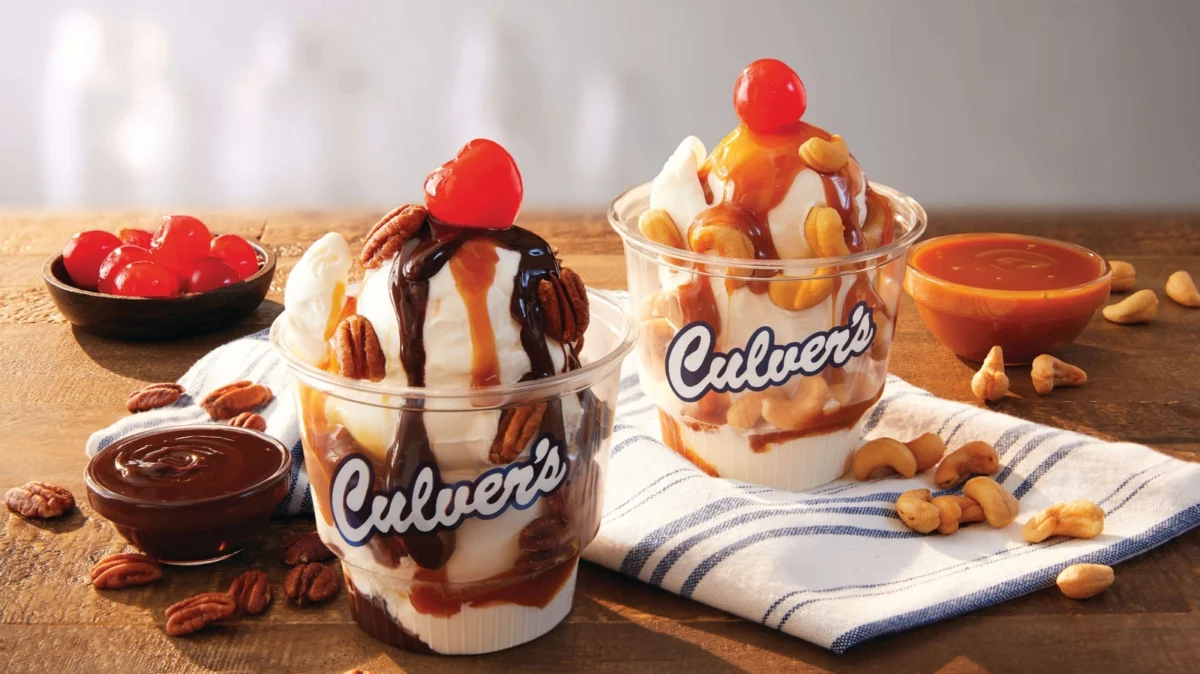
When most consumers think of Culver’s, their minds inevitably drift to the savory allure of a “ButterBurger”—a Midwest staple famously crafted from never-frozen beef. Yet, beneath the shadow of its grill, the fast-food chain has cultivated an equally formidable reputation for its dessert program. Culver’s frozen custard has become a culinary phenomenon, with individual locations serving hundreds of scoops daily, a number that swells to over 1,600 per day during the sweltering peak of summer.
But what distinguishes this treat from the standard soft-serve found at other drive-thru establishments? The answer lies in a meticulous blend of federal standards, historical innovation, and precise mechanical engineering.
The Foundation: Understanding the "Custard" Distinction
At its core, frozen custard is a distinct category of dairy dessert, strictly defined by the Code of Federal Regulations (CFR). According to Title 21, Section 135.110, for a product to be legally labeled as "frozen custard" or "French ice cream," it must contain a minimum of 1.4% pasteurized egg yolk solids by weight of the finished product.
Culver’s adheres strictly to this mandate, utilizing the egg yolk not merely as a legal requirement, but as the engine for the dessert’s signature texture. While ice cream relies heavily on milk and cream, the addition of egg yolks introduces lecithin, a natural emulsifier. When combined with butterfat and sugar, this emulsifier binds the ingredients into a cohesive, dense matrix. This molecular bond is the primary reason why Culver’s custard feels significantly richer and more luxurious on the palate than traditional, air-whipped ice cream.
A Chronological Evolution: From Coney Island to the Midwest
To understand the popularity of the custard, one must look back to the early 20th century. While the dessert is often associated with the American Midwest, its roots are firmly planted in the East Coast. In 1919, Coney Island vendors began experimenting with the addition of egg yolks to their frozen mixtures.
The discovery was largely utilitarian: vendors found that the egg-enriched mixture remained frozen for longer periods, even in the humid, high-traffic environment of the boardwalk. By stabilizing the dairy, the custard could withstand the heat of a summer afternoon without succumbing to immediate melting. This durability, coupled with a vastly improved mouthfeel, transformed the treat from a simple novelty into a staple of American summer culture.
By the time Culver’s founders, Craig and Lea Culver, opened their first restaurant in Sauk City, Wisconsin, in 1984, they sought to honor this tradition. By emphasizing a product that was made from scratch rather than shipped in pre-mixed, high-air-content buckets, they tapped into a desire for quality that has sustained the chain’s growth for four decades.
The Mechanical Advantage: Density vs. Aeration
The richness of Culver’s custard is not solely a product of its ingredients; it is a result of the machines used to manufacture it. In the world of frozen desserts, "overrun" is the industry term for the amount of air whipped into the mixture during the freezing process.
Standard soft-serve ice cream often features high overrun, meaning it is pumped full of air to increase volume and lower costs. Culver’s, however, utilizes specialized custard machines designed to churn the mixture with minimal air.
As James Beard Award-nominated pastry chef Dana Cree has noted, the texture of frozen custard is entirely dependent on the machine’s ability to minimize aeration. By freezing only a small portion of the dairy mixture at any given time, the machines produce a dense, velvety product. The process is a ballet of temperature and time: the custard emerges from the machine in roughly three minutes, identifiable by a glossy, reflective ribbon that signals the perfect emulsion of fat, protein, and sugar.
Supporting Data: Why Temperature Matters
The sensory experience of eating Culver’s custard is also governed by physics. Because of its density and the presence of egg proteins, the product does not require the same extreme sub-zero temperatures as traditional ice cream to maintain its structure.
While commercial ice cream is typically served at a frigid 5 to 10 degrees Fahrenheit, Culver’s custard is served at a warmer 18 to 21 degrees Fahrenheit. This temperature difference is critical for two reasons:
- Flavor Perception: Taste buds are more sensitive to flavors when the product is not aggressively cold. The warmer serving temperature allows the vanilla, chocolate, and butterfat notes to bloom more effectively.
- The "Brain Freeze" Factor: The lower thermal shock of the custard reduces the likelihood of "brain freeze," allowing consumers to enjoy the product at a more leisurely pace.
Furthermore, the egg yolks serve as a natural inhibitor to ice crystal growth. In standard ice cream, water molecules often clump together to form large, jagged ice crystals during storage, resulting in a gritty texture. In Culver’s custard, the emulsified fats and proteins wrap around water molecules, preventing them from coalescing. The result is a smooth, glass-like consistency that persists even in the container.
Operational Excellence: The Two-Hour Rule
Perhaps the most impressive aspect of the Culver’s model is the insistence on freshness. The chain operates on a strict "small batch" philosophy. Throughout the day, staff members prepare fresh custard at two-hour intervals.
This window is not arbitrary. After approximately two hours, even the best-made custard begins to lose its ideal texture as the mixture naturally begins to crystallize and harden within the holding buckets. Rather than relying on stabilizers or additives to keep the product soft for days, Culver’s management enforces a policy of rotation. If a batch has been sitting for too long, it is discarded, and a new batch is churned. This commitment to short-term viability ensures that the "freshly churned" quality is maintained from the morning rush to the late-night dessert seekers.
Official Perspective and Industry Implications
Culver’s has consistently positioned itself as a "quality-first" brand, and their custard program is the crown jewel of that strategy. By aligning with the strict definitions of the FDA and refusing to cut corners with high-overrun machinery, the company has managed to maintain a "homemade" feel at a massive scale.
From an industry standpoint, Culver’s represents a successful outlier in the fast-food landscape. While many competitors have pivoted toward ultra-processed, long-shelf-life ingredients to maximize margins, Culver’s has leaned into the complexity of its supply chain. The requirement for fresh dairy, frequent churning, and strict temperature control adds significant labor and logistics costs, yet the brand has found that customer loyalty—driven by the sensory superiority of the product—justifies the expense.
Conclusion: The Chemistry of Customer Loyalty
The enduring success of Culver’s frozen custard is a testament to the fact that, even in the fast-food world, science and craftsmanship matter. By respecting the chemical necessity of egg yolks, investing in low-overrun freezing technology, and maintaining an uncompromising standard for batch freshness, the chain has elevated a simple treat into a culinary destination.
When a customer receives that signature swirl, they are benefiting from over a century of ice cream evolution—a journey from the boardwalks of Coney Island to the high-tech, small-batch machines of the modern Midwest. It is a reminder that in the world of food, the difference between "good" and "great" is often found in the molecular details.
 Azzam Bilal Chamdy
  Lina Irawan
  Lina Hope