
 By Lina Irawan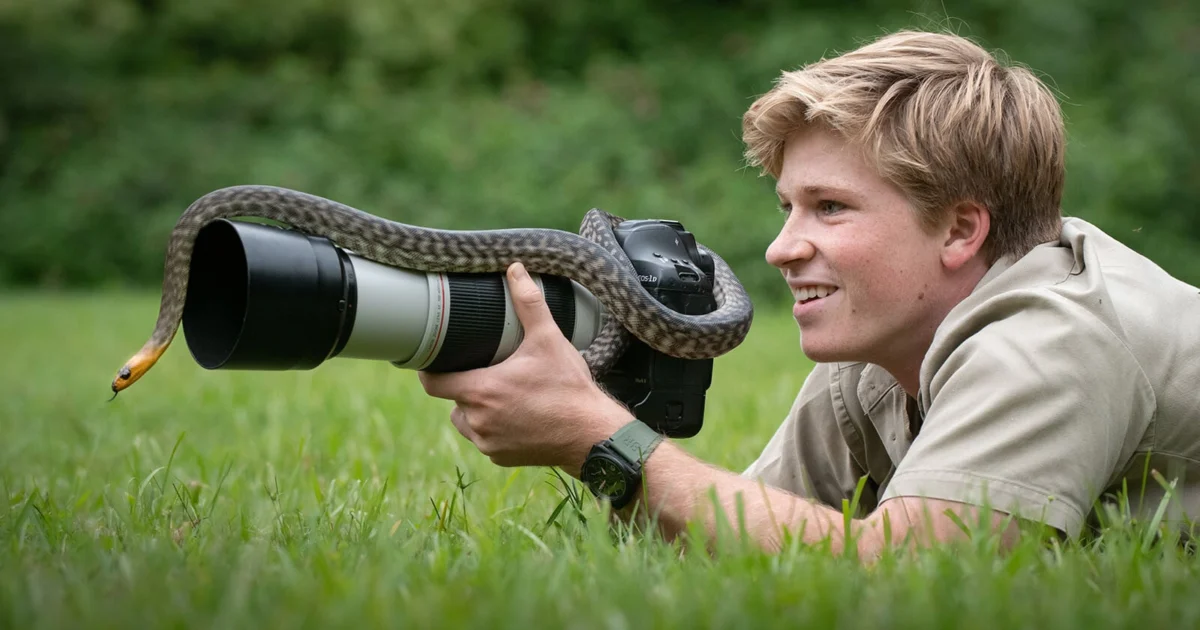
In an era defined by the rapid proliferation of generative artificial intelligence, the boundary between the natural world and digital fabrication has never been more porous. For Robert Irwin—the renowned conservationist, television presenter, and acclaimed wildlife photographer—this technological shift represents more than just a creative evolution; it poses an existential threat to the integrity of nature photography and the conservation messages it conveys.
In a wide-ranging interview with Parade, the 22-year-old scion of the Irwin family reflected on his lifelong commitment to the craft, his burgeoning career beyond the Australia Zoo, and his staunch refusal to allow AI to dilute the visceral power of the "real" image.
The Formative Power of the Lens
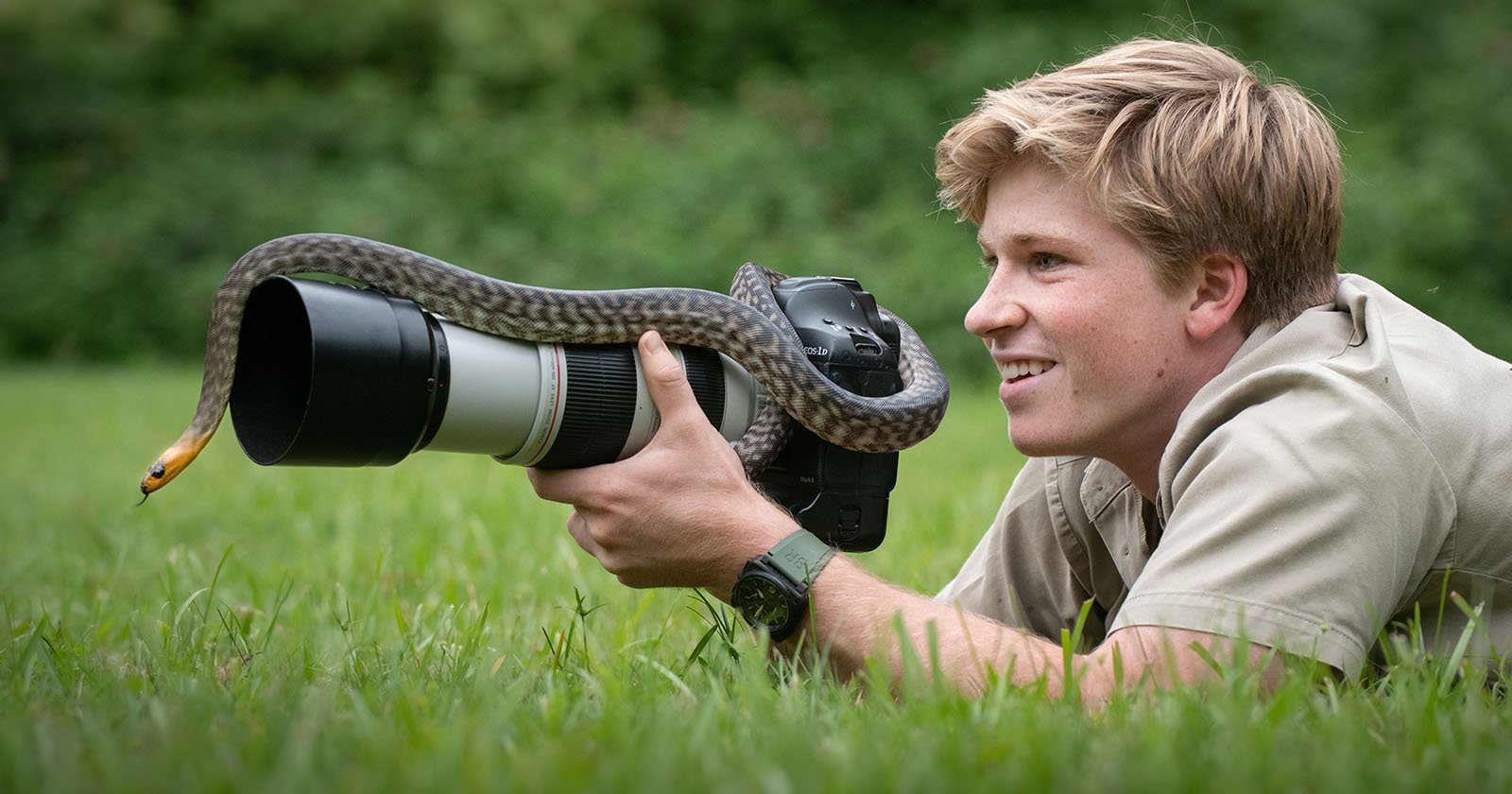
For those who have followed Robert Irwin’s trajectory from a young child exploring the grounds of the Australia Zoo to a global conservation figure, his passion for photography may seem like a secondary pursuit. However, Irwin insists that the camera has been the most formative influence of his life.
"This has been a passion project of mine and ours for a very long time," Irwin told Parade. "A lot of people might not realize this, but there’s this part of my life that’s been really probably the most formative part of my life and really created the person I am today, which is photography."
Since his early youth, Irwin has viewed the camera not merely as a tool for documentation, but as an artistic medium through which to translate his reverence for the natural world. Having spent over a decade behind the viewfinder, his photographic practice has become synonymous with his identity as an advocate for wildlife protection. For Irwin, the act of photography is an exercise in patience, humility, and observation—elements he believes are inherently compromised by the "shortcut" culture of generative AI.
The AI Dilemma: Diluting the Incredible
Irwin’s critique of generative artificial intelligence is multifaceted, touching upon both the environmental cost of the technology and its psychological impact on the viewer.
The Environmental and Ethical Cost
"As with any advancement in technology, I think we sometimes forget about the environmental destruction that it can cause," Irwin noted. While the energy consumption of large-scale AI models is a documented concern, Irwin is more focused on the "environmental" impact within the world of imagery. By generating hyper-realistic, often impossible scenes—such as eagles riding elephants—AI tools clutter the visual landscape with "ridiculousness."
The Erosion of Wonder
The primary danger, according to Irwin, is the dilution of what is truly impressive. When audiences are inundated with synthetic, algorithmically generated "marvels," the capacity for genuine awe at real-world phenomena begins to wither.
"We don’t realize that what is real, and that’s more amazing because it’s real, you know?" he explained. "When you see the image of the… eagle riding the elephant or whatever ridiculousness it is that people genuinely think is real, when there is the actual real amazing photo, it almost dilutes it because we’ve seen so many incredible things."
For Irwin, the "visceral feeling" that accompanies a genuine, hard-won wildlife photograph is irreplaceable. It is the evidence of a moment in time, a testament to the photographer’s presence, and a reflection of the animal’s authentic behavior. AI, in his view, strips that authenticity away, replacing the triumph of observation with the ease of prompt engineering.
A Bucket List of the Wild
Despite his international acclaim and years of travel, Irwin remains remarkably grounded, maintaining the infectious enthusiasm of a nature lover who still has worlds left to explore. He is quick to debunk the assumption that, having grown up at a world-class zoo, he has seen "everything."
"Anyone who has a passion for wildlife will tell you they have a list that’s a mile long of what they want to see next," he said. His list is a roadmap for his future expeditions, spanning continents and climates:
- South America: A region he has yet to visit, with sloths topping his list of desired subjects.
- The Galapagos: A bucket-list destination for any naturalist.
- The Komodo Archipelago: His desire to photograph the legendary Komodo dragon in its native habitat is a top priority.
- The Arctic and Alpine Tundra: Snow leopards and polar bears remain the "pinnacle" for the young photographer.
"I think I would just squeal with excitement if I saw one of them," he admitted, demonstrating that even for a professional who has worked with some of the most dangerous animals on Earth, the wonder of nature remains his primary fuel.
The Conservationist’s Tool: Promoting Authenticity
Irwin views his photography as a conduit for empathy. By sharing his images, he hopes to pass on the sense of wonder he felt as a child to the next generation. This mission has now culminated in a firm stance against the integration of AI in photography competitions, most notably in the Crikey! Magazine Photography Competition.
The 10th Anniversary and the Ban on AI
As the Australia Zoo celebrates the 10th anniversary of the competition, Irwin has made the rules explicitly clear: there is no room for AI-generated or heavily synthetic imagery.
"I’m looking for storytelling that shows nature as it’s intended," Irwin stated. "You’re not meddling with anything. You’re letting nature take its course, and you’re photographing it in its true and raw state."
This requirement for "raw" and "authentic" storytelling serves as a direct challenge to the trend of digital manipulation. By championing this competition, Irwin is providing a global platform for photographers—from amateur hobbyists to seasoned professionals—to prove that the most compelling stories are still found in the field, not in a server farm.
Implications for the Future of Nature Photography
The debate sparked by Irwin’s comments touches on the broader implications for the photography industry:
- Trust and Credibility: As AI images become indistinguishable from reality, the value of verified, professional-grade photography increases. Platforms that guarantee authenticity, like the Crikey! competition, may become essential bastions of truth in a post-truth media landscape.
- The Role of the Photographer: The photographer of the future may shift from being a "collector of images" to an "advocate of the real." The effort, travel, and personal risk involved in capturing an image will become the defining characteristics that separate art from synthesis.
- Educational Outreach: Irwin’s focus on the "next generation" suggests that the way we teach photography to children must emphasize the connection to the subject. If photography becomes a purely digital, screen-based activity, we lose the conservation-driven imperative that has historically fueled the best nature photography.
Conclusion
Robert Irwin’s perspective on the intersection of technology and wildlife is a call to action for both the artistic and conservationist communities. By drawing a hard line against the encroachment of AI, he is not just protecting a competition; he is protecting the sanctity of the natural world’s visual record.
In a world where one can generate a stunning image in seconds, the act of standing in the rain for hours to capture a single, imperfect, but real shot of a predator in the wild remains a revolutionary act. As Irwin continues his journey—from the dance floor to the deepest corners of the globe—his lens remains fixed on one goal: proving that reality, in all its raw and untamed glory, is far more spectacular than anything a computer can conjure.
For those interested in participating in the Crikey! Magazine Photography Competition and sharing their own authentic encounters with nature, entries remain open until August 31, 2026. As Irwin suggests, there is always a story to be told, provided you are willing to step outside and find it.
 Raul Delapena Setiawan
  rifanmuazin
  Ammar Sabilarrohman