By Science & Astronomy Desk Published: October 2026
Main Facts
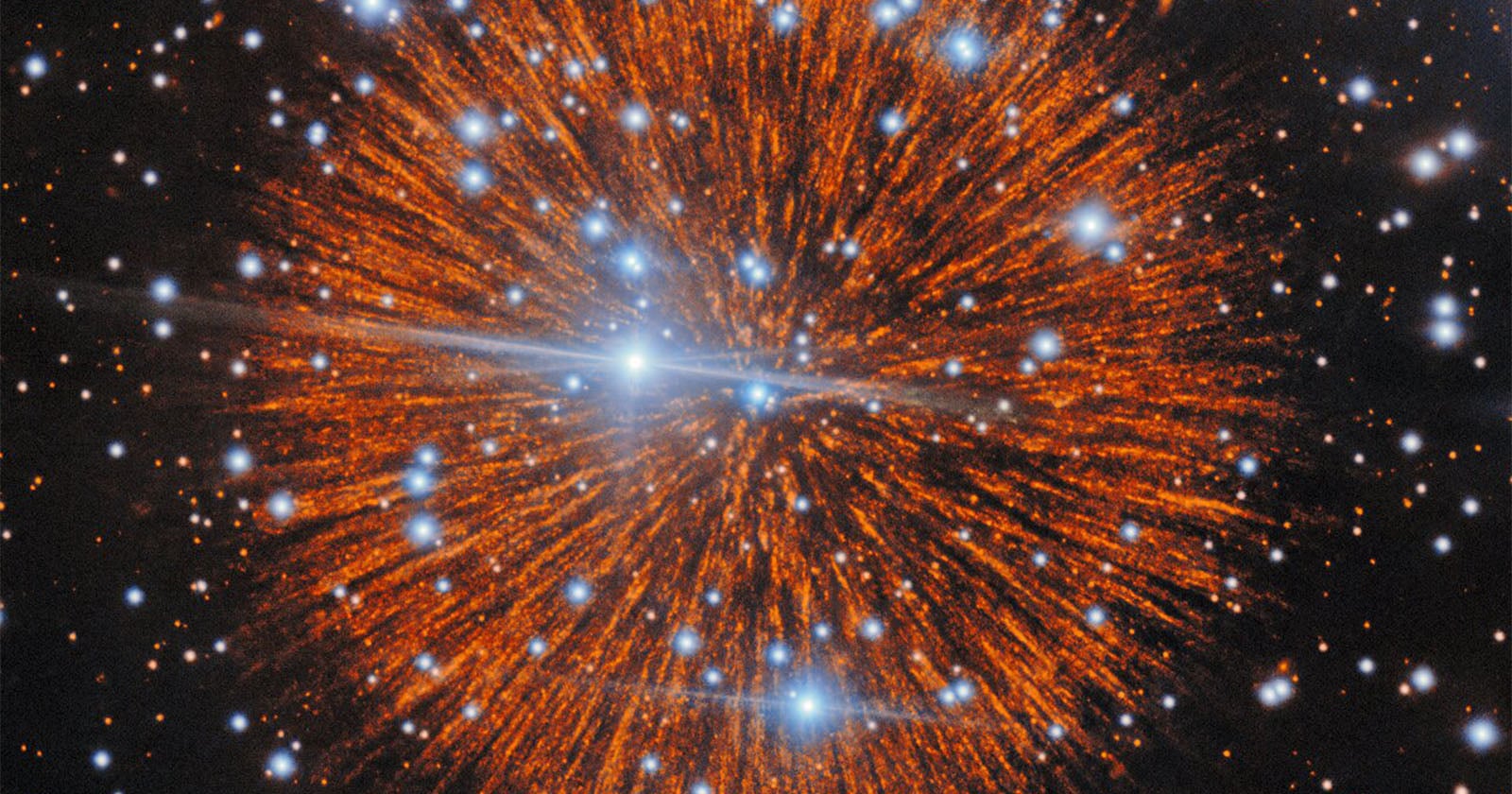
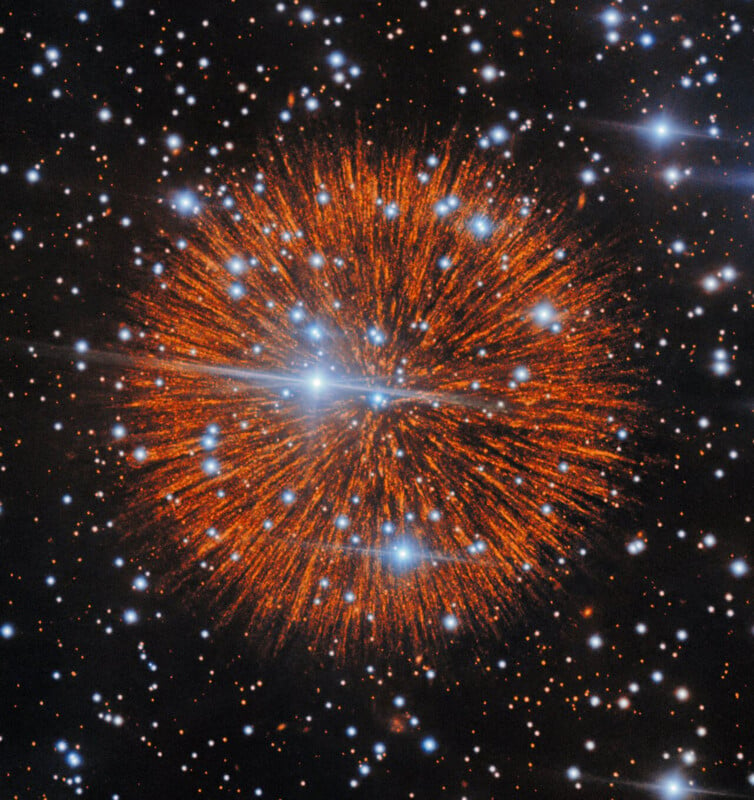
Astronomers utilizing the advanced capabilities of the GeminiNorthtelescope in Hawaiʻi have unveiled a stunning, high-resolution portrait of Pa 30. This intricate, vibrant supernovaremnant is widely believed by the scientific community to be the physical ghost of a stellar explosion witnessed by skywatchers over 840 years ago.
Referred to historically as SN 1181, the original supernova lit up the medieval night sky in August of 1181, remaining visible to the naked eye in the constellation Cassiopeia for an astonishing 185 days. Today, Pa 30 stands as the leading candidate for the physical remains of that historic event.
Captured using the Gemini Multi-Object Spectrograph (GMOS), the newly released image boasts a resolution roughly ten times clearer than previous observations of the remnant’s filamentary structure. This unprecedented clarity allows researchers to examine the fiery, radial "knotty" structures and chemical compositions that tell the story of a cosmic explosion frozen in time.
What makes Pa 30 uniquely fascinating to modern astrophysicists is its classification: it is the sole known remnant of a rare Type Iax supernova in the Milky Way. Unlike standard, catastrophic Type Ia supernovae that completely obliterate their progenitor white dwarf stars, Type Iax events are lower-energy, incomplete explosions. They leave behind a surviving central star that defies typical cosmic dynamics—boasting a scorching surface temperature of approximately 200,000°C (360,000°F) and hyper-velocity stellar winds whipping outward at 16,000 kilometers (10,000 miles) per second. Even more peculiarly, this surviving zombie star sits almost perfectly centered within the nebula, a phenomenon virtually unheard of in stellar remnants, which are usually knocked violently off-center by asymmetric blast waves.
Chronology: From Medieval Stargazers to Modern Astronomy
The story of Pa 30 and SN 1181 bridges nearly a millennium of human curiosity, connecting medieval scribes with twentieth-century amateur sleuths and twenty-first-century astrophysicists.
August 1181: The Guest Star Appears
Between August 4 and August 6, 1181, astronomers across the globe looked up to witness a sudden, brilliant "guest star" burning brightly in the night sky. While European record-keeping of the era was largely silent on the phenomenon, meticulous chroniclers in China, Japan, and the Arabic world documented the event in detail. Across eight surviving historical texts, scholars noted that the star shone with a brilliance comparable to Saturn and remained visible in the constellation Cassiopeia for nearly half a year.
For centuries, this transient beacon of light remained a historical footnote—one of only five supernovae in our Milky Way galaxy provably witnessed by humans prior to the invention of the telescope.
2013: A Citizen Science Discovery
Despite the wealth of historical documentation, the physical aftermath of SN 1181 eluded modern astronomy for centuries. It was not until 2013 that Pa 30 was brought to light—ironically, not by a professional astronomer peering through a billion-dollar observatory, but by a citizen science project.
Amateur American astronomer Dana Patchick discovered the faint nebula while poring through archival data collected by NASA’s Wide-field Infrared Survey Explorer (WISE) spacecraft. Pa 30, named as the 30th planetary nebula discovered by Patchick, sparked immediate intrigue among professional researchers.
Post-2013: Initial Validation
Following its discovery, scientists promptly targeted Pa 30 using instruments at the NSF Kitt Peak National Observatory. Initial calculations regarding the nebula’s expansion rate, estimated age, and overall brightness allowed researchers to "rewind the cosmic clock." The math aligned eerily well with the calendar dates recorded by medieval Asian and Arabic astronomers in 1181, crowning Pa 30 as the prime suspect for the SN 1181 remnant.
October 2026: High-Resolution Revelation
The latest chapter in this stellar biography was published on October 6, 2026, in The Astrophysical Journal (in a paper titled "Detection of Knots in the Type Iax Supernova Remnant Pa 30", authored by Tim Cunningham, Ilaria Caiazzo, John C. Raymond, and Scott J. Kenyon). Utilizing the Gemini North telescope, the research team unveiled the breathtaking new images and data that finally decode the complex structural mechanics of this 845-year-old explosion.
Supporting Data and Technical Observations
The physical characteristics of Pa 30 challenge conventional models of stellar death, providing astrophysicists with a rare natural laboratory.
Exceptional Resolution: The GMOS instrument on Gemini North provided a tenfold improvement in resolving Pa 30’s delicate, hair-like filaments. According to the U.S. National Science Foundation (NSF), these features display a distinct "knotty structure."
Circumstellar Medium Interaction: The knotty morphology indicates that thermal or density variations existed in the surrounding interstellar material (circumstellar medium). As the supernova ejecta expanded radially outward from the core, it collided with these pre-existing density ripples, shaping the intricate firework-like pattern we see today.
Extreme Stellar Physics: The central star powering the nebula is an anomaly. With a surface temperature searing at 200,000 degrees Celsius (360,000°F), it expels stellar winds at an astronomical velocity of 16,000 kilometers per second.
The Centering Paradox: In almost every known supernova remnant, the blast is asymmetrical, ejecting the remaining core far off-center. Pa 30’s survivor sits dead-center, pointing to a unique thermodynamic mechanism during the initial ignition phase of the Type Iax event.
Official Responses and Expert Insights
The intersection of history and cutting-edge astrophysics has generated immense excitement within the international research community.
In a technical release detailing the findings, the NSF highlighted the implications of the imagery:
"The remnant’s knotty structure suggests that there may have been thermal or density variations in the circumstellar medium that shaped the supernova ejecta as it expanded radially away from the explosion."
Elaborating on the unique classification of the event, the NSF added:
"From this, the researchers conclude that SN 1181 was an extremely rare Type Iax supernova. Unlike the standard high-energy explosions of Type Ia supernovae that wipe out their stars, Type Iax supernovae are lower-energy, incomplete explosions that leave behind a surviving remnant star. Pa 30 is the only known Type Iax remnant in the Milky Way."
Lead researchers Tim Cunningham and his co-authors emphasized how the fusion of ancient archives and modern optics redefines what is possible in stellar archaeology. By combining human historical records with contemporary spectrographic imaging, astronomers can validate theoretical models of stellar evolution that would otherwise remain unprovable.
Broader Implications for Astronomy and Science
The study of Pa 30 and SN 1181 transcends the simple cataloging of a cosmic curiosity; it offers profound implications for how we understand the life and death of stars, as well as the history of scientific observation.
Rewriting Models of White Dwarf Explosions
Type Ia supernovae are standard candles used by astronomers to measure the accelerating expansion of the universe. However, their sub-category, Type Iax explosions, remain poorly understood because they are inherently faint and difficult to catch in distant galaxies. By studying the only known Type Iax remnant in our own backyard—Pa 30—scientists can dissect the exact mechanics of a failed or partial thermonuclear detonation of a white dwarf. This sheds light on the physics of carbon-oxygen ignition, mass transfer in binary star systems, and the conditions required for a star to survive its own supernova.
A Masterclass in Trans-Millennial Scientific Cooperation
Perhaps the most poetic aspect of the Pa 30 story is its timeline. The data used by modern astrophysicists to verify the age of the nebula was collected not by supercomputers or space probes, but by human eyes looking up at the night sky in the 12th century.
Monks, court astronomers, and scholars in ancient China, Japan, and the Islamic world had no concept of stellar nucleosynthesis, white dwarfs, or spectrographs. Yet, by recording what they saw with absolute precision, they laid the empirical groundwork for discoveries made 845 years later.
In an era where scientific data is often fleeting or hyper-specialized, the story of SN 1181 stands as a testament to humanity’s enduring, trans-millennial partnership in unraveling the mysteries of the cosmos. As telescopes like Gemini North continue to pierce the veil of deep space, they do not just look forward into the universe’s future—they finally answer questions asked by our ancestors nearly a thousand years ago.

 By Raul Delapena Setiawan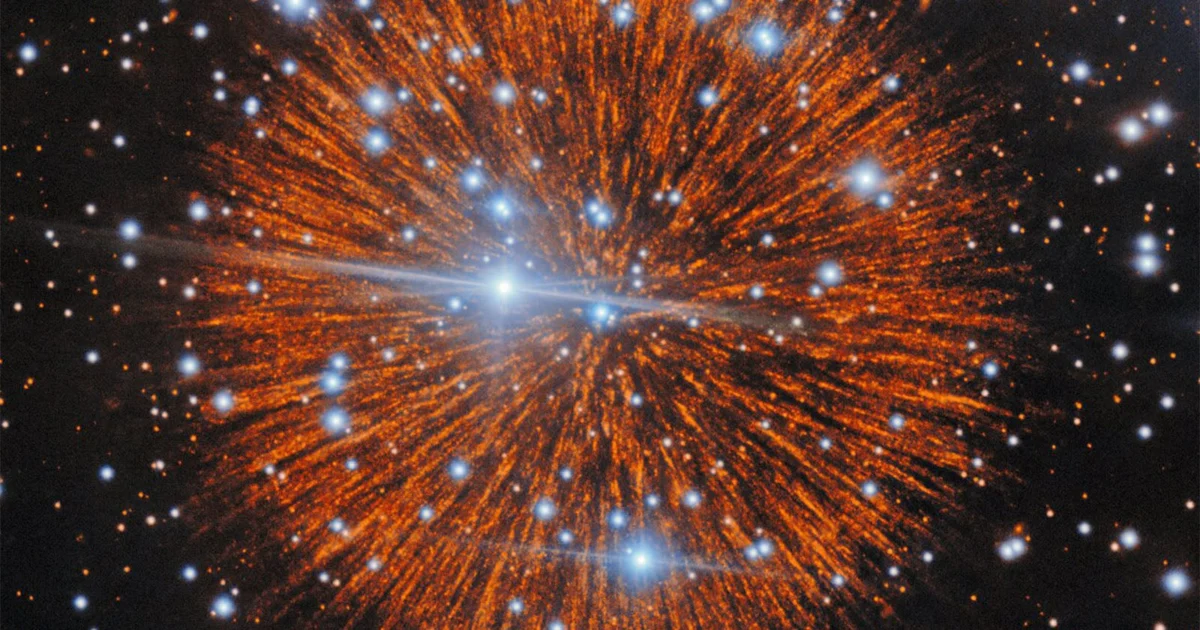
 rifanmuazin
  Ammar Sabilarrohman
  Lina Irawan