
 By Nila Kartika Wati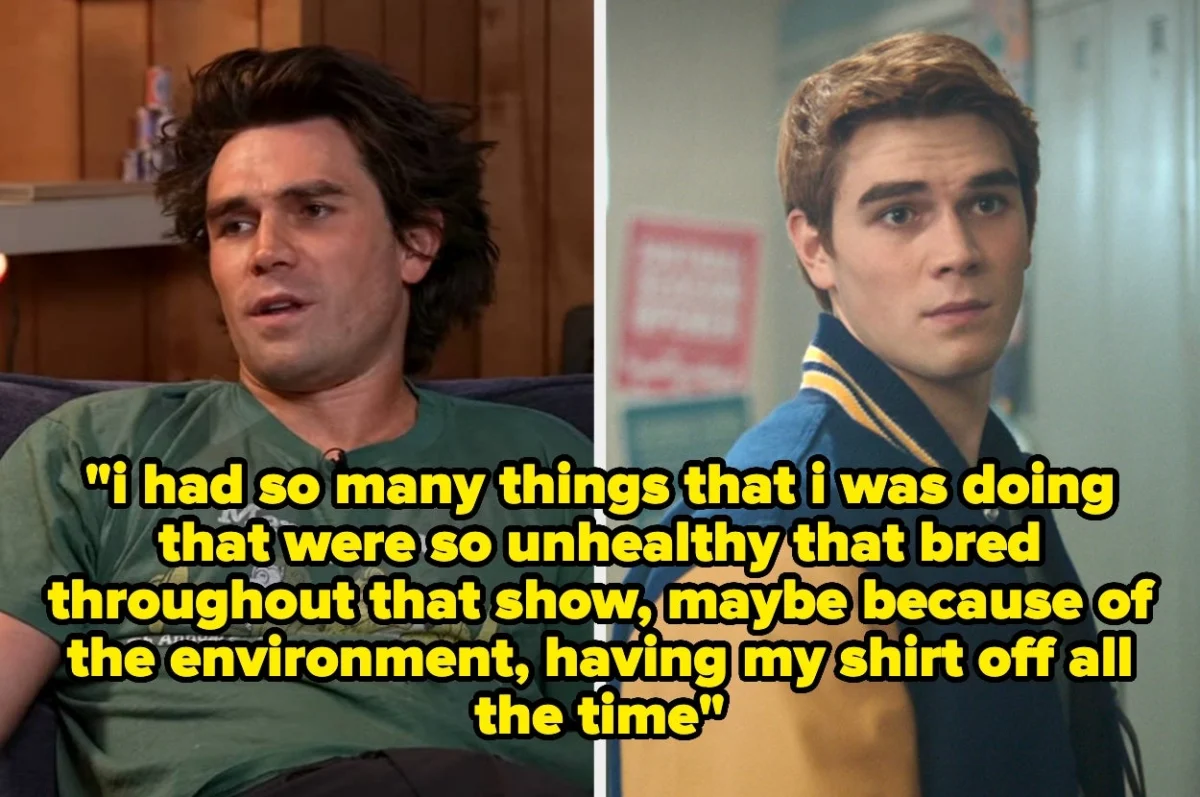
Warning: This article contains discussions of substance misuse, eating disorders, and body dysmorphia.
The polished, hyper-athletic physique that defined Archie Andrews on the hit CW series Riverdale was, for millions of viewers, the standard of male fitness. However, the man behind the character, KJ Apa, has recently pulled back the curtain to reveal a much darker reality. In a candid, unfiltered appearance on the Wildmen podcast, hosted by Dylan Sprouse and Brendan Columbus, Apa shared his harrowing journey through addiction and a severe struggle with disordered eating—a battle he attributes largely to the relentless pressure of maintaining a specific "superhero" aesthetic while navigating the sudden, overwhelming onset of global fame.
The Weight of Expectation: A Chronology of Struggle
KJ Apa was just 19 years old when he stepped into the role of Archie Andrews. Over the next six years, as the show became a cultural phenomenon, Apa found himself trapped in an environment where his physical appearance was not just a character trait, but the primary commodity of the production.
The "Shirtless" Environment
Apa candidly admitted that the constant requirement to be shirtless on camera created a "breeding ground" for toxic habits. "I had so many things that I was doing that were so unhealthy that kind of bred throughout that show," he explained. The intersection of professional pressure to maintain an impossible physique and the psychological toll of newfound, invasive fame created a volatile internal landscape for the actor.
The Cycle of Compulsion
As the series progressed, Apa’s relationship with food became increasingly pathological. He described a cycle of binge eating followed by intense, guilt-driven purging. "I used to eat donuts all day long. Go back to my trailer, throw up," he recalled. This behavior was not merely a lapse in judgment; it was a manifestation of a deep-seated addictive personality that extended beyond the gym and into every facet of his life.
The turning point for the public to understand the severity of his struggle came from a specific, haunting anecdote set during a COVID-19 quarantine in Vancouver. Attempting to lose weight for a return to filming, Apa found himself caught in an extreme "beast mode" mindset. After ordering a massive amount of fast food at 2 a.m., he consumed half of it before being overcome with self-loathing. In a desperate, symbolic act of self-punishment, he urinated on the remaining food.
"I go, throw up all the food that I ate… I go back outside about 20 minutes later after lying there in bed being like, ‘I’m hungry again because all the food is now out of my body,’" he shared. The resulting act—eating around the contaminated food—serves as a visceral illustration of the absolute loss of control associated with his eating disorder at the time.
A "Wake-Up Punch": The Role of Community and Accountability
While Apa’s personal struggles were private, the impact of his behavior rippled through his professional and personal circles. One of the most striking revelations from the Wildmen podcast was an account of a physical confrontation with his co-star and friend, Cole Sprouse.
According to Apa, there was a period during the show’s run where he had relapsed into drug use. Upon discovering this, Cole Sprouse—known for his protective nature over his friends—confronted Apa at a club. The confrontation escalated into a physical altercation, with Sprouse punching Apa in the face.
Rather than a moment of malice, both Apa and Dylan Sprouse characterized the incident as a "love punch" or a "wake-up punch." It was an intervention of the most desperate kind, highlighting the severity of the crisis Apa was facing. Dylan Sprouse, demonstrating remarkable emotional intelligence, noted that the act was born out of genuine fear for his friend’s life.
The Psychological Implications of "The Look"
The revelations from Apa have sparked a broader conversation about the entertainment industry’s obsession with the "ideal" male body. For years, the Riverdale aesthetic has been cited by fitness influencers and fans alike as a goal. Apa’s testimony provides a crucial counter-narrative: that the "goal" is often built on a foundation of misery, illness, and systemic pressure.
The Myth of Attainability
Social media has exacerbated the issue, with fans frequently dissecting the workouts and diets of actors like Apa. By speaking out, Apa is helping to demystify the process, revealing that what is marketed as "healthy" or "dedicated" is often a carefully curated, highly damaging performance. Mental health professionals have long warned that the constant exposure to hyper-muscular imagery in media—particularly when it is presented as the "standard"—contributes significantly to body dysmorphia in young men.
The Intersection of Fame and Mental Health
Apa’s experience also highlights the psychological "double-edged sword" of fame. He spoke of the conflicting feelings of being disgusted by the paparazzi while simultaneously feeling validated by their attention. This dynamic, common among young stars, often leaves them with no outlet to express their vulnerabilities. When the world perceives you as an idealized object, the pressure to maintain that objectification—at the expense of your humanity—becomes immense.
Industry and Audience Response
The reaction to the podcast episode has been overwhelmingly supportive, signaling a shift in how society views male eating disorders. For decades, these conditions were stigmatized as "feminine" issues, leading to a massive underreporting among men.
Public Support and Validation
Social media platforms have been flooded with messages of gratitude. Fans and fellow actors have praised Apa’s courage in sharing the "un-glamorous" side of his life. One recurring sentiment in online discourse is the appreciation for Dylan Sprouse’s response; his ability to identify that Apa was attempting to "punish" himself through his actions was hailed as a masterclass in empathy and emotional intelligence.
A Call for Change
The conversation has now shifted toward a demand for greater transparency in Hollywood. There is a growing movement calling for studios and production companies to provide better support systems for actors, particularly those tasked with radical physical transformations for roles. Experts argue that the industry must move away from the expectation of extreme, year-round leanness, which is physically and psychologically unsustainable for most humans.
Moving Forward: The Path to Recovery
Today, KJ Apa is a year and a half sober. He describes his journey as a continuous process of self-discovery, acknowledging that his addictive nature is a part of who he is, but not something that defines his future. By choosing to share these intimate, painful details, he has provided a roadmap for others struggling in silence.
His testimony serves as a stark reminder that behind the filtered images and the high-definition screens, there are human beings navigating complex mental health challenges. As he continues his recovery, Apa’s story remains a vital touchstone for the necessity of radical honesty in an industry often predicated on the maintenance of illusion.
Resources for Support
If you or someone you know is struggling with substance misuse or an eating disorder, help is available. You are not alone.
- The National Alliance on Mental Illness (NAMI): Provides information, support, and referral services. Call 1-800-950-6264 or visit nami.org.
- GoodTherapy.org: An association of mental health professionals dedicated to reducing harm and providing accessible mental health resources worldwide. Visit GoodTherapy.org.
- National Eating Disorders Association (NEDA): Offers support, resources, and treatment options for those affected by eating disorders. Visit nationaleatingdisorders.org.
 Muslim
  Ammar Sabilarrohman
  rifanmuazin