
 By Jia Lissa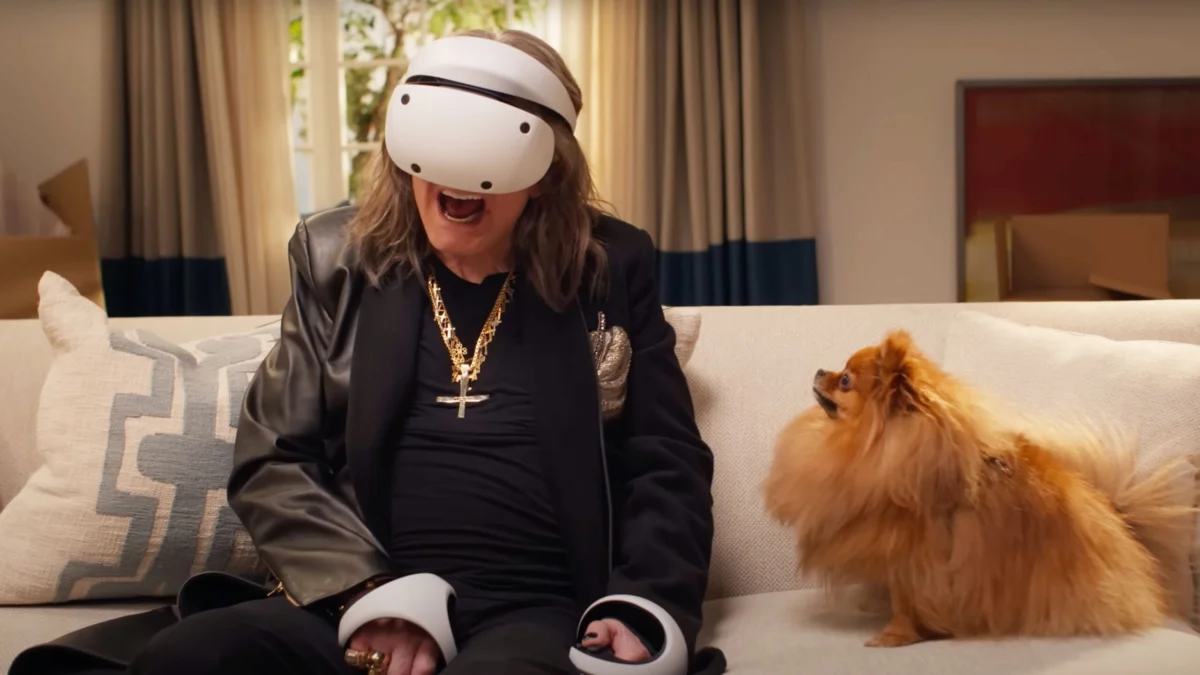
In an era where generative AI models can synthesize symphonies in seconds, generate photorealistic art with a single prompt, and "iron out" the perceived flaws in our digital workflows, a sentiment from the Prince of Darkness feels more relevant than ever. On the anniversary of Ozzy Osbourne’s passing—a cultural icon synonymous with the raw, unvarnished power of heavy metal—his 2011 reflection on the soul of music offers a stark warning for the modern creative professional.
"Rock music is not meant to be perfect," Osbourne famously told The Guardian. Reflecting on his work with the late, legendary guitarist Randy Rhoads, he added, "Randy loved hearing his fingers slide up and down the strings. Nowadays everyone irons the fucking air, it’s all about technology."
As the creative industries pivot toward total automation, Osbourne’s critique serves as a philosophical anchor. While we are currently witnessing a seismic shift in how content is produced, the core tension remains unchanged: the battle between sterile, hyper-optimized perfection and the "human friction" that defines true artistry.
The Philosophy of Imperfection: A Chronology of Artistic Soul
To understand the current crisis in creative authenticity, one must look at the evolution of production standards over the last half-century.
The Analog Era (1970s–1990s)
In the golden age of rock, recordings were capture-based. If a vocalist took a breath, if a guitarist’s fingers squeaked against the fretboard, or if the rhythm section drifted by a millisecond, it stayed on the record. These "errors" were not bugs; they were fingerprints. They signaled to the listener that a human being—not a machine—was expressing an emotion.
The Digital Correction (2000s–2010s)
The rise of Digital Audio Workstations (DAWs) like Pro Tools introduced "grid-locking." Producers began to quantify music, snapping every beat to a perfect digital metronome and using pitch-correction software to ensure every note was theoretically flawless. This was the "ironing the air" phase Osbourne lamented. The humanity was being scrubbed out in favor of a clinical, radio-ready sheen.
The Generative AI Boom (2020–Present)
We have now entered the third phase. We are no longer just cleaning up human performances; we are replacing the performance entirely. AI models, trained on millions of data points, can replicate the "feel" of a human artist without the messy, unpredictable process of actually creating. The question today is not whether we can automate the creative process, but whether we should.
Supporting Data: The Efficiency Paradox
The allure of AI is undeniable. Recent industry reports suggest that AI-integrated workflows can increase output by as much as 400% in fields like copywriting, graphic design, and video editing.
However, this efficiency comes at a hidden cost. A study by the Creative Arts Research Institute noted that while AI-generated content scores higher on "technical precision" metrics—such as image resolution, grammar, and structural consistency—it scores significantly lower on "subjective resonance" and "emotional unpredictability" when tested against audiences.
The data suggests a paradoxical outcome:
- The Efficiency Gain: Creatives spend 70% less time on repetitive tasks (formatting, layout, basic drafting).
- The Engagement Drop: Audiences report a "feeling of artificiality" or "uncanny valley fatigue" when consuming content that lacks the signature irregularities of human creation.
- The Homogenization Effect: Because AI models are trained on existing data, they inherently gravitate toward the "mean." They don’t innovate; they iterate on what already exists, leading to a flattening of cultural aesthetics.
Official Responses and Industry Sentiment
The creative community is deeply divided on how to reconcile these tools with human craft.
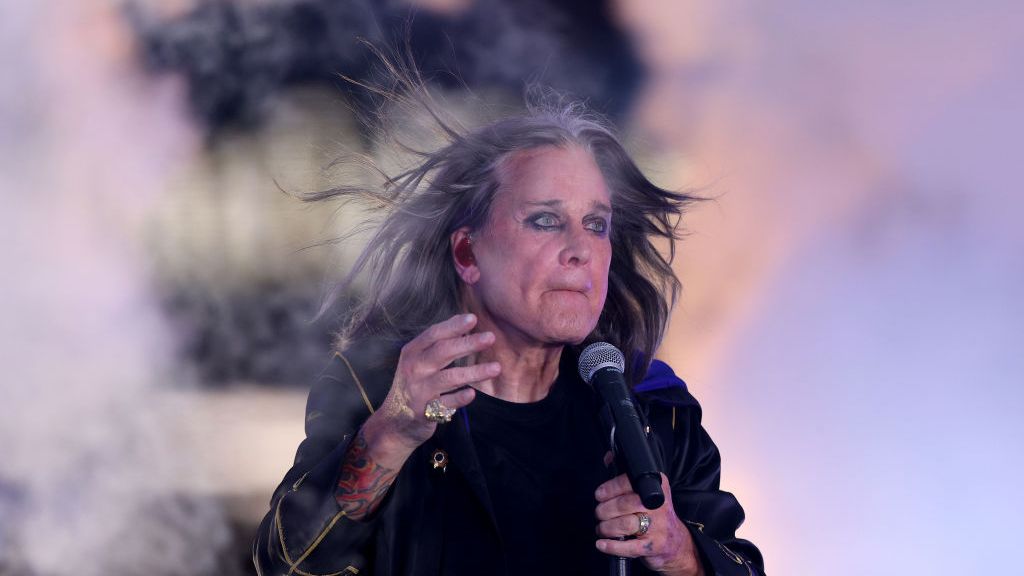
Prominent figures in the music and design industries have voiced concerns that the push for "perfection" is creating a cultural vacuum. In a recent panel discussion on the future of design, art director Sarah Jenkins noted: "We’ve seen a trend where junior designers rely so heavily on AI prompts that they lose the ability to iterate through the ‘messy middle’ of a project. That middle is where the personality is born. If you skip the friction, you skip the character."
Conversely, tech advocates argue that AI is merely the newest tool in the arsenal, much like the synthesizer was to the piano or the digital camera to film. "It’s about augmentation, not replacement," says David Thorne, a lead engineer at a prominent generative AI firm. "The goal is to clear the hurdle of technical entry so the artist can focus on the ‘why’ rather than the ‘how.’"
However, the "how" is exactly what Ozzy Osbourne was defending. The sound of the finger sliding on the string is not a technical inefficiency; it is a narrative element. It tells the listener that the music is a physical act.
Implications: The Future of "Human-First" Creativity
As we look toward the future, the implications for the creative economy are profound. If AI becomes the baseline for "acceptable" work, then the premium on human imperfection will skyrocket.
1. The Rise of "Wabi-Sabi" Design
We are likely to see a backlash against the ultra-polished aesthetic of AI. Much like the vinyl revival was a reaction to the compressed, digital nature of MP3s, we may see a resurgence in hand-drawn, tactile, and intentionally "flawed" artistic expressions that prove human origin.
2. The Creative’s New Skillset: Intentional Friction
The most successful creatives of the next decade will not be those who use AI to smooth out their work, but those who use it as a scaffold, only to "de-automate" the final product. This involves intentionally re-introducing the quirks, the weirdness, and the human perspective that a model cannot replicate.
3. The Ethical Imperative
There is a growing call for transparency. If a piece of work is generated by AI, should it be labeled? Many artists argue that the "soul" of a work is tied to the labor invested in it. When the labor is outsourced to a server farm, the value proposition changes.
Conclusion: Embracing the Squeak
Ozzy Osbourne’s career is a testament to the fact that greatness is found in the margins. Whether it is the crack in a voice, the distortion of an amplifier pushed too hard, or the literal slide of a finger on a string, it is these moments of physical reality that connect us to one another.
As we navigate the rise of AI, we must be careful not to "iron the air" out of our own lives. Technology should exist to serve the creative, not to curate the creative out of existence. The next time you find yourself reaching for an automated solution to "fix" a project, ask yourself: Am I removing a flaw, or am I removing the only thing that makes this work mine?
In the race for perfection, we risk losing our identity. Sometimes, the most professional thing an artist can do is let the strings squeak, let the rhythm drift, and leave the soul exactly where it belongs: in the friction.
For more insights into the shifting landscape of technology and art, explore our AI in Focus 2026 series. And for a deeper look at the growing divide in the creative community, read our feature on the impact of AI on the creative workforce.
 Raul Delapena Setiawan
  Ammar Sabilarrohman
  Muslim