
 By rifanmuazin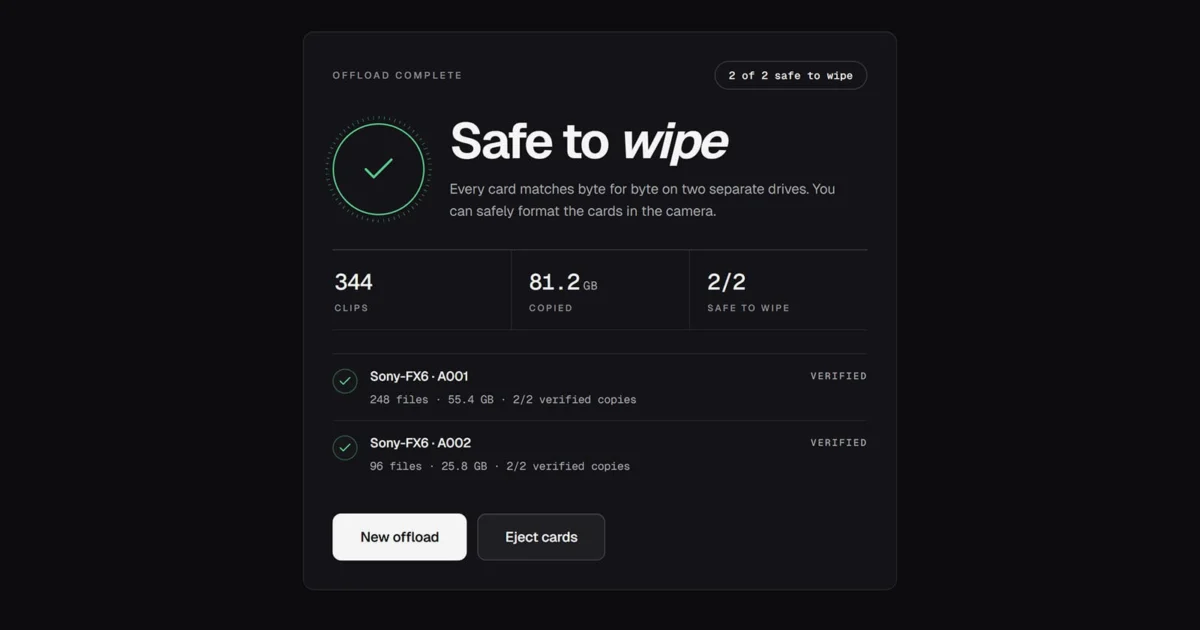
In the high-stakes world of professional cinematography and photography, the most anxiety-inducing moment is rarely the shoot itself; it is the instant a technician reaches for the "Format" button on a camera. With memory cards costing hundreds—sometimes thousands—of dollars, the pressure to recycle them immediately is immense. Yet, the risk of data corruption or incomplete file transfers remains a persistent shadow over every production.
Enter Stow, a new, free software utility developed by the UK-based production house lümira. Aimed squarely at solving the "data integrity crisis" that plagues digital workflows, Stow promises a streamlined, verified, and transparent offloading process that ensures your footage is safe before you ever clear your cards.
The Core Innovation: Beyond Drag-and-Drop
For most creators, the standard method of offloading files—dragging data from a memory card to a computer—is fraught with hidden dangers. Operating systems like macOS and Windows are designed for convenience, not forensic data verification. When you copy a folder, the OS moves the bits, but it does not inherently verify that the destination file matches the source file perfectly.
If a single bit is flipped or a file is truncated during the transfer, you might not discover the corruption until weeks later in post-production. By that time, the memory card has long since been formatted and reused, effectively destroying the original master.
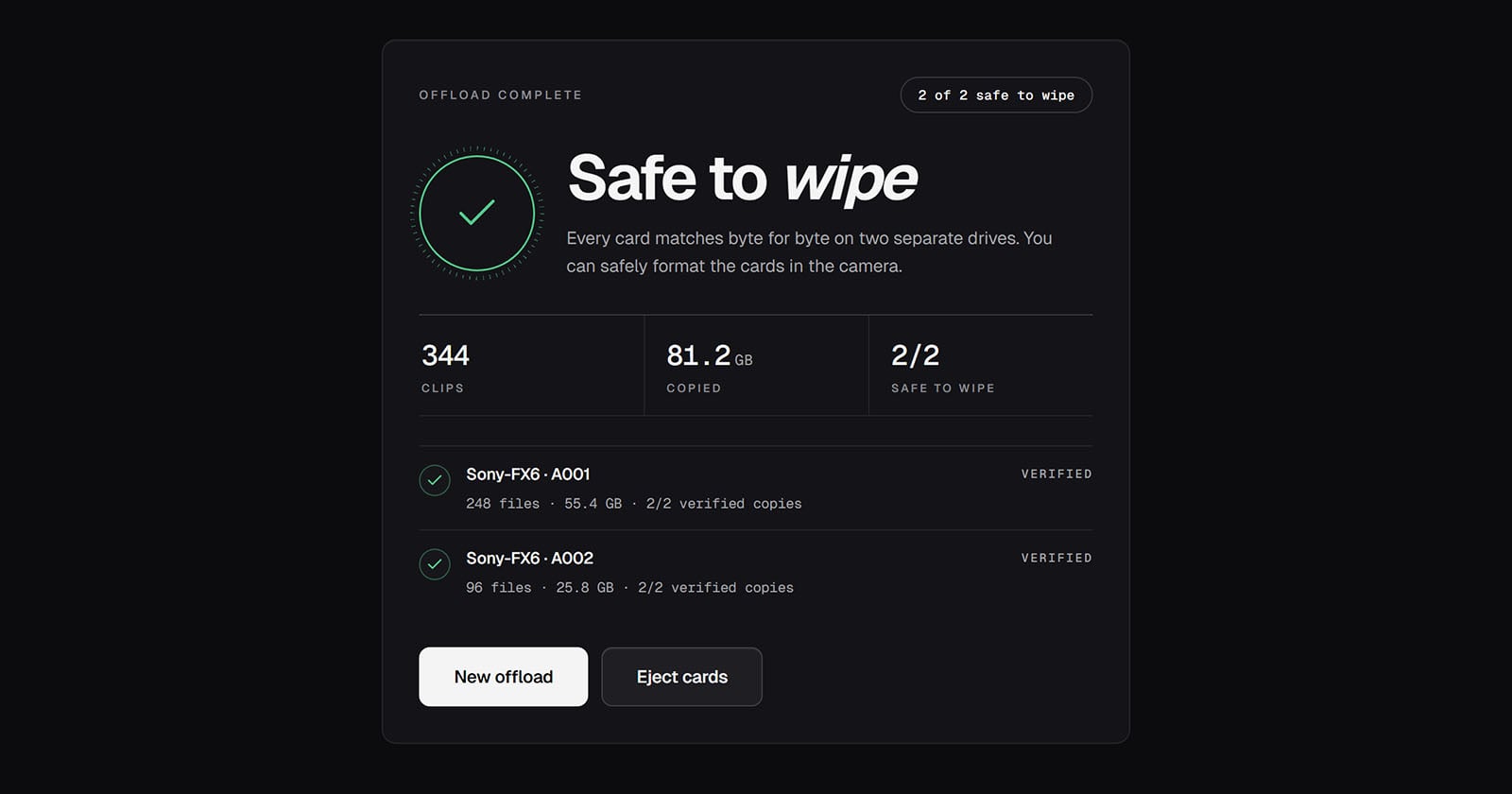
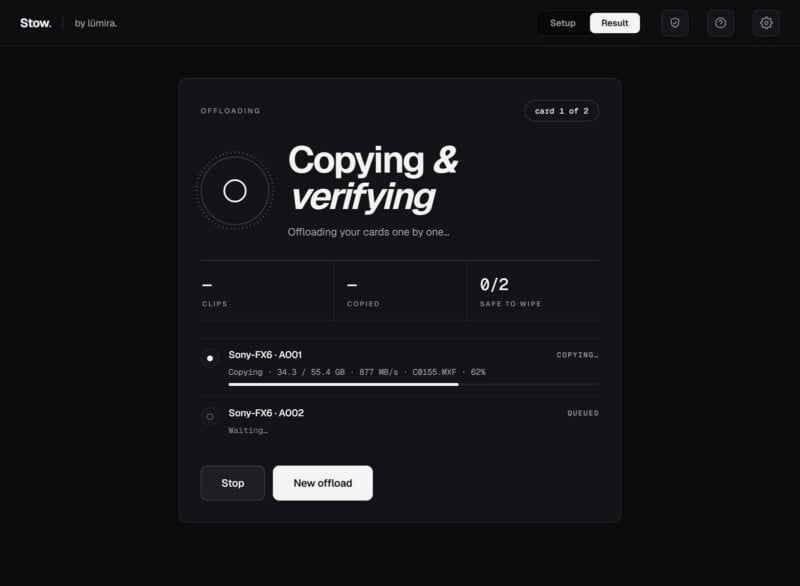
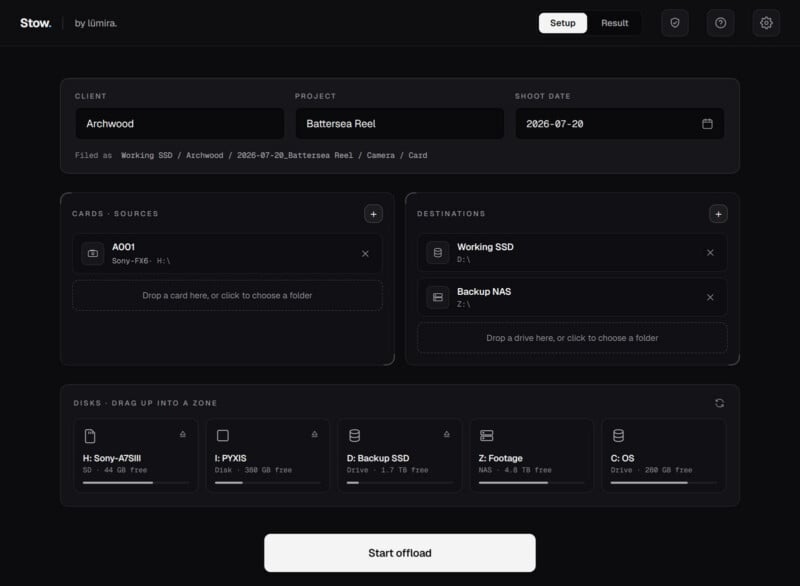
Stow addresses this by acting as an intelligent intermediary. It copies data from a source card to two destination drives simultaneously. Once the transfer is complete, the software performs a rigorous byte-by-byte verification, comparing the data on both destination drives against the original card. Crucially, it does this without ever writing data back to the memory card, ensuring the integrity of the source media remains untouched.
Chronology: A Tool Born of Necessity
The genesis of Stow was not in a boardroom, but in the trenches of a working production studio. Luke Lv, the founder of lümira, found himself and his team increasingly frustrated by the industry-standard software landscape.
“I run a video production studio in the UK, and like everyone working on a shoot, we know the question that matters most at the end of the day: have the cards been backed up properly, and is it actually safe to wipe them?” Lv explains.
The Evolution of the Workflow
- The Frustration Phase: The lümira team noted that existing professional offload software often relied on subscription models or per-user pricing, which became financially burdensome for a busy studio handling constant projects.
- The Development Phase: Frustrated by the lack of a "simple, no-nonsense" tool that didn’t require an enterprise license, the team began developing an internal utility.
- The Refinement Phase: The developers focused on creating a UI that prioritized clarity. They needed a tool that would provide a definitive "Safe to Wipe" or "Stop" signal, removing human error from the equation.
- The Public Release: After successful internal testing, lümira decided to release Stow as a free, open-access tool, aiming to set a new standard for accessibility in professional data management.
Supporting Data: The 3-2-1 Rule and Data Integrity
Stow is built around the industry-standard 3-2-1 backup strategy, a protocol that is widely considered the gold standard for media safety.
- 3 copies of data: You should always have at least three copies of your work.
- 2 different physical media: These copies should reside on separate hardware, such as a primary working drive and a redundant backup drive.
- 1 off-site copy: A final copy should be kept in a separate physical location, such as cloud storage or a separate off-site hard drive.
Stow facilitates this by requiring users to select two destination drives during the offload process. By forcing a dual-drive backup from the start, the software embeds the 3-2-1 philosophy directly into the daily routine of the camera assistant or digital imaging technician (DIT).
How Verification Works
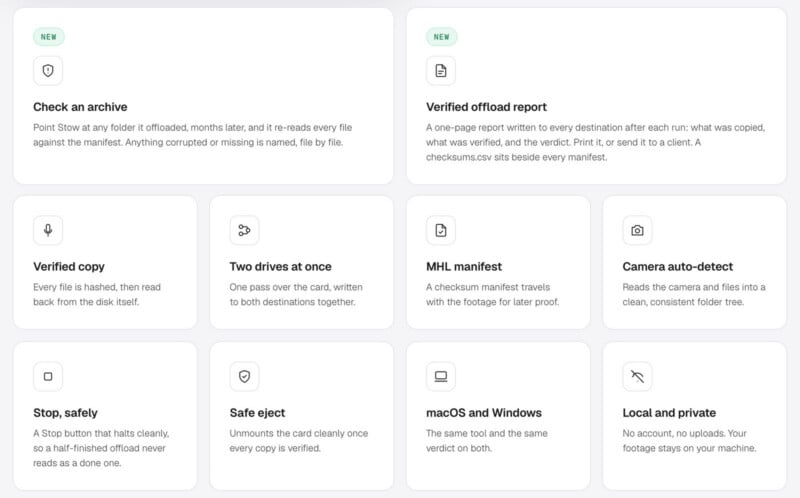
Unlike a standard file copy, which relies on the operating system’s "good enough" protocol, Stow employs checksum verification. By calculating a unique digital fingerprint for every file during the copy process and re-checking that fingerprint against the destination, Stow ensures that not a single frame of 8K raw footage or a single high-resolution RAW photo is lost. The software provides a comprehensive report, detailing every file copied, the verification status, and the total data moved, providing an audit trail for the production team.
Official Responses and Accessibility
The launch of Stow has been met with significant interest, particularly because of its price point: free.
"We wanted to make something that just worked," Lv notes. "We were tired of paying for features we didn’t need and being locked into subscription models. We decided to just make our own app."
The "Security Hurdle"
Because Stow is a new, independent piece of software, it has not yet completed the rigorous (and expensive) code-signing certification processes required by Apple and Microsoft. For the end-user, this means that upon installation, the operating system may flag the software as "unverified."
Lümira has proactively addressed this by providing a comprehensive, step-by-step installation guide on their website. While this adds a minor step to the setup process, it is a small trade-off for a piece of enterprise-grade software that is otherwise completely free of charge and subscription fees.
Feature Comparison
Stow enters a crowded market dominated by giants like Hedge (Offshoot), ShotPut Pro, and Pomfort. In a direct comparison, Stow distinguishes itself through:
- Cost: $0, with no hidden fees.
- Focus: A singular, streamlined focus on verified offloading rather than broader asset management.
- Speed: Optimized for concurrent, multi-drive writes.
- Transparency: Open communication regarding its current development status and security requirements.
Implications: Changing the Economics of Production
The arrival of Stow signals a shift in the digital production ecosystem. Historically, robust data safety software was a "pay-to-play" feature. Independent filmmakers, students, and small-scale studios often skipped these tools due to cost, opting for risky manual copies.
By removing the financial barrier, lümira is effectively democratizing data safety. The implications are broad:
- Standardization: As more productions adopt verified offloading, the industry may see a decrease in "data-loss" incidents during post-production.
- Efficiency: The "Safe to Wipe" indicator significantly speeds up the end-of-day workflow. When a crew is exhausted after a 14-hour shoot, having a green checkmark on a screen provides psychological relief and physical certainty.
- Hardware Longevity: By enabling more reliable workflows, studios may feel more comfortable with smaller, high-speed card inventories, as they can confidently cycle through their media without fear of losing data.
Conclusion: A New Baseline for Digital Media
Stow is more than just a piece of software; it is a philosophy of data hygiene. By prioritizing the verification of every byte, it removes the ambiguity that has caused many a production professional to lose sleep. While it still carries the "unverified" label associated with early-stage, independent software, its core functionality is robust, transparent, and undeniably useful.
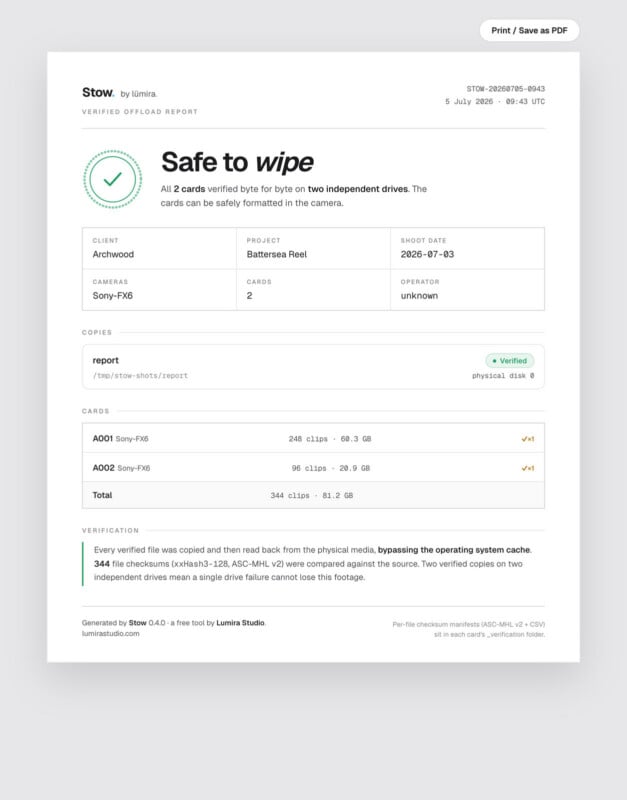
As the industry moves toward higher resolutions and larger file sizes, the importance of data verification will only grow. For now, the team at lümira has provided a tool that turns a complex, high-pressure task into a simple, binary decision: green means go, and your data is safe.
For any filmmaker looking to tighten their workflow without loosening their budget, Stow is a essential download that promises to keep your media secure from the moment it leaves the camera until it lands in the edit suite.
 Raul Delapena Setiawan
  Ammar Sabilarrohman