
 By rifanmuazin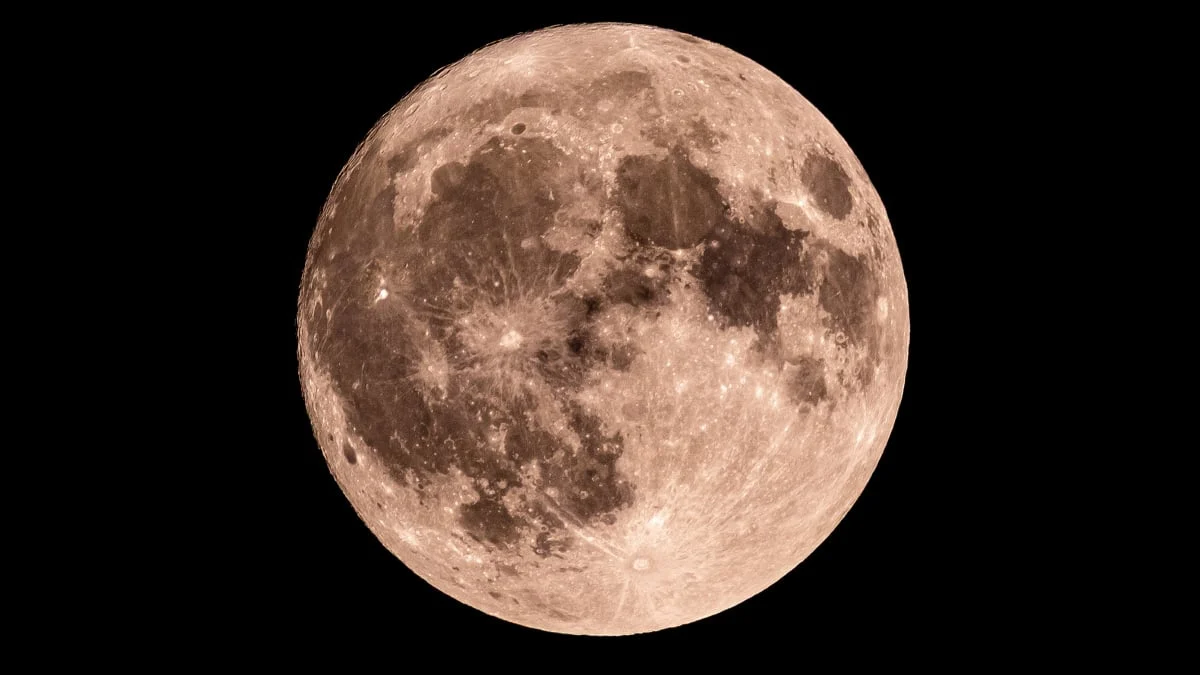
Main Facts: The State of the Moon on July 24
On the evening of Friday, July 24, skywatchers around the globe are treated to a brilliant display as the Moon continues its monthly journey toward full illumination. According to data compiled by NASA’s Daily Moon Guide tracker, the Moon has entered its Waxing Gibbous phase, with precisely 68 percent of its earth-facing surface illuminated by the Sun.
During this phase, the line dividing the dark and light halves of the Moon—known to astronomers as the "terminator"—creeps steadily westward across the lunar disk. This transition zone is of particular interest to amateur and professional astronomers alike. Because the Sun hits the lunar surface at a low angle along the terminator, it casts long, dramatic shadows that accentuate the topography of craters, mountain ranges, and deep valleys, making tonight an ideal opportunity for lunar observation.
For those planning to step outside tonight, the Moon will be easily visible to the naked eye, offering clear views of massive geological structures. With the aid of basic binoculars or a modest backyard telescope, observers can unlock a wealth of historical and scientific features, ranging from ancient basaltic plains to the historic landing sites of NASA’s Apollo missions. This celestial display serves as a prelude to the upcoming Full Moon, which is scheduled to reach peak illumination on Wednesday, July 29.
Current Lunar Status (July 24):
┌───────────────────────────────┬───────────────────────────────┐
│ Phase: Waxing Gibbous         │ Illumination: 68%             │
├───────────────────────────────┼───────────────────────────────┤
│ Next Full Moon: July 29       │ Synodic Cycle: ~29.5 Days     │
└───────────────────────────────┴───────────────────────────────┘
Chronology: Deconstructing the 29.5-Day Lunar Cycle
The changing appearance of the Moon is not a result of Earth’s shadow falling on its surface—a common misconception—but rather a consequence of the changing geometry between the Earth, the Moon, and the Sun. As the Moon completes its orbit around the Earth every 29.5 days (a period known as a synodic month), the angle of sunlight hitting the lunar surface shifts from our perspective.
The lunar cycle is chronologically divided into eight distinct, universally recognized phases:
1. New Moon
The cycle begins when the Moon is positioned directly between the Earth and the Sun. In this alignment, the side of the Moon illuminated by sunlight faces entirely away from Earth, rendering the lunar disk invisible to the naked eye.
2. Waxing Crescent
As the Moon progresses in its orbit, a thin, silver sliver of light appears on the right side of the disk (as viewed from the Northern Hemisphere). "Waxing" indicates that the illuminated area is growing larger.
3. First Quarter
Approximately one week after the New Moon, the Moon reaches a point in its orbit where it is at a 90-degree angle relative to the Earth and Sun. From our perspective, exactly half of the lunar disk is illuminated on the right side.
4. Waxing Gibbous
Following the First Quarter, the illuminated portion continues to expand. "Gibbous" comes from a Latin word meaning "humpbacked." During this phase, more than half—but not yet all—of the Moon is lit. This is the phase observed on July 24, standing at 68 percent illumination.
5. Full Moon
Two weeks into the cycle, the Moon is positioned opposite the Sun relative to the Earth. The entire earth-facing side of the Moon is bathed in sunlight, presenting a fully illuminated circular disk. The next occurrence of this phase will be on July 29.
6. Waning Gibbous
After reaching peak illumination, the cycle reverses. "Waning" means the lit portion is shrinking. Light begins to recede from the right side, leaving the left side illuminated.
7. Third Quarter (or Last Quarter)
Three weeks into the cycle, the Moon once again reaches a 90-degree angle relative to the Earth and Sun, but on the opposite side of its orbit. Exactly half of the Moon is lit, this time on the left side.
8. Waning Crescent
The final phase of the cycle features a dwindling sliver of light on the left side of the disk. The crescent grows progressively thinner each night until the Moon disappears back into the darkness of the New Moon phase, restarting the 29.5-day cycle.
Supporting Data: A Selenographical Guide to Tonight’s Sky
Tonight’s 68 percent illumination provides a unique balance of brightness and shadow, offering high-contrast viewing of several of the Moon’s most famous geological features. Depending on the equipment available, observers can locate the following targets:
Observation Equipment Guide:
┌───────────────────┬─────────────────────────────────────────────────────────┐
│ Naked Eye         │ • Mare Fecunditatis  • Mare Tranquillitatis  • Tycho    │
├───────────────────┼─────────────────────────────────────────────────────────┤
│ Binoculars        │ • Mare Nectaris      • Alphonsus Crater      • Alps Mts.│
├───────────────────┼─────────────────────────────────────────────────────────┤
│ Telescope         │ • Apollo 11 Site     • Apollo 16 Site        • Apollo 17│
└───────────────────┴─────────────────────────────────────────────────────────┘
Naked-Eye Observations
Even without optical assistance, observers under clear skies can easily distinguish between the light-colored highlands and the dark, flat plains of the Moon.
- Mare Fecunditatis (The Sea of Fecundity): Located on the eastern edge of the Moon, this ancient basin spans over 900 kilometers in diameter. It was formed billions of years ago by successive flows of basaltic lava.
- Mare Tranquillitatis (The Sea of Tranquility): Situated northwest of Mare Fecunditatis, this is perhaps the most famous of all lunar maria. Its dark, relatively smooth basaltic surface is easily visible as a dark patch on the upper-right quadrant of the Moon.
- Tycho Crater: Located in the southern highlands, this relatively young impact crater (roughly 108 million years old) is famous for its prominent ray system—bright streaks of ejected material that radiate outward across thousands of kilometers of the lunar surface.
Binocular Targets
Using a standard pair of binoculars (such as 7×50 or 10×50 models) will resolve finer details, revealing depth and texture along the terminator line.
- Mare Nectaris (The Sea of Nectar): A smaller, circular volcanic plain situated south of Mare Tranquillitatis. It sits within a highly impacted, ancient basin.
- Alphonsus Crater: A 119-kilometer-wide impact crater featuring a prominent central peak. Because it lies close to tonight’s terminator, its steep walls will cast long, sharp shadows across its flat floor.
- Montes Alpes (The Alps Mountains): This spectacular mountain range in the northern region of the Moon rises up to 2.4 kilometers high. Binoculars will reveal the jagged silhouette of the range against the dark lunar sky.
Telescopic Targets
For those utilizing a backyard telescope, tonight offers a chance to pinpoint the historic landing sites of human space exploration. While the physical descent stages left behind by astronauts are far too small to be resolved by Earth-based telescopes, the geographical valleys and plains where they rested are highly visible.
- Apollo 11 Landing Site: Located in the southwestern corner of Mare Tranquillitatis. A telescope reveals the flat, dark basaltic plains where Neil Armstrong and Buzz Aldrin first set foot on the lunar surface in July 1969.
- Apollo 16 Landing Site: Located in the rugged Descartes Highlands, north of the Cayley crater. This site offers a stark contrast to the flat maria, showing the highly cratered, mountainous terrain explored by astronauts in 1972.
- Apollo 17 Landing Site: Tucked into the Taurus-Littrow valley on the southeastern edge of Mare Serenitatis. This deep valley, flanked by steep mountain walls, was the final resting place of the Apollo lunar modules in December 1972.
Official Responses: NASA’s Perspective and Public Engagement
NASA’s Planetary Science Division continues to emphasize the educational and scientific importance of regular lunar observation. Representatives from the agency note that public resources, such as the Daily Moon Guide, are designed to foster a deeper connection between humanity and our closest celestial neighbor, especially as space agencies prepare to return humans to the lunar surface.
"The Moon is a dynamic laboratory that holds the history of our solar system," a NASA science outreach specialist commented. "When people look up at the Waxing Gibbous Moon tonight and identify the Sea of Tranquility or the Apollo landing sites, they aren’t just looking at history—they are looking at the foundation of our future. The same geological features we observe tonight with backyard binoculars are currently being mapped in high resolution by our Lunar Reconnaissance Orbiter (LRO) to prepare for the upcoming Artemis missions."
Furthermore, NASA scientists point out that observing the Moon during its partial phases, like the Waxing Gibbous, is often much more rewarding than observing during a Full Moon. During a Full Moon, the Sun shines directly down onto the lunar surface from our perspective, washing out shadows and making the topography appear flat and featureless. The shadows present during the Waxing Gibbous phase provide the depth perception necessary to truly appreciate the vertical scale of the Moon’s mountains and craters.
Implications: From Backyard Stargazing to Deep Space Exploration
The regular tracking of lunar phases and surface features carries implications that extend far beyond amateur astronomy.
1. Advancements in Aerospace and Science Education
Public interest in the Moon serves as a critical entry point for STEM (Science, Technology, Engineering, and Math) education. Simple activities like tracking the transition from a Waxing Gibbous to a Full Moon help students understand orbital mechanics, geometry, and gravitational physics in a hands-on, observable manner.
2. Preparing for the Artemis Era
As NASA and its international partners advance the Artemis program, which aims to establish a sustainable human presence on the Moon, detailed mapping and observation of lunar geography have taken on renewed geopolitical and scientific importance. The highlands and maria observed by backyard astronomers tonight are the very regions being analyzed for resources such as water ice, which is trapped in permanently shadowed craters at the lunar poles. Understanding the topography of these regions is critical for planning landing trajectories, habitat construction, and solar power generation.
3. Biological and Ecological Impacts
On Earth, the transition of lunar phases has direct ecological implications. The gravitational pull of the Moon drives Earth’s ocean tides. During the upcoming Full Moon on July 29, the gravitational alignment of the Sun and Moon will create "spring tides"—periods of higher-than-average high tides and lower-than-average low tides. Additionally, many marine species synchronize their spawning cycles with the light of the Full Moon, making the steady build-up of light during tonight’s Waxing Gibbous phase a biological cue for ecosystems worldwide.
As the Moon continues to wax toward its full illumination on July 29, tonight’s 68 percent illuminated Waxing Gibbous offers a perfect window for humanity to pause, look upward, and contemplate our past achievements and our future among the stars.
 Raul Delapena Setiawan
  Ali Ikhwan