
 By Asro
In the modern political landscape, the "digital town square" has transitioned from a theoretical concept to a critical infrastructure of governance. As of 2026, social media is no longer a secondary channel for government agencies; it is the primary frontline for public engagement, crisis management, and policy transparency. With over half of U.S. adults now consuming news primarily through social platforms, the shift from traditional press releases to real-time, interactive communication has fundamentally altered how the public perceives and interacts with the state.

From municipal police departments hosting viral Q&A sessions on TikTok to federal agencies deploying AI-driven monitoring to combat misinformation, the integration of social media into the public sector has reached a level of sophistication—and legal scrutiny—never before seen.

Main Facts: The State of Government Social Media
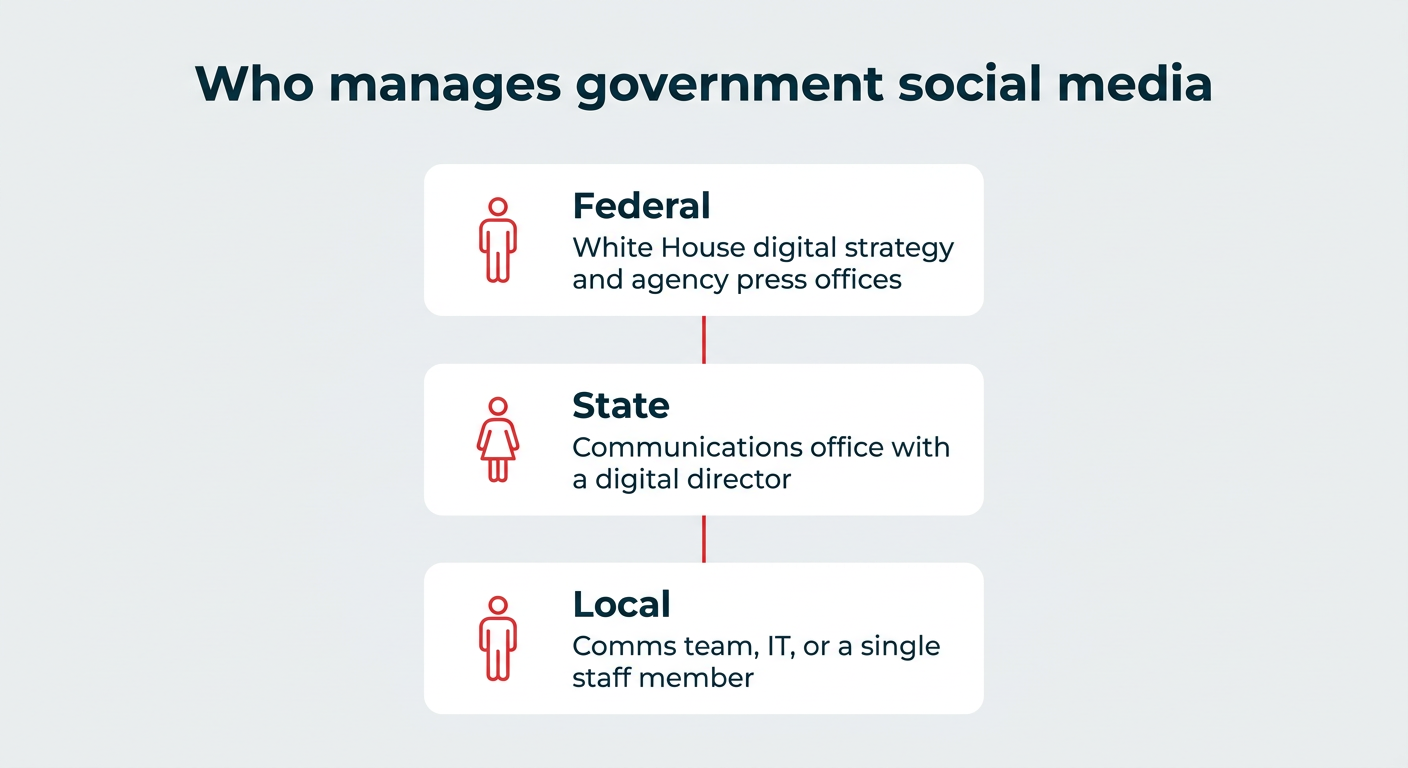
The current landscape of government social media is defined by a move away from "broadcasting" toward "engagement." For decades, government communication was a one-way street: agencies issued statements, and the public consumed them via newspapers or television. Today, the model is inherently conversational.
The Rise of the "Human" Official
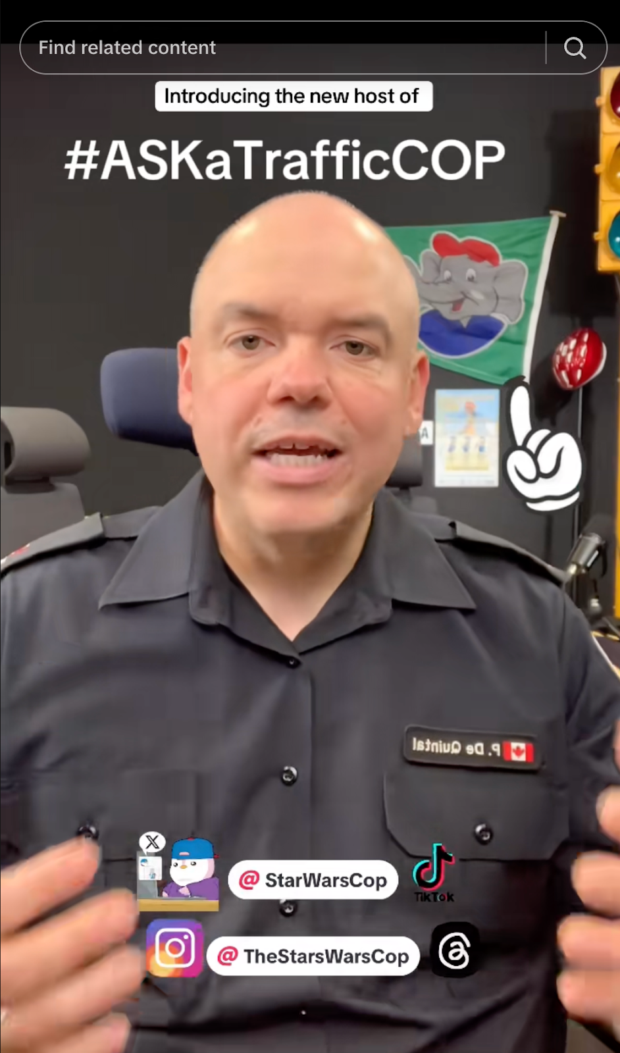
A primary driver of this shift is the demand for authenticity. High-profile figures like U.S. Representative Alexandria Ocasio-Cortez (AOC) have demonstrated that a personal brand rooted in transparency can yield massive influence. By eschewing polished political jargon in favor of direct, often unfiltered communication on platforms like X and Bluesky, AOC grew her following from 500,000 in 2018 to over 12 million by 2026. This "humanization" of the politician has become a blueprint for modern governance, though it remains a double-edged sword that can lead to rapid public backlash if authenticity is perceived as performative.
Meeting Constituents Where They Are
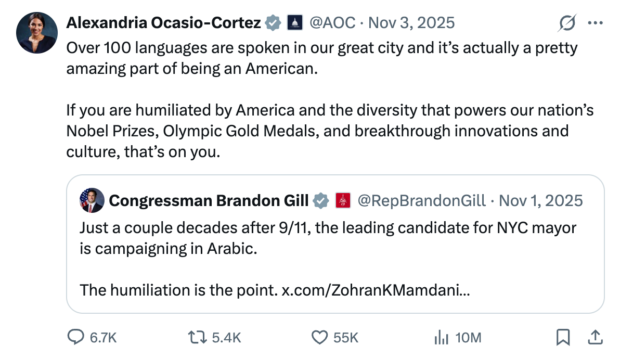
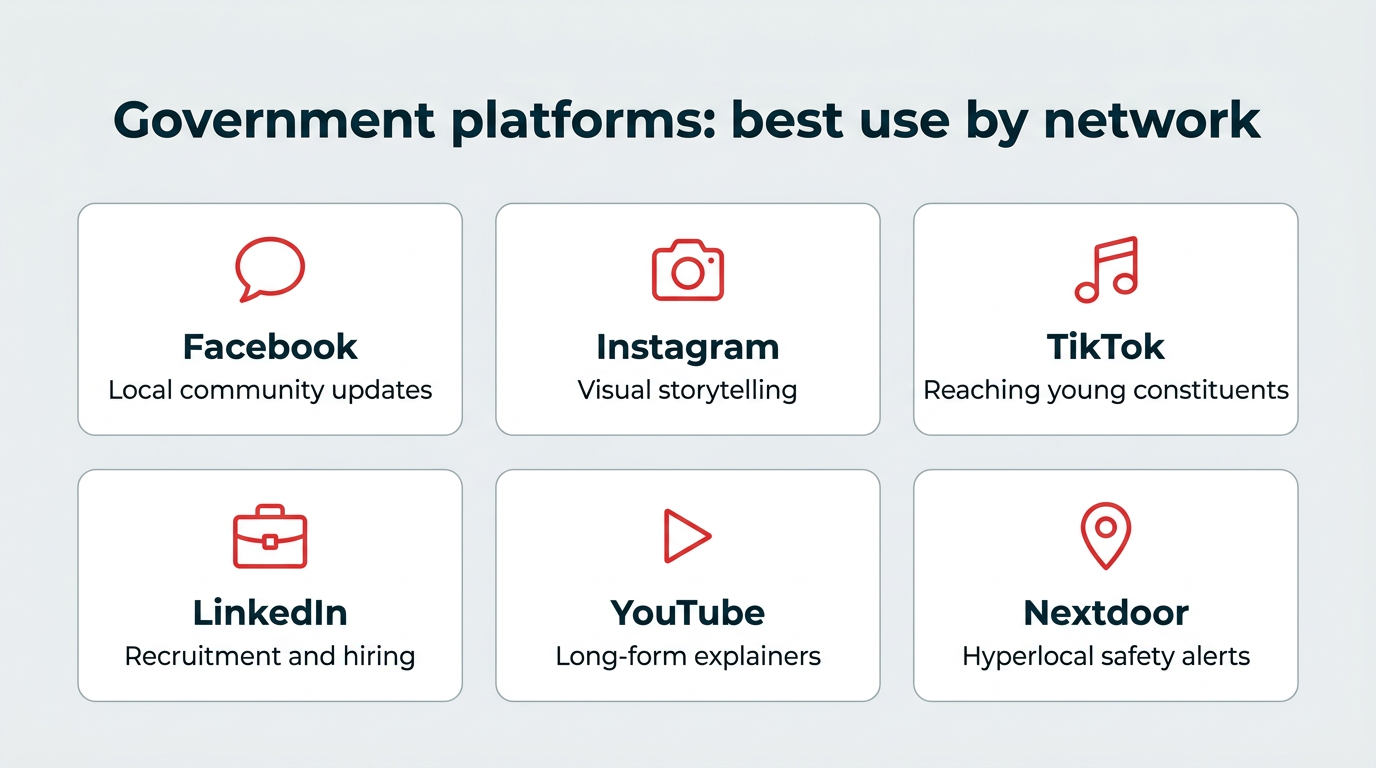
Local governments are increasingly utilizing niche platforms to solve specific community problems. The Toronto Police Traffic Unit, for example, has successfully utilized TikTok’s "Ask Me Anything" (AMA) format to demystify traffic laws, answering mundane but essential questions like the legality of aftermarket steering wheels. Similarly, the hyperlocal app Nextdoor has become the "workhorse" for municipal governments to organize town halls and educate residents on neighborhood safety issues.
The AI Frontier
By 2026, Artificial Intelligence has become the "force multiplier" for government communications. Teams are utilizing AI to draft constituent responses, detect misinformation in real-time, and summarize thousands of public comments. However, the prevailing standard remains "human-in-the-loop" governance. Because an AI-generated error from an official government account can erode years of public trust, agencies are prioritizing tools that offer traceability and human oversight over pure automation.
Chronology: The Evolution of Digital Governance
The journey to the 2026 digital-first government was marked by several pivotal moments that defined the boundaries of professional conduct, legal rights, and strategic messaging.
- 2014: The South Dakota "Jerk and Drive" Incident: This serves as a foundational lesson in messaging risks. The South Dakota Department of Public Safety launched a campaign intended to warn drivers against over-correcting on ice. The double-entendre hashtag #DontJerkAndDrive went viral for the wrong reasons, forcing the state to pull the campaign. It remains a case study in why government messaging must undergo rigorous tone and interpretation testing.
- 2020-2022: The Pandemic and the Misinformation Crisis: During the COVID-19 pandemic, nearly 47% of U.S. adults reported encountering fabricated news online. This era forced agencies like the CDC to move beyond static updates and into the realm of "social listening," monitoring false narratives to provide rapid-response factual corrections.
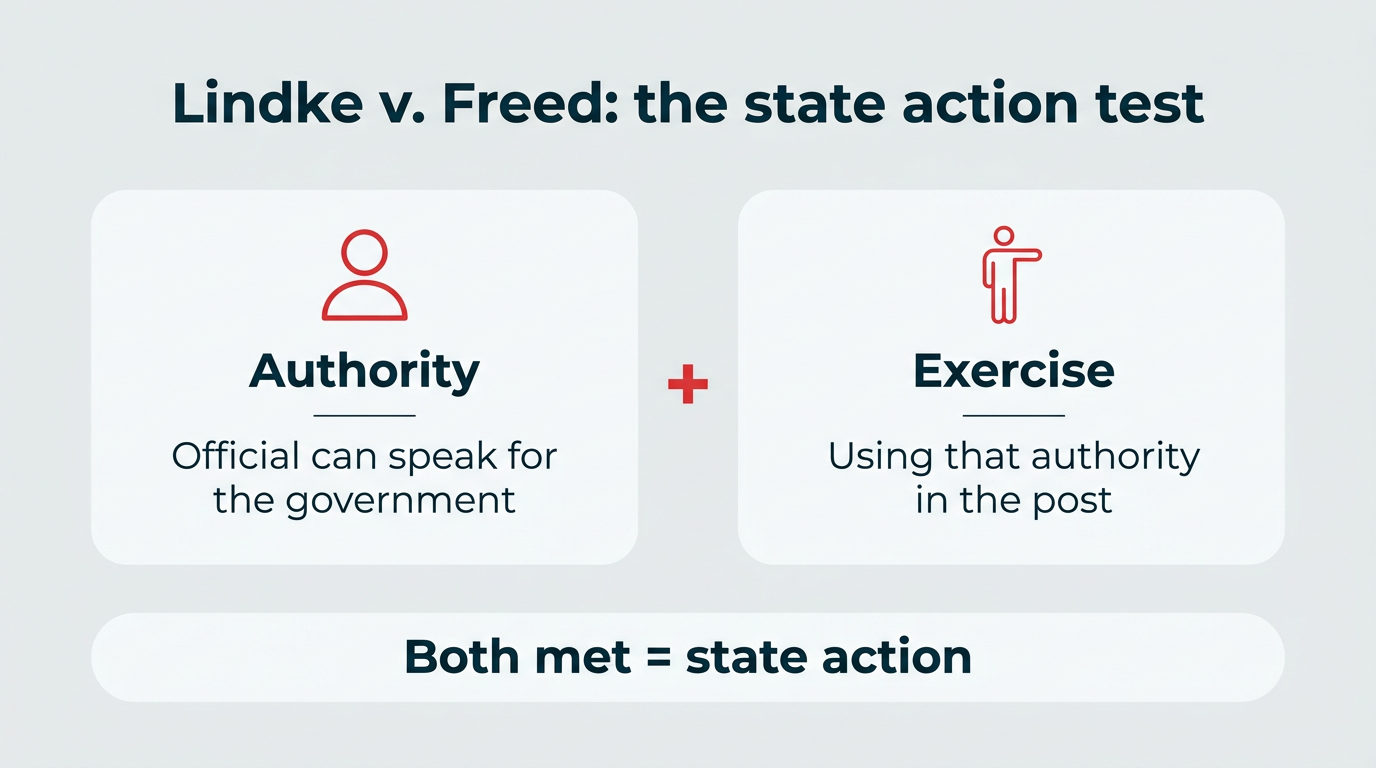
- 2024: The Supreme Court and Lindke v. Freed: Perhaps the most significant legal milestone, the U.S. Supreme Court established the "state action" test. This ruling clarified that if a public official has the authority to speak for the government and uses their social media to exercise that authority, they cannot block users or delete critical comments, as the account functions as a public forum protected by the First Amendment.
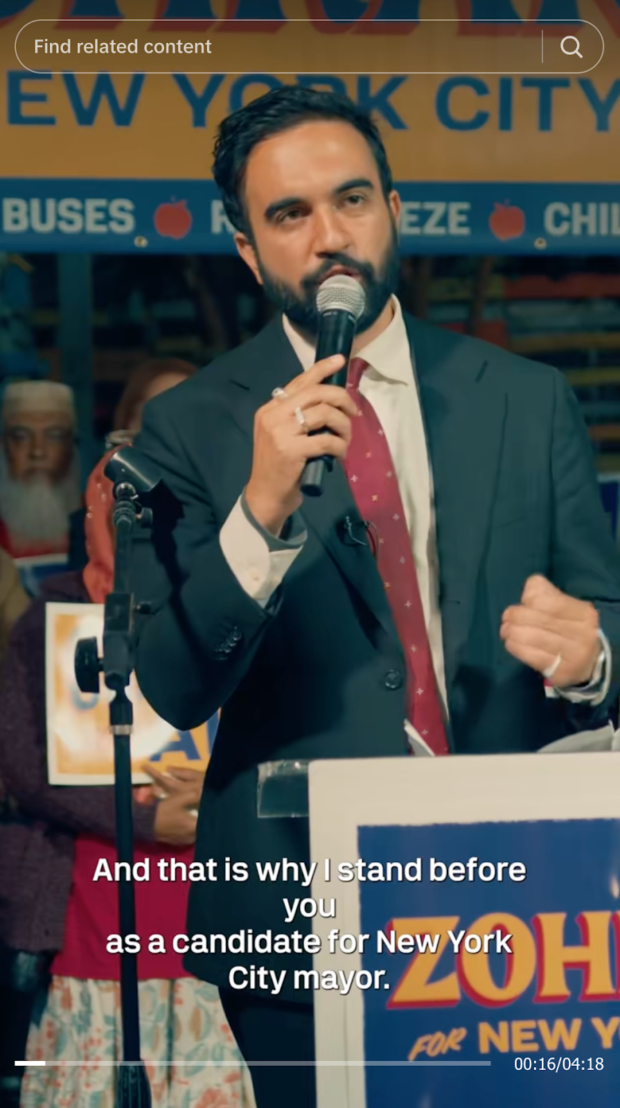
- 2025: The TikTok-First Mayoral Run: Zohran Mamdani’s 2025 New York City mayoral campaign proved the efficacy of platform-native content. By focusing almost exclusively on short-form, emotionally resonant TikTok videos, Mamdani captured a staggering 78% of the 18–29-year-old voter demographic, signaling a permanent shift in campaign strategy.
Supporting Data: Benchmarking Success in 2026
To understand the efficacy of these strategies, one must look at the performance data. According to recent industry benchmarks from Q4 2025, government engagement varies significantly by platform, reflecting the differing demographics of each "digital neighborhood."
Average Weekly Posting Frequency
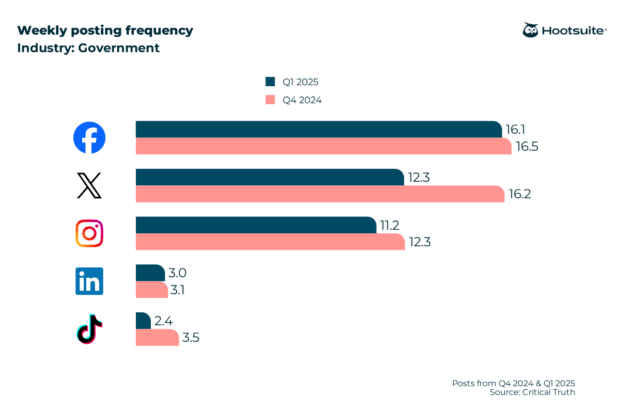
Government agencies are most active on Facebook, averaging 16.1 posts per week. This reflects the platform’s status as the primary hub for local community notices and municipal updates. In contrast, TikTok sees much lower frequency, with an average of 2.4 posts per week, suggesting that agencies prioritize high-production, high-impact content on video platforms over volume.
Engagement Rates by Platform
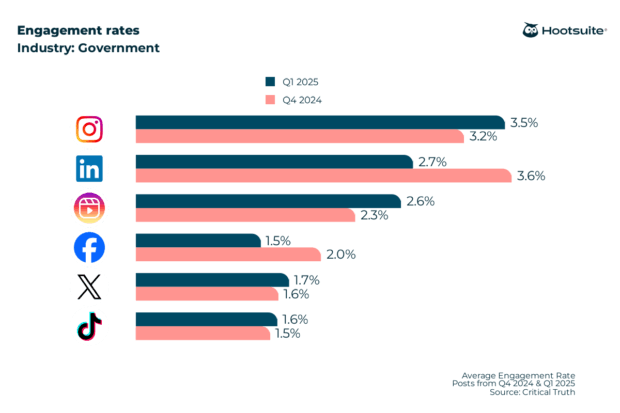
Despite the high volume on Facebook, the highest engagement rates (the percentage of followers who interact with a post) are found elsewhere:
- Instagram: 3.5% (The leader for visual storytelling)
- LinkedIn: 2.7% (Crucial for recruitment and agency credibility)
- Instagram Reels: 2.6%
- X (Twitter): 1.7%
- TikTok: 1.6%
- Facebook: 1.5%
Follower Growth Trends
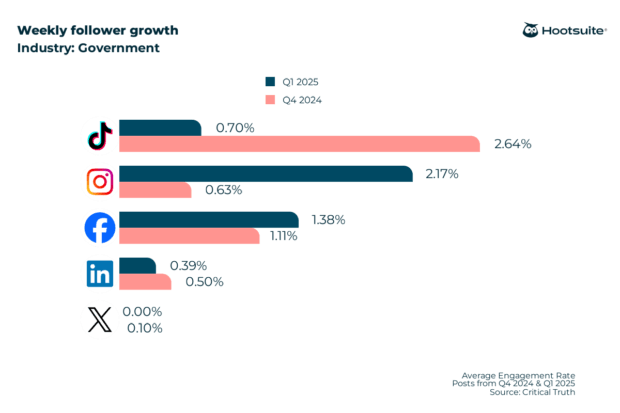
Growth is currently stagnant on legacy text platforms like X (0% growth), while Instagram continues to lead with a 2.17% growth rate, followed by Facebook at 1.38%. This data suggests that the public increasingly prefers visual and video-based government communication over text-heavy updates.
Official Responses and Legal Frameworks
The transition to digital governance has necessitated a robust legal and regulatory framework to ensure security, accessibility, and constitutional compliance.

The First Amendment and User Blocking
Following the Lindke v. Freed ruling, government agencies have had to retrain their staff on the nuances of user interaction. Official responses now emphasize that while "trolling" is frustrating, the removal of critical speech can lead to expensive civil rights litigation. Agencies are instead encouraged to use "mute" functions or focus on providing factual corrections rather than silencing dissent.
Security and FedRAMP Compliance
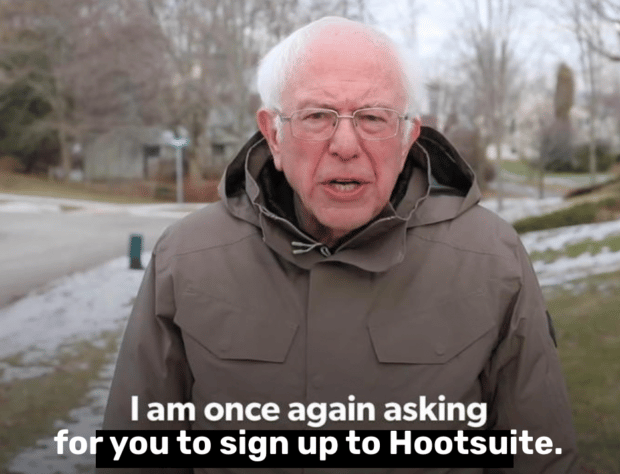
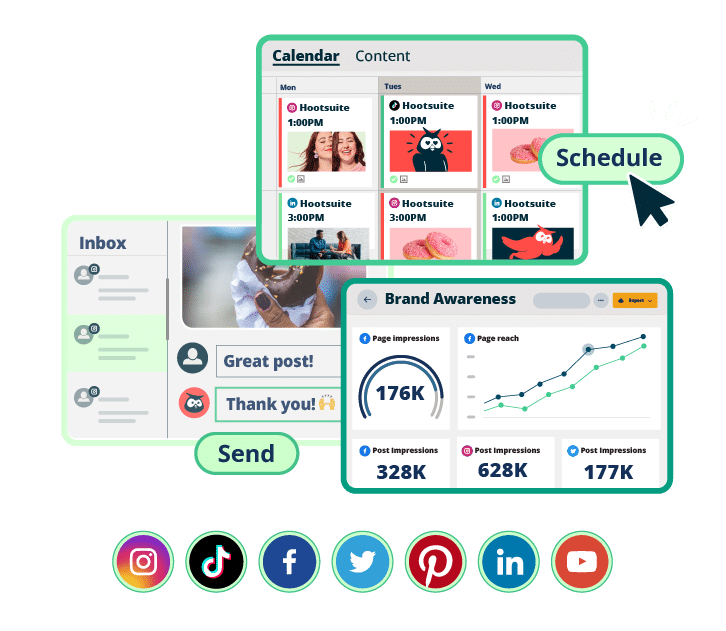
Federal agencies are strictly mandated to use cloud services that meet FedRAMP (Federal Risk and Authorization Management Program) standards. This ensures that the platforms used to manage social media—such as Hootsuite or other centralized dashboards—have the necessary encryption and multi-factor authentication to prevent account takeovers, which could be used to spread state-level disinformation.
Accessibility and Section 508
Official government responses have reiterated that digital content is a public service that must be accessible to all. Under Section 508 of the Rehabilitation Act, all government social media must include:
- Descriptive alt-text for all images.
- Closed captioning for all video content.
- The avoidance of "emoji-only" communication that confuses screen readers.
- CamelCase hashtags (e.g., #PublicSafetyAlert) to ensure screen readers can distinguish between words.
Implications: The Future of the Public Trust
The implications of these developments for the future of democracy are profound. Social media has successfully lowered the barrier to entry for political engagement, allowing younger and more diverse populations to participate in the civic process. However, this accessibility comes with increased vulnerability.
The Risk of the "Viral Gaffe"
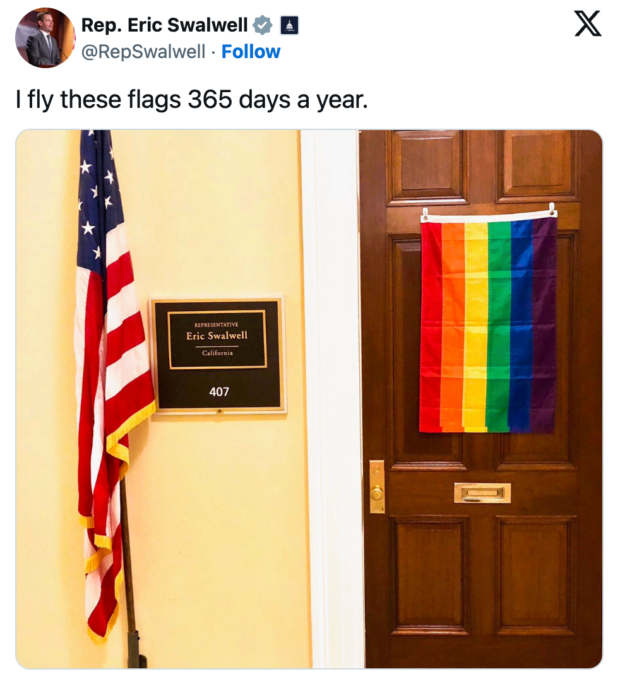
As seen with Congressman Eric Swalwell’s "creased flag" incident—where a photo of a Pride flag intended to show year-round support was revealed to be newly unpacked—the public’s ability to fact-check in real-time is unprecedented. For government agencies, this means that "performative" governance is increasingly easy to spot and punish.
Strategic Restraint
Perhaps the most sophisticated development in 2026 is the recognition of when not to use social media. The 2022 detention of Brittney Griner in Russia remains a landmark example of "strategic silence." By avoiding public social media callouts during the early stages of negotiations, officials prevented Griner from becoming a more valuable "bargaining chip" in a high-tension geopolitical environment. This demonstrates that the most effective digital strategy is sometimes one of calculated restraint.
Conclusion
As we move further into 2026, the government’s role on social media has evolved from a simple PR tool to a core component of the social contract. By balancing the efficiency of AI with the necessity of human oversight, and the reach of viral content with the requirements of legal compliance, the public sector is attempting to rebuild trust in an era of deep skepticism. The "digital town square" is no longer just a place for conversation—it is where the modern state proves its value to the people every single day.
 Basiran
  Nana Muazin
  Nila Kartika Wati